Tegan Passalacqua at Turley Wine Cellars applies John Muir's 19th-century naturalist wisdom to California's old vine vineyards, where vines planted in 1954 still produce wines that defy modern uniformity.
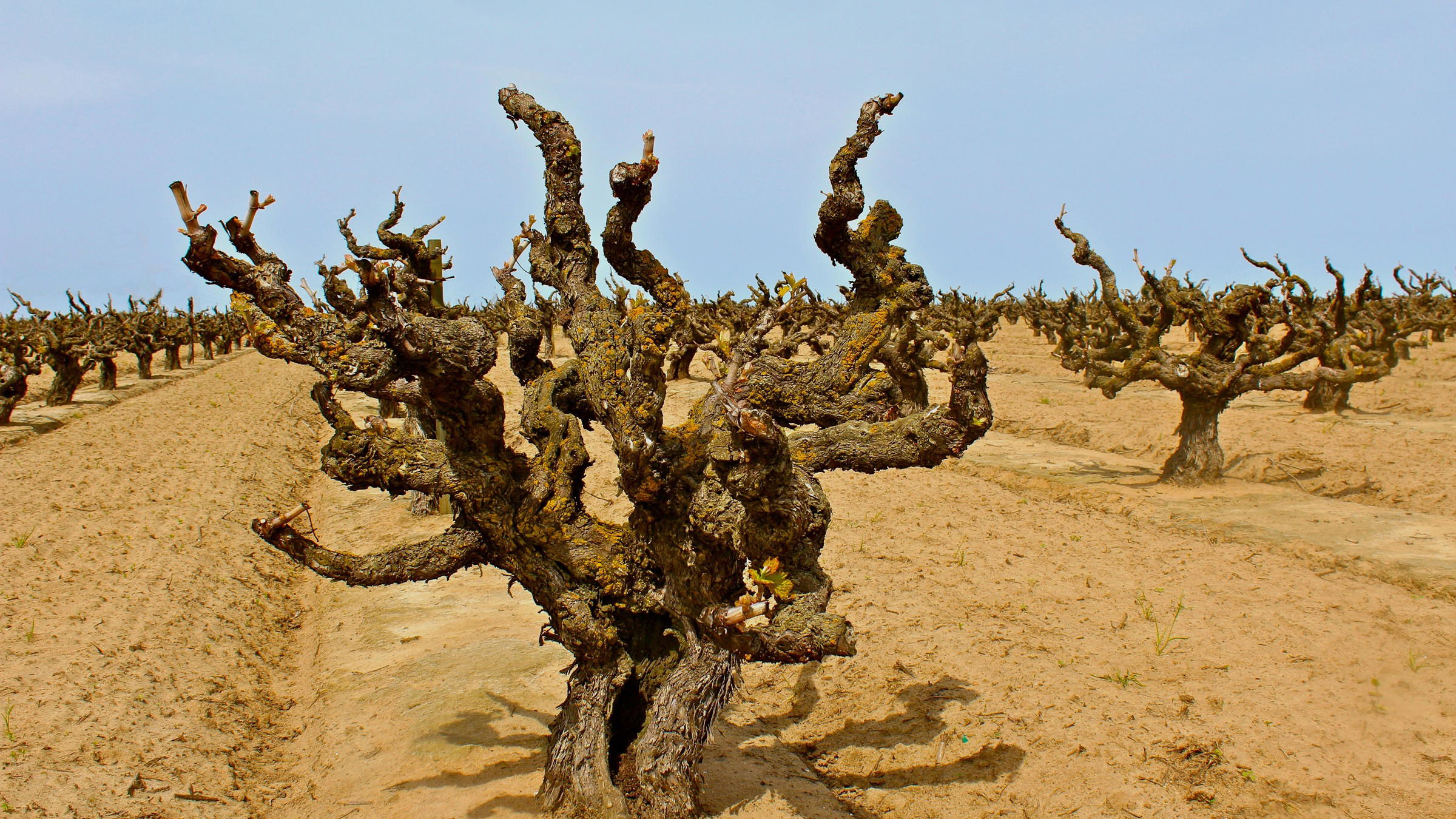
In 1869, Scottish-American naturalist John Muir observed that young pines grow 'straight and regular in form', but by 50 to 100 years, they 'begin to acquire individuality, so that no two are alike in their prime or old age.' Tegan Passalacqua, director of winemaking at Turley Wine Cellars and the winemaker behind Sandlands in California, keeps a copy of My First Summer in the Sierra within reach for exactly this reason. Old vines, he says, do the same. Each grows to express something different from where it is planted, and that individuality is what modern winegrowing was built to erase.
Passalacqua's philosophy sits at the center of a quiet tension in California viticulture. Economics rewards productivity and efficiency, uniform rows, immaculate canopies, vines farmed for quick returns. A young vineyard, Passalacqua says, reminds him of an army: everyone looks the same, trained for a mission.
But California's oldest vineyards, some planted in the 1950s, others dating back to the 1880s, produce wines that resist that uniformity. They express terroir not as a marketing concept but as a lived fact: no two vines ripen identically, no two parcels taste the same.
The question is whether the economics of modern viticulture will allow those vineyards to survive.
Why California Old Vine Vineyards Produce More Distinctive Wines
Turley Wine Cellars and Sandlands both maintain an explicit focus on historic vineyards, sites where vine age translates directly into bottle character. The distinction isn't romantic. Old vines develop root systems that reach deeper into the soil, accessing water and nutrients that young vines cannot. They yield less fruit per acre, but the fruit they produce carries more concentrated flavors and greater phenolic complexity. More importantly, they express site individuality that young vines, planted for uniformity and trained to ripen on schedule, cannot.
In viticulture, economics tends to reward a focus on productivity and efficiency. Visually, this is easy to recognize: uniform rows, immaculate canopies, vines farmed for quick returns. The payoff is predictable tonnage, consistent ripening windows, and fruit that meets winery specifications without requiring hand-sorting or parcel-by-parcel fermentation. But that predictability comes at a cost. Modern vineyards are planted to erase the individuality that Passalacqua and other old vine champions seek to preserve.
Old vines, by contrast, grow to express something different from where they are planted.
A vine planted in 1954 on a hillside in Sonoma Valley will ripen differently from its neighbor three rows over, not because of winemaking intervention, but because the vine itself has adapted to the specific microclimate, soil composition, and water availability of its exact location. That adaptation takes decades.
By the time a vine reaches 50 years, it has developed a root architecture and canopy structure that reflect the site's distinctive conditions. The result is fruit that carries a signature of place, not just appellation, but parcel, slope, and aspect.
The Muir Principle: How Passalacqua and Sandlands Read Individual Vines
Passalacqua's reference to John Muir is not incidental. Muir's observation about pines acquiring individuality over time applies directly to how Passalacqua approaches winemaking at both Turley Wine Cellars and Sandlands. In a young vineyard, every vine is trained to the same trellis height, pruned to the same spur count, and irrigated on the same schedule.
The goal is uniformity, fruit that ripens evenly and can be harvested in a single pass. But in an old vineyard, uniformity is impossible. Each vine has its own growth habit, its own ripening schedule, its own response to heat and water stress. The winemaker's job is not to impose uniformity but to read the vineyard's individuality and respond to it.
This requires a different kind of viticulture. In a young vineyard, decisions are made at the block level: when to irrigate, when to thin fruit, when to harvest. In an old vineyard, decisions are made vine by vine. Some vines ripen early and need to be picked first. Others hang longer and develop different flavor profiles. The result is a harvest that unfolds over weeks, not days, and a fermentation program that treats each parcel as a distinct entity. The wines that result from this approach carry a complexity that young vineyards cannot deliver, not because the winemaker is more skilled, but because the vineyard itself is more varied.
Passalacqua's Sandlands label is built around this principle. The wines are sourced from historic vineyards across California, sites where vine age and site individuality intersect. The focus is not on varietal purity or appellation branding but on expressing what the vineyard itself has to say.
That means working with field blends, mixed plantings, and parcels that do not fit neatly into modern wine categories. It also means accepting lower yields, longer hang times, and fermentation curves that do not follow textbook patterns.
The payoff is wines that taste like they come from a specific place, not because the label says so, but because the fruit carries that information in its structure, acidity, and tannin profile.
Compagni Portis and the Economics Threatening America's Viticultural Heritage
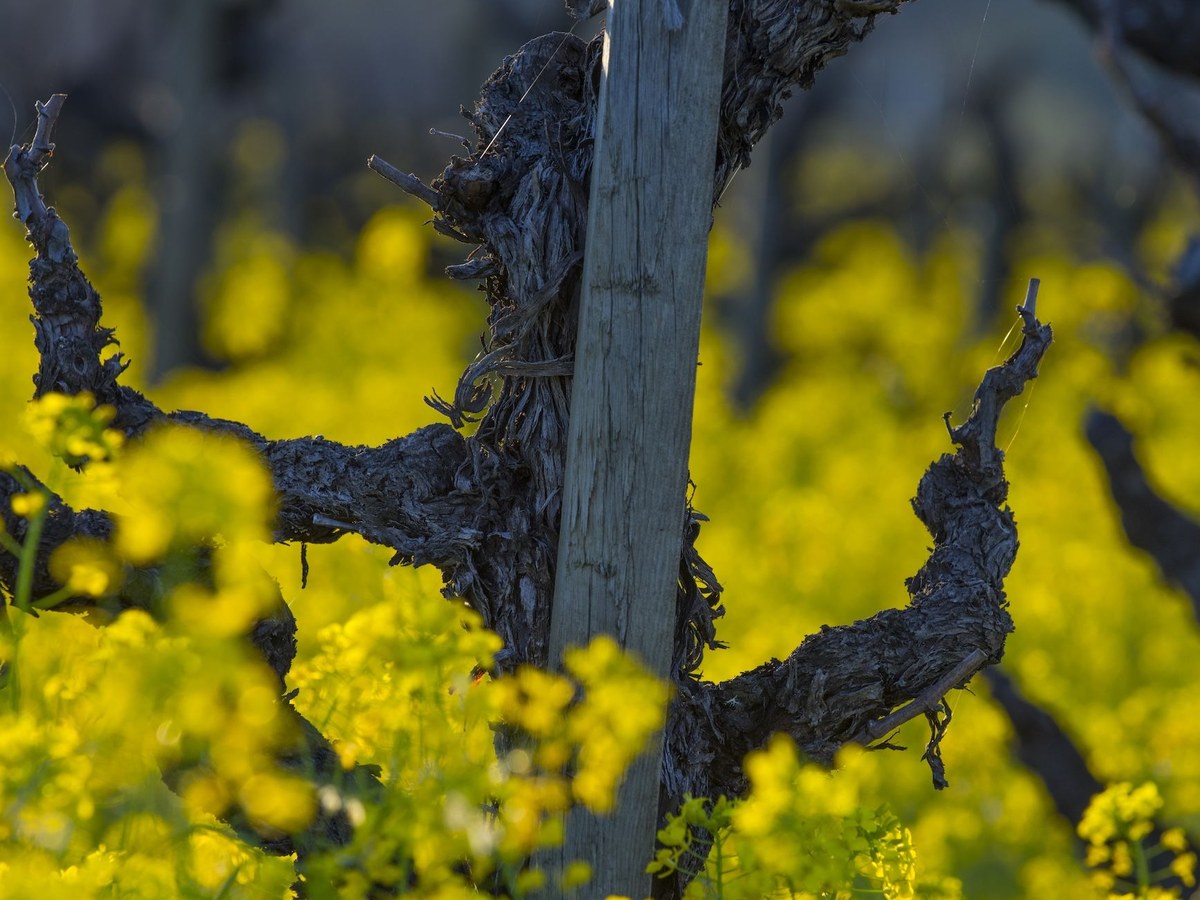
Compagni Portis is a rare white field blend planted in 1954 in Sonoma Valley, part of the original historic Buena Vista vineyard. The site is home to a mix of varieties, Riesling, Sylvaner, and others, planted together in the European tradition of field blending. The vines are now 70 years old, and they produce a wine that cannot be replicated in a modern vineyard. The fruit ripens unevenly, the varieties contribute different aromatic and structural components, and the wine that results carries a complexity that comes from the vineyard's age and diversity.
Compagni Portis vineyard: old vines and mustard flowers bloom in California.
But Compagni Portis is also a case study in the economics threatening California's old vine heritage. The vineyard yields less fruit per acre than a modern planting would. It requires more labor to farm, hand pruning, selective thinning, multiple harvest passes.
And the wine it produces does not fit neatly into varietal categories or appellation marketing programs. In viticulture, economics tends to reward productivity and efficiency, expressed in uniform rows, immaculate canopies and vines farmed for quick returns.
The only reason it survives is that someone values the wine it produces enough to absorb the economic inefficiency.
This is the central challenge facing California's old vine vineyards. The economics of modern viticulture reward efficiency, uniformity, and scale. Old vineyards deliver none of those things. They are expensive to farm, difficult to harvest, and produce wines that require patient consumers and patient winemakers.
As land values rise and vineyard ownership consolidates, the pressure to replant increases. A vineyard planted in the 1950s may be worth more as a development site than as a working vineyard.
Even if it remains in agricultural use, the economic incentive is to replant with varieties that command higher prices, yield more fruit, and fit into established appellation branding.
The result is that California's old vine vineyards are disappearing. Some are lost to development. Others are replanted with modern clones and trellising systems. A few survive because they are owned by producers like Turley Wine Cellars and Sandlands, who have built business models around old vine fruit. But the broader trend is clear: the vineyards that Passalacqua describes, sites where individual vines express individual character, are becoming rarer every year.
What Old Vine Wines Deliver That Modern Viticulture Cannot
The case for old vine wines is not sentimental. It is structural. Old vines produce fruit with different phenolic profiles, different acidity levels, and different aromatic compounds than young vines. The differences are measurable in the lab and detectable in the glass. Old vine fruit tends to have thicker skins, which contribute more tannin and color to red wines. It also tends to have lower pH and higher acidity, which gives the wines better aging potential and more precise flavor definition. And because old vines yield less fruit, the concentration of flavor compounds per berry is higher.
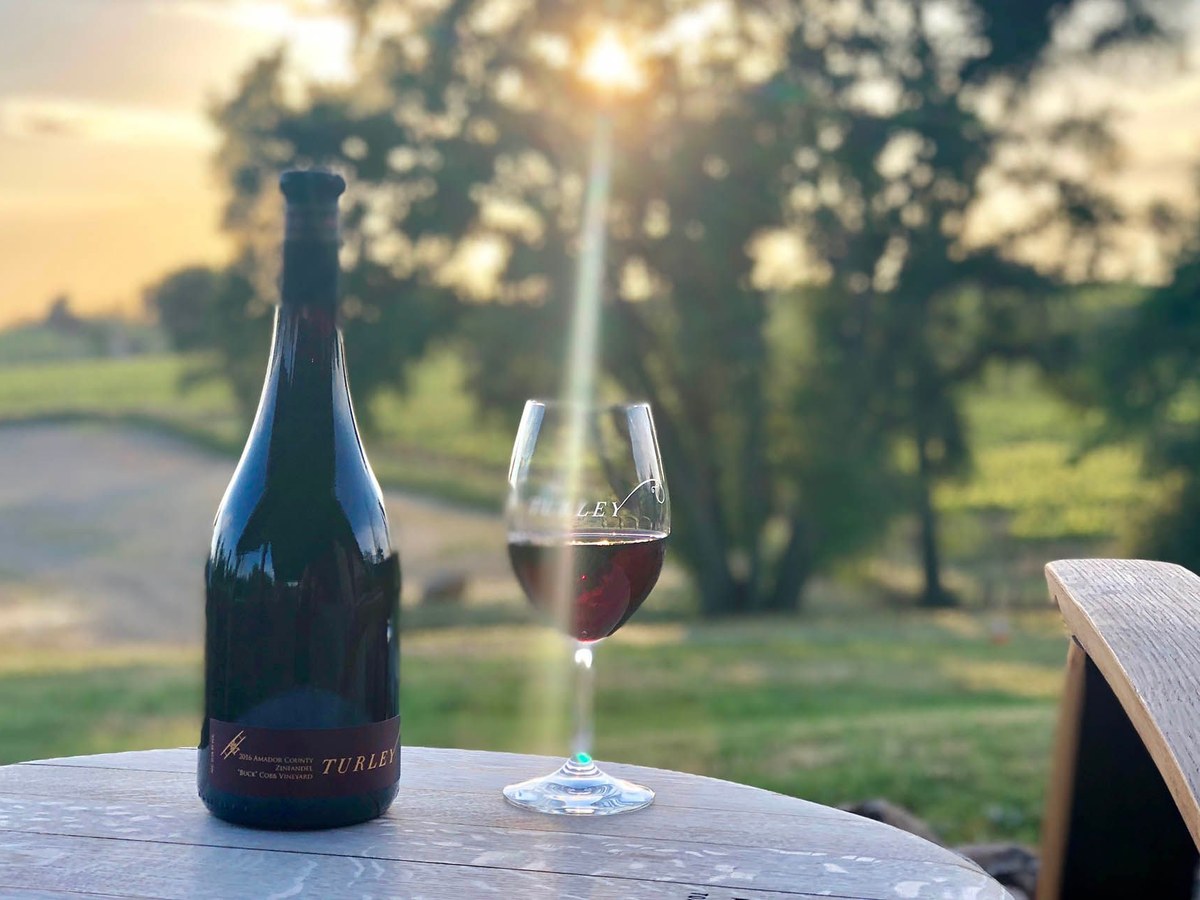
A bottle of Turley Zinfandel wine and a glass of red wine are seen at sunset, illustrating what old vine wines deliver.
But one important difference is site expression. A young vineyard planted to a single clone and farmed for uniformity will produce fruit that tastes consistent from vintage to vintage. An old vineyard with mixed plantings and varied vine ages will produce fruit that reflects the specific conditions of each growing season. In a cool year, the wine will taste different than in a warm year, not because the winemaking changed, but because the vineyard responded differently to the season. That responsiveness is what collectors and enthusiasts value. It is also what modern viticulture is designed to eliminate.
For collectors, old vine wines offer a window into California's viticultural history. A bottle of Compagni Portis is not just a white field blend, it is a snapshot of what Sonoma Valley looked like in the 1950s, when European immigrants planted mixed varieties in the same parcel and farmed them without irrigation or chemical inputs. The wine tastes different from anything produced in a modern vineyard because the vineyard itself is a relic of a different era. That historical continuity is rare in California, where most vineyards have been replanted multiple times since the 1970s.
For enthusiasts, old vine wines offer a different kind of drinking experience. They tend to be less fruit-forward and more structurally complex than wines from young vines. They show more secondary and tertiary flavors, earth, spice, dried fruit, even in their youth. And they age differently, developing bottle complexity over decades rather than years. A well-made old vine Zinfandel or Carignan can drink beautifully at 20 years, while a young vine equivalent may peak at five. That aging potential is a function of the fruit's inherent structure, not winemaking technique.
The Collector's Perspective: How to Identify and Evaluate Old Vine Designations
Not all old vine designations are created equal. California has no legal definition of 'old vine,' and producers use the term loosely. Some apply it to vineyards planted in the 1970s. Others reserve it for sites planted before Prohibition. For collectors, the key is to look beyond the label and understand the vineyard's history, the producer's farming practices, and the wine's track record.
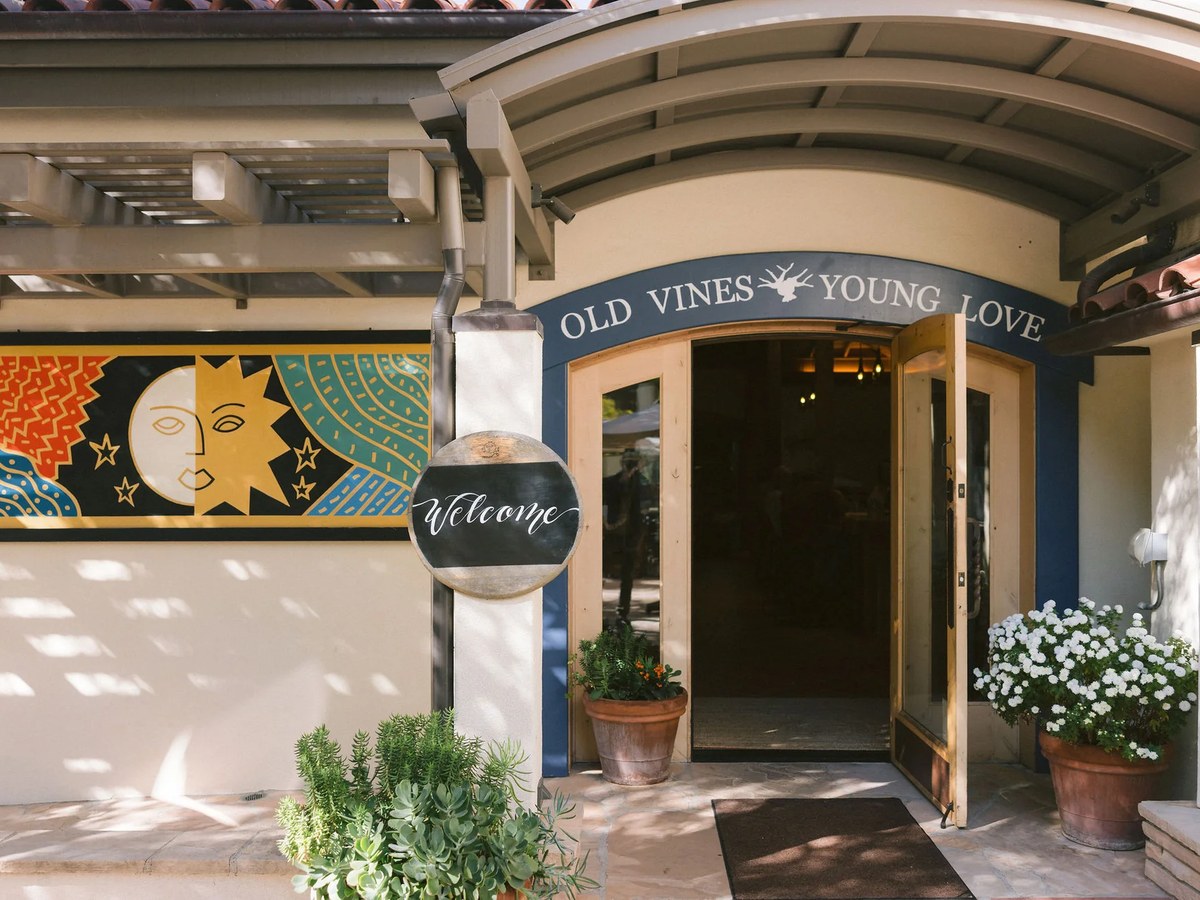
Entrance to a winery tasting room with 'OLD VINES YOUNG LOVE' signage and a 'Welcome' sign.
Particularly reliable old vine wines come from producers with a documented commitment to historic vineyards. Turley Wine Cellars, for example, sources fruit from sites planted in the 1880s and maintains long-term contracts with growers who farm those vineyards for quality rather than tonnage.
Sandlands takes a similar approach, working with parcels that have been in continuous production for decades and that express site individuality in the bottle.
These producers do not just buy old vine fruit, they invest in the vineyards themselves, funding replanting of missing vines, installing drip irrigation where necessary, and working with growers to manage yields and harvest timing.
For collectors evaluating old vine wines, the key questions are: How old is the vineyard? Who farms it? What is the yield per acre? And how does the wine taste compared to young vine equivalents? A true old vine wine should show more structure, more complexity, and more site specificity than a wine from a young vineyard. It should also age better. If a wine labeled 'old vine' tastes like a fruit bomb with no structure, it is either not from genuinely old vines or it has been made in a style that obscures the vineyard's character.
The other factor to consider is provenance. California's oldest vineyards are concentrated in a few regions: Lodi, Contra Costa County, Sonoma Valley, and parts of Napa. These areas were planted in the late 19th and early 20th centuries, and many of the original plantings survive.
Wines from these regions are more likely to deliver genuine old vine character than wines from regions that were planted more recently. But even within these regions, not all old vineyards are farmed equally. Some are dry-farmed and head-pruned, which preserves the vines' natural growth habit.
Others have been converted to drip irrigation and trellis systems, which increases yields but reduces individuality.
The Road Ahead: What Happens When the Last Old Vineyards Disappear
The future of California's old vine vineyards depends on whether the wine industry can build a business model that rewards their preservation. Right now, the economics are stacked against them. Land values are rising, farming costs are increasing, and the market for small-lot, site-specific wines is limited. Most consumers do not know what an old vine wine is, and most retailers do not stock them. The wines that do reach the market often sell at prices that reflect their scarcity and quality, but those prices are not always enough to offset the cost of farming a 70-year-old vineyard in a high-cost region like Sonoma or Napa.
One solution is appellation-level protection. Europe's wine regions have long used appellation rules to protect historic sites and limit replanting. California could adopt a similar approach, designating certain vineyards as historic and restricting their conversion to other uses. But that would require political will and industry consensus, neither of which exists at the moment. The more likely outcome is that old vine preservation will remain the work of individual producers who are willing to absorb the economic cost in exchange for the cultural and viticultural value.
Another solution is consumer education. If more wine drinkers understood what old vine wines deliver, and why they are worth paying for, the market for those wines would expand. That would create more economic incentive for landowners to preserve old vineyards rather than replant them. But education takes time, and time is something California's old vineyards do not have. Every year, more sites are lost to development or replanting. Once a vineyard is gone, it cannot be replaced. A new planting may eventually reach 50 or 70 years, but it will not carry the same history or the same site adaptation as the vineyard it replaced.
Passalacqua's work at Turley Wine Cellars and Sandlands offers a model for how to preserve that history. By sourcing fruit from historic vineyards, farming them for quality rather than tonnage, and making wines that express site individuality, he is building a business case for old vine preservation.
The wines are not cheap, and they are not widely available. But they deliver something that modern viticulture cannot: a taste of California's viticultural past, bottled in the present. Whether that model can scale, and whether it can save California's remaining old vineyards, remains to be seen.
But for now, producers like Passalacqua are proving that old vines matter, and that the individuality they express is worth fighting for.