← Guides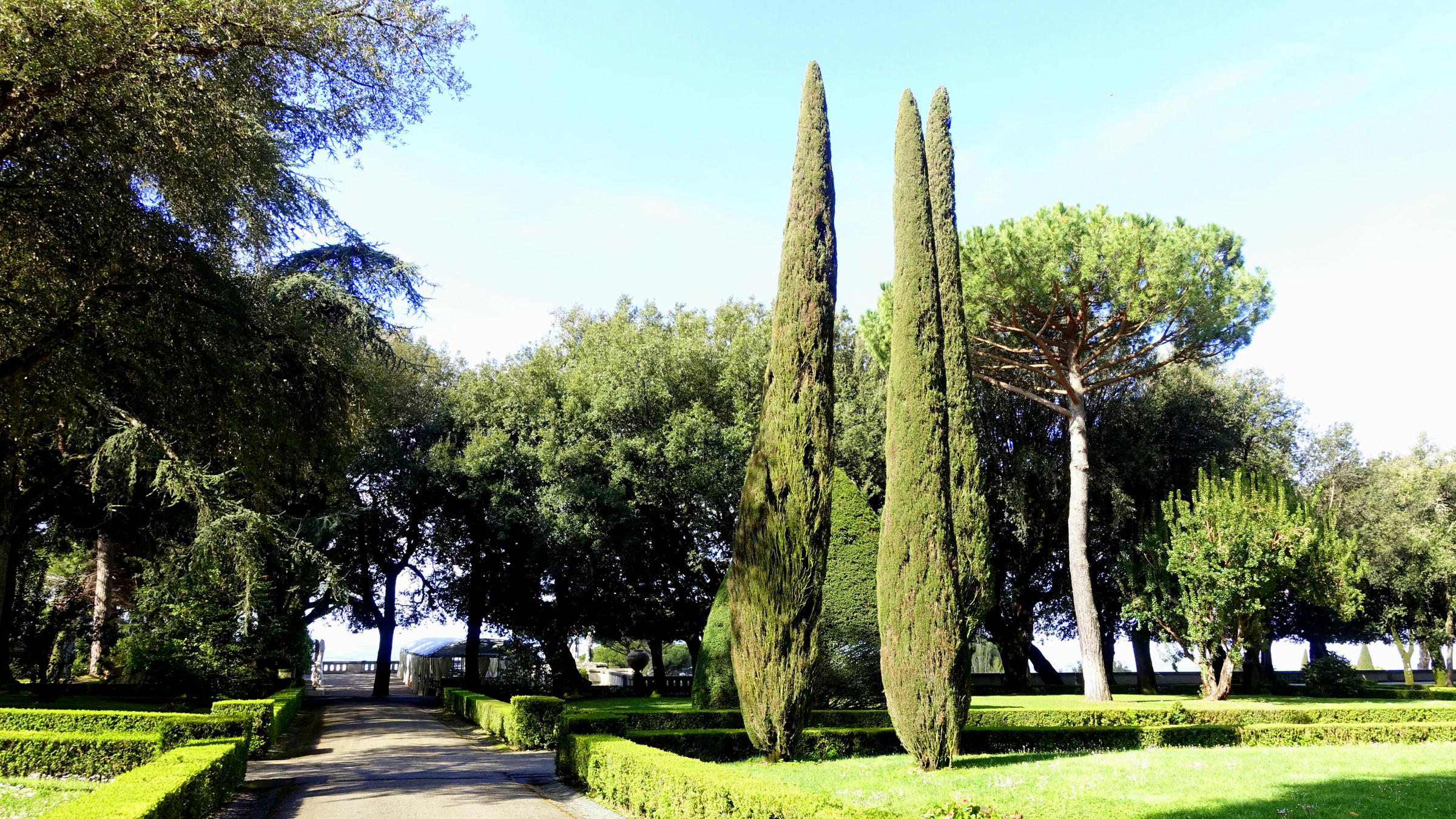
Pope Leo XIV blessed the inaugural vintage from Borgo Laudato Si, 5,000 bottles of Cabernet Sauvignon grown by refugees at Castel Gandolfo.
Pope Leo XIV blessed the inaugural vintage from Borgo Laudato Si, 5,000 bottles of Cabernet Sauvignon grown by refugees at Castel Gandolfo.
Pope Leo XIV raised a glass of red wine at Castel Gandolfo this season, not at a state dinner, but standing in a two-hectare vineyard tended by refugees, unaccompanied minors, and former prisoners. The occasion: the first 5,000 bottles of Cabernet Sauvignon produced by Borgo Laudato Si, the 55-acre sustainable farming operation he formally opened at the papal summer retreat in Lazio. With the Laudato Si office confirming that 'production remains experimental and in development,' this is not a commercial launch. It is something harder to categorise, and, for collectors attuned to provenance, considerably more interesting.
The vineyard sits within the grounds of the papal summer residence in Castel Gandolfo, a hilltop town in the Castelli Romani, roughly 25 kilometres south-east of Rome.
The estate covers 55 acres in total, but the wine comes from a single 2-hectare block planted exclusively to Cabernet Sauvignon, a variety that performs well on the volcanic soils of the Colli Albani, where elevation and diurnal temperature shifts give the grape enough acidity to balance its natural weight.
The University of Udine in Friuli designed the vineyard specifically to resist pests and diseases, reducing the need for pesticide intervention from the outset. AI-powered smart irrigation systems administer only the water the vines require, eliminating runoff waste.
The resulting wine is 100% Cabernet Sauvignon, aged in oak barrels. Beyond that, the Laudato Si office has been deliberately measured: 'production remains experimental and in development,' they told The Drinks Business. The inaugural yield, 5,000 bottles from the entire first harvest, reflects both the youth of the vines and the programme's deliberate pace. Cardinal Fabio Baggio, director of Borgo Laudato Si, has described the supply chain as operating 'well below the traditional zero kilometre,' meaning grapes, production, and distribution all remain tightly local. Future annual production could reach 15,000 litres, around 20,000 standard 75cl bottles, but that ceiling is some years away.
Pope Leo XIV visited the site to bless the vineyard and raised a glass of the red wine himself. That act of blessing is not incidental to the wine's identity. It is, in a literal sense, part of the provenance, and in a market where provenance increasingly drives collector interest, that distinction matters more than any appellation rating.
Approximately 8,000 vines are tended and harvested by refugee workers as part of a structured programme that trains migrants and unaccompanied minors in sustainable agriculture, livestock care, and hospitality. Former prisoners are also welcomed into the initiative. The programme aims to reach more than 1,000 people per year, a scale that makes Borgo Laudato Si less a winery with a social dimension and more a social enterprise that happens to produce wine.
Fr. Manuel Dorantes, managing director of Borgo Laudato Si, described the site as 'a zero-impact space' created 'for the welcome of all and the support of the vulnerable.' The agricultural model reinforces that framing: organic farming, regenerative soil practice, AI-managed irrigation, and a short supply chain that keeps production, processing, and consumption within the same immediate geography. Olive oil, herbal tea, and cheese are also produced on-site and sold to visiting members of the public, school groups among the more frequent visitors, with wine forming one strand of a broader agricultural education.
The University of Udine's involvement signals institutional seriousness. Udine sits in Friuli-Venezia Giulia, one of Italy's most technically rigorous wine regions, and its viticulture faculty has a long record of applied research in disease-resistant vine management.
Designing a vineyard for Lazio's climate, warmer, drier, and more pest-prone than Friuli, required site-specific work. The result is a block that can be farmed with minimal chemical intervention, which matters when your workforce is being trained rather than recruited for prior expertise.
Every agronomic decision at Borgo Laudato Si feeds back into the training programme: the workers who tend the vines are also learning the reasoning behind each intervention, building transferable skills in sustainable land management that extend well beyond this single estate.
Speaking at the opening ceremony, Pope Leo XIV framed the project in terms of stewardship rather than production: 'This privilege comes with a great responsibility: that of caring for all other creatures, in accordance with the creator's plan. Care for creation, therefore, represents a true vocation for every human being, a commitment to be carried out within creation itself, without ever forgetting that we are creatures among creatures, and not creators.' That language maps directly onto the regenerative agriculture philosophy underpinning the vineyard's design, and it sets a clear expectation for how the estate intends to grow.
The Castelli Romani have produced wine for centuries, the zone's Frascati DOC is one of Italy's oldest white wine appellations, and the volcanic soils of the Colli Albani have long supplied Rome's restaurants with easy-drinking local bottles. Cabernet Sauvignon is a less traditional choice for the area, but it is not without precedent: producers across Lazio's IGT zones have planted international varieties since the 1990s, finding that the combination of volcanic mineral structure and warm growing seasons can produce Cabernets with genuine depth.
What makes the Borgo Laudato Si wine different from any other Lazio Cabernet is not, primarily, the terroir. It is the institutional context.
The papal estates at Castel Gandolfo have been Vatican-managed farmland for centuries, but they have not previously produced a commercially identifiable, mission-driven wine under a named brand with a defined social programme attached.
The Annona store within Vatican City, open to all visitors, and a second wine shop accessible only to cardholders have long stocked bottles from across Italy, benefiting from the Vatican's duty-free status, which has been in place since the Lateran Treaty of 1929 recognised the Holy See as an independent state.
A Vatican-produced wine, sold within those same walls, is a different proposition entirely.
Vatican City is also, according to trade data from the World Integrated Trade Solution, the world's top wine importer per capita, a statistic that reflects both the duty-free retail environment and the concentration of clergy and diplomatic staff within its 0.44 square kilometres. Italian bottles accounted for 96.3% of Vatican wine imports in 2021, with Austria representing 3.6% and all other countries combined making up just 30 litres. Into that context, a domestically produced Cabernet Sauvignon from the papal estate itself arrives as something genuinely without precedent in the Vatican's wine history.
The short answer is: not through any conventional retail channel, at least not yet. According to Cardinal Baggio, the wine is sold within the Vatican and shared with visitors to Borgo Laudato Si itself. There is no confirmed public distribution, no importer arrangement, and no en primeur allocation. The 5,000 bottles that constitute the entire inaugural vintage are, for now, accessible only to those who visit the estate or purchase within Vatican City.
That scarcity is not manufactured. It is a direct consequence of where the project sits in its development, experimental, intentional, and deliberately unhurried. But for collectors who track provenance-driven wines, the combination of papal blessing, refugee labour, a named estate, and a single-variety debut vintage from a historically significant site creates a profile that has no direct parallel in the modern wine market. Father Jim Sichko, Diocesan Evangelist and Papal Missionary of Mercy, put it plainly: "These bottles are not just collector's items, they are symbols of hope and compassion, created to do good in the world,"1 a framing that positions each bottle as something beyond a direct cellar acquisition.
The secondary market for faith-institution wines and papal memorabilia has demonstrated real appetite. In December 2024, two Bourbons signed by the late Pope Francis, both produced by Willett Distillery in Kentucky, one marking the 10th anniversary of his papacy and the other celebrating the 2025 Jubilee Year, sold at Sotheby's for a combined US$27,500, with proceeds directed to faith-led charities. Whisky and wine are different markets, but the underlying dynamic is the same: papal provenance commands a premium that no appellation rating can replicate.
The Borgo Laudato Si wine does not yet have a public price point, a vintage date confirmed on the label, or a defined export pathway.
What it has is a 2-hectare block of Cabernet Sauvignon on volcanic Lazio soil, designed by the University of Udine, farmed by people rebuilding their lives, blessed by a sitting Pope, and bottled in a quantity, 5,000, that makes every bottle a finite object. If and when distribution opens beyond Vatican City, the allocation window will be short.
The programme's ambition to scale toward 20,000 bottles annually suggests the estate is thinking seriously about reach.
How it chooses to distribute that reach, through the Vatican's existing retail infrastructure, through direct estate visits, or through a curated allocation model, will determine whether Borgo Laudato Si becomes a collector's footnote or among the more closely watched new estates in Italian wine. Either way, the first vintage is already gone.
The second one is worth tracking.
Get the App
Take the shortlist into the En Primeur Club app for concierge access, saved places, and the next step after discovery.
Get Exclusive AccessMore from the editors