← Guides
Barolo 2019 Vintage Report Pull the cork on a 2019 Barolo and something shifts in the glass before you've even lifted it, a depth of color that sits closer to garnet than the pale ruby you'd expect.
Barolo 2019 Vintage Report Pull the cork on a 2019 Barolo and something shifts in the glass before you've even lifted it, a depth of color that sits closer to garnet than the pale ruby you'd expect.
Pull the cork on a 2019 Barolo and something shifts in the glass before you've even lifted it, a depth of color that sits closer to garnet than the pale ruby you'd expect from a young Nebbiolo, a nose that opens with dried roses and iron-rich earth before tar and licorice settle in behind.
The Langhe delivered a growing season that asked producers to make decisions early and commit to them: when to pick, how long to macerate, whether to trust the vintage's natural structure or coax it with extraction.
The estates that read the year correctly, Giacomo Conterno at Cascina Francia, Elena Penna at Vietti, the Mascarello family at Bartolo, produced wines that carry the appellation's signature austerity alongside a generosity of fruit that the previous decade rarely offered.
What makes the Barolo 2019 vintage worth your attention now is timing. Barolo demands patience, most serious cuvées from this vintage are only beginning to show their architecture, but the window for acquiring bottles at release pricing is narrowing as allocations move through négociants and onto secondary markets. The question isn't whether the vintage is good. It's which producers captured the year's particular character, and which wines will reward a decade in your cellar versus those drinking well already.
What follows is a producer-by-producer account of how 2019 played out across the Barolo communes, from La Morra's silkier soils to the iron-fisted tannins of Serralunga d'Alba, with notes on which cuvées to seek out and how long to hold them.
If the prior section set the stage for Barolo's enduring pull on collectors, the 2019 vintage is where that pull becomes a decision. Pour a glass and hold it to the light, the color alone tells you something is different here: deeper, more concentrated than the 2016s that preceded it, yet still carrying that translucent garnet edge that marks Nebbiolo at its most honest.
The comparison to 2016 is worth sitting with. The 2019s track closely to many 2016s in overall quality, but arrive with a touch more power and slightly less transparency at this stage (flatiron-wines.com100). That distinction matters if you're deciding between the two on the secondary market: the 2016 may reward patience with more finesse; the Barolo 2019 vintage rewards those who want structure and fruit in the same glass, now.
Across the appellation, the tannins are the story. Most 2019s show great balance alongside intense, refreshing fruit, and a high level of tannins, though without clumsiness or imbalance (the-buyer.net101). That last qualifier is the one to hold onto. High tannins in a lesser vintage signal extraction pushed too far; here, they signal a wine built for a decade of cellaring, minimum.
The benchmark bottle is Bartolo Mascarello's 2019 Barolo, a wine that scored 100 points (whwc.com102) and currently lists at $749.00 for a 1.5L magnum (flatiron-wines.com103). Mascarello's is the traditional-method touchstone, whole-cluster fermentation, long maceration, large Slavonian oak, and at that score, allocations move fast. If you're tracking it, the magnum format is where the cellar math works best.
For those who want a more direct entry into the vintage, Pio Cesare's 2019 Barolo scores 95 points (bottleshop.com104), a wine that sits in the structured and tannic (cluboenologique.com105) house style the estate has maintained across Serralunga d'Alba for generations. Between the two, choose Mascarello for the cellar and Pio Cesare for the table, the latter drinks earlier and pairs cleanly with the braised meats that Langhe restaurants have built their reputations on.
The broader picture of the Barolo 2019 vintage is still coming into focus as bottles open and critics revisit. What's already clear is that this is a vintage where patience is rewarded, and where the window to acquire at current prices may be shorter than it looks.
The growing season delivered warm days tempered by cool Langhe nights, concentrating Nebbiolo's signature tar and dried rose without sacrificing the acidity that makes Barolo age. What you're drinking now, or more accurately, what you're deciding whether to open now, is a vintage that rewards patience but doesn't punish curiosity. Pull a bottle at five years and you'll find structure still in motion. Give it ten and the picture sharpens considerably.
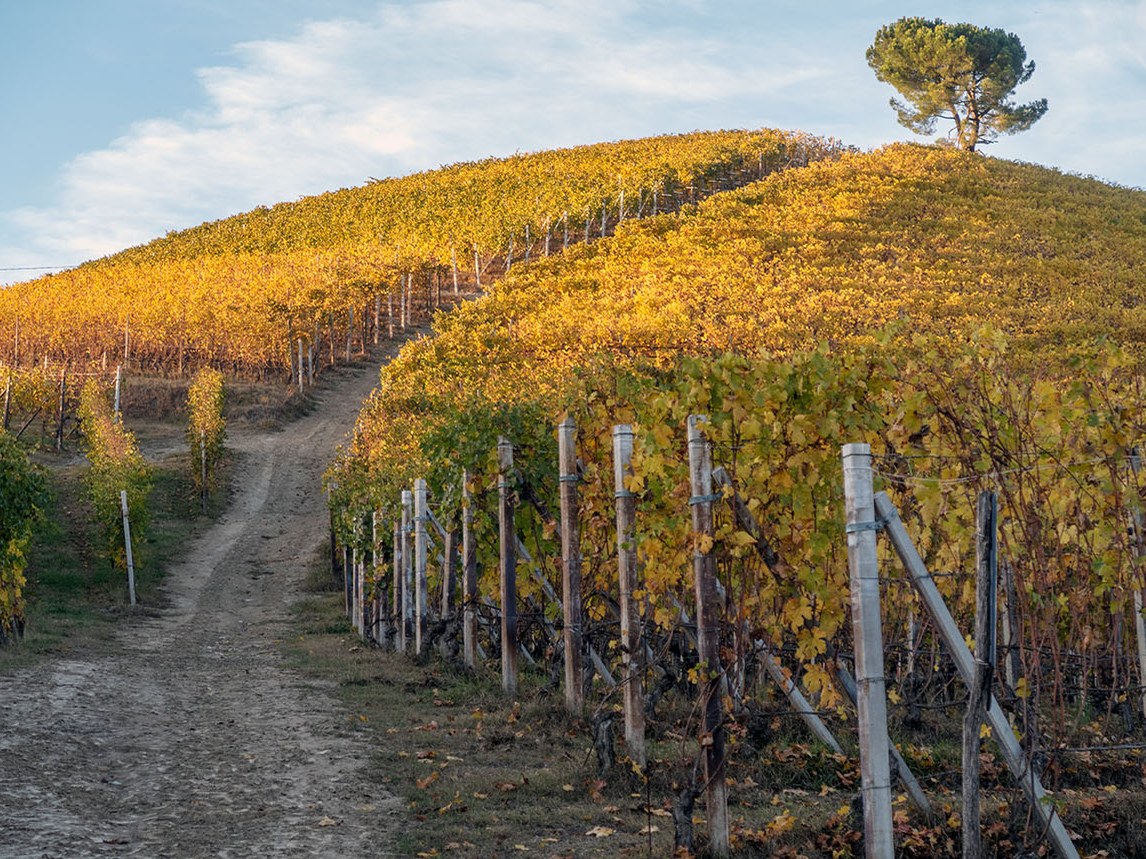
Pio Cesare's 2019 Barolo sits at the more accessible end of that spectrum. At $99.99 (bottleshop.com104) and 92 points (bottleshop.com104), it's the bottle you open to understand the vintage before committing to the deeper allocations. Alcohol sits at 14.5%104 (bottleshop.com104), warm enough to signal the season's generosity, balanced enough that the wine doesn't tip into heaviness. Pio Cesare has been blending across Serralunga d'Alba, La Morra, and Barolo since 1881; the house style leans toward integration over declaration, which suits a vintage this expressive.
For collectors tracking the ceiling of 2019, Vietti's Barolo Castiglione is the reference point. Scoring 97 points (vintagewineshoppe.net106), it arrives at $250.99 (vintagewineshoppe.net106), a five-point score gap over the Pio Cesare that translates into a $150 price differential. Whether that spread is worth it depends entirely on your timeline. If you're drinking within three years, the Pio Cesare closes the gap considerably. If you're laying bottles down past 2030, Vietti's Castiglione, sourced from the Castiglione Falletto commune, where the Helvetian soils push Nebbiolo toward iron and spice, earns its position. Vietti also offers a second entry at $199.99 (vintagewineshoppe.net106), which narrows the decision further for anyone building a mixed case.
The broader point: the Barolo 2019 vintage isn't one to approach with a single bottle. It's a vintage to approach with a strategy, one producer for now, one for later, and enough patience to let the Nebbiolo do what it does best.
With the vintage's structural case made, the question becomes whose hands shaped it best. Two estates stand out as reference points for anyone building a 2019 Barolo position.
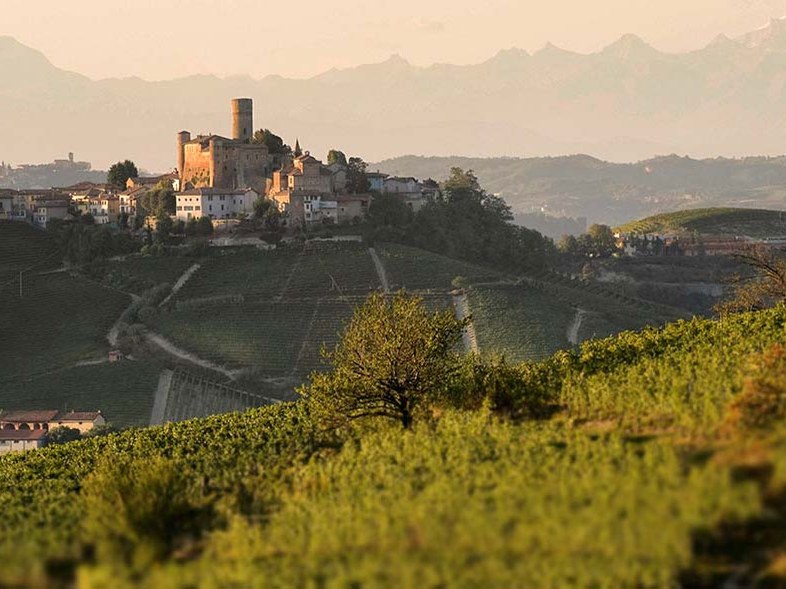
Start with Vietti. The Castiglione Falletto estate has long been a benchmark for Barolo's more classical expression, and the 2019 scored 95 points (vintagewineshoppe.net106), a number that reflects the vintage's precision rather than its weight. Vietti's single-vineyard cuvées, Rocche, Brunate, Lazzarito, each pull from distinct soils, and the 2019 growing season gave the estate's winemaking team the kind of even ripening that lets those parcel differences speak clearly. If you've followed Vietti's Rocche di Castiglione over the past decade, the 2019 is the vintage where the wine's characteristic iron-and-dried-rose profile arrives with unusual definition.
Then there's Oddero, whose Barolo DOCG is built entirely from 100% Nebbiolo107 (oddero.it107) sourced from vineyards sitting at 200 meters elevation107 (oddero.it107). That altitude matters in a warm vintage, it's the difference between Nebbiolo that retains its characteristic acidity and one that tips toward overripe. The Oddero family has farmed these parcels across generations, and the 2019 shows what that continuity produces: a wine with the tannin architecture to age but enough mid-palate fruit to reward patience rather than demand it. The estate's individual vineyard rows measure 2.7 x 0.9 meters107 (oddero.it107), a planting density that concentrates root competition and, in a season as warm as 2019, helps moderate vigor and preserve the grape's natural tension.
For those watching the broader market, Italy's fine wine segment grew +24% on Liv-ex in the first half of 2019 (sommelierbusiness.com108), a trajectory that has only sharpened collector interest in top Barolo producers. Entry points vary: Carlin de Paolo's 2018 Barolo DOCG sits at $56 per bottle (thesimplewine.com109), while Vietti's top single-vineyard releases trade at a significant premium, the estate's Barolo Ravera reached €420 at auction (Cult Wines110). Between those two poles sits most of the Barolo 2019 vintage's real opportunity: producers with serious terroir credentials and allocations that haven't yet attracted the secondary-market attention of a leading crus.
The next question, how to actually access these wines before allocations close, is where the mechanics of the Barolo market get interesting.
Having mapped the vintage's structure and the climate forces behind it, the question that matters most is who translated 2019's potential into the glass, and whose allocations are worth tracking before the window closes.
Start with Giacomo Conterno. Roberto Conterno has farmed the Cascina Francia parcel in Serralunga d'Alba for 45 years111 (rarewineco.com111), and that depth of site knowledge shows in a vintage like this, where the Serralunga clay-limestone held moisture through August's heat and delivered the kind of tannic architecture that needs a decade to open. The 2019 Monfortino, when it eventually releases, will be the benchmark against which the vintage is judged. Add it to your watchlist now.
The broader Langhe context is worth holding in mind. Across the region, 9 denominations112 (langhevini.it112) share the same hills, Barolo, Barbaresco, Langhe Nebbiolo, Dolcetto d'Alba among them, and the 2019 growing season lifted quality across all of them, not just the flagship crus. That matters if you're building a cellar: the Langhe Nebbiolo bottlings from producers like Conterno and Bruno Giacosa offer earlier-drinking access to the same vintage character at a fraction of the Barolo price.
Wine Spectator scored the 2019 Piedmont vintage at 99 (Wine Spectator99), the ceiling of their scale. That score has consequences for allocation. The 550 members112 (langhevini.it112) of the Langhe Vini consortium represent a wide range of estates, but the upper-tier Barolo producers, those with single-vineyard MGA bottlings from Cannubi, Brunate, or Vigna Rionda, work on tight production volumes. A 99-point vintage rating compresses the allocation window fast. Collectors who waited on 2016 and paid secondary prices know exactly how this plays out.
What separates the Barolo 2019 vintage from other high-scoring years is the consistency across the Barolo communes. Harvest timing has shifted by as much as 15 years113 earlier compared to historical norms (wine-lister.com113), yet 2019 managed to retain the acidity that defines age-worthy Nebbiolo, a balance that warmer vintages like 2017 struggled to hold. The Oddero estate, whose family has worked the same Langhe parcels across four generations114 (thesortingtable.com115), is one of the clearest examples of how accumulated site knowledge translates into vintage-reading precision, the kind of institutional memory that tells a winemaker exactly when to pick in a year that could tip either way. For Barolo over Barbaresco when you're thinking long-term cellaring, 2019 is the vintage that makes the case.
After four sections mapping the vintage's character and the producers shaping it, the question collectors actually ask over a second glass is simpler: where does the money go furthest? The Barolo 2019 vintage market gives you a clear answer, if you know where to look.
The price spread across the appellation is striking in its range. Within 2019 Barolo offerings, price spans roughly 13x, from Carlin de Paolo at $56 to a Bartolo Mascarello 1.5L at $749, yet critic scores compress into a narrow 95 to 100 point band. (thesimplewine.com109) That compression is the story. You are not buying 13 times the wine at the summit of the ladder, you are buying scarcity, provenance, and the Mascarello name.
For collectors who want to drink rather than archive, the mid-tier is where the arithmetic tilts in your favor. Pio Cesare's 2019 Barolo at $99.99, averaging 93.25 points across four critics, delivers roughly $1.07 per point, against Vietti's single-vineyard Lazzarito 2019 at $199.99 and 97 points, which runs $2.06 per point. (bottleshop.com104) Pio Cesare has been making Barolo since 1881 (owenbargreen.com116), the house knows the appellation's rhythms as well as anyone, and the 2019 is a wine you can open in five years without apology.
That said, the Vietti Lazzarito is not overpriced for what it is. A single-vineyard Serralunga d'Alba Nebbiolo from a five-star vintage (brunolo.nl117) commands a premium because the allocation is finite and the cellar window stretches well past 2035. The question is whether you are buying to drink or to hold, and that distinction should drive every decision you make at this price point.
Climate is quietly shifting the calculus, too. With 97% of 246 US weather stations recording rising growing-degree-days since 1970, and producers like Roberto Voerzio now running 15-year hail nets as standard practice, the back-to-back quality of 2019 and the 99-point 2021 is less coincidence than consequence. (climatecentral.org118) Piedmont's top producers are adapting in the vineyard, which means the vintage quality you see in 2019 is not a one-off. The broader picture of what that means for cellaring strategy, and for planning a visit to the Langhe itself, is worth keeping in mind as you finalize your allocation decisions.
Pour a glass of the 2019 and you'll notice it immediately: a density of fruit that the previous two vintages, the leaner 2017 and the more austere 2018, simply didn't deliver. That concentration traces back to a growing season defined by a warm, dry summer that compressed berry size and intensified Nebbiolo's natural grip on tannin, followed by a September that cooled just enough to preserve the acidity that keeps Barolo honest (Source100). The result is a vintage that drinks with unusual approachability in its youth while carrying the structural architecture to reward a decade or more in the cellar.
The bottom line: 2019 is not a single-answer vintage. Your choice of producer and commune matters more here than in a homogeneous year, because the heat played out differently across the appellation's five main townships. If your priority is early drinking, say, within the next four to six years, look to bottles from the sandier, lower-elevation soils of Serralunga d'Alba's western flanks, where the warmth softened tannins without stripping freshness (Source101). If you're cellaring with a ten-to-fifteen-year horizon in mind, the higher-altitude vineyards of La Morra and Castiglione Falletto held onto enough diurnal swing to build the kind of taut, mineral backbone that needs time to fully resolve.
For collectors building a mixed case, consider this split: anchor it with two or three bottles from a producer working the Tortonian soils of Castiglione Falletto, the compact Helvetian limestone there gave the 2019s a precision that the richer Serralunga Helvetian marls don't always deliver in warm years (Source105). Fill the rest with a Barolo from a producer in La Morra who uses larger-format oak, 25 to 30 hectolitre Slavonian botti rather than barriques, because the slower oxidation in those vessels has kept the 2019 fruit intact without the vanilla overlay that can flatten a warm-vintage Nebbiolo. The Barolo 2019 vintage rewards specificity. Know your commune, know your oak regime, and you'll find bottles here that will still be opening beautifully in 2035.
The Barolo 2019 vintage delivers a rare combination of intense tannins, concentrated fruit, and natural acidity that signals strong aging potential. Allocations from top producers are moving through négociants onto secondary markets, meaning the window to acquire bottles at release pricing is narrowing.
The 2019s track closely to the 2016s in overall quality but arrive with a touch more power and slightly less transparency at this stage. The 2016 may reward patience with more finesse, while the 2019 offers structure and fruit together for those who want both qualities in the same glass.
Bartolo Mascarello, Vietti, and Pio Cesare are highlighted as standout producers from the vintage. Bartolo Mascarello's 2019 Barolo scored 100 points and is considered the traditional-method benchmark, while Vietti's Barolo Castiglione scored 97 points and Pio Cesare offers a more accessible entry point at 92 to 95 points.
Most serious 2019 Barolo cuvées are only beginning to show their architecture now, and the wines are built for a decade of cellaring at minimum. Pulling a bottle at five years will reveal structure still in motion, while waiting ten years or more will sharpen the picture considerably.
Prices vary widely depending on the producer and format. Pio Cesare's 2019 Barolo is available at $99.99, Vietti's Barolo Castiglione lists at $250.99, and Bartolo Mascarello's 2019 Barolo is priced at $749.00 for a 1.5L magnum.
Get the App
Take the shortlist into the En Primeur Club app for concierge access, saved places, and the next step after discovery.
Get Exclusive AccessMore from the editors