← Guides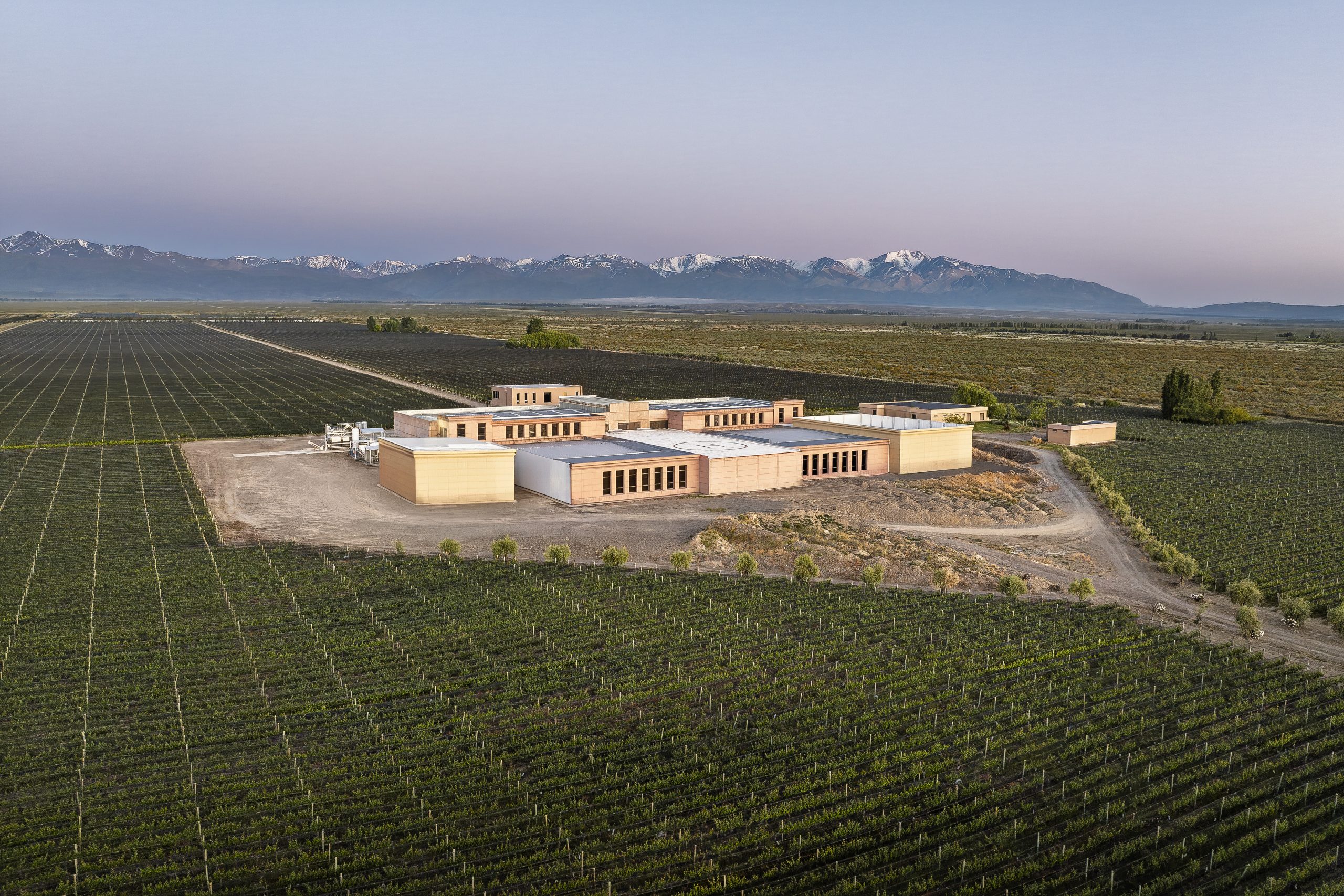
Rutini’s 2021 and 2023 Single Vineyard Gualtallary Malbecs took Decanter Best in Show, putting Uco Valley sub-regions in focus.
Rutini’s 2021 and 2023 Single Vineyard Gualtallary Malbecs took Decanter Best in Show, putting Uco Valley sub-regions in focus.
Rutini Single Vineyard Gualtallary Malbec has now taken Decanter World Wine Awards Best in Show twice in succession: the 2021 vintage in 2025, and the 2023 vintage in 2026. For collectors, Gualtallary Malbec Rutini now means one specific signal from Mendoza, a named Uco Valley sub-region, a single-vineyard bottling, and two different harvests judged at the summit medal level.
That matters because Mendoza has often travelled under one large regional banner on restaurant lists and merchant shelves. Malbec did the heavy lifting. The label said Argentina, then Mendoza, and only occasionally asked the drinker to think harder about where in Mendoza the fruit grew. Rutini’s pair of Best in Show results asks a sharper question: what happens when buyers start reading Gualtallary with the same care they already bring to village names, lieux-dits, and estate parcels elsewhere?
The answer begins in the Uco Valley, where Rutini Wines planted the first vineyards in 1925, according to The Drinks Business. A century later, the estate’s head of winemaking, Juan Pablo Murgia, and CEO Santiago Ribisich are speaking less about generic Mendoza power and more about regional nuance. The distinction is not cosmetic. It changes how you buy, cellar, pour, and travel through Argentina’s most familiar wine province.
Best in Show is a leading medal available at the Decanter World Wine Awards, and Rutini Single Vineyard Gualtallary Malbec secured it in both 2025 and 2026. The award-winning wines came from two different vintages: 2021 first, then 2023. That sequence gives the story its spine. One medal can flatter a season, a panel, or a bottle; two medals from separate harvests move the conversation toward site and repeatability.
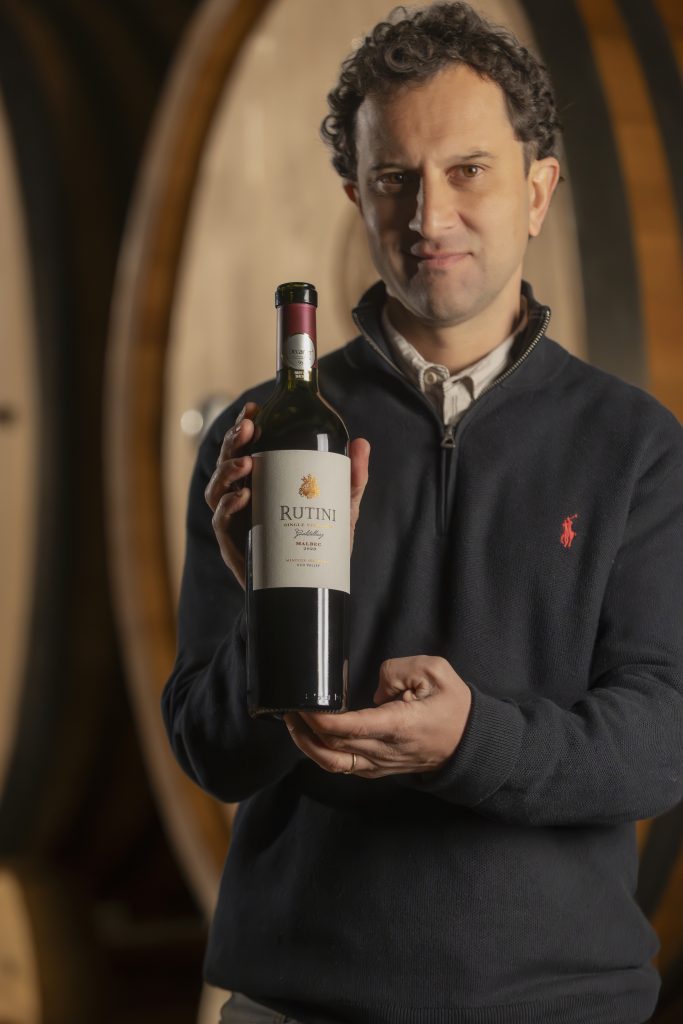
Ribisich makes that point directly. The CEO’s emphasis is not on the trophy cabinet alone, but on the fact that Gualtallary delivered across two harvests under the same Rutini lens.
"We place particular value on the fact that these are two different harvests, because it confirms that we are not looking at a strong result, but at the consistency of a terroir and of sustained winemaking work"1
, Santiago Ribisich, CEO of Rutini Wines, The Drinks Business1
For a cellar, consistency is not a dull word. It is the difference between buying a medal and buying a thesis. If the 2021 and 2023 Rutini Single Vineyard Gualtallary Malbecs can both rise through Decanter’s judging structure, the collector has something more useful than a lone accolade: a producer, a sub-region, and a variety speaking with enough clarity to be recognised twice.
That clarity also helps separate fine-wine Mendoza from the broad, fruit-forward Malbec category that built Argentina’s export reputation. The point is not to dismiss the latter; Rutini itself has the range and fruit sourcing to produce bottles for everyday drinking, as The Drinks Business notes. The more interesting move is vertical: the same estate can bottle approachable wines while using its knowledge of vineyard sites to make a single-vineyard Malbec that asks to be judged by origin.
“Gualtallary” narrows Mendoza. “Malbec” fixes the grape. “Rutini” names the producer with the two recent Decanter Best in Show results. For buyers tired of broad regional shorthand, those three words do the sorting.
The Uco Valley is a high-elevation desert, often more than 1,000 metres above sea level, where grapes receive bright sunlight during the day and cool overnight. That diurnal rhythm is central to the region’s appeal: fruit can ripen under intense light while night-time cooling helps preserve freshness. You feel the logic before you taste the wine, desert glare by day, cold air after sunset, and a vineyard working between the two.
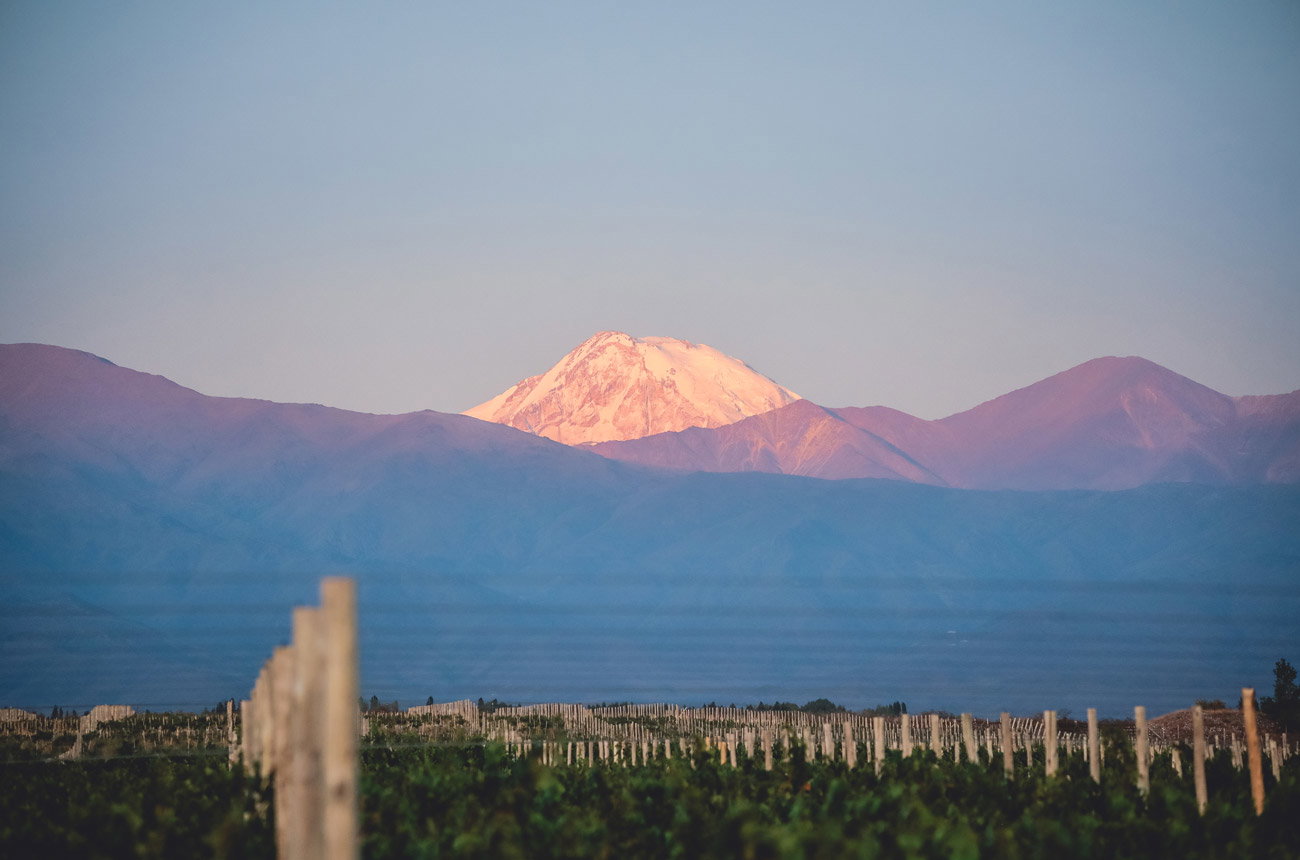
The conditions are not gentle. The valley is sparsely populated, with water treated as precious and hail a threat throughout the year. That last detail should stay in the collector’s mind. Hail does not care about scores, harvest plans, or release calendars. It gives the Uco Valley a practical risk profile that differs from the romance of altitude alone.
Modern viticulture has changed how producers manage that risk and ripeness. The Drinks Business points to drip irrigation and careful canopy management as tools that help growers harvest grapes with a balanced profile. In the cellar, gentler treatment has helped integrate Malbec’s naturally high tannins more successfully than before. These are not decorative technicalities. They are the difference between a wine that merely tastes dark and one that can carry structure without abrasion.
Gualtallary sits within that Uco Valley frame, and Rutini’s recent success has put the sub-region under a brighter light. The key is specificity. Mendoza is too large and too familiar a word to do all the work now. For collectors who already parse Bordeaux by commune and Burgundy by climat, the next step in Argentine buying is not difficult: ask which part of Mendoza, which vineyard expression, which producer, and which vintage.
Rutini’s 1925 planting in the Uco Valley gives the estate a long historical line in the region, but the current interest comes from what the name Gualtallary can now carry on a label. It signals altitude, desert conditions, day-night contrast, and a profile that Murgia describes through fruit, flowers, herbs, and tension. It also gives travellers a more precise way to plan time in Mendoza. Instead of treating the province as one stop, you begin to move by sub-region.
Rutini’s Uco Valley story begins in 1925, when the estate planted the first vineyards there, according to The Drinks Business. That date gives the producer a useful vantage point: it can speak about Mendoza’s modern sub-regional turn without sounding as though it arrived for the fashion. The vines, the water demands, the hail risk, and the desert air were present long before Gualtallary became a fine-wine keyword.
The current face of that story belongs to Juan Pablo Murgia in the cellar and Santiago Ribisich in the executive chair. Murgia, head of winemaking, has described Rutini’s house style as wines of great freshness, fruit, and a highly drinkable character. The phrasing matters because it pulls against a caricature that still shadows Argentine Malbec in some cellars: density first, oak second, freshness somewhere behind them.
Rutini’s recent Decanter results suggest a different reading of Mendoza ripeness. The Single Vineyard Gualtallary Malbec does not need to argue for importance through sheer mass. Its identity, as described by Murgia, comes from a deep blue-fruit register with floral and slightly herbal notes. The wine’s interest lies in the balance of ripeness and edge, the fruit has colour and depth, but the site does not vanish beneath it.
That approach also explains why the same house style can apply across different levels of the Rutini range. A producer with a long history and established fruit sourcing can make bottles meant for frequent opening; the same producer can use more granular site knowledge for wines that carry critical and collector scrutiny. The bridge between the two is not a slogan. It is freshness.
Freshness, in this context, does not mean thinness. In Uco Valley Malbec, it can mean tannins handled with enough care that the wine’s natural structure feels integrated, not blunt. It can mean blue fruit rather than jam. It can mean herbal lift that gives the finish direction. These are the details that make a second glass more persuasive than the first.
For an estate profile, Rutini is interesting because its claim is historical and current at once. The 1925 planting anchors it in the Uco Valley’s past; the 2021 and 2023 Best in Show wines place Gualtallary in the present tense of fine-wine buying. Few producers get to tell both parts of the story with one cuvée.
"What marks out this site is a purity of place, where a deep blue fruit character is distinctive with floral and slightly herbal notes. This wine achieves something that is difficult to balance: a wild and elegant character at the same time."2
, Juan Pablo Murgia, head of winemaking, The Drinks Business1
Murgia’s description gives one useful tasting frame for Rutini Single Vineyard Gualtallary Malbec. Deep blue fruit sets the register: not red-cherry brightness, not black-fruit weight alone, but that saturated blue spectrum Malbec can carry when the fruit is ripe without losing line. The floral note lifts it. The slight herbal edge keeps it from becoming soft.
That combination is exactly why Gualtallary deserves to be read as a place, not only as a word appended to Malbec. Site character shows itself when a wine has more than fruit concentration. In Murgia’s account, the sub-region gives both aromatic lift and a wilder edge; the winemaking task is to keep that character intact while allowing the tannins to settle into the wine’s shape.
Gentle treatment in the winery is one reason Malbec’s naturally high tannins are now better integrated. That detail matters when tasting the 2021 and 2023 award-winning vintages, even if you encounter them years apart. You are not only looking for flavour; you are looking for how the wine carries its frame. Does the tannin grip or guide? Does the fruit feel sunlit, or cooked? Do the floral and herbal notes sit above the palate, or disappear after the first pour?
For travel, the sensory thread begins before the glass. The Uco Valley’s desert light, cool nights, scarce water, and hail risk are not background decoration; they shape the decisions that end up in the bottle. Drip irrigation and canopy management are practical answers to a place that gives abundance and threat in the same season. A tasting of Gualtallary Malbec Rutini therefore belongs in the vineyard as much as at the table.
If you pour the wine with food, follow Murgia’s clues rather than the old Malbec stereotype. Blue fruit and tannin can handle grilled meat, of course, but the floral and herbal notes ask for dishes with their own green or aromatic line. Think of the pairing less as weight meeting weight and more as fruit, char, herb, and freshness moving together. The wine’s drinkability, part of Murgia’s stated house style, should remain visible through the meal.
The two winning vintages are the collector’s anchor points: Rutini Single Vineyard Gualtallary Malbec 2021 won Best in Show at the Decanter World Wine Awards in 2025, and the 2023 vintage followed with Best in Show in 2026. The responsible reading stays close to what the results can support. Two different harvests carried the same wine to Decanter’s top medal.
That is enough to change how the bottle should be filed in a cellar notebook. Do not list it simply under “Argentina” or even “Mendoza Malbec.” File it by producer, sub-region, and vintage: Rutini Wines, Gualtallary, Malbec, 2021; then Rutini Wines, Gualtallary, Malbec, 2023. The habit may sound small, but it is how fine-wine regions become legible over time. Precision accumulates.
For buyers, the key practical detail is the exact cuvée name. Rutini produces across a range, and the Decanter Best in Show results attach specifically to Rutini Single Vineyard Gualtallary Malbec. If you are speaking with a merchant, sommelier, or importer, use the full name and the vintage. The difference between “a Rutini Malbec” and “Rutini Single Vineyard Gualtallary Malbec 2021” is the difference between a general preference and a traceable wine.
There is another reason to be exact: the awards belong to the 2021 and 2023 vintages respectively. A later or earlier vintage may still carry the same site and producer signature, but it should be evaluated on its own merits. Collectors know this from every serious region. A name opens the door; the vintage decides the room you are walking into.
The 2021 and 2023 results also give sommeliers a cleaner way to introduce Mendoza at the table. Instead of leaning on Malbec familiarity, they can pour the wine as a sub-regional study: high-elevation desert, bright days, cool nights, Gualtallary fruit character, and a producer whose Uco Valley history reaches back to 1925. That story is concise enough for service and specific enough for a guest who wants more than a grape variety.
For private cellars, the lesson is similar. Buy the label for the site and the producer, not for a generic category slot. If the cellar already holds Napa by AVA, Bordeaux by commune, Barolo by MGA, or Burgundy by climat, Mendoza can be organised with the same discipline. Gualtallary is the word to keep visible.
Particularly useful Mendoza itinerary is no longer built around the province as a single block. The Drinks Business frames Rutini’s success as part of a push for regionality, and that is how you should travel it: by sub-region, by producer, by the vineyard names that appear on serious bottles. Uco Valley deserves time in that plan, especially if your interest is in wines where altitude, desert conditions, and night-time cooling show through the glass.
Start with the label. For Gualtallary Malbec Rutini, the essential wording is Rutini Single Vineyard Gualtallary Malbec, followed by the vintage. The two Decanter Best in Show wines are 2021 and 2023. If a wine list gives only “Rutini Malbec,” ask for the cuvée and year. A good sommelier will understand why you are asking; a good merchant will check the bottle rather than rely on memory.
When tasting, keep four questions in mind. First, does the fruit sit in the deep blue register Murgia describes? Second, do floral or slightly herbal notes appear as the wine opens? Third, do the tannins feel integrated rather than imposed? Fourth, does the wine retain the freshness and drinkable character that Murgia identifies as part of Rutini’s house style? Those questions will tell you more than a numerical score once the bottle is open.
For travellers, the Uco Valley’s physical conditions should shape expectations. This is a high-elevation desert where water matters and hail can threaten throughout the year. The beauty is not lush; it is spare, bright, and edged by risk. That austerity is part of the pleasure. Wines from such places often make more sense after you have felt the day’s light and the evening’s drop in temperature.
For collectors, the buying discipline is direct: track producer, sub-region, cuvée, and vintage together. Rutini’s recent Decanter results may draw more drinkers toward Gualtallary, but strong response is not haste. It is precision. Know which bottle earned the medal. Know which harvest you are buying. Know that the site expression Murgia describes, blue fruit, flowers, slight herbality, is the thread you are trying to follow.
Rutini’s second century in the Uco Valley will be measured not only by medals, but by how clearly wines such as its Single Vineyard Gualtallary Malbec teach drinkers to read Mendoza in smaller, more exact pieces. The next chapter belongs to the labels that make sub-region, site, and vintage impossible to ignore.
Get the App
Take the shortlist into the En Primeur Club app for concierge access, saved places, and the next step after discovery.
Get Exclusive AccessMore from the editors