← Guides
Fontenille Collection’s first Burgundy hotel opens in Meursault with 18 rooms now, 12th-century cellars, and Célestine.
Fontenille Collection’s first Burgundy hotel opens in Meursault with 18 rooms now, 12th-century cellars, and Célestine.
Fontenille Collection opened Château de Cîteaux in Meursault last week, its first Burgundy property, placing 18 guest rooms above intact 12th-century Cistercian wine cellars in a 19th-century château. The address gives Burgundy travelers a new base in the village most drinkers associate with Chardonnay at the table, in the cellar, and on the itinerary.
The timing has a collector’s edge. Château de Cîteaux is not launching as a large resort on the edge of wine country; it opens with 18 rooms now, 17 more due in 2027, and a total plan of 35 rooms and suites. In a village where dinner reservations, domaine visits, and harvest-week calendars can already feel tightly held, scale matters. So does the fact that the building sits over cellars shaped by the Cistercian story of Meursault rather than merely decorated with wine-country cues.
The Château de Cîteaux Meursault opening gives Fontenille Collection a first address in Burgundy at the same moment the group marks its 10-year anniversary, according to Robb Report Hotels. Linda Hazi, CEO of Fontenille Collection, framed the project through the property’s layered past: “With Château de Cîteaux, we wanted to honor a house shaped across the centuries by its winemaking heritage, Cistercian roots and 19th-century elegance,” said Linda Hazi.1
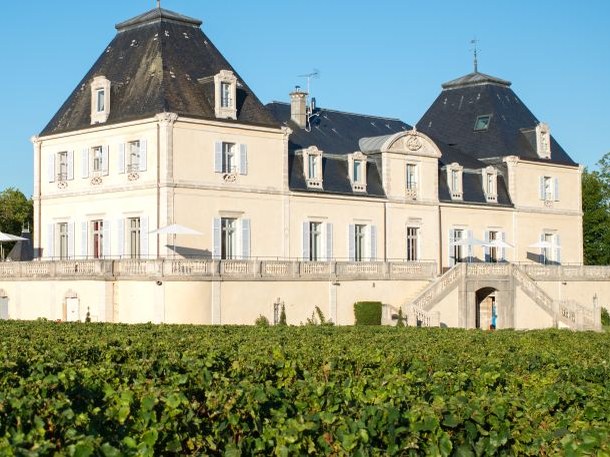
That sentence explains the appeal without forcing it. Château de Cîteaux is housed in a 19th-century château built by architect Jules Bernard, and Fontenille Collection has transformed it into a hotel while keeping the wine story underfoot. For travelers who treat Burgundy as a sequence of villages rather than a single destination, Meursault matters because it lets you wake up inside the rhythm of the Côte de Beaune rather than commute into it after breakfast.
The property is just under a three-hour train ride from Paris, which makes the opening useful for a precise kind of trip: two nights between city appointments, a long weekend after a tasting in Beaune, or a harvest-season pause before continuing south. You are not being asked to choose between architecture and appellation. The building gives you both.
Fontenille’s choice of Meursault also sharpens the news. This is not merely another Burgundy hotel with a polished lobby and a wine list. The former owner, Philippe Bouzerau, is a ninth-generation Meursault grower, and the hotel will pour his cuvées alongside other Côte de Beaune appellations and smaller growers. That link between prior ownership and current wine service gives Château de Cîteaux a thread few new openings can claim: the room key, the cellar, and the glass all point back to the village.
One persuasive detail at Château de Cîteaux lies below the guest rooms. The property sits above 12th-century wine cellars built by Cistercian monks, and those cellars remain intact. In Burgundy, where monastic history is often invoked in broad strokes, this is a tactile fact: stone, temperature, and time directly below the château.
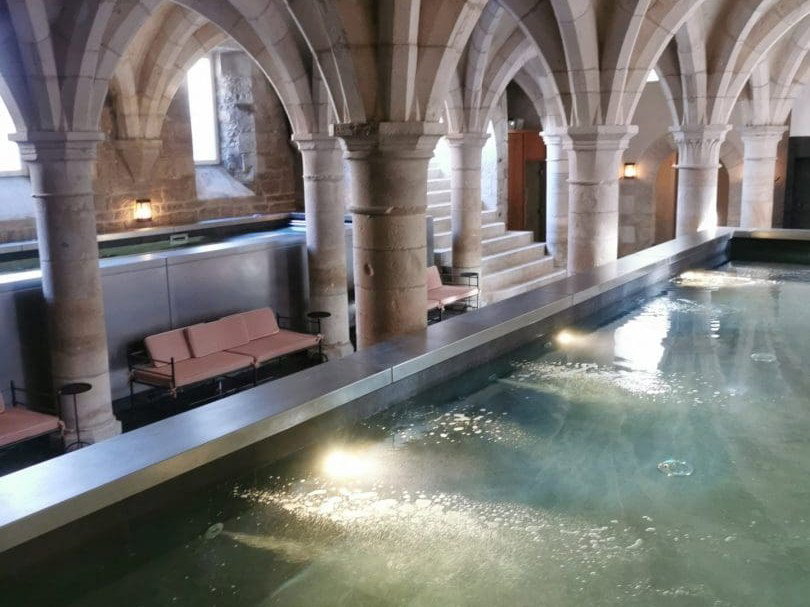
The story begins before the current building. Robert de Molesme founded the Cistercian order in 1098 at an abbey about 20 miles from Meursault. Soon after, the dukes of Burgundy gave the monks land for vineyards in Meursault’s Vieux-Clos, where the cellars beneath the present property were made. Centuries later, Jules Bernard’s château rose above them. The hotel now sits on that stack of eras: Cistercian cellar, 19th-century architecture, contemporary rooms.
For wine travelers, the practical consequence arrives in September, when guests can explore the Cistercian cellars for a tasting. That timing matters. Burgundy in September carries the pulse of harvest, and the hotel has also placed a harvest event with Bouzerau on its activity calendar from August to September. The useful fact is the window itself: late summer into early autumn, when Meursault feels less like a label and more like a working village.
Cellar access changes the texture of a stay. A tasting room can be built anywhere; a 12th-century cellar under a château in Meursault cannot be moved. For guests who have walked through enough renovated domaines to recognize stagecraft, the cellars at Château de Cîteaux offer a rarer kind of context. They connect the property to the monastic roots often cited in Burgundy’s vineyard history, and they place that history inside the hotel rather than across town behind a locked door.
This is where scarcity enters quietly. Eighteen rooms are open now. The cellar tastings begin in September. The 17 additional rooms will not arrive until 2027. For the first seasons of Château de Cîteaux Meursault, the guest list will be limited by design and by the renovation calendar.
Château de Cîteaux will have 35 rooms and suites when complete, with 18 available at opening and 17 more scheduled for 2027. That staged release gives the hotel a first chapter before the full room count arrives. It also keeps the experience at château scale rather than estate-resort scale, a distinction Burgundy travelers tend to feel quickly.
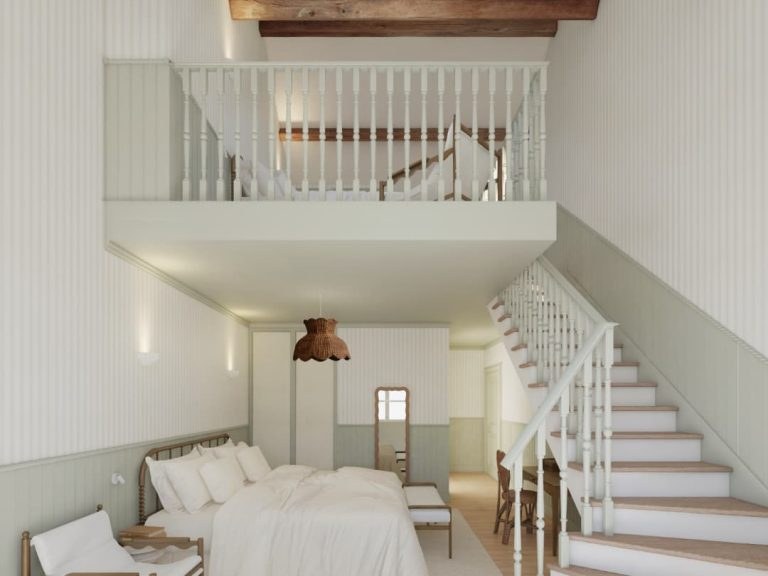
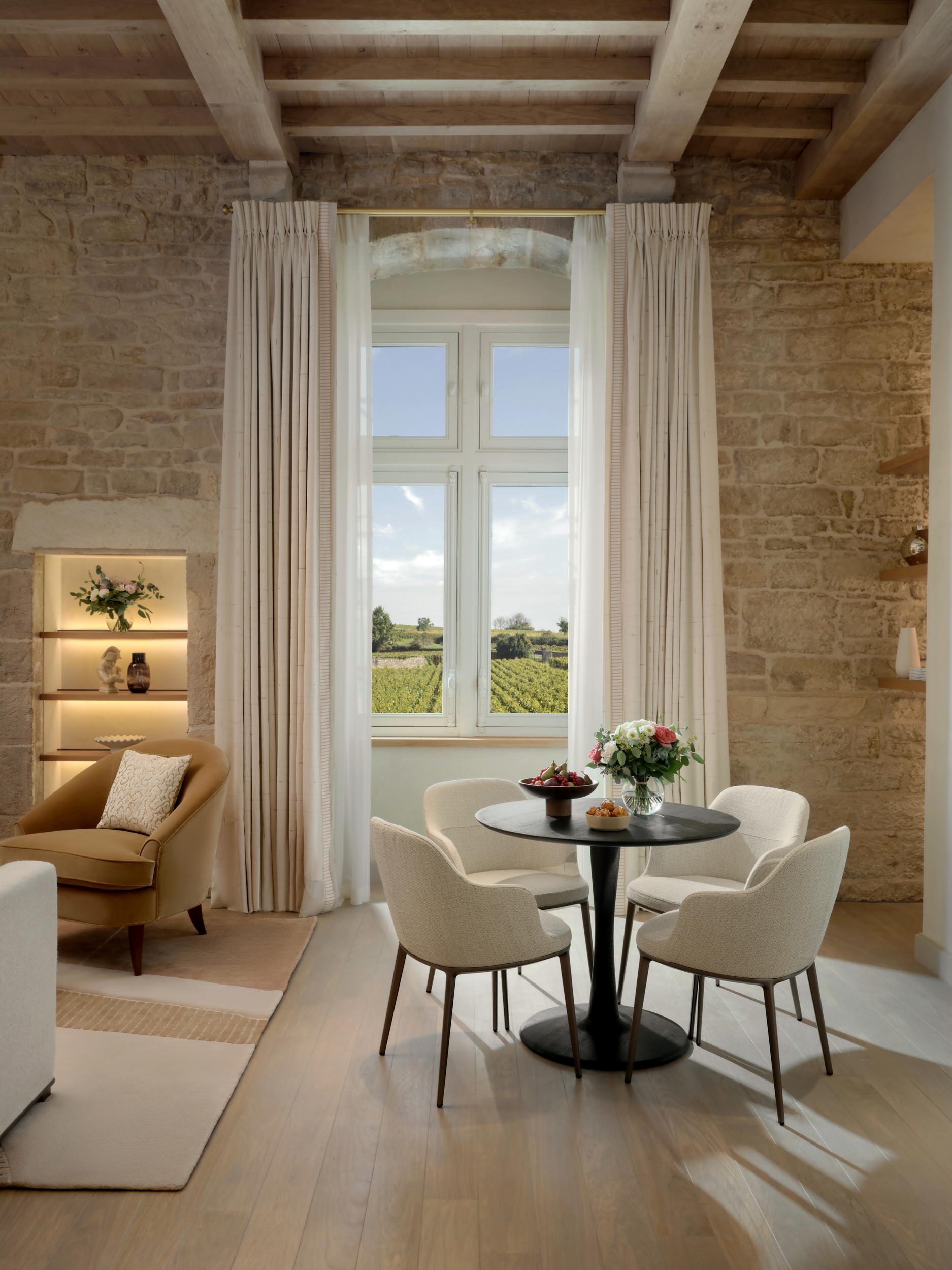
The design details lean into the 19th century rather than treating the château as a blank shell. Robb Report Hotels cites Napoleon III-era Second Empire references, torsade columns, muted greens, terra-cotta touches, and stonework throughout the property. The rooms also draw from the Barbizon School, the 19th-century French painters associated with nature and rural scenes, with private terraces looking toward the Côte de Beaune.
Those details matter because Burgundy hospitality can fall into two predictable modes: monastic minimalism or decorative excess. Château de Cîteaux, at least from the reported design language, seems to be working with the building’s own period rather than covering it. Muted greens and terra-cotta have a different register than glossy hotel beige. Torsade columns and stonework give the eye something specific to rest on between tastings.
Fontenille Collection also looked to local ateliers, including Leblond Père et Fils for bespoke woodwork. That is the kind of procurement decision guests may not notice immediately but often feel after an hour in a room: the weight of a door, the joinery around a cabinet, the sense that the interior was not shipped in fully formed from elsewhere. In Burgundy, where growers speak in parcels and generations, hotel design gains credibility when the materials and makers feel tied to place.
Private terraces overlooking the Côte de Beaune will be especially useful for travelers who want decompression built into the day. A Burgundy itinerary can become a grid of appointments: morning visit, lunch, afternoon tasting, dinner, repeat. A terrace gives you the pause between those points. Open a bottle from the village if your plans allow it, watch the light move, and let the day settle before the next cellar.
Célestine, the restaurant at Château de Cîteaux, is led by chef Christophe Vauthier. The room itself carries one of the property’s most visual restorations: paintings and frescoes restored by conservator Alice Gardien. The restaurant is named for Jules Bernard’s daughter, and a gilded salon with bright paintings, including cherubs among clouds on the ceiling.
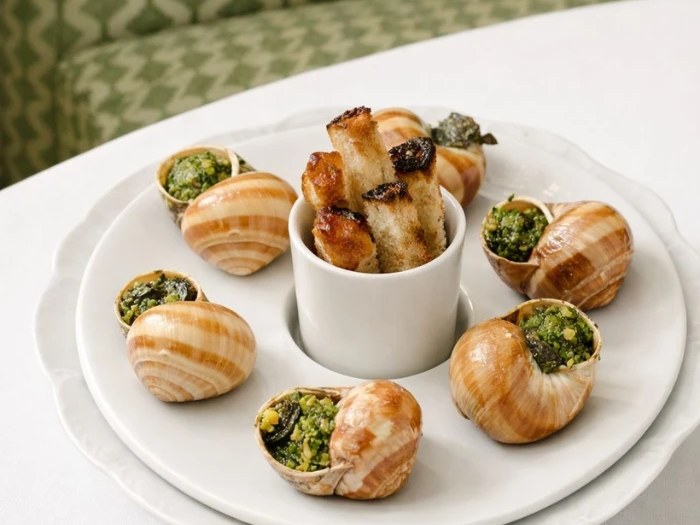
Vauthier’s kitchen will serve regional cheeses, river fish, Bresse poultry, and vegetables from local markets. The list is short, but it tells you the direction: Burgundy produce and nearby references rather than a menu trying to import a global template. In Meursault, that restraint is sensible. The village already supplies the gravitational pull.
The wine program, as reported, will include Bouzerau’s cuvées, other Côte de Beaune appellations, and smaller growers. For guests, that could be one useful part of the opening. Burgundy travel often rewards those who can taste across producer, village, and vintage without turning every glass into a formal appointment. A hotel list anchored in Meursault but reaching across the Côte de Beaune gives you room to calibrate your palate before or after domaine visits.
There is also a subtle advantage in tasting Bouzerau’s wines at the property he once owned. Philippe Bouzerau is a ninth-generation Meursault grower and former owner of Château de Cîteaux. That connection does not need embellishment. It gives the wine service a human line from grower to building to guest.
Fontenille Collection has also put wine activities on the calendar: a vineyard picnic, tastings with neighboring winemakers, the harvest event with Bouzerau from August to September, and cellar tastings beginning in September. None of those replaces a carefully planned domaine schedule, nor should it. Instead, they give the stay its own wine architecture. You can build a trip around appointments in Beaune, Pommard, and nearby villages, then let the hotel provide the softer moments: a picnic, a cellar tasting, a harvest-linked encounter.
The spa adds another route into the Cistercian theme. Treatments are based on the monks’ apothecary, and the facilities include a heated indoor pool, Jacuzzi, hammam, and sauna. After a day of cellar steps and village roads, that set of amenities may matter as much as the room category. Burgundy is not a passive place to visit; even polished itineraries involve walking, waiting, tasting, and recalibrating.
Rates at Château de Cîteaux start from about $440, or 380 euros, per night. The hotel is under a three-hour train ride from Paris, putting Meursault within reach for travelers who want Burgundy without building an entire week around it. The current inventory is 18 rooms and suites, with the remaining 17 scheduled for 2027.
For planning, the first decision is seasonal. September brings the announced cellar tasting access and the harvest event with Bouzerau falls from August to September. Those weeks will speak to travelers who want the village at its most active, though they also bring the usual need for precision around reservations and timing. A quieter stay outside harvest may suit guests who want Célestine, the spa, and measured visits through Beaune and Pommard without chasing the tempo of picking season.
The second decision is how much structure you want from the hotel. Château de Cîteaux’s activity list includes vineyard picnics and tastings with neighboring winemakers, but Burgundy still rewards advance planning. If your trip involves specific producers, build those appointments first and let the hotel’s programming fill the spaces between them. If your interest is broader, Meursault, Côte de Beaune appellations, smaller growers, the property’s own wine access may supply enough focus for a short stay.
The third decision is timing around the room rollout. The opening chapter has 18 rooms, and the full 35-room count will not arrive until 2027. That makes the first phase more constrained, particularly for travelers aiming at harvest weeks or weekends tied to broader Burgundy itineraries. It also means the hotel will change in stages; early guests will see the property before its final inventory is complete.
Beaune, Burgundy’s wine capital, and Pommard are nearby historic villages to visit. That gives Château de Cîteaux a practical triangle: sleep in Meursault, dine at Célestine, move through the Côte de Beaune by day. For travelers arriving from Paris by train, the under-three-hour journey keeps the plan clean enough for a long weekend, yet specific enough to feel rooted in one village.
The Château de Cîteaux Meursault opening is most useful to wine travelers who prefer proximity over spectacle: a room count small enough to notice, a restaurant tied to local produce, and medieval cellars scheduled for tastings from September. Watch how Fontenille Collection develops the remaining 17 rooms for 2027; the first season will show whether this château becomes a true Meursault address or simply a beautiful place to sleep between bottles.
Get the App
Take the shortlist into the En Primeur Club app for concierge access, saved places, and the next step after discovery.
Get Exclusive AccessMore from the editors