Yashin Sushi
Yashin Sushi operates from a quiet residential address on Argyll Road in Kensington, holding its own against a London omakase tier that has grown considerably more expensive and competitive in recent years. The restaurant's position in west London places it outside the Mayfair-Soho corridor where most high-profile Japanese openings cluster, giving it a different rhythm and clientele than its central counterparts.
 Discover on Pearl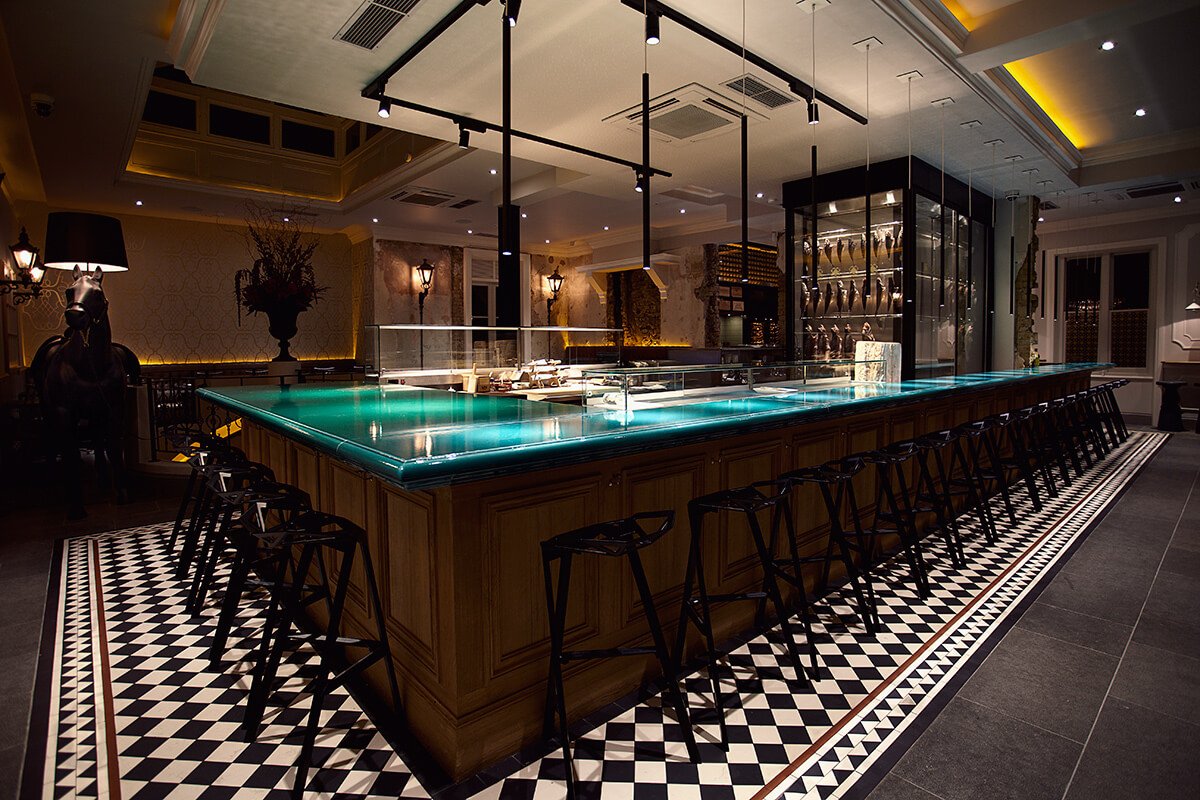
Kensington's Quieter Counter: Where Yashin Sits in London's Sushi Scene
London's sushi market has fractured sharply over the past decade. At one end sits a cluster of omakase-only counters in Mayfair and the West End, where chef-driven tasting formats run to several hundred pounds per head and bookings open months in advance. At the other end, a broader casual tier of conveyor belts and delivery-optimised menus serves the city's everyday appetite for Japanese food. Yashin Sushi, on Argyll Road in Kensington, occupies a middle ground that has become increasingly difficult to define — and, in some ways, increasingly interesting because of that ambiguity.
The address itself sets a tone. Argyll Road is residential, a few minutes from High Street Kensington but removed from the footfall that drives most restaurant decisions in this city. The venues that survive in locations like this tend to do so through repeat local custom and word-of-mouth rather than tourist walk-ins. That pattern shapes the room's energy in ways that more centrally positioned restaurants rarely achieve: quieter service rhythms, regulars who know the menu without consulting it, and a dining pace that doesn't feel engineered by a room-turn target.
The Lunch and Dinner Divide
In Japanese restaurants across London, the gap between lunch and evening service is often more pronounced than in other cuisines. Evening omakase formats command premium pricing and formal pacing; lunch tends toward a more compressed, value-conscious structure. Yashin's Kensington setting amplifies this divide. The surrounding neighbourhood draws a daytime crowd — locals, professionals working nearby, visitors staying in the area's hotels , who use lunch as a proper meal rather than a quick transaction. That creates a midday service with its own internal logic, distinct from the dinner counter experience that defines the restaurant's reputation.
In the broader London context, this lunch-versus-dinner split matters for how a restaurant is perceived. A counter that delivers technically at dinner but doesn't invest in its lunch format tends to read as aspirational-occasional rather than neighbourhood-rooted. The reverse , a restaurant known for accessible, high-quality lunch that also holds its own at dinner , tends to develop a more durable local identity. West London's Japanese restaurants, which include a handful of serious operators in the Notting Hill and Kensington corridor, compete most directly on this axis.
West London's Japanese Dining Context
The majority of London's most-discussed Japanese openings in the past five years have landed in Mayfair, Marylebone, or the City. West London has remained a secondary market for headline sushi, but it has also been less vulnerable to the rapid turnover that affects higher-profile addresses. Restaurants in Kensington and its immediate neighbours tend to have longer operating histories and more stable clienteles than their equivalents in areas where restaurant density is higher and competition for attention more intense.
Yashin's positioning within this geography places it in a peer set that includes serious Japanese operators who have built durable businesses away from the central dining circuit. That's a different kind of credibility than a Michelin-listed counter in Mayfair carries, but it's credibility nonetheless , earned through consistency and local loyalty rather than awards-page visibility. For visitors comparing options, the distinction matters: a Mayfair omakase is often a destination event; a Kensington sushi counter can be that, or it can simply be dinner.
Format and Room
The physical environment on Argyll Road signals the kind of experience Yashin is designed to deliver. The residential street approach, the scale of the space, and the neighbourhood context all point toward a counter that prioritises craft over theatre. London's most technically ambitious sushi operations have generally moved away from the design-led spectacle that characterised the mid-2010s wave of Japanese openings, toward quieter, more material-focused rooms where the food does the communicating. Whether Yashin sits fully in that tradition or bridges it with an earlier generation of UK sushi presentation is something that emerges most clearly at the dinner counter, where the format slows down enough to show its hand.
Lunch, by contrast, tends to compress that signal. A bento format or set menu at midday tells you less about a kitchen's ceiling than an evening sequence does. For first-time visitors, an evening visit , even a shorter one ordered à la carte rather than via a full omakase , will give a more accurate read of what the restaurant is actually doing.
Planning a Visit
Kensington is direct to reach: High Street Kensington station (District and Circle lines) is the nearest tube, and the walk to Argyll Road takes under ten minutes. The neighbourhood has little of the evening pedestrian density of Soho or Covent Garden, which means pre-dinner and post-dinner options are quieter; it's worth treating the evening as restaurant-focused rather than building it around a broader neighbourhood crawl.
For those building a wider London itinerary that includes serious drinking as well as eating, the city's bar scene merits separate planning. 69 Colebrooke Row in Islington is the reference point for technically driven cocktails in London, while A Bar with Shapes for a Name represents the city's more conceptual end. Academy and Amaro cover different registers of the London bar programme. See our full London restaurants guide for broader coverage across neighbourhoods and price points.
Outside London, the UK bar scene worth noting includes Bramble in Edinburgh, Schofield's in Manchester, and Mojo Leeds. Further afield, Bar Kismet in Halifax and Dear Friend Bar in Dartmouth are worth tracking for travellers moving through those regions. Internationally, Bar Leather Apron in Honolulu and Lab 22 in Cardiff round out a picture of where serious bar programming is happening beyond the obvious capitals.
| Factor | Yashin Sushi (Kensington) | Mayfair Omakase Tier | Casual West London Japanese |
|---|---|---|---|
| Booking lead time | Not confirmed; check directly | Typically 4–12 weeks | Walk-in often possible |
| Evening format | Counter/à la carte likely | Fixed omakase only | À la carte standard |
| Lunch availability | Neighbourhood lunch trade | Limited or no lunch service | Lunch standard |
| Neighbourhood feel | Residential, quieter approach | Hotel-adjacent, high footfall | High Street positions |
| Price orientation | Mid-to-upper tier (unconfirmed) | Premium fixed price | Mid-range or below |
Frequently Asked Questions
Cuisine-First Comparison
A small set of peers for context, based on recorded venue fields.
| Venue | Cuisine | Awards | Notes |
|---|---|---|---|
| Yashin Sushi | This venue | ||
| Bar Termini | World's 50 Best | ||
| Callooh Callay | World's 50 Best | ||
| Happiness Forgets | World's 50 Best | ||
| Nightjar | World's 50 Best | ||
| Quo Vadis | World's 50 Best |
Need a Table?
Our members enjoy priority alerts and concierge-led booking support for the world's most difficult bars and lounges.
Get Exclusive Access