Uchibā Austin
Uchibā Austin occupies a West Second Street address that positions it squarely inside Austin's growing appetite for Japanese-inflected drinking culture. The bar draws on a cocktail program where technique and curation share equal weight, placing it in a tier above the city's more casual izakaya-adjacent spots. For visitors cross-referencing Austin's cocktail scene against peers in Chicago or New York, this is a useful reference point.
 Discover on Pearl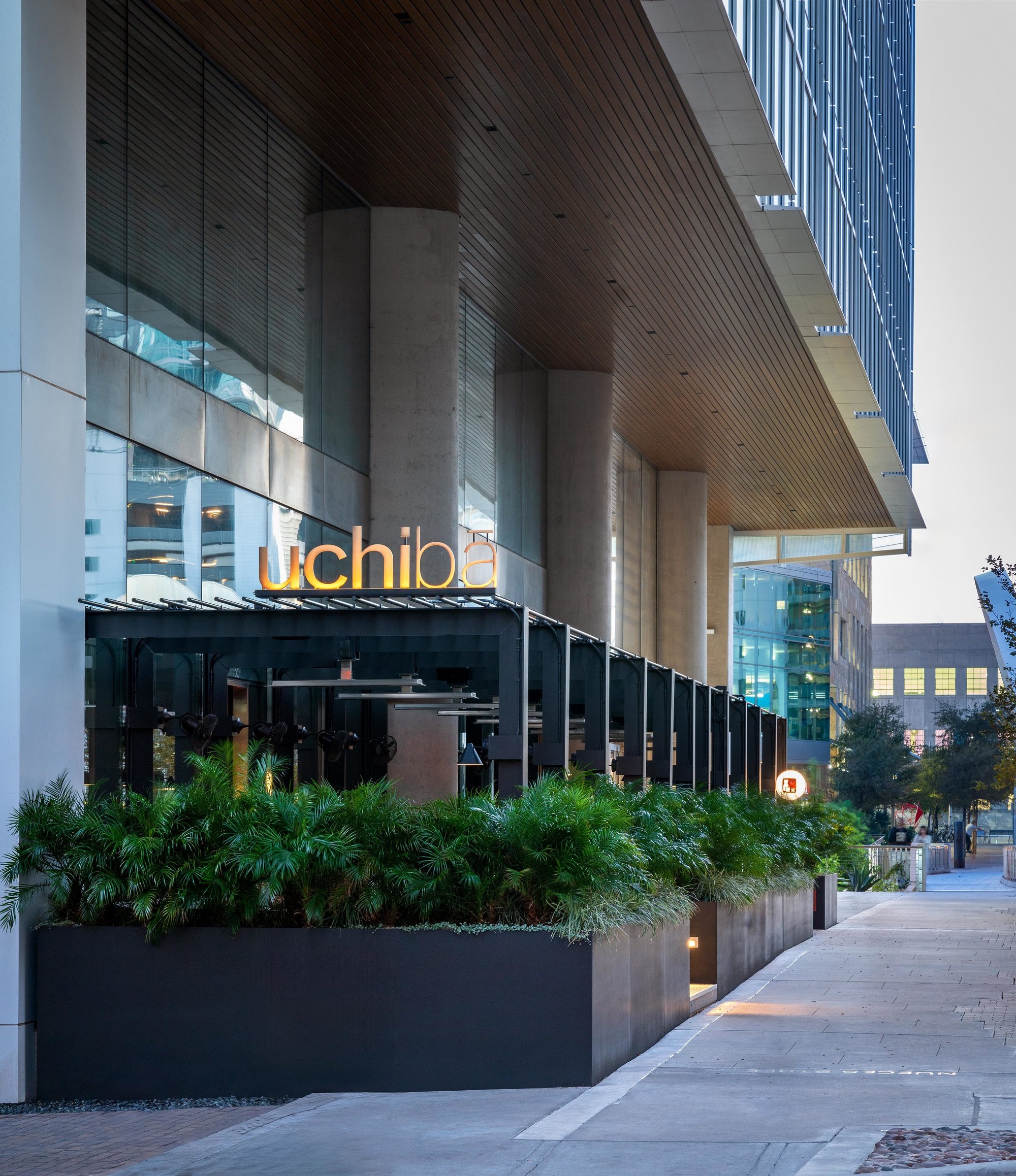
West Second Street and the Grammar of Japanese Cocktail Bars in Austin
Austin's cocktail culture has spent the last decade sorting itself into legible tiers. The dividing line is no longer speakeasy theatrics or bourbon-heavy Tex-centric menus — it is program depth: how a bar builds its back bar, how it thinks about spirit provenance, and whether the drinks list rewards close reading or just impulse ordering. Along West Second Street, where the Seaholm District bleeds into a denser restaurant corridor, a particular kind of bar has taken hold: one that pulls from Japanese drinking philosophy without leaning on novelty or theme. Uchibā Austin at 601 W 2nd St sits inside that current, and the address alone signals something about its competitive positioning. This is not a deep-east-side dive or a Sixth Street volume operation. It is a deliberately placed room in a part of the city that draws residents with disposable income and opinions about whisky.
The Physical Room as Argument
Japanese bar design, at its most considered, operates through restraint: dark timber, controlled light sources, a counter that focuses attention on the bartender's hands rather than a mirrored back bar stacked for spectacle. When that aesthetic framework is applied well, the room itself becomes an argument for a certain kind of drinking — slower, more attentive, oriented around what is in the glass. Austin has seen versions of this aesthetic applied with varying levels of commitment, from superficial Japanese-adjacent branding to programs with genuine depth. The question worth asking of any bar in this category is whether the design philosophy and the drinks philosophy are actually speaking the same language. At the West Second Street location, the Seaholm surroundings , a neighborhood that skews toward residents who moved here from coastal cities with existing cocktail literacy , provide a ready audience for a more technically demanding program.
Where Uchibā Austin Sits in the City's Cocktail Tier
Austin's serious cocktail bars cluster into a recognizable set. Nickel City operates on a different model entirely , high-volume, deliberately unpretentious, a beer-and-shot room that understands exactly what it is. 2500 E 6th St represents the kind of neighborhood anchor that prioritizes accessibility over program ambition. Aba Austin approaches cocktails through a Mediterranean-inflected restaurant lens, where the drinks list is secondary to the food program. Uchibā occupies a different position: the Japanese-inflected bar format, when executed at full depth, asks the guest to engage with the program rather than treat it as a support system for a meal or a louder evening. That positioning makes it a closer peer to Kumiko in Chicago , where Julia Momosé built one of the country's most cited Japanese-influenced cocktail programs , than to most Austin comparables.
Further afield, the reference set includes Bar Leather Apron in Honolulu, which holds its own against any American Japanese-technique bar, and Jewel of the South in New Orleans, which applies a different regional flavor logic but shares the same commitment to program discipline. Superbueno in New York City and ABV in San Francisco represent West Coast and Northeast equivalents of the technically serious, medium-format bar. Against that peer set, Uchibā's West Second Street address fills a gap in Austin that the city's growth has made increasingly visible.
The Wine and Spirit Curation Angle
In Japanese bar culture , the tradition that gave the world the art of the highball as a precise technical discipline , back bar curation is not about volume but about selection logic. The most respected Japanese bars, from the lounges of Ginza to the smaller rooms of Roppongi, build their whisky selections around depth in specific distilleries rather than breadth across every available label. The same logic, when applied to an American bar operating in that tradition, produces a different kind of drinks list: one where the sommelier-equivalent function is carried by the bar lead's buying decisions rather than by label count. How deeply Uchibā Austin has built out its Japanese whisky selection, its sake program, or its broader wine-adjacent spirits list will determine where it ultimately lands in that conversation. The West Second Street location, with its Seaholm demographic, provides the clientele capable of sustaining a more curated, higher-price-per-pour back bar. The editorial comparison that matters here is not with the rest of Austin but with programs like The Parlour in Frankfurt, which operates with a similar degree of curation discipline in a different cultural context, and Julep in Houston, which applies deep program thinking to a Southern-American frame just three hours down I-10.
The Austin Context: Why This Format Is Arriving Now
Austin's population growth over the last five years has imported drinking habits from San Francisco, New York, and Chicago at a rate the local bar scene is still calibrating to. The result is a city that simultaneously supports a thriving dive-bar culture and an accelerating appetite for the kind of technical cocktail program that would be unremarkable in a Manhattan neighborhood but represents a genuine step-change for Central Texas. The Seaholm and West Second corridor has absorbed a disproportionate share of that demand, partly because of its proximity to the convention center and the Lady Bird Lake hotel cluster, and partly because the residential density in that zip code skews toward the demographic most likely to seek out bars with documented program depth. Alamo Drafthouse Cinema Slaughter Lane operates in a different register entirely , entertainment-first, drinks as accompaniment , which illustrates just how wide Austin's bar category has become. Uchibā's position at the technical, curation-led end of that spectrum is where the city's growth story is pointing.
For a broader map of where Austin's drinking and dining scene is heading, our full Austin restaurants guide provides the neighborhood-level context that individual venue pages cannot.
Planning Your Visit
| Venue | Format | Address | Booking |
|---|---|---|---|
| Uchibā Austin | Japanese-inflected cocktail bar | 601 W 2nd St, Austin TX 78701 | Walk-in / check venue directly |
| Nickel City | Neighborhood dive, high-volume | East Austin | Walk-in |
| Kumiko (Chicago) | Japanese-influence cocktail program | Chicago, IL | Reservations advised |
| Bar Leather Apron (Honolulu) | Japanese-technique bar | Honolulu, HI | Reservations advised |
The West Second Street address puts Uchibā within walking distance of the Seaholm District's hotel options and a short rideshare from downtown Austin's core. Given the neighborhood's parking constraints, arriving on foot or by car-share is the practical default. For visitors building an Austin drinking itinerary that takes program depth seriously, this address belongs on the list alongside the city's other technically anchored rooms.
Frequently Asked Questions
- What cocktail do people recommend at Uchibā Austin?
- Uchibā Austin's program leans into Japanese drinking tradition, which means guests with experience of similar bars tend to gravitate toward the whisky highball or any cocktail built around shochu or sake as a base. The bar's positioning in the Seaholm corridor suggests a clientele that rewards bartenders for recommending off-menu or spirit-forward builds. For the most current recommendations, checking recent guest reviews or asking the bar team directly will give you a more accurate read than any fixed answer , programs at this level of curation update seasonally.
- What is Uchibā Austin leading at?
- Among Austin's cocktail bars, Uchibā's clearest strength is its positioning in the Japanese-inflected, technique-led segment of the market , a category where the city has fewer well-established options than comparable metros like Chicago or San Francisco. The West Second Street location places it in a neighborhood with the demographic depth to sustain a more demanding program, which tends to correlate with higher back-bar investment and more considered curation. For a visitor whose reference point is a bar like Kumiko in Chicago, Uchibā is the Austin address that operates in a recognizably similar register.
- Is Uchibā Austin suitable for a serious whisky-focused evening, and how does it compare to other Austin bars for that purpose?
- The Japanese bar format that Uchibā operates within has a strong historical association with whisky depth , particularly Japanese single malts and blended expressions that most general Austin bars stock only at the introductory level. For a guest specifically seeking a whisky-led evening with program curation rather than just label volume, the West Second Street address is a more logical starting point than Austin's higher-volume cocktail rooms. Pairing it with a visit to another program-serious Austin bar, then benchmarking both against a known reference like Kumiko in Chicago, gives the clearest sense of where Austin's whisky bar culture currently sits relative to peer cities.
Recognition, Side-by-Side
A quick peer reference to anchor this venue in its category.
| Venue | Awards | Cuisine | Notes |
|---|---|---|---|
| Uchibā Austin | This venue | ||
| The Roosevelt Room | |||
| Nickel City | World's 50 Best | ||
| DuMont's Down Low | |||
| Eden Cocktail Room | |||
| Half Step |
Need a Table?
Our members enjoy priority alerts and concierge-led booking support for the world's most difficult bars and lounges.
Get Exclusive Access