Tile Bar
A First Avenue fixture in the East Village, Tile Bar occupies the unpretentious end of New York's bar spectrum — no reservations, no dress code, no concept beyond a well-kept pint and a room that has absorbed decades of neighbourhood life. For visitors tracking the city's cocktail scene, it anchors the block between the technical programs and the places that simply do the basics without apology.
Pearl is the En Primeur Club membership app — saves, bookings, and concierge access live there. Same editors, same standards.
- Address
- 115 1st Ave, New York, NY 10003
- Phone
- +1 212 254 4317
- Website
- tilebarnyc.com
- Directions
- Get directions
 Saves & bookings on Pearl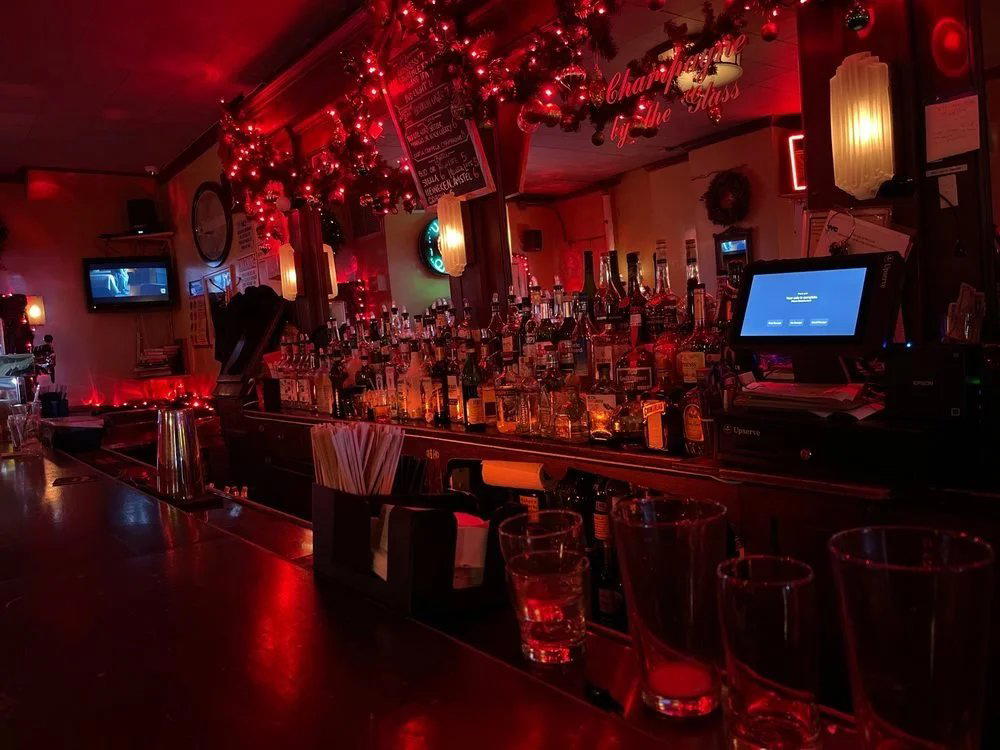
The East Village and the Bar That Refuses to Perform
New York's bar culture has spent the last decade sorting itself into two broad camps: venues with printed cocktail manifestos and venues that predate the need for one. The East Village, more than any other Manhattan neighbourhood, holds both in close proximity. On First Avenue, where the block between 6th and 7th Streets carries a density of drinking options that would embarrass most cities, Tile Bar at 115 1st Ave sits firmly in the second category. It is a neighbourhood bar in the original sense — a place defined by its regulars, its lack of pretension, and a room that has been absorbing East Village life long enough to have earned a certain ambient authority.
That positioning matters when you understand what surrounds it. The East Village was ground zero for New York's craft cocktail revival in the early 2000s, and bars like Amor y Amargo and Attaboy NYC — both within reasonable walking distance, represent the technical, ingredient-obsessive end of that tradition. Tile Bar operates in deliberate contrast to that mode. Where those programs run on house-made bitters, seasonal syrups, and bartenders who can speak at length about dilution curves, Tile Bar runs on something less articulated but equally considered: the bar as social infrastructure rather than tasting room.
What the Cocktail Programme Actually Signals
In cities with layered bar cultures, the most revealing thing about any individual venue is not what it serves but where it positions itself against the broader menu of available experiences. New York now has cocktail bars that price at the level of Michelin-starred restaurants, bars with waiting lists, bars with no menus, and bars, like Angel's Share in the same neighbourhood, where the Japanese precision of execution has built a three-decade reputation. Against that range, a bar that keeps things direct is making a statement as deliberate as any tasting menu.
The East Village's drinking culture has always had this dual character. It produced the hidden-room cocktail bar and the dive bar with equal energy, and the neighbourhood has resisted the full gentrification that has flattened similar districts in other cities. That resistance shows up at the street level, where a bar like Tile Bar can share a zip code with technically ambitious programs without either feeling out of place. The aesthetic compressed into the name, tile, as in the kind of functional, no-frills material that lines old New York bars and subway stations, is part of the signal. This is a room that communicates through what it omits as much as what it includes.
For visitors building a bar itinerary across Manhattan, the question of where Tile Bar fits depends entirely on what kind of evening you're constructing. If you're working through the city's cocktail canon, Superbueno for its Latin-inflected program, Amor y Amargo for its amaro-led focus, Tile Bar reads as the palate-cleanser between acts. If you're mapping the neighbourhood's longitudinal character rather than its current ambitions, it reads as primary source material.
Placing Tile Bar in a Wider American Bar Conversation
American bar culture, particularly in cities that have attracted significant cocktail investment over the past fifteen years, tends to produce a predictable hierarchy: the technical flagships at the leading, the neighbourhood bars below, and an expanding middle tier of concept-driven spaces that borrow from both. What makes certain cities interesting is when the neighbourhood tier maintains genuine quality rather than simply defaulting to mass-market product. In New Orleans, Jewel of the South demonstrates how a bar rooted in local tradition can also operate at a high technical level. In Chicago, Kumiko layers Japanese sensibility into the neighbourhood format. In San Francisco, ABV built its reputation on accessible craft without the velvet-rope affect. In Houston, Julep anchors its program in Southern heritage. In Washington D.C. Allegory operates at the concept-forward end of that spectrum.
Tile Bar does not compete in that technical conversation, and that is not a weakness. The bars that last longest in high-churn urban neighbourhoods are frequently those that have settled into a clear identity rather than chasing the current critical moment. The East Village has seen enough concept openings and quick closures to give longevity its own form of credibility. From a comparative standpoint, the closest international parallel might be the kind of local bar that survives in neighbourhoods where real estate pressure has eliminated most of its peers, a category that The Parlour in Frankfurt or Bar Leather Apron in Honolulu both, in different ways, represent: bars that have developed identity through consistency rather than concept-led reinvention.
What the Visit Looks Like
The East Village rewards itinerary-building by foot. First Avenue between Houston and 14th Street is walkable in either direction, and the density of bars means that Tile Bar functions well as a starting point or an intermediate stop rather than a destination in isolation.
For those cross-referencing their New York bar list against the broader city guide, our full New York City restaurants and bars guide maps the full range of drinking options by neighbourhood and price tier, which is useful context when deciding how Tile Bar sits relative to the Manhattan options in other boroughs and districts.
Know Before You Go
- Address: 115 1st Ave, New York, NY 10003
- Neighbourhood: East Village, Manhattan
- Reservations: Not required
- Dress code: None
- Leading approach: Walk-in; flexible timing suits it as a first or intermediate stop on a First Avenue bar itinerary
- Nearby reference points: Amor y Amargo, Attaboy NYC, Angel's Share, all within the East Village bar cluster
Continue exploring
More in New York City
Bars in New York City
Browse all →
Restaurants in New York City
Browse all →
Hotels in New York City
Browse all →




At a Glance
- Classic
- Cozy
- After Work
- Casual Hangout
- Standalone
- Seated Bar
Current opening hours
- Monday
- 5 PM–2 AM
- Tuesday
- 5 PM–2 AM
- Wednesday
- 5 PM–2 AM
- Thursday
- 5 PM–2 AM
- Friday
- 4 PM–4 AM
- Saturday
- 3 PM–4 AM
- Sunday
- 3 PM–2 AM
Hours can change for holidays and private events. Last verified .
Dimly lit with grimy, unpretentious charm and neighborhood feel.
Know Before You Go
- Getting there
- 115 1st Ave, New York, NY 10003