Tiki-Ti
On Sunset Boulevard in Los Feliz, Tiki-Ti is one of Los Angeles's oldest continuously operating tiki bars, a compact, family-run room that has served rum-heavy drinks in a vessel-and-palm-leaf setting since 1961. The format is intimate, the drink list long, and the atmosphere shaped by decades of accumulated memorabilia rather than recent renovation.
Pearl is the En Primeur Club membership app — saves, bookings, and concierge access live there. Same editors, same standards.
- Address
- 4427 Sunset Blvd, Los Angeles, CA 90027
- Phone
- (323) 669-9381
- Website
- tiki-ti.com
- Directions
- Get directions
 Saves & bookings on Pearl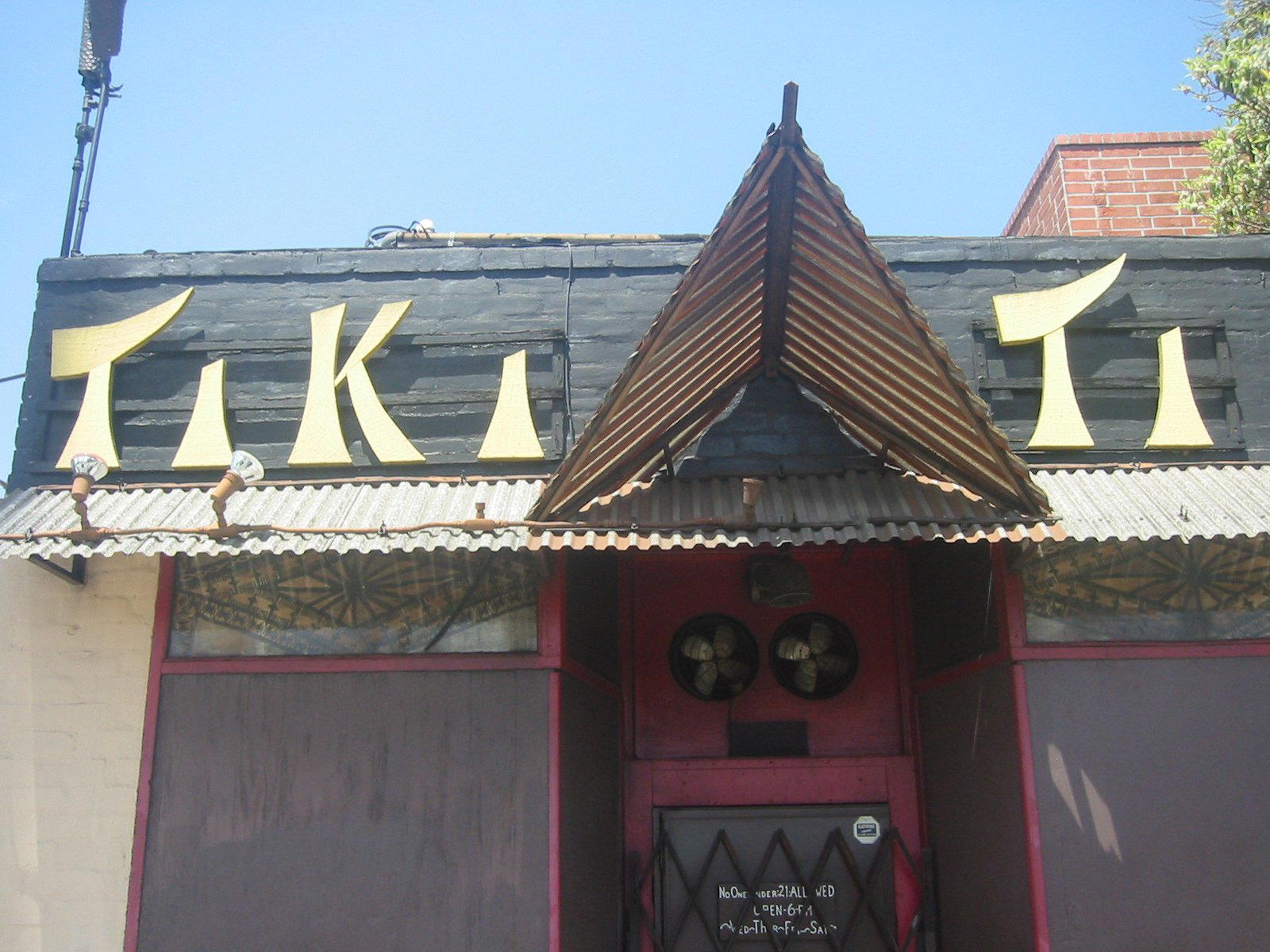
Sixty Years on Sunset, Still Pouring
The tiki bar format reached its commercial peak in mid-century America before retreating into nostalgia, kitsch, and eventually revival. In Los Angeles, that arc played out across a dozen rooms that have opened, rebranded, or disappeared since the 1950s. Tiki-Ti at 4427 Sunset Blvd in Los Feliz is a bar that never closed or rebranded. Opened in 1961, it remains one of the few surviving examples of the original tiki bar format in California.
The city has added technically sophisticated programs at places like Death & Co (Los Angeles), which imports the clarified-spirit and house-made-syrup discipline of New York's cocktail modernist wave. Rooms like Mirate frame their drinks through a culinary lens. Against that backdrop, Tiki-Ti represents continuity rather than evolution, a working artifact of a bar tradition that most cities have lost entirely.
The Room and What It Signals
Tiki bars of the postwar era were built as total environments: carved tikis, pufferfish lanterns, woven ceiling panels, and enough visual density to suggest transport to somewhere tropical. Tiki-Ti runs to that formula in a room that holds few people, capacity is small enough that a full house feels like a gathering rather than a crowd. The memorabilia covering every surface is not decorative theming applied by a design firm; it is accumulated over decades of operation, which gives the interior a layered quality that reproduction tiki bars cannot replicate on opening night.
That physical compression creates a particular dynamic at the bar. Conversation carries across the room. The bartenders are not separated from the clientele by an expanse of mahogany. This is a standing-and-sitting-close format, which shapes the experience in ways that larger, more architecturally polished rooms like Standard Bar or Bar Next Door do not replicate.
The Drinks: Length, Rum, and the Classic Tiki Idiom
The tiki drink tradition is built on complexity achieved through layering, multiple rums at different proof and origin, citrus acids, syrups made from exotic or tropical fruits, and enough garnish to suggest effort. The great mid-century tiki bars, particularly those in Southern California and Hawaii, ran drink lists that ran to dozens of house originals, often with names tied to the bar's mythology rather than their ingredients. The bar operates in this idiom with a drink list that is long by any contemporary bar standard and anchored in rum, though not exclusively.
Bar Leather Apron in Honolulu shows how a serious cocktail program can operate in the Pacific Islands with technical precision layered over tropical influence. The comparison is instructive: the bar's appeal is not technical novelty but rather the depth of a drink list that has been in continuous development since 1961, with house recipes that predate the current revival by half a century. Several of the drinks served today date to the founding generation.
Among the drinks most consistently cited by visitors over decades of reviews and bar writing is the Ray's Mistake, a house rum creation that has appeared in coverage of the bar from multiple sources and periods. It sits in the long, layered, mildly frozen or blended category, which is the structural home of the classic tiki drink, rather than in the short, stirred, spirit-forward category that has dominated cocktail bar menus since the early 2000s. That distinction puts the bar in a different conversation from the spirit-led programs at Kumiko in Chicago or Jewel of the South in New Orleans, while connecting it to tiki-specific traditions also visible in the broader American craft bar movement at venues like Superbueno in New York City.
Food, the Bar Snack Tradition, and Why It Fits Here
The tiki bar's relationship to food has always been utilitarian. Unlike the dining bar formats that have become standard at ambitious cocktail rooms, tiki bars built their experience around drinks as the primary offering, with food serving the direct function of keeping guests at the bar longer and managing the effect of high-proof, sweetened rum drinks. The bar sits squarely in this tradition. The bar is not a food destination, and nothing in its six-decade operating history positions it as one.
What matters editorially is how the absence of a serious food program clarifies the bar's identity. Rooms that have built food-drink pairing programs, like Julep in Houston or ABV in San Francisco, are answering a different question than the bar. The question at the bar is simpler and older: what does a rum drink at a tiki bar, made from a recipe that has not changed in decades, taste like in the room where it was created? That is a narrow question, but for the visitor who wants to answer it, no amount of chef-driven small plates at a revival tiki room provides the same response.
The pairing logic at a bar like this operates through the drink list itself rather than a kitchen. Sweet, acidic, rum-heavy drinks with complex syrup layering are their own category of table experience, different from wine-with-food pairing, different from the digestif-led cocktail pairings that fine-dining bars have developed. The garnish on a classic tiki drink, citrus wheels, mint, orchids, sometimes sparklers, functions as a kind of theatrical presentation that the food-focused bar achieves through plating. At the bar, that theatricality is built into the glass. For European visitors used to the cocktail seriousness of a room like The Parlour in Frankfurt on the Main, the bar offers a different register entirely: more informal, more raucous, and rooted in a specifically American mid-century popular culture that has no European equivalent.
Planning Your Visit
The bar operates on Sunset Boulevard in Los Feliz, a neighbourhood that sits between Silver Lake and Hollywood and holds a mix of longstanding local bars and newer restaurant openings. Reservations: The bar is walk-in friendly. Dress: Casual. Budget: Expect about $25 per person. Getting there: Street parking on Sunset and surrounding blocks is available; the location is also reachable by the Metro local bus network running along Sunset Boulevard.
- Ray's Mistake
- Ooga Booga
- Blood and Sand
- 151 Rum Swizzle
- Puka Puka
- Burnt Hawaiian
- Dr Funk
- Zombie
Booking and Cost Snapshot
Comparable venues nearby, for context on price, style, and recognition.
| Venue | Cuisine | Price | Notes |
|---|---|---|---|
| Tiki-TiThis venue — the venue you are viewing | Not listed | $$ | Not listed |
| Guelaguetza Restaurant | Harvard Heights, mezcaleria | $$ | Not listed |
| Steep LA | Not listed | $$ | Chinatown, cocktail_bar |
| Historic Core | Not listed | $$ | Gallery Row, cocktail_bar |
| Bar Bandini | Not listed | $$ | Echo Park, wine_bar |
| Bludso's BBQ | Not listed | $$ | Fairfax, sports_bar |
Continue exploring
More in Los Angeles
Bars in Los Angeles
Browse all →
Restaurants in Los Angeles
Browse all →
Hotels in Los Angeles
Browse all →
Wineries in Los Angeles
Browse all →
At a Glance
- Well Known
- Lively
- Cozy
- Whimsical
- Classic
- Group Outing
- Casual Hangout
- Celebration
- Historic Building
- Standalone
- Seated Bar
- Counter Only
- Standing Room
- Classic Cocktails
- Craft Cocktails
- Rum
- Punch
Current opening hours
- Monday
- Closed
- Tuesday
- Closed
- Wednesday
- 6 PM–12 AM
- Thursday
- 6 PM–12 AM
- Friday
- 6 PM–12 AM
- Saturday
- 6 PM–12 AM
- Sunday
- Closed
Hours can change for holidays and private events. Last verified .
Warm, dimly lit interior packed with bright strings of lights, tapa cloth, tropical knickknacks, and vintage tiki regalia; intimate and cluttered with decades of memorabilia creating a nostalgic South Pacific escape.