The Duke Organic
An Islington pub that positions itself squarely within the organic and natural drinks movement, The Duke Organic at 30 St Peter's Street brings considered curation to a neighbourhood better known for its cocktail bars. Where nearby venues compete on theatrics or technique, this one argues the case through provenance, a bar built around what's in the bottle, not just what's in the glass.
Pearl is the En Primeur Club membership app — saves, bookings, and concierge access live there. Same editors, same standards.
- Address
- 30 St Peter's St, London N1 8JT, United Kingdom
- Phone
- +44 20 7359 3066
- Website
- dukeorganic.co.uk
- Directions
- Get directions
 Saves & bookings on Pearl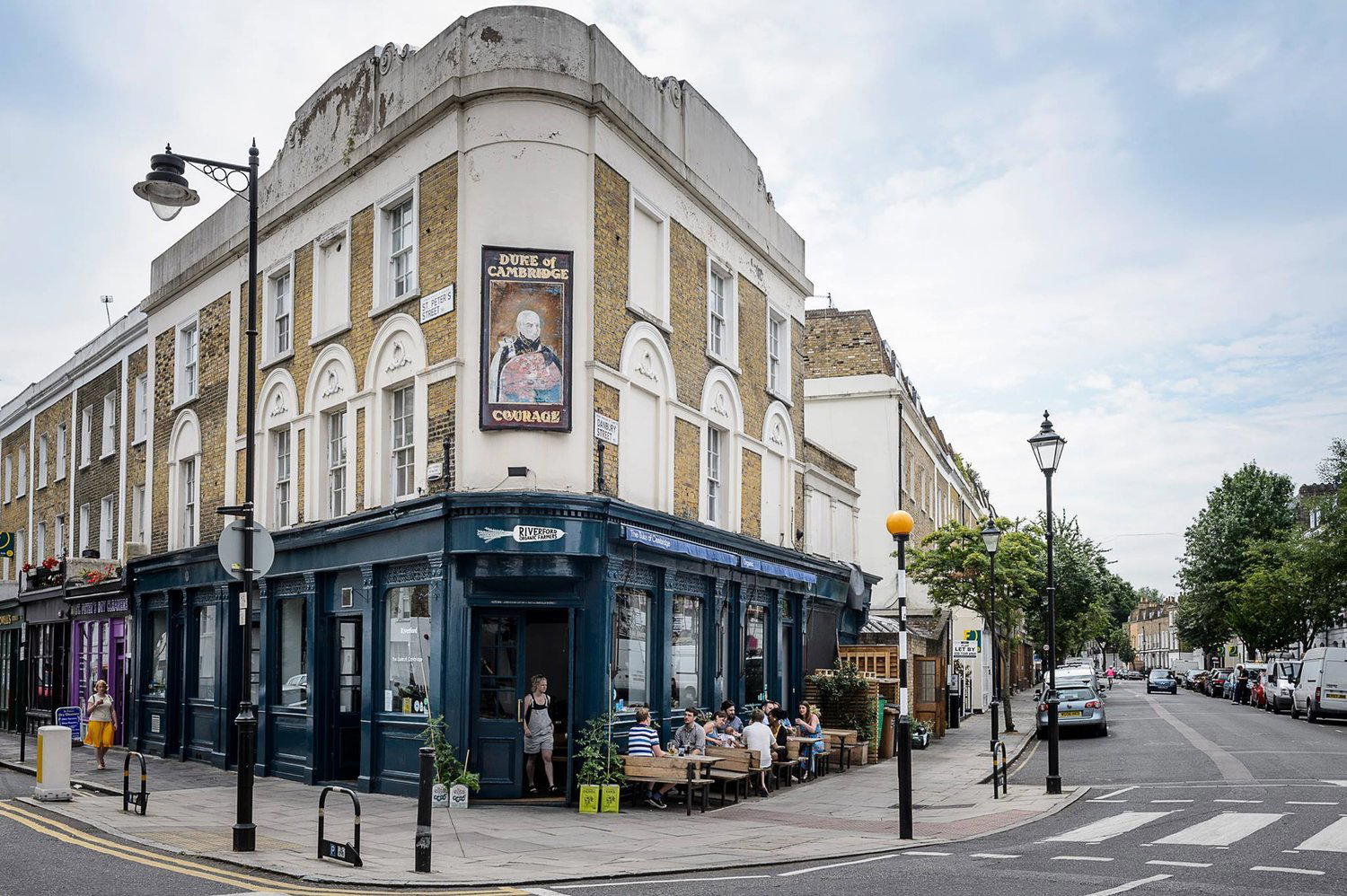
St Peter's Street and the Case for Provenance Drinking
Islington has long operated as one of London's more self-aware drinking neighbourhoods. The stretch around Upper Street and its quieter tributaries has produced some of the capital's most discussed bars, 69 Colebrooke Row established the template for precision cocktail work on this side of the city, while Amaro pushed the conversation toward depth of spirit knowledge. St Peter's Street sits just off the main artery, a quieter residential strip where The Duke Organic occupies a corner position at number 30. The building reads as a pub before it reads as anything else: familiar proportions, the kind of frontage that belongs to the street rather than announcing itself to it.
That physical restraint is worth noting because it runs against the grain of how the organic and natural drinks category often presents itself in London. In a bar scene that has spent a decade reaching for credibility through design statements and elaborate menus, The Duke makes its argument quietly, which is, increasingly, how the more serious end of the provenance-led drinks movement tends to operate.
The Organic Bar Format in London's Current Moment
The organic bar as a distinct format has taken longer to establish in London than the natural wine bar did. Natural wine venues proliferated across Hackney, Bermondsey, and Soho through the late 2010s, building a recognisable grammar of orange bottles, chalkboard lists, and pét-nat poured at low margins. The organic bar follows a related logic but applies it across categories, spirits, wines, beers, and soft options, which requires either a more disciplined supplier network or a narrower list. Most venues compromise on one or the other.
The challenge is also a commercial one. Certified organic spirits remain a small share of the total spirits market globally, and the price differential over conventional production is rarely absorbed at the retail end. Bars that commit to the format in full tend to run shorter lists at higher average spend, relying on curation to justify the constraint. That positions them in a different conversation than the cocktail-led venues nearby, including A Bar with Shapes For a Name or Academy, both of which operate with substantial back-bars built around technique and breadth rather than certification and supply-chain discipline.
Reading the Wine List as an Editorial Document
In any venue where the organic or natural positioning is genuine rather than decorative, the wine list functions as the clearest statement of intent. A curated organic wine list tells you which producers the buyer trusts, which regions they consider to have credible certified output, and how much range they're willing to sacrifice in the name of consistency. It's a more constrictive brief than conventional wine buying, and gaps in coverage, no serious Beaujolais, or an under-represented Loire, often reveal where supply relationships haven't yet closed.
Within the UK bar context, a few reference points are useful for calibrating what commitment to organic wine service looks like at different price tiers. At the premium end, venues in London's West End will hold organically certified bottles from Alsace, the Rhône, and southern Spain alongside more expected natural wine staples. At the neighbourhood level, which is where The Duke operates geographically, the list tends to be shorter and the turnover faster, with staff knowledge carrying more weight than cellar depth. Comparing this model to what L'Atelier Du Vin Wine and Cocktail Bar in Brighton And Hove does in a similarly mid-market coastal context is instructive: both venues occupy a space between destination wine bar and approachable local, and both rely on curation credibility rather than label recognition to hold their audience.
For drinkers arriving from outside London, the comparison with UK bar culture elsewhere is also relevant. Bramble in Edinburgh and Schofield's in Manchester both represent the seriousness with which British bar culture has developed outside the capital, while Merchant Hotel in Belfast, Mojo Leeds in Leeds, and Horseshoe Bar Glasgow in Glasgow anchor different regional traditions entirely. The organic positioning of The Duke places it in a distinct sub-category that has fewer direct comparators anywhere in the UK, which gives it an unusual amount of room to define what the format means at the neighbourhood pub scale.
The Provenance Argument in Practice
What separates a bar that trades on organic credentials from one that takes the category seriously is the degree to which provenance informs every layer of the offer, not just the wine column or the spirits shelf, but how the venue communicates its choices to the people sitting at it. In the strongest examples, staff can speak with specificity about certification bodies, about the difference between organic and biodynamic, and about why a particular producer's conversion to certified farming matters or doesn't in terms of what ends up in the glass.
This kind of floor knowledge is harder to build than a thoughtfully designed back-bar, and it's the factor that most reliably distinguishes a venue committed to the format from one using organic as a positioning term. Internationally, Bar Leather Apron in Honolulu demonstrates how rigorous category thinking, in that case around Japanese spirits and precision mixing, can anchor a bar's identity far more durably than decor or concept alone. The same principle applies here: the organic brief only earns its keep if the people delivering it can make the case from first principles.
Getting There and Planning Your Visit
The Duke Organic is at 30 St Peter's Street, London N1 8JT, a short walk from Angel Underground station on the Northern line. St Peter's Street runs parallel to Upper Street and sits in a quieter residential pocket of Islington, making the location more neighbourhood local than destination bar, though the organic positioning draws visitors from across the city. For a broader map of what the area offers in terms of bars and restaurants, the full London restaurants and bars guide covers the wider Islington circuit in detail.
Reservations are recommended. Dress: casual. Budget: about $25 per person. Plan for a spend per head consistent with a curated independent bar rather than a standard high-street pub.
A Tight Comparison
Comparable venues nearby, for context on price, style, and recognition.
| Venue | Cuisine | Price | Notes |
|---|---|---|---|
| The Duke OrganicThis venue — the venue you are viewing | Islington, pub | $$ | Not listed |
| Bloomsbury Lanes | Bloomsbury, lounge | $$ | Not listed |
| The Man of Kent | Nunhead, pub | $$ | Not listed |
| Blue Posts | Soho, pub | $$ | Not listed |
| Crooked Billet | Wimbledon, pub | $$ | Not listed |
| Aperivino | Not listed | $$ | Swiss Cottage, wine_bar |
Continue exploring
More in London
Bars in London
Browse all →
Restaurants in London
Browse all →
Hotels in London
Browse all →


At a Glance
- Rustic
- Cozy
- Classic
- Casual Hangout
- Group Outing
- Standalone
- Communal Tables
- Booth Seating
- Craft Beer
- Natural Wine
Current opening hours
- Monday
- Closed
- Tuesday
- 12–11:30 PM
- Wednesday
- 12–11:30 PM
- Thursday
- 12–11:30 PM
- Friday
- 12–11:30 PM
- Saturday
- 12–11:30 PM
- Sunday
- 12–6 PM
Hours can change for holidays and private events. Last verified .
Rustic pub interiors with an elegant, welcoming atmosphere and clean, simple presentation.