The Devil's Acre
On Columbus Avenue in North Beach, The Devil's Acre occupies a corner of San Francisco's cocktail scene that sits closer to the historically minded end of the spectrum than the technically avant-garde.
Pearl is the En Primeur Club membership app — saves, bookings, and concierge access live there. Same editors, same standards.
- Address
- 256 Columbus Ave, San Francisco, CA 94133
- Phone
- +1 415 766 4363
- Website
- thedevilsacre.com
- Directions
- Get directions
 Saves & bookings on Pearl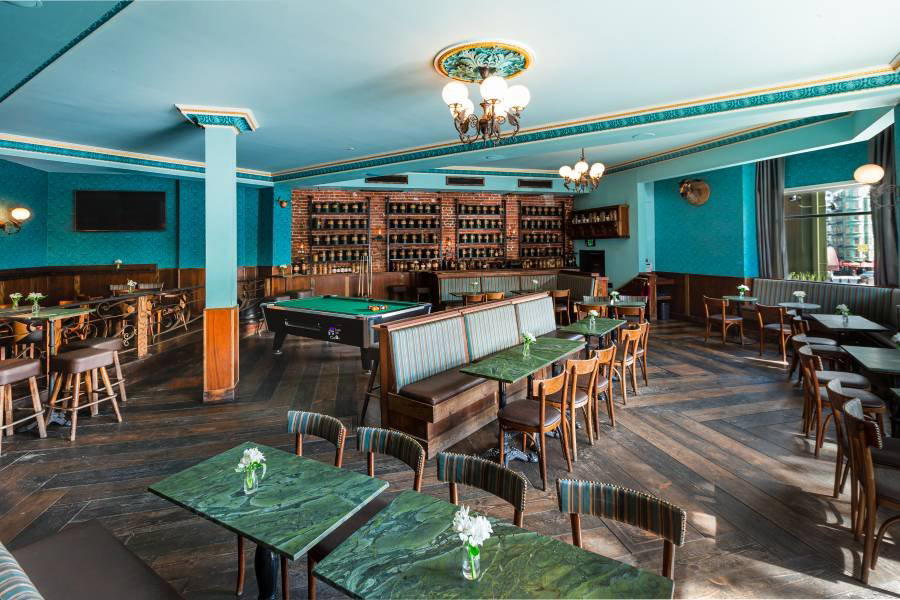
North Beach, Columbus Avenue, and the Bars That Earned Their Address
Columbus Avenue cuts through North Beach at an angle that feels deliberately unhurried. The stretch between Broadway and Vallejo has accumulated bars, cafes, and bookshops over decades in a way that resists the kind of rapid turnover that reshapes other San Francisco corridors. The Devil's Acre, at 256 Columbus Ave, sits inside that continuity. Approaching from the street, the signage and exterior read as earned rather than designed for effect — a quality that, in North Beach, functions as its own credential.
San Francisco's cocktail bar field has undergone several visible shifts over the past fifteen years. The early 2010s produced a wave of technically oriented programs focused on house-made syrups, precise dilution, and the kind of menu design borrowed from fine dining. That era established a benchmark, but it also created space for a counter-tendency: bars that anchor their identity in atmosphere, history, and beverage traditions with roots outside the craft-cocktail canon. The Devil's Acre occupies that second lane.
How the Program Has Shifted
The evolution of a bar on a block like Columbus Avenue is rarely dramatic. It tends to be incremental — a menu reorientation here, a shift in sourcing there, a gradual tightening of the aesthetic logic. What The Devil's Acre has moved toward over time is a more explicit engagement with the historical and the obscure: spirits categories that predate the modern cocktail revival, formats that reference pre-Prohibition American drinking culture, and a physical environment that underscores that orientation rather than contradicting it.
This is a meaningful distinction in a city where several bars have staked their entire identity on a single reference point. Smuggler's Cove built one of the most comprehensive rum programs in the United States around a tightly defined theme. ABV went in a different direction, building a food-forward, technically articulate program in the Upper Market neighborhood. Pacific Cocktail Haven positioned itself around West Coast ingredients and a competition-oriented cocktail sensibility. Each of these represents a coherent editorial choice about what a bar should be. The Devil's Acre's choice reads as: atmosphere first, with the program in service of it.
Where It Sits in the San Francisco Bar Conversation
San Francisco supports a relatively small number of bars with genuine program depth. The city's size and the pressure of real estate costs mean that serious cocktail operations tend to concentrate in a few neighborhoods: the Mission, Hayes Valley, Lower Haight, and the older corridors of North Beach and the Financial District. Within that geography, bars tend to sort themselves by primary identity: technically ambitious, community-oriented, theme-driven, or atmosphere-led.
The Devil's Acre's address in North Beach places it alongside the neighborhood's longer drinking history, which includes institutions that predate the craft cocktail movement by several decades. That context matters. A bar in North Beach is read differently than the same bar in SoMa or the Tenderloin. The neighborhood carries expectations about what a serious bar should feel like, and those expectations lean toward the atmospheric and the historically inflected.
Compared to the bars that dominate San Francisco's awards conversation, venues like Pacific Cocktail Haven, which has appeared in international recognition lists, or the technically demanding programs that have emerged from the Mission, The Devil's Acre operates with less competitive visibility and more neighborhood permanence. That tradeoff is not incidental. It reflects a deliberate positioning that values the loyalty of a regular clientele over the attention of a transient one.
Bars with this orientation appear across American cocktail cities. Jewel of the South in New Orleans draws on that city's deep cocktail history with a similar emphasis on tradition. Julep in Houston anchors its program in Southern American drinking culture. Kumiko in Chicago takes a more Japanese-inflected approach to atmosphere and precision. Allegory in Washington, D.C. orients itself around narrative and storytelling as organizing principles. Each of these operates in a different city and with a different reference point, but shares a commitment to the idea that the physical environment and the conceptual frame of a bar carry as much weight as the technical execution of any individual cocktail. Bar Leather Apron in Honolulu and Superbueno in New York City extend that pattern into their respective cities, while The Parlour in Frankfurt on the Main demonstrates that the same orientation toward atmosphere-led programming translates across markets.
What to Order
The Devil's Acre's menu orientation toward historical cocktail formats and less-common spirits categories means the most direct path through the program is to engage with whatever the bar signals as its strength on a given visit. In atmosphere-led bars with historically minded programs, the tendency is toward spirit-forward builds, drinks where the base spirit is the argument, not a delivery mechanism for complexity. Aged spirits, bitters-heavy formats, and low-intervention cocktails that prioritize clarity over novelty tend to be where these programs have the most to say.
Visitors who approach the menu looking for the most technically current compositions will find a different experience than those who arrive looking for something quieter and more considered. Both orientations are legitimate; they just describe different bars.
Planning Your Visit
| Venue | Neighborhood | Program Orientation | Booking |
|---|---|---|---|
| The Devil's Acre | North Beach | Atmosphere-led, historically minded | Walk-in advised |
| Smuggler's Cove | Hayes Valley | Rum-focused, theme-driven | Walk-in, queues likely on weekends |
| ABV | Upper Market | Food-forward, technically articulate | Walk-in |
| Pacific Cocktail Haven | Tenderloin | Competition-oriented, West Coast ingredients | Walk-in, reservations available |
| Friends and Family | Mission | Community-oriented, accessible | Walk-in |
North Beach bars on Columbus Avenue tend to operate on a walk-in basis. Weekday evenings offer the most direct access; weekend nights on this block draw both locals and visitors from across the city, and the narrower footprints of most North Beach bars mean capacity fills earlier than comparable venues in larger-footprint neighborhoods. For the full San Francisco bar and restaurant picture, see our full San Francisco restaurants guide.
Continue exploring
More in San Francisco
Bars in San Francisco
Browse all →
Restaurants in San Francisco
Browse all →
Hotels in San Francisco
Browse all →
At a Glance
- Classic
- Cozy
- Intimate
- Historic
- Date Night
- Casual Hangout
- Historic Building
- Seated Bar
- Booth Seating
- Classic Cocktails
- Craft Cocktails
Current opening hours
- Monday
- Closed
- Tuesday
- 4:30 PM–1 AM
- Wednesday
- 4:30 PM–1 AM
- Thursday
- 4:30 PM–1 AM
- Friday
- 4:30 PM–2 AM
- Saturday
- 4:30 PM–2 AM
- Sunday
- 4–10 PM
Hours can change for holidays and private events. Last verified .
Vintage-inspired Victorian saloon with mahogany and leather bars, low ceilings, blue wallpaper, balanced lighting—not too dark or bright—and classic feel.
Know Before You Go
- Getting there
- 256 Columbus Ave, San Francisco, CA 94133