The Battery
On Battery Street in San Francisco's Financial District, The Battery occupies a converted brick warehouse that anchors the block with industrial-era bones and a modern private-club sensibility. The space draws from a tradition of members-only social venues where architecture does as much work as the programming. For those navigating SF's cocktail scene, it sits at a distinct remove from the city's more open bar formats.
 Discover on Pearl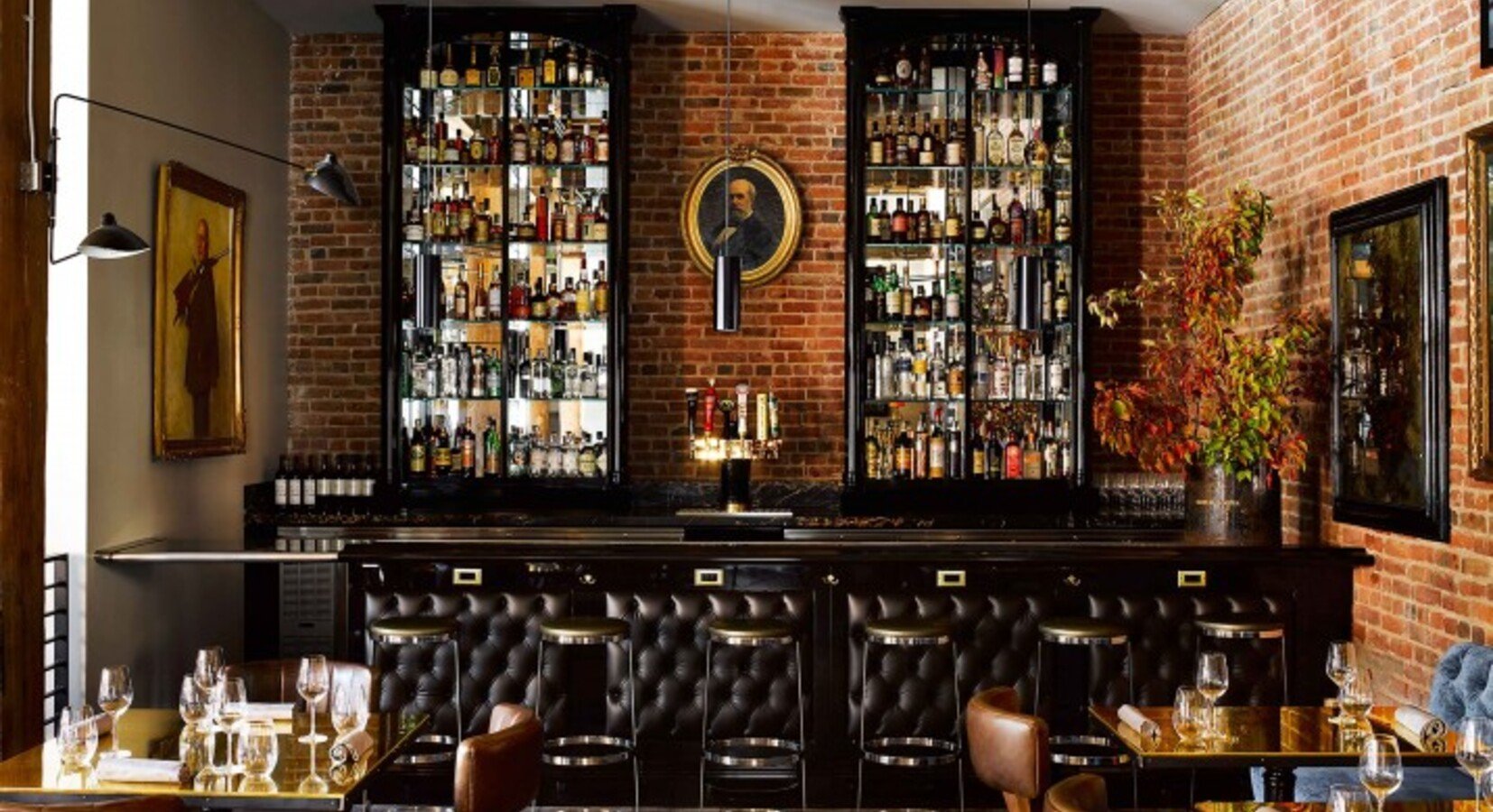
A Warehouse That Became a Room
San Francisco's Financial District has always maintained a dual identity: working city by day, increasingly residential and social by night. The stretch of Battery Street where this address sits reflects that shift, with converted brick-and-timber buildings that date to the post-earthquake reconstruction era now housing a different kind of commerce. The Battery occupies one of these structures at 717 Battery St, and the building's bones do most of the heavy lifting before anyone orders a drink.
In American cities with strong industrial heritage, a particular type of social venue has emerged over the past two decades: the private club reconceived not as a Gilded Age institution but as a design-forward space where membership controls access rather than lineage. The Battery belongs to that format. Its architecture places it in a specific tier of San Francisco hospitality, one where the physical container signals the experience before any program detail does.
Industrial Architecture as Editorial Statement
Warehouse conversions in American cities tend to split into two camps. The first strips the original structure to its skeleton and fills the void with exposed utilities and reclaimed-wood surfaces, leaning hard into the aesthetic of industrial authenticity. The second takes a more considered approach, preserving the building's proportional logic while layering in furniture, lighting, and material choices that create warmth inside a frame that was never designed for comfort. The Battery follows the second path.
The brick exterior on Battery Street gives way to interiors that retain the warehouse's volume while working against its inherent coldness. High ceilings in spaces like this create a particular acoustic environment, one where sound disperses rather than concentrates, and where the scale of a room generates its own social gravity. The Financial District's proximity to the Embarcadero means natural light behaves differently here than it does deeper in the city, and the building's orientation takes advantage of that.
For context on how San Francisco's bar and social spaces have evolved architecturally, the comparison points are instructive. Venues like Pacific Cocktail Haven and ABV operate in the city's more open, bar-forward tier, where the room is designed to turn over and the energy is outward-facing. Smuggler's Cove, by contrast, uses its space to create total immersion in a specific world. The Battery operates on a different axis entirely: the space is designed for sustained occupation rather than high turnover, which changes the furniture scale, the lighting temperature, and the sound management.
The Members-Only Model and What It Implies
Private membership clubs in the United States have undergone a significant repositioning since the early 2000s. The traditional model built exclusivity around professional credentials and longstanding social networks. The contemporary version, of which The Battery is a clear example, builds it around design quality, programming, and a particular idea of urban community. Annual membership fees in this tier of club typically run into four figures, which shifts the peer set from hotel bars and cocktail lounges to a different kind of social infrastructure entirely.
This matters for how you read the space. A room designed for members who will return dozens of times per year must solve different problems than a room designed for one-off visits. Seating arrangements prioritize long-stay comfort. Lighting schemes allow for variation across a full evening arc. Bar programming needs depth rather than novelty alone, because the audience will eventually exhaust a shallow list. These design constraints, imposed by the membership model, are what give the interior its particular character.
Comparable private-club formats in other American cities have grappled with the same tension between exclusivity and cultural relevance. In Chicago, Kumiko operates in the premium cocktail tier without a membership gate, while in New York, Superbueno takes a neighborhood-forward approach that is almost the inverse of the Battery's model. Further afield, Allegory in Washington, D.C. and Jewel of the South in New Orleans show how different cities have resolved the question of premium social space differently.
The Financial District as Setting
Location shapes expectation in ways that are easy to underestimate. The Financial District's bar and social scene operates on rhythms that differ from the Mission or Hayes Valley: the lunch hour carries weight, the late afternoon has a particular intensity as markets close, and the evening crowd is often visiting rather than local in the neighborhood-regular sense. A venue in this district that succeeds across those different day-parts has to solve architectural and programming problems that a single-shift bar in a residential neighborhood never faces.
The Battery's position at 717 Battery St places it within walking distance of the Embarcadero, the Ferry Building, and the dense concentration of financial-sector offices that define the area's daytime character. This geography has historically supported a specific type of hospitality, one oriented toward business entertaining, expense-account lunches, and after-work decompression. What makes the Battery notable within that context is its departure from that transactional mode toward something more residential in feel, closer in spirit to Bar Leather Apron in Honolulu or The Parlour in Frankfurt, where the room is designed to make you want to stay rather than move on.
San Francisco's cocktail scene has its own distinct character, shaped by the city's proximity to California's wine and spirits production, its historically adventurous food culture, and the influence of venues like Friends and Family. The Battery sits at a slight angle to that scene: its programming is part of a broader members-club offering rather than a standalone cocktail destination, which changes the competitive reference points. For more on how it fits into the wider city picture, see our full San Francisco restaurants guide.
Internationally, the format has analogues: private urban clubs that use architectural quality and restricted access to create a specific social register. Julep in Houston represents a different resolution of the premium-bar question, one that is more publicly accessible but equally design-conscious. The Battery's choice to maintain a membership structure is itself an architectural decision, one that determines who the room is optimized for and how long those people stay.
Know Before You Go
- Address: 717 Battery St, San Francisco, CA 94111
- Access: Private membership required for most areas; check current guest policy before visiting
- Neighbourhood: Financial District, close to the Embarcadero and Ferry Building
- Getting There: Accessible via BART (Embarcadero station) and multiple Muni lines; street parking limited during business hours
- Leading For: Members and invited guests seeking a sustained-stay social environment distinct from the city's open-bar circuit
Frequently Asked Questions
Reputation First
A quick peer check to anchor this venue’s price and recognition.
| Venue | Awards | Cuisine | Notes |
|---|---|---|---|
| The Battery | This venue | ||
| ABV | World's 50 Best | ||
| Smuggler's Cove | World's 50 Best | ||
| Trick Dog | World's 50 Best | ||
| Bar at Hotel Kabuki | |||
| Evil Eye |
Need a Table?
Our members enjoy priority alerts and concierge-led booking support for the world's most difficult bars and lounges.
Get Exclusive Access