Tapas Brindisa Battersea
Tapas Brindisa Battersea brings the Brindisa group's Spanish provisions heritage to Nine Elms, positioning itself within a south London dining scene still finding its post-development footing. The format follows the established Brindisa template of ingredient-led tapas rooted in direct relationships with Iberian producers. It sits at the more accessible end of London's Spanish dining tier, distinct from the capital's formal tasting-menu operators.
Pearl is the En Primeur Club membership app — saves, bookings, and concierge access live there. Same editors, same standards.
- Address
- 25 Circus Rd W, Nine Elms, London SW11 8EZ, United Kingdom
- Phone
- +44 20 8016 8888
- Website
- brindisakitchens.com
- Directions
- Get directions
 Saves & bookings on Pearl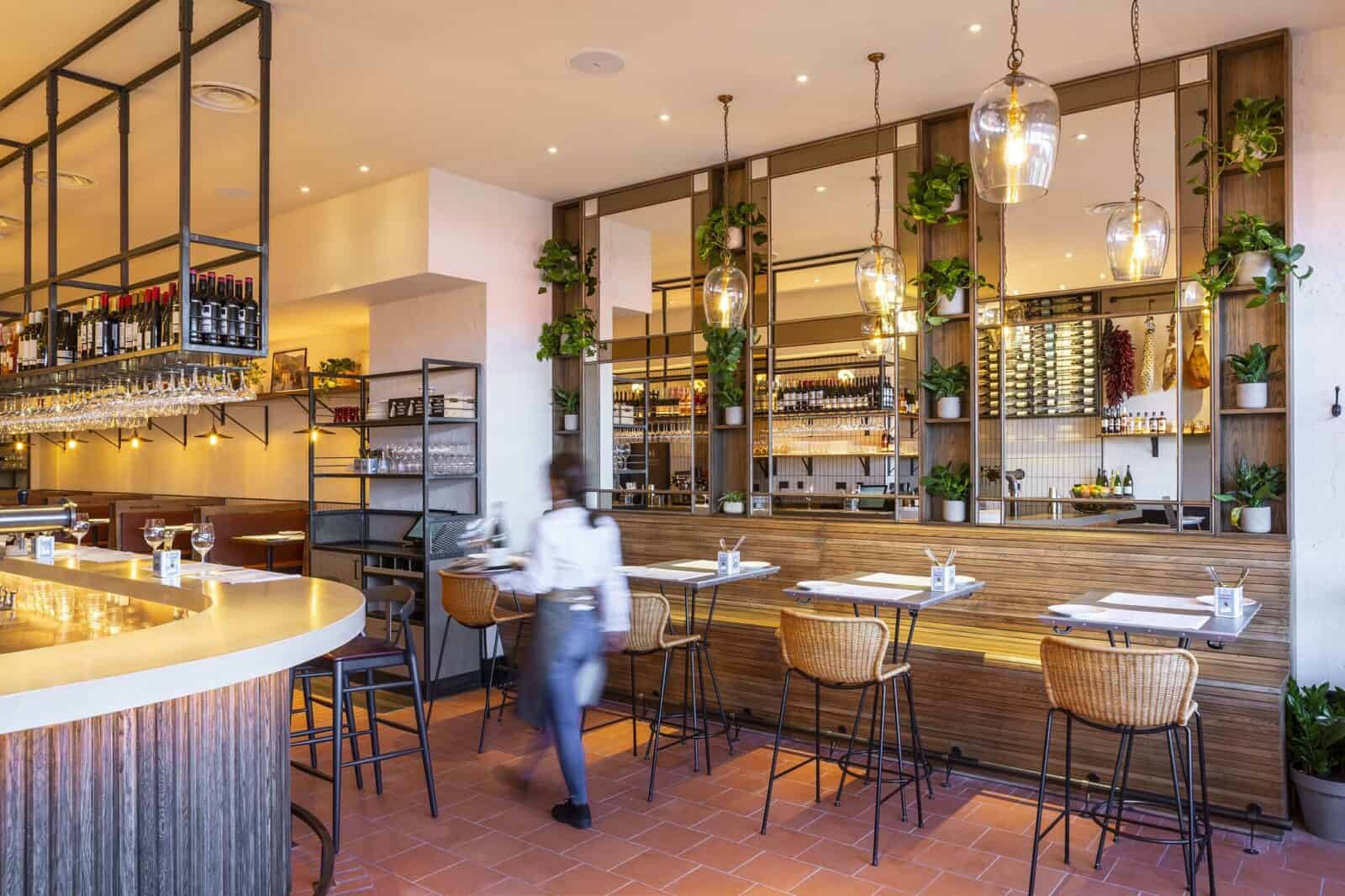
Nine Elms and the New South London Table
Tapas Brindisa Battersea is a bar in Nine Elms, London, serving Spanish small plates and Sherry-led drinks. The stretch of riverfront between Vauxhall and Battersea Power Station has, over the past decade, undergone a transformation so rapid it still feels provisional. New Covent Garden Market displaced, towers of glass and steel rising against the Thames, a new Northern Line extension threading underneath. Into this still-settling neighbourhood, Tapas Brindisa Battersea plants a version of something London's Spanish dining scene has understood for years: that the leading argument for a cuisine is the quality of its raw ingredients, not the theatre around them. The address at 25 Circus Road West, Nine Elms, places it squarely within the post-regeneration dining offer of the area, a moment when a neighbourhood is hungry for anchors.
The Brindisa name carries weight in that context. The group's origin as an importer of Spanish provisions, jamón, cheese, olive oil, conservas, means its restaurants operate with a supply chain that most London tapas operators have to approximate. That provenance story sits in the background of any meal here, audible in the quality of the charcuterie, present in the olive oil on the bread. It is the kind of detail that distinguishes ingredient-led operations from concept-led ones.
The Atmosphere of a Spanish Room in a New City Quarter
Spanish bar culture at its most functional is loud, warm, and communal. Tables fill early, conversation competes with the clatter of small plates arriving and leaving. In its established London locations, Brindisa has understood this rhythm and built around it: counters for solo diners, tiled surfaces that bounce sound, wine lists weighted toward regional Spanish producers rather than the international selections that pad out lesser lists. The Battersea iteration arrives in a neighbourhood without deep restaurant tradition, which gives it an unusual role, not competitor in a crowded field, but reference point for a district still assembling its culinary identity.
Atmospherically, Spanish tapas restaurants in London occupy a distinct register from the broader European casual-dining category. The format encourages a tempo of eating that is social by design: dishes timed to the kitchen rather than to courses, the table accumulating plates and glasses simultaneously, conversation distributed across the meal rather than bracketed by it. It is a format that rewards groups over solo diners, generosity over restraint. London's Spanish dining tier has embraced this, and it sits apart from the more structured service rhythms of, say, the city's French or Italian mid-market operators.
Where Brindisa Sits in London's Spanish Dining Tier
London's Spanish restaurant offer spans considerable range. At one end, there are operators with Michelin recognition working with formal tasting structures. At the other, there are direct tapas bars that prioritise price point over sourcing. Brindisa has long occupied a middle tier characterised by ingredient quality and accessibility rather than ceremony. That positioning is not a compromise, it reflects a distinct editorial point of view about what Spanish food is actually for. The group's importing background means it can source conservas, cured meats, and cheeses at a level most restaurants in its price range cannot, and the menu is built to showcase that supply chain rather than obscure it behind elaborate preparation.
Operations like 69 Colebrooke Row, A Bar with Shapes For a Name, Academy, and Amaro represent a version of the same shift: away from broad-market formats and toward specialist, ingredient- or technique-focused operations. The dining and drinking scenes are moving in the same direction, toward depth of knowledge expressed through a focused offer. Brindisa's model applies that logic to Spanish provisions.
The Spanish Wine and Drinks Argument
Any serious Spanish restaurant in London should be making a case for Spanish wine, and the Brindisa group has historically treated this as a given rather than an aspiration. The Spanish wine market offers material for a genuinely interesting list: Galician Albariños and Godellos in the whites, Rioja and Ribera del Duero for those who want structure, Sherry across a range of styles that remains dramatically underused by London operators. A well-constructed Spanish list can hold its own against any European regional selection, and the tapas format is one of the few dining structures that actually suits Sherry, the salinity of fino and manzanilla aligns with the salt, fat, and acid of charcuterie and anchovies in ways that still surprise diners who encounter the pairing for the first time.
Spanish restaurants operating at Brindisa's level carry the same obligation on the wine side. For international reference, Bar Leather Apron in Honolulu demonstrates how focused programming, even in unexpected geography, builds credibility. The principle applies across categories.
Planning Your Visit
Nine Elms is accessible via the Northern Line at Nine Elms station, one of the two new stations opened in 2021 as part of the Battersea Power Station extension. The tapas format means a table can move at whatever pace the guests set, a short lunch of four or five dishes or an extended evening of a dozen plates across two hours are both coherent uses of the space.
| Venue | Location | Format | Peer Notes |
|---|---|---|---|
| Tapas Brindisa Battersea | Nine Elms, SW11 | Sharing plates, Spanish provisions | Ingredient-led, importer background |
| Bar Termini | Soho | Aperitivo bar | Negroni-specialist, compact format |
| Quo Vadis | Soho | Full-service restaurant | Members' club dining heritage |
| Callooh Callay | Shoreditch | Cocktail bar | Adjacent hospitality tier |
| Happiness Forgets | Hoxton | Basement cocktail bar | Low-capacity, technique-focused |
| Nightjar | Old Street | Speakeasy cocktail bar | Theatrical format, reservation-heavy |
The Minimal Set
Comparable venues nearby, for context on price, style, and recognition.
| Venue | Cuisine | Price | Notes |
|---|---|---|---|
| Tapas Brindisa BatterseaThis venue — the venue you are viewing | Not listed | $$ | Not listed |
| Alchemy Bar | Not listed | $$ | City of London, cocktail_bar |
| Greenberry Café | Primrose Hill, lounge | $$ | Not listed |
| Dame Alice Owen | Finsbury, pub | $$ | Not listed |
| Perilla | Not listed | $$ | Mildmay, cocktail_bar |
| Cork and Bottle wine bar | Not listed | $$ | Leicester Square, wine_bar |
Continue exploring
More in London
Bars in London
Browse all →
Restaurants in London
Browse all →
Hotels in London
Browse all →


At a Glance
- Lively
- Rustic
- Cozy
- Date Night
- Group Outing
- Casual Hangout
- Terrace
- Lounge Seating
- Outdoor Terrace
- Booth Seating
- Classic Cocktails
- Waterfront
- Street Scene
Current opening hours
- Monday
- 12 PM–12 AM
- Tuesday
- 12 PM–12 AM
- Wednesday
- 12 PM–12 AM
- Thursday
- 12 PM–12 AM
- Friday
- 12 PM–12 AM
- Saturday
- 12 PM–12 AM
- Sunday
- 12–11:30 PM
Hours can change for holidays and private events. Last verified .
Welcoming space with cozy booths, high tables, open kitchen views, and a terraza-style bar area overlooking the river.