Sushi Blue
Sushi Blue operates in Snyderville's Redstone Center, a strip-mall-adjacent dining zone that has quietly accumulated a more serious restaurant roster than its retail surroundings suggest. The bar program here positions itself within a broader mountain-town trend toward technique-forward drink-making, where craft and locality matter as much as the fish case. It sits in a peer set defined less by altitude and more by intention.
 Discover on Pearl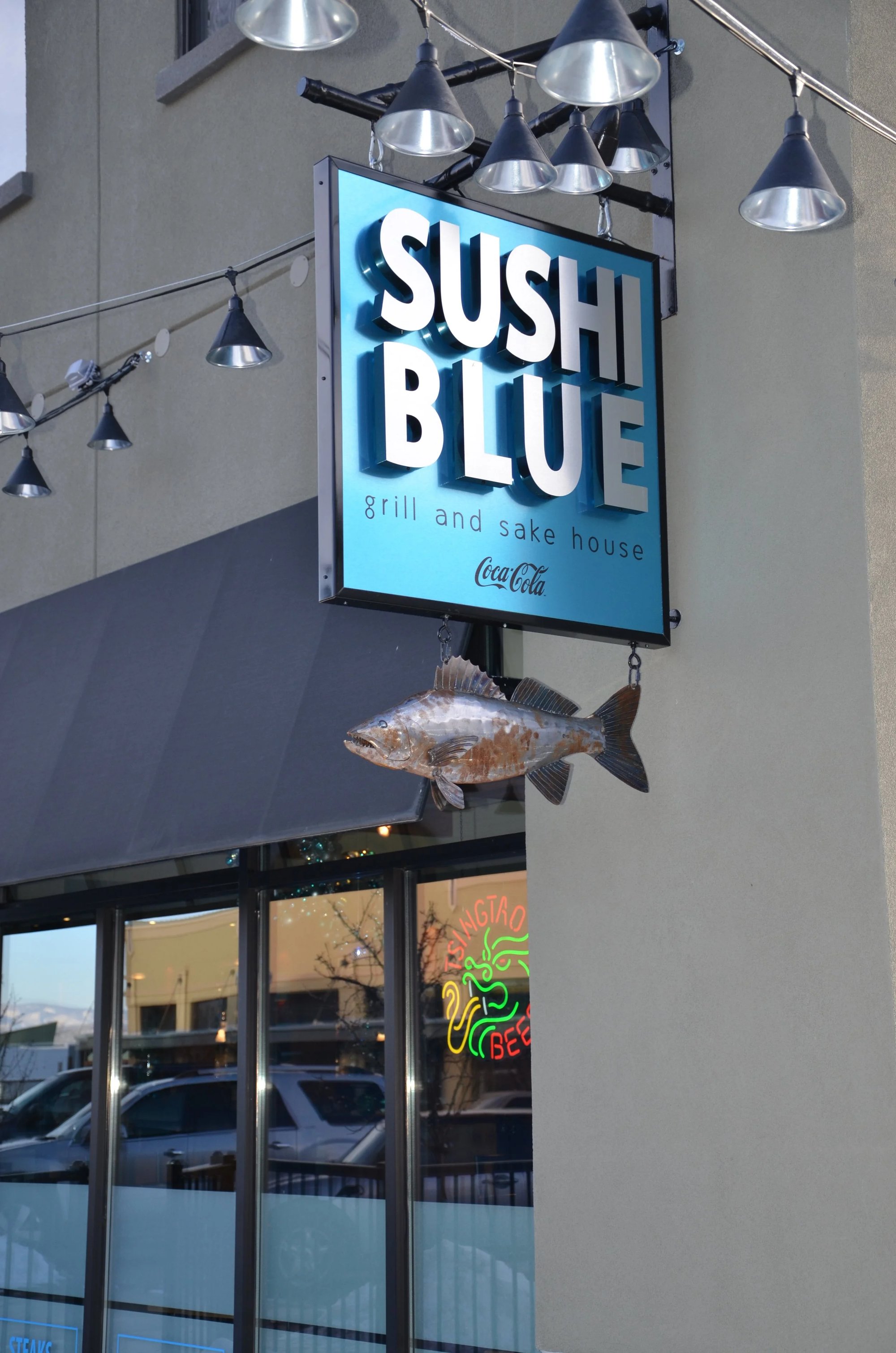
Where Mountain-Town Drinking Gets Serious
Snyderville sits in the valley between Park City's resort infrastructure and the quieter residential spread that has grown up around it. The Redstone Center corridor, where Sushi Blue occupies suite 140 at 1571 Redstone Center Drive, reads at first glance like the kind of mixed-use development that could exist anywhere in the American West: big-box anchors, a parking lot built for ski-season overflow, and a collection of restaurants that serve a community running on outdoor exertion and après-ski habit. What that first glance misses is how seriously some of those restaurants take their programs. Utah's liquor landscape has loosened considerably over the past decade, and the result is a dining corridor that now supports bar programs with genuine depth alongside their food menus.
Sushi Blue lands in that context as a venue where the drink program and the fish counter operate in conversation rather than in parallel. That pairing — raw bar precision alongside deliberate cocktail craft — has become a recognizable format in American mid-market dining, and mountain communities have adopted it faster than might be expected, partly because the clientele cycles through from coastal cities where the format is already established. A guest who drinks at Bar Leather Apron in Honolulu or Kumiko in Chicago during the rest of the year arrives in Park City with a calibrated palate and expectations to match.
The shortlist, unlocked.
Hard-to-book tables, cellar releases, and concierge-planned trips.
Get Exclusive Access →The Bar as the Room's Organizing Logic
Across American dining, the past decade has seen the bartender's role shift from service function to editorial voice. The person behind the bar is no longer simply executing a recipe list; they are making arguments about flavor, sourcing, and the relationship between a drink and the food it accompanies. This shift has been documented at programs like Jewel of the South in New Orleans, where historical cocktail research shapes the menu, and at Julep in Houston, where regional ingredient sourcing frames every pour. What connects those programs is a philosophical stance: the bar has a point of view, and that point of view is communicated through the drink list as much as through conversation.
At a sushi-anchored venue in a mountain resort corridor, that point of view has particular shape. Japanese spirits , shochu, sake, whisky , sit alongside the expected American craft whiskey and Pacific-influenced citrus cocktails. The logic of pairing drinks with raw fish rewards precision over weight; lighter, acid-forward builds tend to perform better against delicate proteins than the spirit-forward pours that dominate many Western bar programs. Programs that understand this tend to produce drink lists with more internal coherence than their price tier might suggest. Whether Sushi Blue's current list reflects that level of editorial discipline is something the room itself will tell a visitor faster than any menu description.
What the Mountain-Town Bar Scene Actually Looks Like
Park City and Snyderville operate as a single social organism during ski season, with traffic and reservation patterns shifting dramatically between November and April. The bar programs that survive year-round in this environment tend to be those that anchor a local clientele in the off-season rather than depending entirely on resort traffic. Snyderville's Redstone Center has developed a cluster of venues that serve both functions: Drafts Burger Bar occupies the casual end of that spectrum, while The Farm Restaurant positions itself further up the formality register. Jupiter Bowl and Maxwell's each occupy their own niches within the same corridor. Sushi Blue operates in the middle of that field, where the combination of a recognizable cuisine format and a drink program that goes beyond wine-by-the-glass creates a repeatable visit cycle for local residents who return across seasons.
That year-round viability is a meaningful signal. Mountain-town restaurants that survive only on seasonal traffic tend to produce drink programs calibrated for turnover rather than depth. A program that sustains a local base through shoulder months has to give regulars a reason to return, which typically means rotating seasonal cocktails, a sake or Japanese spirits selection that rewards exploration, and bar staff capable of guiding a guest through something unfamiliar. Programs built on those principles tend to produce bars where the conversation at the counter matters as much as the liquid in the glass , a quality visible at places like ABV in San Francisco and Superbueno in New York City, where staff knowledge functions as a genuine differentiator.
Drinking at a Sushi Counter: The Format's Internal Logic
The pairing tradition between Japanese cuisine and drinks is older and more specific than the general American craft cocktail movement. Sake's regional variation , junmai, ginjo, daiginjo, nigori , maps directly onto the flavor spectrum of raw fish, from fatty tuna to leaner white fish to shellfish. That mapping is not decorative; it is structural, and bar programs at serious sushi venues use it as an organizing principle rather than an afterthought. European cocktail programs operating at the same intersection, such as The Parlour in Frankfurt on the Main, have documented how Japanese ingredient logic can inform a broader cocktail philosophy beyond the sushi context itself.
For a diner at Sushi Blue, this means the drink menu deserves the same attention as the food menu. Ordering on reflex , a beer, a predictable cocktail , misses the internal argument the bar is making. The sake list, if present, is the most direct expression of the bar program's seriousness, because sake selection requires sourcing relationships and staff education that go well beyond stocking a standard spirits list. A three-to-five entry sake list suggests a baseline engagement with the format; a list organized by prefecture or style suggests something more considered. Asking the bartender to walk through the list is always worth the two minutes it takes.
Planning Your Visit
Sushi Blue is located at 1571 Redstone Center Drive, suite 140, in Snyderville, Utah 84098, within the Redstone Center retail and dining complex. The venue is most accessible by car, and parking within the center is available. During peak ski season, the Redstone Center corridor sees higher traffic on weekends and holiday periods; visits on weekday evenings tend to involve shorter waits and more counter availability. Current booking methods, hours, and pricing are leading confirmed directly with the venue, as the available record does not include those details. For a broader view of what the area offers, the full Snyderville restaurants guide maps the corridor's dining options against each other in more detail.
Frequently Asked Questions
- What should I drink at Sushi Blue?
- Sushi-anchored venues at this format tier typically organize their drink programs around Japanese spirits and sake alongside craft cocktails. The sake list is the most direct indicator of the bar program's depth , asking the bartender to walk through it by style or weight is the fastest way to find a pairing that works with whatever fish is on the menu that evening.
- What is Sushi Blue known for?
- Sushi Blue operates as a sushi and Japanese-influenced dining venue in Snyderville's Redstone Center, serving a community that includes both Park City resort visitors and year-round local residents. Within the Snyderville dining corridor, it represents the end of the market where cuisine format and bar program are treated as complementary rather than separate offerings.
- What's the leading way to book Sushi Blue?
- Current booking details are not confirmed in the available record. Given the venue's location in a ski-season corridor, contacting the restaurant directly before a visit , particularly on weekend evenings in winter , is the practical approach. Walk-in availability is generally easier during shoulder season and on weekday evenings.
- Is Sushi Blue appropriate for a solo diner or small group at the bar?
- Sushi venues built around a counter format are historically well-suited to solo dining and pairs, where the bar functions as the primary social space rather than a waiting area. Small groups benefit from counter seating at Japanese-style venues because the bartender or sushi chef is an active part of the experience, guiding drink and food choices in sequence. Confirming counter availability ahead of a visit is worth the call, particularly during peak season.
The Essentials
A short peer set to help you calibrate price, style, and recognition.
| Venue | Notes | Price |
|---|---|---|
| Sushi Blue | This venue | |
| Drafts Burger Bar | ||
| Jupiter Bowl | ||
| Maxwell's | ||
| The Farm Restaurant |
Need a Table?
Our members enjoy priority alerts and concierge-led booking support for the world's most difficult bars and lounges.
Get Exclusive AccessThe shortlist, unlocked.
Hard-to-book tables, cellar releases, and concierge-planned trips.
Get Exclusive Access →