Soseki Omakase
Omakase dining arrived in Central Florida in full form at Soseki, where a chef-driven counter format on West Fairbanks Avenue brings the discipline of sourcing-first Japanese cuisine to Winter Park. The format places the kitchen's ingredient decisions at the center of the meal, positioning Soseki inside a small but serious tier of destination omakase rooms operating well outside major coastal markets.
Pearl is the En Primeur Club membership app — saves, bookings, and concierge access live there. Same editors, same standards.
- Address
- 955 W Fairbanks Ave, Winter Park, FL 32789
- Phone
- +1 407 619 3952
- Website
- sosekifl.com
- Directions
- Get directions
 Saves & bookings on Pearl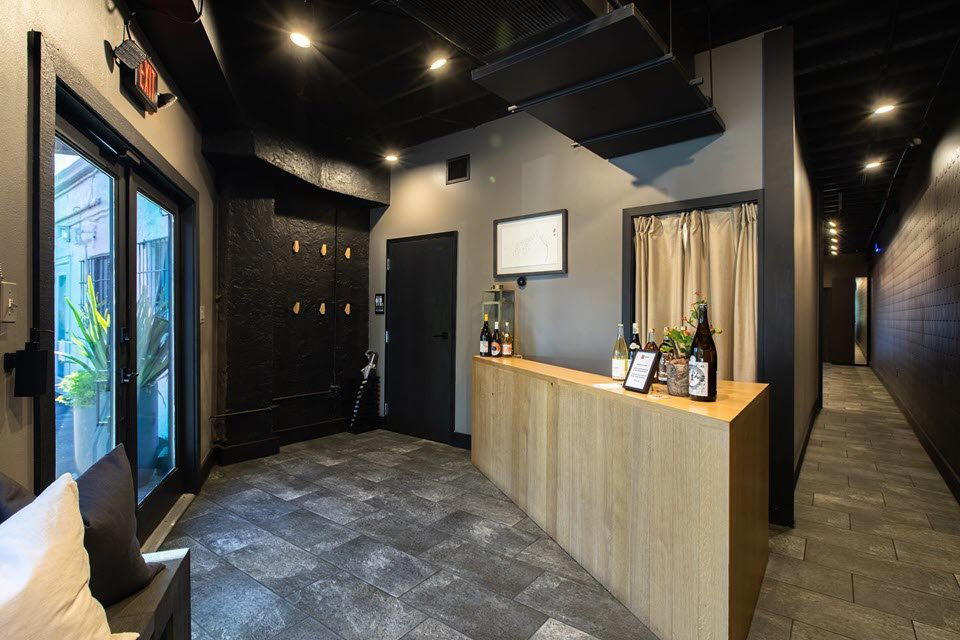
A Counter Format in an Unlikely City
Winter Park is better known for gallery rows and Italian-leaning restaurant blocks than for the kind of counter-driven Japanese dining that defines neighborhoods in New York's Midtown or San Francisco's Japantown. That context matters when reading Soseki Omakase, which sits on West Fairbanks Avenue in a city whose restaurant scene otherwise orbits around accessible dining formats. Omakase as a format carries particular demands: the kitchen sets the menu, the guest surrenders choice, and the credibility of the experience rests almost entirely on what the kitchen sources and how it handles those ingredients across the course of the meal. In a city without an established omakase tier to benchmark against, Soseki occupies the space almost by default, and that absence of competition is itself an editorial signal.
Nationally, the omakase format has expanded well beyond its original coastal strongholds. Cities including Nashville, Austin, and Miami have developed credible counter programs over the past decade, and the presence of a serious omakase room in Central Florida fits that pattern of diffusion. The format travels with the sourcing infrastructure: overnight shipping from Toyosu Market, relationships with domestic fishermen supplying bluefin and live shellfish, and access to premium domestic wagyu. Where those supply lines run, the counter format can operate.
What Sourcing Means at This Scale
The editorial argument for any omakase room lives or dies in the supply chain. At the format's upper end, counters distinguish themselves not by theatrics or interior design but by the provenance and handling of each component on the plate. A piece of aged tuna served at body temperature on warmed ceramic, for example, requires not only premium sourcing but precise temperature management through every stage from market to counter. The same applies to seasonal fish from Japanese waters, roe in tight seasonal windows, and the domestic and imported produce that frames each savory course.
For a venue operating in Winter Park rather than within a major metropolitan fish market orbit, ingredient sourcing is the central logistical question. Counter programs outside coastal hubs typically rely on a combination of overnight air freight from Japan-based markets, relationships with US distributors who serve the fine dining sector, and direct sourcing from domestic producers for elements like rice, koji, and seasonal vegetables. That supply chain adds cost and planning complexity relative to a counter in Tokyo's Tsukiji orbit or one in lower Manhattan near the Fulton Fish Market, and that cost differential usually expresses itself in pricing and in the counter's booking posture.
Winter Park's proximity to Orlando gives Soseki access to a metropolitan catchment that extends well beyond the immediate city. The Orlando metro carries enough dining-out spend at the upper end to sustain a serious counter program, as the growth of higher-ticket restaurants across the region over the past five years indicates. Venues like Mynt Fine Indian Cuisine, Prato, and Reel Fish Coastal Kitchen and Bar each represent a different tier of the Winter Park dining market, while Rocco's Italian Grille and Bar anchors the more established Italian-American block. Soseki sits in a different category from all of them, targeting a guest willing to commit to a fixed format at a price point that reflects the sourcing overhead.
The Physical Space and the Counter Logic
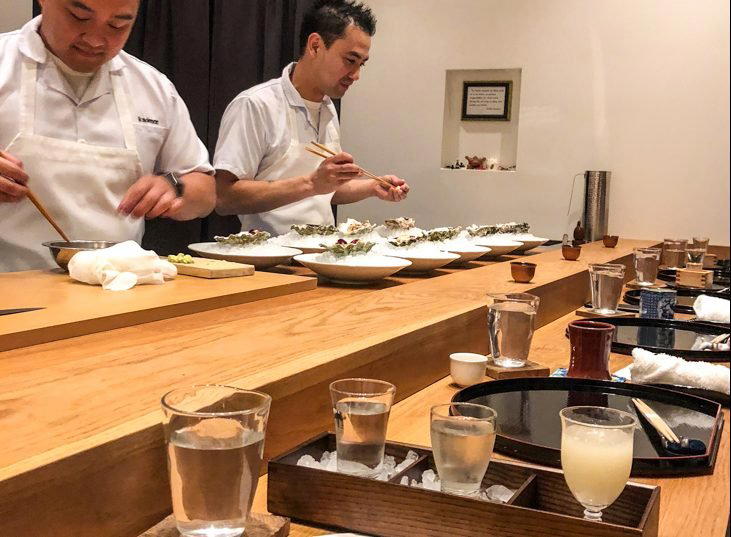
The omakase counter as a format is deliberately constrained. Seat counts at serious operations typically run from six to twelve, with the physical limitation serving a functional purpose: the chef can manage the pacing, temperature, and presentation of each course simultaneously for every guest. Larger rooms require brigade coordination that softens the direct kitchen-to-guest relationship that defines the format. At Soseki, the counter arrangement at 955 West Fairbanks Avenue places guests in direct sight of the preparation, which is both the format's primary appeal and its central discipline, there is no back-of-house buffer between what the kitchen does and what the guest observes.
That transparency raises the stakes on sourcing decisions in a way that conventional restaurant service does not. When a chef places a piece of fish in front of a guest at arm's length, the quality of that fish and its handling communicate without narration. The omakase format asks the kitchen to defend every sourcing decision implicitly, across every course, every night.
Where Soseki Fits in a Broader Omakase Geography
Across the United States, the bar programs that accompany serious omakase rooms have become their own area of editorial interest. Sake lists with region-specific selections, Japanese whisky programs, and technically precise cocktail menus now appear as standard accompaniments to the counter format in its upper tier. The parallel in cocktail programming can be seen in places like Bar Leather Apron in Honolulu, Kumiko in Chicago, and Jewel of the South in New Orleans, where precision-driven programs have developed alongside or within serious dining formats. The craft cocktail scene more broadly, represented by venues like Julep in Houston, Superbueno in New York City, ABV in San Francisco, and The Parlour in Frankfurt, reflects a similar movement toward ingredient-focused, technically literate hospitality operating at scale across different formats and markets.
Soseki's position in Winter Park means it draws from a guest base that may be traveling specifically for the format rather than encountering it as one option among many, as would be the case in a denser urban dining market. That travel intent changes the guest relationship with the booking process and the expectation of the meal.
Planning a Visit
The omakase format requires advance planning almost universally. Guests arriving without a reservation at an omakase counter are rarely accommodated, since seat allocation is fixed by format design.
At-a-Glance Comparison
Comparable venues nearby, for context on price, style, and recognition.
| Venue | Cuisine | Price | Notes |
|---|---|---|---|
| Soseki OmakaseThis venue — the venue you are viewing | sake_bar | $$$$ | Not listed |
| VINIA Wine & Kitchen | wine_bar | $$$ | Hannibal Square |
| Rocco's Italian Grille & Bar | cocktail_bar | $$$ | Winter Park |
| Umi Japanese Restaurant | sake_bar | $$$ | Park Avenue |
| Mynt Fine Indian Cuisine | Bar | $$$ | Hannibal Square |
| Reel Fish Coastal Kitchen and Bar | lounge | $$ | Winter Park |
Continue exploring
More in Winter Park
Bars in Winter Park
Browse all →
Restaurants in Winter Park
Browse all →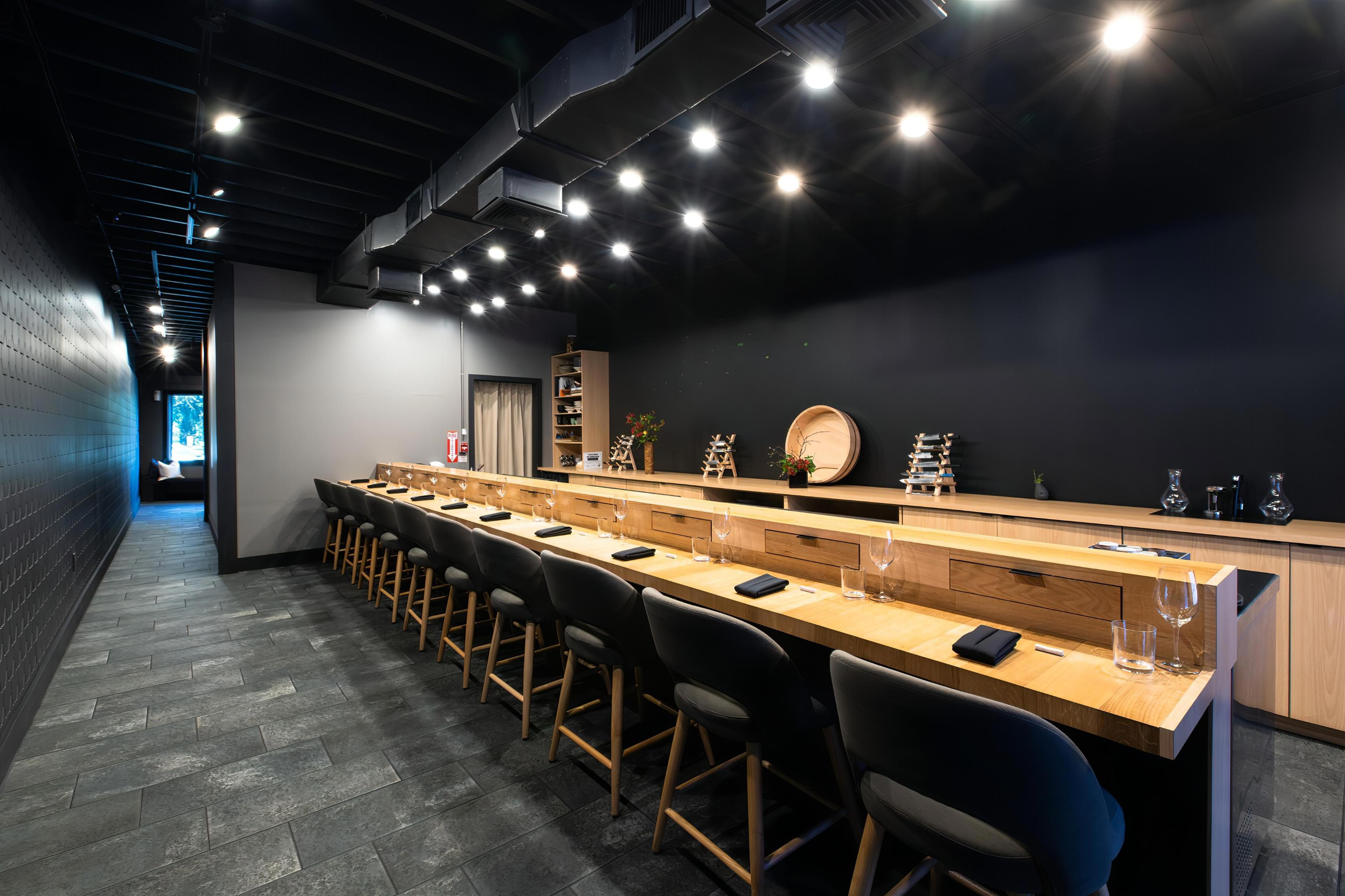
At a Glance
- Intimate
- Elegant
- Modern
- Sophisticated
- Date Night
- Special Occasion
- Celebration
- Design Destination
- Standalone
- Counter Only
- Seated Bar
- Sake
- Conventional Wine
- Craft Cocktails
Current opening hours
- Monday
- Closed
- Tuesday
- Closed
- Wednesday
- 5:30–10 PM
- Thursday
- 5:30–10 PM
- Friday
- 5:30–10 PM
- Saturday
- 5:30–10 PM
- Sunday
- Closed
Hours can change for holidays and private events. Last verified .
Intimate counter setting with theatrical lighting design featuring bright spotlights, dark walls, and sleek wood floors creating a stage-like presentation of culinary artistry.