Rosa Bonheur Buttes Chaumont occupies a restored park keeper's pavilion at the edge of the Parc des Buttes-Chaumont in Paris's 19th arrondissement, drawing a neighbourhood crowd that spills onto the terrace through the warmer months. The drinks program leans into approachable French wine and relaxed aperitif culture, set against one of the city's least touristy green spaces. It operates as a guinguette for a new generation.
Pearl is the En Primeur Club membership app — saves, bookings, and concierge access live there. Same editors, same standards.
- Address
- 2 Av. de la Cascade, 75019 Paris, France
- Phone
- +33 1 42 00 00 45
- Website
- rosabonheur.fr
- Directions
- Get directions
 Saves & bookings on Pearl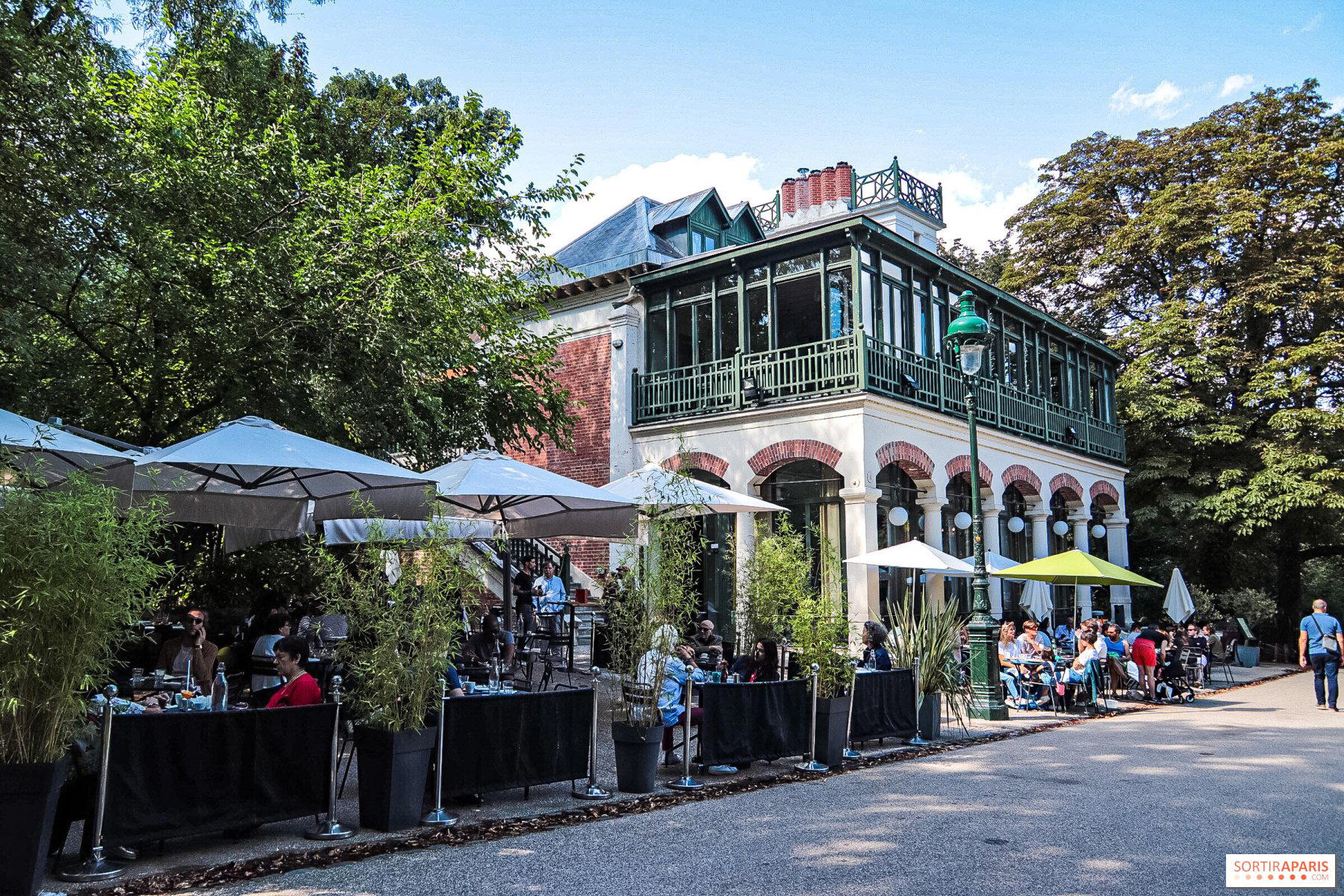
A Guinguette at the Edge of the 19th
Paris has always had a complicated relationship with its own leisure culture. The guinguette, that tradition of outdoor drinking and dancing on the urban periphery, was largely pushed into myth by the mid-twentieth century, surviving mainly in nostalgic photography and the occasional riverside pop-up. Its partial revival in recent decades has taken two distinct forms: the polished, concept-driven version designed for tourists who associate it with accordion music, and the genuinely neighbourhood-rooted version that functions less as a performance and more as an extension of local life. Rosa Bonheur Buttes Chaumont is a bar in Paris's 19th arrondissement, at 2 Av. de la Cascade, 75019 Paris, France, known for wine, beer, and open-air dancing.
The Parc des Buttes-Chaumont itself shapes the character of everything around it. Unlike the Tuileries or the Luxembourg, it was designed in the 1860s under Haussmann with theatrical topography in mind: cliffs, a lake, a suspension bridge, a temple perched on a volcanic-rock island. The park draws a different demographic than the grand jardins of the 1st and 6th arrondissements, and that demographic shows up at Rosa Bonheur. The 19th arrondissement has one of the youngest and most diverse populations in Paris, and on a warm Saturday afternoon, that fact is legible in the crowd gathered on the terrace.
The Drinks Program: Approachability Over Curation
Paris's premium cocktail bars have, over the past decade, consolidated around a recognizable model: small-batch spirits, house-made syrups, tableside theatrics, and prix-fixe formats that place them closer to the restaurant tier than the bar tier. Danico and Candelaria both operate within that framework, the former through technical precision, the latter through a mezcal and taco format that made Marais the city's reference point for Mexican-influenced drinking culture. Bar Nouveau and Danico push further into craft-spirits curation with back bars that read like annotated bibliographies of European distilling.
Rosa Bonheur operates outside that competitive set entirely. Its drinks program is not structured around rare bottles or production-method storytelling. The editorial angle here is not the back bar but what the back bar's absence signals: that a certain kind of Paris drinking culture has always been indifferent to the spirits-collection logic that defines the premium cocktail tier. French wine by the glass, beer, and direct mixed drinks remain the currency of the guinguette, and Rosa Bonheur does not try to reframe that as a deficit. At a moment when Buddha Bar anchors its identity partly to spectacle and scale, Rosa Bonheur's low-intervention approach reads as a deliberate counterposition, whether or not it was conceived as one.
For visitors accustomed to the curated back-bar experience, the comparison is worth making explicit. The difference between a venue like Bar Leather Apron in Honolulu, where spirits depth and technical preparation are the main event, and a guinguette like Rosa Bonheur is not simply a quality gap. It reflects two entirely different theories of what a bar is for. One is a destination for the drink itself. The other is a destination for the context around drinking, the park, the terrace, the crowd, the hour of the day.
Seasonal Logic and When to Visit
The question of when to visit Rosa Bonheur is inseparable from the question of what you are visiting it for. The terrace at Buttes-Chaumont is the point. From late spring through early autumn, the outdoor space operates as a de facto extension of the park, and the venue's rhythm is tied to daylight and temperature rather than to any internal programming logic. Arriving in the late afternoon on a weekday, before the post-work crowd arrives from the surrounding arrondissements, gives a different and more considered experience than a Saturday evening, when the terrace reaches capacity and the guinguette energy tilts toward the festive.
In winter, the calculus changes. Paris guinguettes without enclosed heated spaces lose their primary asset when the temperature drops, and Rosa Bonheur is not a venue that compensates with an elaborate indoor program. Visitors coming specifically in the colder months should calibrate expectations accordingly. The park itself is worth the journey year-round, but Rosa Bonheur's strongest argument for a detour operates between May and September.
For context on how Paris's bar geography distributes across the city: the premium cocktail corridor runs largely through the Marais, Saint-Germain, and increasingly the 2nd arrondissement, where venues like Candelaria anchored a shift toward serious mixed-drinks culture. The 19th represents a different axis entirely, one defined by neighbourhood hospitality rather than destination drinking. That distinction matters when planning an evening. Rosa Bonheur is not a logical stop on a bar-hopping itinerary through the Marais; it functions better as the opening act for an afternoon in the park, or as a standalone destination for those staying in or near the 19th.
Placing Rosa Bonheur in the Wider French Drinking Scene
Across French cities, the gap between polished hospitality venues and genuinely local drinking spots has widened as the craft-drinks movement has raised the technical floor for what counts as a serious bar. Papa Doble in Montpellier, Au Brasseur in Strasbourg, Bar Casa in Bordeaux, Coté Vin in Toulouse, and La Maison M. in Lyon each represent a city's version of the informed neighbourhood bar, occupying the space between casual café and cocktail destination. Rosa Bonheur sits in that register but adds the outdoor guinguette element that most French cities, outside of Paris, cannot easily replicate. Le Café de la Fontaine in La Turbie offers a comparative example of how a setting, in that case a hillside village above Monaco, can do most of the contextual work that a carefully curated drinks menu would otherwise need to perform.
Rosa Bonheur's identity is, in that sense, park-dependent. Remove the Buttes-Chaumont setting, and the drinks program does not carry the experience alone. That is not a criticism; it is a description of the category.
Comparable Options
Comparable venues nearby, for context on price, style, and recognition.
| Venue | Cuisine | Price | Notes |
|---|---|---|---|
| Rosa Bonheur Buttes ChaumontThis venue — the venue you are viewing | lounge | $$ | Not listed |
| Lone Palm | cocktail_bar | $$ | Roquette |
| Le Dauphin | wine_bar | $$ | 11th arrondissement |
| La Mano | lounge | $$ | Faubourg Montmartre |
| Combat | cocktail_bar | $$ | Belleville |
| Point Éphémère | lounge | $$ | Canal Saint-Martin, 10th arrondissement |
Continue exploring
More in Paris
Bars in Paris
Browse all →
Restaurants in Paris
Browse all →
Hotels in Paris
Browse all →



At a Glance
- Lively
- Scenic
- Rustic
- Bohemian
- Well Known
- Casual Hangout
- Group Outing
- Late Night
- Garden
- Terrace
- Historic Building
- Outdoor Terrace
- Lounge Seating
- Natural Wine
- Garden
Current opening hours
- Monday
- Closed
- Tuesday
- Closed
- Wednesday
- Closed
- Thursday
- 12 PM–12 AM
- Friday
- 12 PM–12 AM
- Saturday
- 12 PM–12 AM
- Sunday
- 12 PM–12 AM
Hours can change for holidays and private events. Last verified .
Bucolic and relaxed park setting with pink walls inside, lively terrace atmosphere, and eclectic festive music.