Nobie's
Nobie's occupies a converted bungalow on Colquitt Street in Houston's Upper Kirby district, where the residential scale and warm interior set it apart from the city's more formal dining rooms. The kitchen works a produce-driven American format that reflects the neighborhood's appetite for casual precision. It sits comfortably in Houston's mid-tier creative dining conversation, drawing a loyal local crowd rather than a destination-dining circuit.
 Discover on Pearl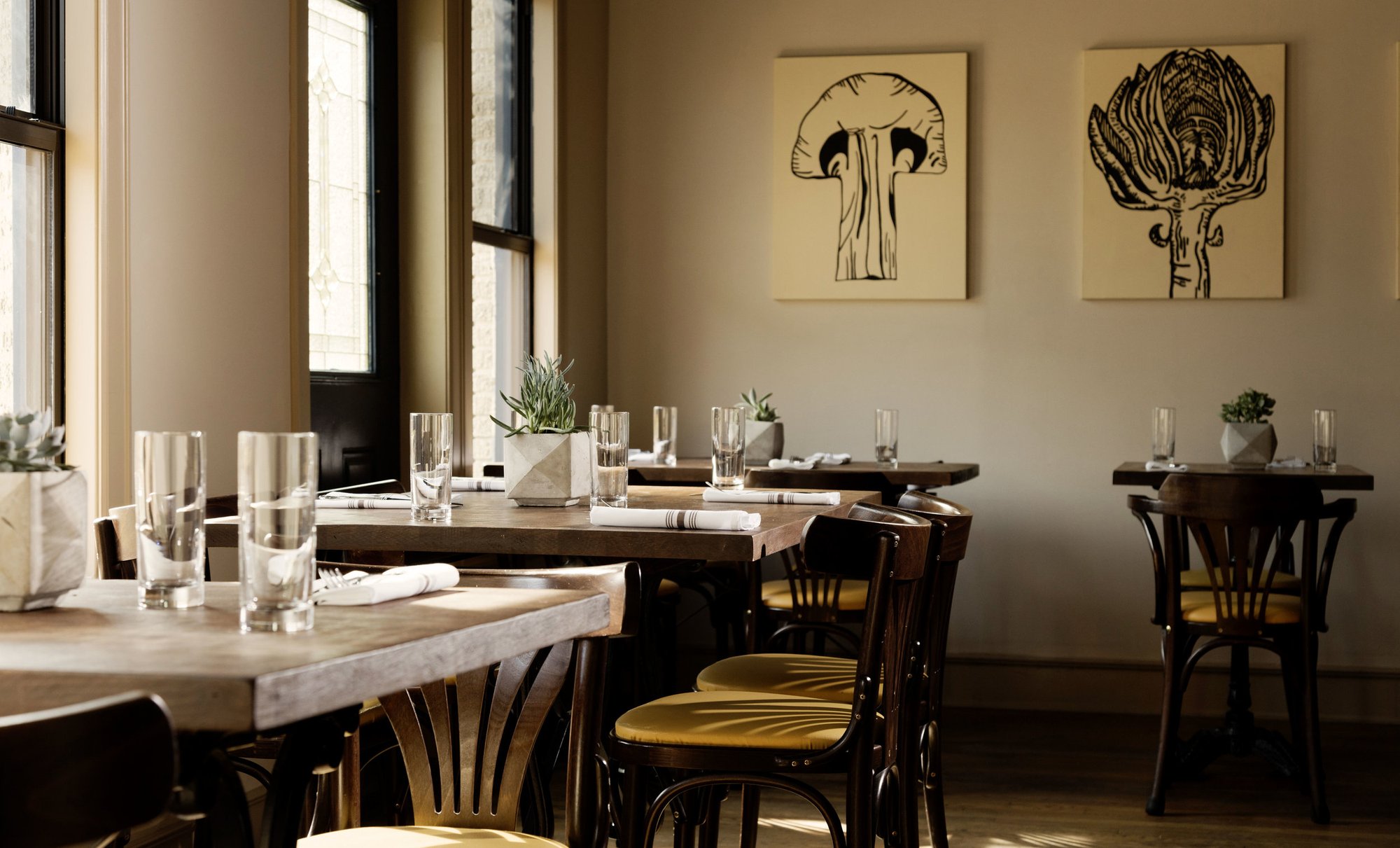
A Bungalow Format in a City That Usually Thinks Bigger
Houston's dining culture has long tilted toward the grand gesture: the sprawling steakhouse, the high-ceilinged Tex-Mex institution, the hotel dining room with architectural ambition to match its price point. Nobie's, at 2048 Colquitt Street in Upper Kirby, operates in deliberate contrast to that scale. The building is a converted residential bungalow, and the interior retains enough of that domestic logic — low ceilings, rooms that flow rather than open, a sense of enclosure rather than spectacle — to feel like a different kind of proposition entirely.
That physical format is not incidental to what Nobie's is. In a city where dining rooms frequently compete on square footage and volume, the bungalow container shapes the experience before a plate arrives. The seating arrangements follow the geometry of converted domestic space: smaller clusters, tighter sightlines, a room where proximity to other diners reads as convivial rather than crowded. It is the kind of space that rewards going with two people rather than a party of eight, and that favors conversation over ambient noise management.
Upper Kirby as Context
Upper Kirby sits between the density of Montrose and the more residential rhythms of River Oaks, and that in-between quality shapes the character of the dining along its streets. This is not a neighborhood built around a single culinary identity the way that, say, Midtown Houston anchors certain bar-heavy formats or the Heights has absorbed a wave of chef-driven openings. Upper Kirby's dining tends toward the neighborhood-facing, the independently operated, and the repeat-visit model rather than the destination-dining pilgrimage.
Nobie's fits that pattern. Its address on Colquitt puts it on a residential stretch where the walk from street to door passes through what feels more like a domestic yard than a restaurant approach. That transition matters: by the time you are inside, the register has already shifted away from the formal dining occasion and toward something more like a considered dinner at someone's home, if that home happened to have a well-organized kitchen and a thoughtful wine list.
For a broader map of where Nobie's fits in Houston's drinking and dining geography, the full Houston restaurants guide covers the city's key neighborhoods and the distinct personalities that separate them.
The Interior Logic of a Converted Space
Converted bungalow restaurants carry specific design constraints that larger builds do not face. Wall placement is fixed by structure rather than concept. Room proportions reflect domestic rather than commercial logic. Lighting has to work harder in spaces that were not originally designed to hold kitchen exhaust, service choreography, and forty seated guests at once. The restaurants that succeed in these formats tend to lean into those constraints rather than fight them, letting the domesticity become the aesthetic rather than papering over it with industrial salvage or forced rusticity.
What that produces, at its better end, is a dining room that feels curated rather than decorated. Materials tend toward the warm end of the palette because the architecture already establishes that register. The scale enforces a kind of intimacy that larger purpose-built dining rooms spend considerable budget trying to approximate. For the guest, it means a room where the physical experience is coherent with the food program rather than in tension with it.
This design logic connects Nobie's to a broader category of American restaurants that have found their identity partly through the inherited character of their buildings. It is a different kind of precision than the custom-built dining room, but it is precision nonetheless.
Drinking at Nobie's: What to Expect
Houston's bar conversation is anchored by a handful of well-documented programs. Julep holds the serious cocktail end with a Southern spirits focus. Bandista and 1100 Westheimer Rd represent the city's more eclectic bar formats, while 13 Celsius has built a strong reputation specifically on its wine and craft beer selection. Nobie's operates in a different register from all of these: the drinks program here is a support structure for the food rather than a destination in its own right, with the wine list favoring producers that work at the same mid-tier, producer-focused pitch as the kitchen.
That approach places Nobie's in a category of American restaurants where the drink selection is genuinely considered without requiring the guest to engage with it at a sommelier-level of attention. It is a practical distinction: you are not coming here because of a celebrated cocktail program, but you are not going to find a drinks list assembled without thought either. The framing is closer to a neighborhood wine bar that happens to serve serious food than to a cocktail-forward operation that added a kitchen.
For reference points on what a destination-level drinks program looks like in comparable American cities: Kumiko in Chicago and ABV in San Francisco represent the technical end, while Jewel of the South in New Orleans and Allegory in Washington, D.C. show what a design-coherent bar program looks like at the higher end. Bar Leather Apron in Honolulu and Superbueno in New York City are useful comparisons for operator-driven concepts where the space and the program speak the same language. Internationally, The Parlour in Frankfurt on the Main is a useful reference for how a small-footprint bar concept can build outsized reputation through format discipline.
Planning a Visit
Nobie's sits on Colquitt Street in Upper Kirby, a neighborhood that is navigable by car and direct to park in compared to denser Houston districts like Midtown or the Heights. The bungalow format means capacity is limited by the building's residential footprint, which makes advance reservations a practical necessity rather than a formality, particularly on weekend evenings when the neighborhood's dining crowd is at its densest. The dress code follows the register of the space: the domestic scale and warm interior suggest that neither formal attire nor aggressively casual presentation is the right pitch. Mid-range smart casual is the practical default for this kind of Houston neighborhood dining room.
Pricing at Nobie's sits in the mid-tier of Houston's creative dining range, below the destination tasting-menu operations but above the casual neighborhood spots that anchor the lower end of the Upper Kirby dining mix. That positioning makes it a credible option for a considered weeknight dinner or a low-key weekend reservation where the objective is a good meal in a comfortable room rather than a special-occasion statement.
Frequently Asked Questions
Price and Positioning
These are the closest comparables we have in our database for quick context.
| Venue | Price | Awards | Notes |
|---|---|---|---|
| Nobie's | This venue | ||
| Julep | World's 50 Best | ||
| Bandista | World's 50 Best | ||
| Anvil Bar | |||
| Birdies Icehouse | Bar / icehouse fare (burgers, tacos, snacks) | ||
| The Teahouse |
Need a Table?
Our members enjoy priority alerts and concierge-led booking support for the world's most difficult bars and lounges.
Get Exclusive Access