Mr Fogg’s Tavern
Mr Fogg's Tavern in Covent Garden's historic Market Building pitches itself at the intersection of Victorian theatricality and serious cocktail craft. The drinks list leans into the spirit of Phileas Fogg's travels, with period-inspired serves alongside a pub-format food menu. It occupies a tier of London bars where the concept does as much work as the liquid in the glass.
 Discover on Pearl
Pearl is the En Primeur Club membership app — saves, bookings, and concierge access live there. Same editors, same standards.
Where the Concept Is the First Course
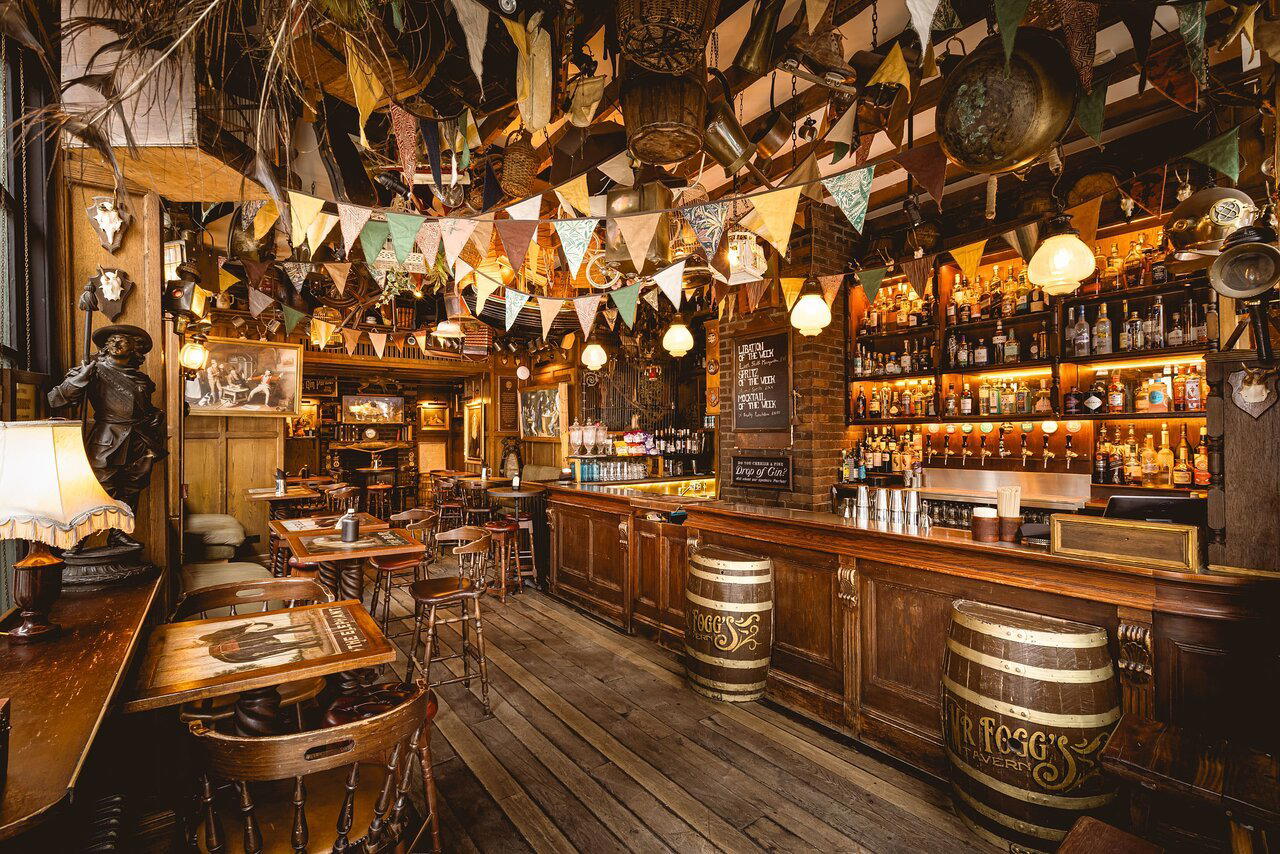
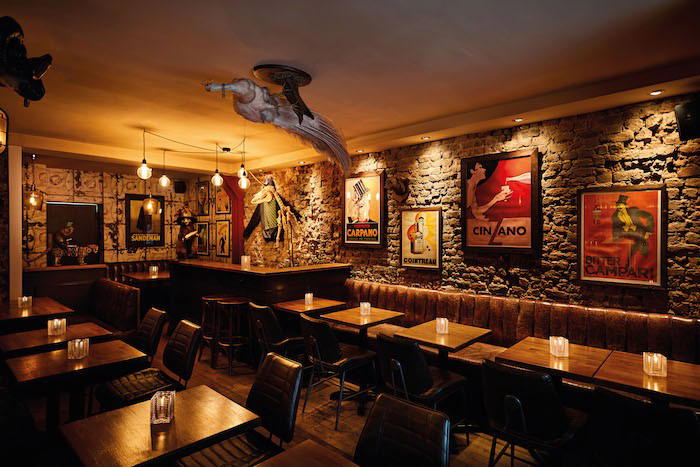
Covent Garden's Market Building has housed everything from flower traders to chain restaurants, but its architecture, cast iron and Victorian arcade grandeur, does much of the atmospheric heavy lifting before you order anything. Mr Fogg's Tavern works this context deliberately: the room is dressed in the manner of a nineteenth-century gentleman's study that has been comprehensively ransacked by a well-travelled collector. Globes, taxidermy, framed expedition maps, and curiosity-cabinet objects compete for space on walls that are already doing considerable theatrical work. The effect is dense rather than sparse, and that density is the point. London has a long tradition of themed drinking establishments, from Dickensian gin palaces to Edwardian hotel bars, but the Mr Fogg's group occupies a distinct niche within that tradition: high-concept execution applied to considered drinks programs.
Arriving at the Tavern, particularly during early evening before the post-theatre crowd builds, gives you the experience in its most legible form. The room settles into itself, the props become backdrop rather than novelty, and what you're left with is a bar operating in a part of London where footfall is enormous but repeat custom is harder to earn. That the Tavern has sustained its position in Covent Garden, a neighbourhood that cycles through concepts at speed, says something about whether the offer holds beyond a first visit.
The Arc of an Evening: Drinking in Sequence
The editorial angle most useful for understanding Mr Fogg's Tavern is not the individual drink but the progression across an evening. London's more technically ambitious bars, places like 69 Colebrooke Row in Islington or A Bar with Shapes for a Name, have made their names on rigorous technique, clarification, fat-washing, and carbonation applied with precision. Mr Fogg's Tavern operates on a different register: the narrative progression of the drinks list is thematic rather than purely technical. Serves are framed around the conceit of Phileas Fogg's circumnavigation, which means the list moves through reference points tied to geography and period rather than through a chef's-tasting-style escalation of complexity.
In practice, this means the opening serves tend to function as scene-setters: lighter, aperitif-adjacent constructions that read as the beginning of a journey rather than a destination in themselves. The middle of the list is where the kitchen-bar overlap typically becomes most interesting in concept-led venues, and at the Tavern this is where punches, longer serves, and historically inflected recipes tend to cluster. The format borrows from the tradition of the tavern punch bowl, a genuinely British drinking ritual that pre-dates the cocktail by at least a century. Whether you're working through the list methodically or following staff recommendations, the structural intention of the menu rewards a slower pace than a single round allows.
The pub-format food menu positions the Tavern differently from the Mr Fogg's group's other addresses. Academy and Amaro represent other points on London's bar spectrum, but the Tavern's food-alongside-drinks format aligns it more with the gastropub tier than with dedicated cocktail bars that treat food as an afterthought.
Where the Tavern Sits in London's Bar Spectrum
London's cocktail scene has become genuinely plural in the past decade. The model that produced Nightjar, Callooh Callay, and Happiness Forgets, bars that traded on discovery, limited capacity, and a certain knowing obscurity, has matured into something more varied. Quo Vadis and Bar Termini represent different points on that maturity curve: one a private-members-adjacent dining institution with serious bar credentials, the other a micro-format aperitivo specialist with extraordinary compression of quality into a tiny footprint.
Mr Fogg's Tavern occupies a more accessible position within this spectrum, and that accessibility is worth naming plainly. The Covent Garden location means high visibility and significant tourist traffic, which places it in a different competitive conversation from a reservation-only basement in Dalston. The question for a visitor calibrating their London bar itinerary is not whether the Tavern is technically ambitious (it is, relative to its immediate neighbourhood) but whether the experience it delivers justifies its position as a first-call stop versus a second-night option once more operationally demanding bars have been visited.
The answer depends largely on what you're optimizing for. If the priority is the most technically cutting-edge cocktail in a stripped-back environment, bars further from the tourist centre will reward the detour. If the priority is a considered concept executed with reasonable fidelity in a room that earns its atmosphere through actual design investment rather than mood lighting and a name, the Tavern holds its position. Comparable experiences in other UK cities include the Merchant Hotel in Belfast and Schofield's in Manchester, both of which deploy historical framing as part of their identity with genuine commitment to the drinks program. Bramble in Edinburgh, Mojo Leeds, and Horseshoe Bar Glasgow each represent their city's version of a bar that has built a sustained identity rather than relying on novelty. Further afield, L'Atelier Du Vin in Brighton and Bar Leather Apron in Honolulu demonstrate that the combination of strong concept and rigorous drinks programs travels well beyond major capitals.
Planning Your Visit
The format suits groups as well as pairs, and the food menu makes it practical for longer stays without the need to move venues mid-evening.
| Venue | Format | Neighbourhood | Walk-in Feasibility | Food Available |
|---|---|---|---|---|
| Mr Fogg's Tavern | Concept cocktail bar / pub | Covent Garden | High (evenings variable) | Yes, pub menu |
| Nightjar | Reservation-led cocktail bar | Shoreditch | Low (bookings advised) | Limited bar snacks |
| Bar Termini | Aperitivo micro-bar | Soho | High (small capacity, early) | Light Italian |
| Happiness Forgets | Basement cocktail bar | Hoxton | Moderate | No |
| Callooh Callay | Concept cocktail bar | Shoreditch | Moderate | Limited |
Recognition, Side-by-Side
Comparable venues nearby, for context on price, style, and recognition.
| Venue | Cuisine | Price | Awards | Notes |
|---|---|---|---|---|
| Mr Fogg’s TavernThis venue — the venue you are viewing | pub | $$$ | , | |
| Flor | wine_bar | $$$ | , | Borough |
| The Phene | pub | $$$ | , | Chelsea |
| Barshu Restaurant | lounge | $$$ | , | Soho |
| Graphic | cocktail_bar | $$$ | , | Soho |
| Boundary Shoreditch | rooftop_bar | $$$ | , | Bethnal Green |
Continue exploring
More in London
Bars in London
Browse all →
Restaurants in London
Browse all →
Hotels in London
Browse all →
Wineries in London
Browse all →
At a Glance
- Whimsical
- Cozy
- Lively
- Iconic
- After Work
- Group Outing
- Celebration
- Historic Building
- Live Music
- Seated Bar
- Booth Seating
- Classic Cocktails
- Punch
- Gin
Lively and quirky Victorian pub atmosphere with background music, sometimes loud, adorned with eclectic artifacts and old pictures.