M Izakaya
M Izakaya occupies a ground-floor suite at Fenton, Cary's mixed-use development that has repositioned the suburb as a serious dining destination in the Triangle. The format sits squarely in the izakaya tradition: drinks anchor the experience, and the food program is built to extend the evening rather than center it. For the Raleigh-Durham corridor, that pairing-first philosophy still registers as a distinct point of difference.
 Discover on Pearl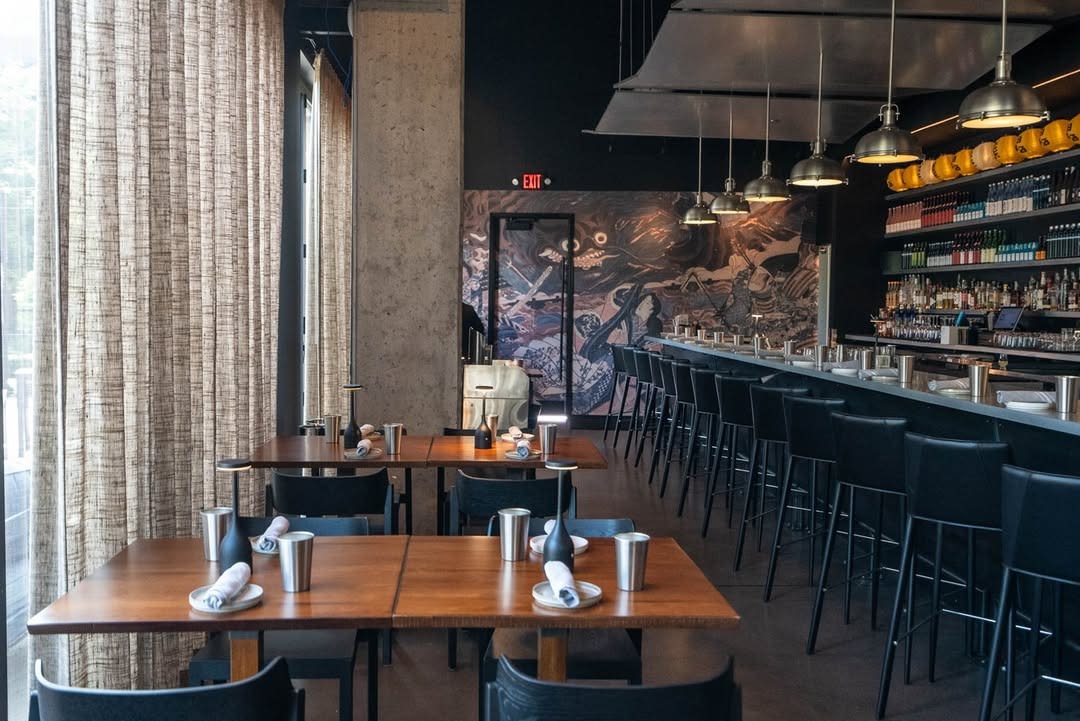
The Izakaya Format in a Suburban American Context
The izakaya model has always been misread in American markets. Transplanted to strip malls and food halls, it often lands as either a sake bar with appetizers or a Japanese gastropub with an identity problem. What makes the format work in its original context is a specific hierarchy: drinks come first, food is ordered progressively through the evening, and the kitchen's job is to sustain the session rather than headline it. When that logic holds, the bar program and the food menu develop a genuine relationship. When it breaks down, you get a kitchen trying to be a restaurant that happens to serve cocktails.
M Izakaya, positioned at 4 Fenton Main St in Cary's Fenton development, operates in a market where that distinction matters. Fenton opened as a deliberate attempt to build a walkable, restaurant-dense environment in a suburb that had long depended on car-centric dining corridors. The development now anchors a cluster of independent food and drink operators, giving M Izakaya a neighborhood fabric that most suburban izakaya concepts lack entirely. That context shapes how the venue functions: guests arrive from adjacent bars, linger through multiple rounds, and treat the food program as the through-line of an evening rather than its conclusion.
How the Drinks-First Model Works on the Floor
The izakaya tradition draws its coherence from sake, shochu, and Japanese whisky acting as structural elements around which small plates rotate. In Japanese practice, highballs made with Suntory Toki or Nikka Coffey Grain are standard session anchors precisely because their moderate proof and carbonation allow for three or four over the course of an evening without closing the palate down. Spirits-forward cocktails using Japanese whisky occupy a more deliberate position in the sequence, typically arriving later in the sitting.
Bars that execute this well, including Kumiko in Chicago, which has built a reputation around Japanese spirits integrated into a Western cocktail framework, demonstrate that the pairing logic extends beyond sake-and-sashimi orthodoxy. The framework is more transferable than it appears: what matters is that the drinks list and the food menu are calibrated against each other, rather than developed independently and stapled together on opening night. Bar Leather Apron in Honolulu takes a comparable approach, using a restrained cocktail program to frame a food menu that extends rather than dominates the experience. M Izakaya's placement within the Fenton development, where guests may have started the evening at a neighboring venue, means the bar program needs to function both as an arrival point and as a sustained session format.
Food as Infrastructure for the Bar
The editorial substance of any izakaya sits in this question: does the kitchen understand its role? The strongest izakaya food programs are built around salt, fat, and umami calibrated to keep glasses moving. Yakitori and skewered proteins work because they arrive in small increments, sustaining the table without demanding the focused attention that a composed main course requires. Fried items, pickles, and cold preparations serve different functions across the arc of a session: fried food absorbs, pickles reset, cold plates refresh the palate between rounds.
That functional logic is well-established at bars that have thought carefully about the food-drink relationship. Jewel of the South in New Orleans and ABV in San Francisco both run kitchens structured around extending the drinking experience rather than competing with it, and both have earned sustained critical attention as a result. The distinction is clearest when you compare them to venues where the food and bar programs feel like they belong to different businesses sharing a room.
In the Triangle market, where Bond Brothers Beer Company and Fortnight Brewing Company have established serious craft beer identities, and where a'Verde Cocina + Tequila Library operates around a spirits-and-food pairing model, M Izakaya occupies a distinct category. The izakaya format is the only one in Cary's current bar scene that foregrounds Japanese spirits and sake as the structural logic of the menu. Craft Public House serves a different function in the neighborhood: broader in format, less focused on pairing discipline.
Cary's Fenton Development and the Venue's Neighborhood Position
Fenton is a planned mixed-use district that opened in phases beginning in 2021, and it represents a specific experiment in Triangle-area real estate: can you build walkable density in a suburb that grew up around highways and parking lots? The answer, judged by the density and quality of operators who have taken space there, is partially yes. The development has attracted independent restaurants and bars that would previously have settled in Durham or Chapel Hill, closer to the pedestrian infrastructure those cities already had.
For an izakaya concept, the location logic is sound. The format depends on guests willing to linger, and Fenton's walkable cluster of venues creates the conditions for extended evenings that a standalone suburban location rarely generates. Guests moving between venues across the development create the kind of foot traffic that benefits a bar-first model far more than a restaurant-first one. Planning a visit on a Thursday or Friday evening makes the most of that dynamic; weekends attract higher volume and the format works better with a slightly slower pace.
Those planning to visit can find M Izakaya at Suite 120B on Fenton Main Street. Given the limited availability of venue-specific operational details at time of writing, confirming hours and any reservation requirements directly before visiting is advisable, particularly for weekend evenings when the Fenton development draws its largest crowds. For a broader view of what Cary's dining and drinking scene currently offers, our full Cary restaurants guide maps the development across multiple categories.
Where M Izakaya Fits in a Wider Drinks Map
For readers approaching this as part of a wider trip through the region's bar scene, it helps to understand where the izakaya format sits relative to the American craft cocktail programs that have defined premium bar culture over the past decade. Venues like Julep in Houston, Superbueno in New York City, and The Parlour in Frankfurt each represent a different kind of pairing-first discipline: spirits chosen to anchor a food or flavor identity, and menus built outward from that anchor. The izakaya format operates on similar logic, but the reference points are narrower and the session structure is more prescribed.
What M Izakaya offers the Triangle market is precisely that narrowness. A focused format executed well is more useful to a city's bar ecosystem than a broadly conceived venue executing a generic program adequately. Whether the kitchen and bar have achieved the calibration that makes the izakaya model coherent is something each visit reveals, but the structural conditions, a walkable development, a drinks-first format, and a market with limited direct competitors in the category, are in place.
Frequently Asked Questions
- What's the signature drink at M Izakaya?
- Specific current menu items are not available in our verified data at time of writing. The izakaya format typically anchors its drinks program around Japanese whisky highballs, sake, and shochu, with cocktails built to complement rather than compete with the food menu. For confirmed current offerings, checking directly with the venue before visiting is the most reliable approach.
- What's the main draw of M Izakaya?
- The primary draw is the izakaya format itself, which remains the only drinks-first Japanese bar program currently operating within Cary's Fenton development. In a Triangle market that skews toward craft beer and American cocktail programs, a sake- and Japanese spirits-focused venue occupies a distinct position. The Fenton location adds walkable context that most suburban bar concepts in the area lack.
- Do they take walk-ins at M Izakaya?
- Specific booking policy details are not confirmed in our current data. As a bar-format venue within a mixed-use development, walk-in capacity is often available, particularly on weeknights. Weekend evenings at Fenton attract significant foot traffic across the development, so arriving early or confirming availability in advance is a reasonable precaution. No phone or website data is available in our records to verify current policy directly.
- Is M Izakaya a good option for groups looking to drink and eat across an extended evening in Cary?
- The izakaya format is structurally well-suited to groups who want to order progressively through an evening rather than commit to a set menu from the outset. Food in this format arrives incrementally, calibrated to extend the bar session rather than anchor a single sitting. Within Cary's current dining and drinking options, the combination of a Japanese spirits program and a food menu designed around that pairing logic gives M Izakaya a clear identity for groups planning a multi-hour evening at Fenton.
Nearby-ish Comparables
A fast peer set for context, pulled from similar venues in our database.
| Venue | Cuisine | Price | Notes |
|---|---|---|---|
| M Izakaya | This venue | ||
| Bond Brothers Beer Company | |||
| Craft Public House | |||
| Fortnight Brewing Company | |||
| Hank's Downtown Dive | |||
| Lugano Ristorante |
Need a Table?
Our members enjoy priority alerts and concierge-led booking support for the world's most difficult bars and lounges.
Get Exclusive Access