LON’s at The Hermosa Inn
LON's at The Hermosa Inn occupies a 1930s hacienda compound in Paradise Valley, where adobe walls, open-air terraces, and desert-facing patios define the setting as much as the kitchen does. The restaurant sits within one of the Arizona valley's most storied boutique inn properties, placing it in the same conversation as the region's serious destination-dining addresses.
 Discover on Pearl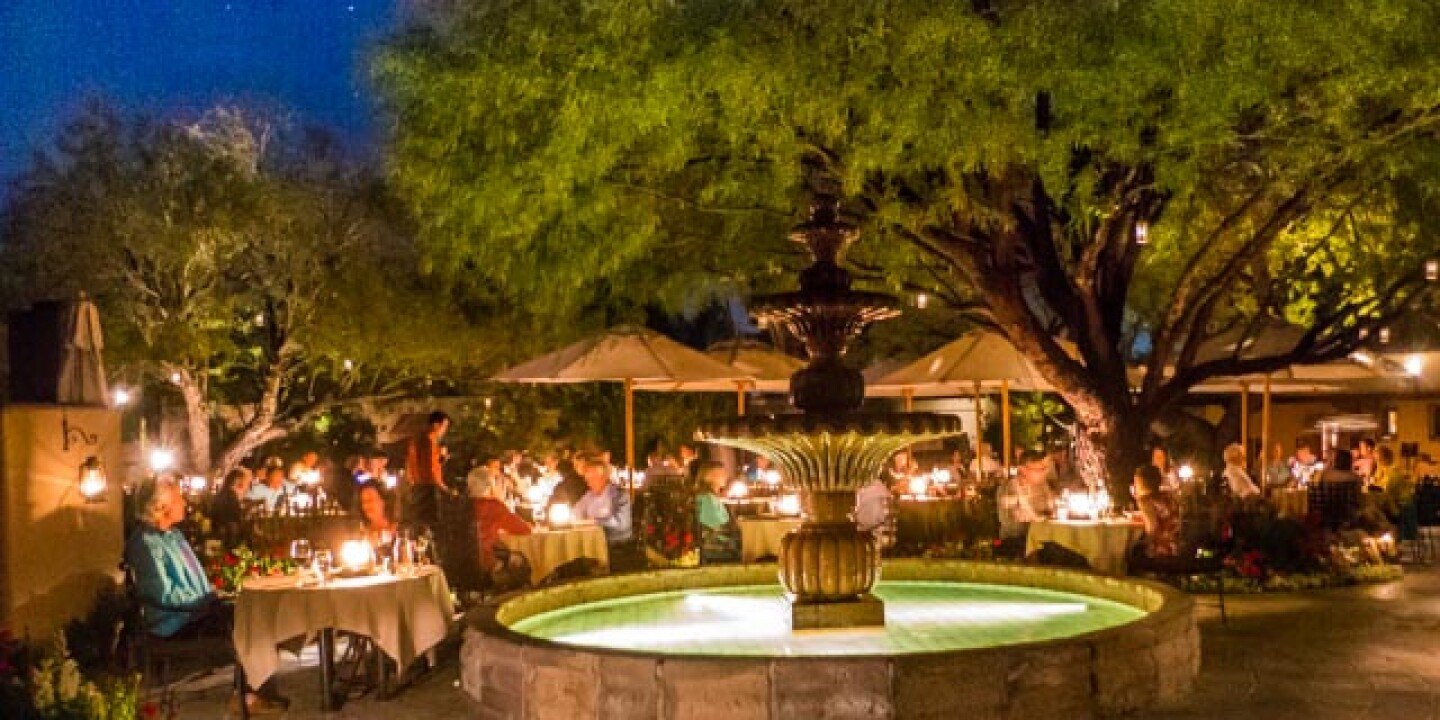
Desert Architecture as Dining Context
There is a particular category of American restaurant that only works because of where it sits. LON's at The Hermosa Inn belongs to that category. The dining room and its surrounding terraces occupy a 1930s hacienda-style compound in Paradise Valley, Arizona, and the physical environment does as much editorial work as any plate that leaves the kitchen. Adobe walls, low-slung wooden beams, and an open-air orientation toward the Sonoran Desert establish the atmosphere before the menu enters the conversation.
Paradise Valley operates at a different register from Scottsdale's busier restaurant corridors. The town has no commercial strip; its dining addresses are spread across resort and estate properties, and the mood skews toward the unhurried. LON's sits within that pattern, which means guests arriving for dinner are already in a setting shaped by distance from ambient noise. That separation is part of the value proposition for a certain kind of traveler, particularly those combining a stay at The Hermosa Inn with serious meals at an in-house restaurant. For the full picture of dining options across the valley, see our full Paradise Valley restaurants guide.
The shortlist, unlocked.
Hard-to-book tables, cellar releases, and concierge-planned trips.
Get Exclusive Access →Light, Layout, and the Patio Argument
The case for outdoor seating at LON's is strong by any regional standard. The Sonoran Desert's evening light, particularly in the shoulder months between February and May and again from October into November, produces conditions that no interior lighting design can replicate. As temperatures drop after sunset, the terrace becomes the preferred seat, with the desert skyline visible to the north and the warmth of the adobe compound holding some of the day's heat. This is the kind of atmospheric advantage that sets apart destination restaurants in the American Southwest from their urban counterparts.
Indoors, the hacienda architecture guides the spatial logic. Low ceilings, warm materials, and a scale calibrated to a boutique property rather than a large resort keep the room from reading as cavernous or impersonal. The Hermosa Inn as a property was built around the studio of cowboy artist Lon Megargee, and that legacy informs the decorative register of the space: Southwestern American art and materials rather than generic resort aesthetics. The restaurant name is a direct reference to Megargee, which anchors LON's within a specific local history rather than treating the building as a backdrop.
Where LON's Fits in the Arizona Destination-Dining Picture
Arizona's premium dining geography has consolidated around Scottsdale and Paradise Valley, with a smaller set of addresses operating as genuine destination restaurants rather than resort amenities. LON's competes within the latter group, where the physical setting carries argumentative weight alongside the food. Comparable destination-dining properties in the Southwest tend to divide between properties that emphasize modern chef-driven formats and those that foreground the architecture and landscape. LON's sits closer to the second model, where the continuity of place and the sensory experience of a specific building shape the evening as much as any individual menu decision.
Paradise Valley's peer set for this kind of dining includes El Chorro, which has operated as an evening destination in the same geography for decades, and jade bar at Sanctuary Camelback Mountain, which commands a competing view orientation. Each of these addresses draws partly on location and partly on format. LON's distinction lies in the historical depth of the Hermosa Inn compound and the intimacy of a property that has remained boutique in scale.
The Drinks Program in Context
Cocktail culture in American destination restaurants has shifted significantly over the past decade, moving from generic resort drink lists toward programs with genuine craft ambition. That shift is visible at the serious end of the spectrum in cities like Chicago, where Kumiko runs a Japanese-influenced program with sustained critical attention, or in Houston, where Julep has built a Southern spirits identity. In Honolulu, Bar Leather Apron in Honolulu operates within a similarly hospitality-forward format. In New Orleans, Jewel of the South in New Orleans draws on the city's deep cocktail history. Closer to the LON's model, resort-adjacent bars in the American West tend to anchor their programs around local spirits and regional flavor profiles, with agave-based cocktails carrying particular relevance in Arizona given the geography.
Guests focused on the drinks side of an evening at LON's should expect the agave and Southwestern botanicals thread to appear across the list, consistent with where the broader Arizona beverage scene has moved. The same regionalism that informs the architecture tends to inform the bar program at this kind of address. For those building a broader cocktail itinerary across American cities, ABV in San Francisco, Superbueno in New York City, Allegory in Washington, D.C., Bar Kaiju in Miami, and The Parlour in Frankfurt on the Main each represent the format's range across markets.
Planning a Visit
The strongest argument for timing a visit to LON's falls between October and May, when Phoenix-area temperatures allow for outdoor dining without the constraints of peak summer heat. The Hermosa Inn operates as a boutique property with limited rooms, which means the restaurant draws a mix of in-house guests and outside diners rather than functioning as a resort dining room scaled for large group volume. That balance tends to keep the room quieter and the service more attentive than at larger resort properties in the Scottsdale corridor. Guests staying on-property can move directly between accommodation and the restaurant without coordinating transportation, which has practical value in a town designed around private vehicles. For reservations and current hours, contacting The Hermosa Inn directly through their main property channel is the most reliable route, as specific booking and scheduling details for LON's are leading confirmed at the source.
Frequently Asked Questions
- What should I expect atmosphere-wise at LON's at The Hermosa Inn?
- The setting is a 1930s hacienda compound in Paradise Valley, with Adobe construction, low ceilings, and open terraces oriented toward the Sonoran Desert. The scale is boutique rather than resort-grand, and the evening mood, particularly on the outdoor patio during the cooler months, tends toward the unhurried. Paradise Valley's remove from Scottsdale's denser commercial areas reinforces that register.
- What should I drink at LON's at The Hermosa Inn?
- The regional pattern at Arizona destination restaurants points toward agave-forward and Southwestern botanical cocktails as the most coherent ordering logic. The property's historical identity and the broader Arizona beverage scene both support that direction. Guests who want to compare craft cocktail formats across American cities will find useful reference points at addresses like Kumiko in Chicago or Jewel of the South in New Orleans.
- What is LON's at The Hermosa Inn leading at?
- The clearest case for LON's is the atmospheric proposition: a historically grounded hacienda setting in a quiet stretch of Paradise Valley, with outdoor terrace seating that draws on the desert environment in a way that urban restaurants cannot replicate. Within the Arizona destination-dining tier, it occupies the niche where architecture and place carry more weight than chef-led culinary programming.
- Is LON's at The Hermosa Inn reservation-only?
- Given the boutique scale of The Hermosa Inn property and the demand pattern typical of Paradise Valley destination dining, booking ahead is the practical approach, particularly on weekends and during the October-to-May peak season. Specific reservation policies are leading confirmed directly with the property, as real-time availability and booking channel details sit outside what can be reliably verified here.
- What is the historical significance of the LON's name and setting?
- The restaurant takes its name from Lon Megargee, the cowboy artist who built the original hacienda compound in the 1930s as his personal studio and residence. That origin distinguishes The Hermosa Inn from properties assembled around a generic resort concept, and it gives LON's a specific architectural and cultural identity anchored in early Arizona history. Within the Paradise Valley dining scene, that depth of provenance is uncommon, and it positions the restaurant as a reference point for guests interested in the region's pre-resort cultural record.
Style and Standing
A compact peer snapshot based on similar venues we track.
Need a Table?
Our members enjoy priority alerts and concierge-led booking support for the world's most difficult bars and lounges.
Get Exclusive AccessThe shortlist, unlocked.
Hard-to-book tables, cellar releases, and concierge-planned trips.
Get Exclusive Access →