Launderette
A fixture on Austin's East Side, Launderette operates from a converted laundry on Holly Street and draws a steady crowd of regulars who return for the room as much as the plate. The space bridges the neighbourhood's industrial past with a dining culture that rewards repeat visits — the kind of place where the experience deepens the better you know it.
 Discover on Pearl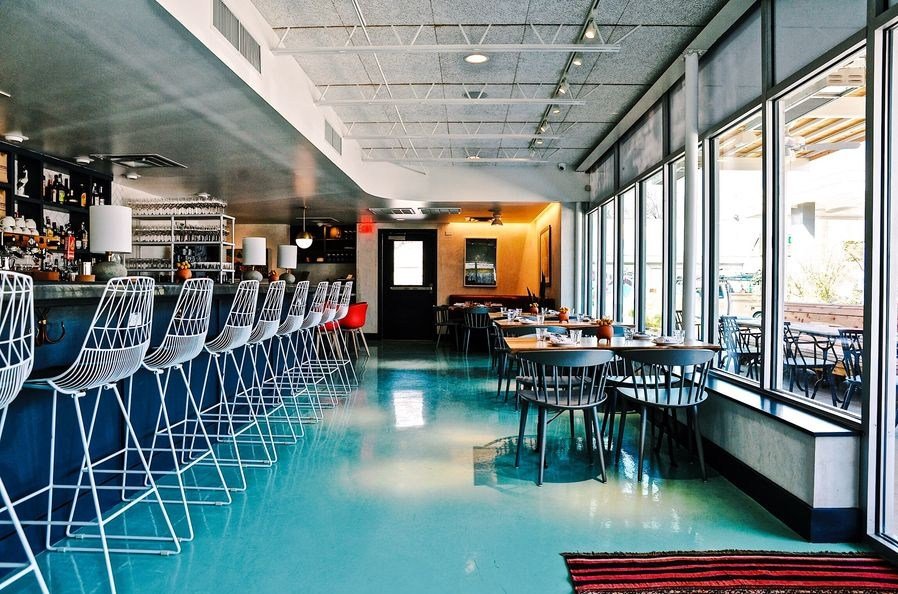
A Room That Earns Its Regulars
East Austin's dining corridor along Holly Street has filled in steadily over the past decade, moving from vacant lots and auto shops to a stretch that now holds some of the city's more considered restaurant rooms. Launderette sits at 2115 Holly St in a converted laundromat — the bones of the original building still legible in the proportions and materials — and the physical environment does a specific job: it signals that the neighbourhood is the point, not a backdrop. The high ceiling, worn surfaces, and open layout create the conditions for a room where regulars feel at home from the first visit and more so by the fifth.
That dynamic , a room that rewards familiarity , is increasingly what separates the lasting East Side addresses from the ones that peak on opening month. Austin's restaurant culture has matured enough that the question is no longer which new opening is worth the detour, but which rooms are still full two years later. Launderette answers that question with a consistent clientele who have, over time, shaped the atmosphere as much as the kitchen has.
The East Side Context
East Austin's 78702 zip code has become one of the more closely watched dining corridors in Texas, with a density of independent operators that places it in a different category from the tourist-facing Sixth Street strip or the corporate-anchored Domain development north of the city. The neighbourhood's trajectory mirrors patterns visible in similarly gentrified urban zones across American cities: early creative tenants anchor a block, rents follow, and the question becomes which operators had enough structural depth to survive the cycle. Launderette's Holly Street address was an early claim on this shift, and the converted-building format has since become a template others have followed.
For visitors trying to read the Austin restaurant scene, the East Side functions as a useful reference point. Bars like Nickel City and 2500 E 6th St anchor the drinking side of the neighbourhood, while Launderette holds the dinner-destination slot for a clientele that is broadly local and repeat rather than tourist and transient. That distinction matters for how the room operates: the kitchen and front-of-house are calibrated for guests who already know what they want, not for first-timers needing a guided orientation.
What Keeps Regulars Returning
The regulars' perspective on any restaurant is shaped by a different set of variables than the first-timer's. First-timers notice the room, the menu structure, the noise level. Regulars notice whether the kitchen is consistent across seasons, whether the staff recognises them, and whether there is enough depth in the menu to sustain multiple visits without repetition. Launderette's durability on the East Side suggests it performs on all three counts, though the specific menu data that would confirm dish-level consistency is not available for citation here.
What the physical format does confirm is intent. Converting an existing industrial building rather than building from scratch is a choice that carries costs , structural compromise, spatial constraint, the impossibility of designing out every awkward corner , and operators who make that choice are usually signalling something about the kind of room they want to run. The laundromat shell at Holly Street creates an environment that is neither precious nor performative, which tends to attract a clientele with a similar disposition. Regular guests at rooms like this are not there for occasion dining; they are there because the room fits into their life at a frequency that occasion dining never could.
This pattern is visible across cities where converted-industrial dining rooms have become neighbourhood anchors: the format self-selects for a certain kind of loyalty. It is worth comparing Launderette's position in Austin to how rooms like Jewel of the South in New Orleans or Kumiko in Chicago operate within their own neighbourhoods , each occupying a specific cultural slot that is legible to locals and requires some decoding for visitors. In Austin's case, the Holly Street address is that kind of destination: known to the people who matter to it, less prominent to the broader national dining conversation.
Austin's Independent Dining Tier
Austin sits in an interesting position nationally: large enough to support a genuine fine-dining tier, but with a cultural identity that has historically rewarded casual-but-serious operators over formal tasting-menu rooms. The city's independent dining scene competes on neighbourhood presence and culinary point of view rather than ceremony and Michelin infrastructure , Texas has received Michelin coverage only recently, and the guide's arrival reshuffled which operators were suddenly legible to visiting food press. Launderette predates that shift and built its audience without it.
That sequence matters. Restaurants that built their regular clientele before major-guide coverage tend to operate with a different internal logic than those positioned from the start for critical recognition. The room at Holly Street was not designed around a Michelin inspector's priorities; it was designed around the neighbourhood's rhythm. Whether that means a more relaxed service register or a menu that evolves on its own terms rather than in response to external ranking pressure is the kind of thing regulars learn over time.
For visitors coming from cities where the cocktail and dining scenes are more tightly integrated, Austin's East Side offers a useful parallel. The proximity of bars like Aba Austin and the broader 6th Street East corridor means that a Launderette dinner fits naturally into a longer evening that moves between venues. Comparable evening-architecture thinking applies in cities like San Francisco, where ABV occupies a similar pre- or post-dinner slot, or in New York, where Superbueno anchors a neighbourhood block in a way that rewards sequential visits rather than standalone destination trips.
Planning Your Visit
East Austin restaurants at this level of local reputation tend to fill on weekend evenings without much advance notice being necessary for the room to operate at capacity. Midweek bookings are typically easier to secure, and the neighbourhood rewards a slower evening rather than a rushed one , the blocks around Holly Street are walkable enough that arriving early and leaving late fits naturally into the experience. For visitors staying outside the East Side, the drive or rideshare from downtown is short, and the surrounding blocks offer enough additional stops to make a longer evening worthwhile.
Those planning a broader Austin evening should note that the East Side bar and restaurant density makes sequential venue visits practical. The Alamo Drafthouse Cinema Slaughter Lane adds a different format to the mix for those building a full evening, and the city's independent dining and drinking scene , covered in more detail in our full Austin restaurants guide , has enough depth that a single evening rarely covers all of it. For those comparing Austin to other Southern and Southwest cities, the independent bar and restaurant culture has points of overlap with what Julep in Houston or Bar Leather Apron in Honolulu represent in their own markets: a local-first operation with a regular clientele that functions as the room's real identity. Even internationally, operators like The Parlour in Frankfurt on the Main reflect a similar philosophy of neighbourhood-first hospitality that transcends geography.
Know Before You Go
- Address: 2115 Holly St, Austin, TX 78702
- Neighbourhood: East Austin (78702)
- Format: Converted laundromat building; neighbourhood restaurant
- Booking: Contact the venue directly or check current reservation platforms for availability
- Timing: Midweek evenings typically offer easier access than Friday and Saturday; East Side dining rewards a longer, unrushed evening
- Getting there: Short rideshare or drive from downtown Austin; street parking available on surrounding blocks
Frequently Asked Questions
- What should I try at Launderette?
- Specific dish-level recommendations require current menu data that changes seasonally, so the most reliable approach is to ask the staff on arrival what has been consistent across the room's tenure. Launderette's cuisine format is grounded in the kind of American cooking that suits repeat visits rather than single-occasion showpieces , approachable in register but with enough kitchen discipline to hold a regular clientele. The room's awards record and cuisine specifics are not fully documented in publicly available databases, so direct engagement with the venue is the most accurate route to current menu intelligence.
- What's the main draw of Launderette?
- The primary draw is the room itself , a converted East Austin laundromat that functions as a neighbourhood anchor for a repeat-visit clientele rather than a destination stop for out-of-town diners. That local loyalty shapes the atmosphere in ways that price point and awards alone do not: the room operates at a frequency and familiarity that most new openings cannot replicate. Within Austin's independent dining tier, that kind of durable neighbourhood presence is a credential in its own right.
- How far ahead should I plan for Launderette?
- Austin's East Side restaurant demand has grown significantly as the neighbourhood's profile has risen, and rooms with established local followings tend to fill on weekends with less lead time available than visitors might expect. Booking one to two weeks ahead for weekend evenings is a reasonable baseline; midweek visits can often be arranged with shorter notice. The venue's current booking method and contact details are leading confirmed directly, as operational policies shift and are not comprehensively captured in third-party listings.
- Is Launderette a good option for a neighbourhood dinner versus a special-occasion meal?
- Launderette's format and following place it firmly in the neighbourhood-dinner category rather than the occasion-dining tier. The converted-building setting and East Austin address signal a room calibrated for regulars rather than celebrations, and the clientele reflects that. Visitors looking for Austin's more formal tasting-menu experience will find it elsewhere in the city, but those seeking a room with genuine local character , the kind that accumulates over years of repeat visits rather than a single headline opening , will find Launderette a more representative address for what the East Side has become.
Standing Among Peers
A compact comparison to help you place this venue among nearby peers.
| Venue | Awards | Cuisine | Notes |
|---|---|---|---|
| Launderette | This venue | ||
| The Roosevelt Room | |||
| Nickel City | World's 50 Best | ||
| DuMont's Down Low | |||
| Eden Cocktail Room | |||
| Half Step |
Need a Table?
Our members enjoy priority alerts and concierge-led booking support for the world's most difficult bars and lounges.
Get Exclusive Access