On Rue Tiquetonne in the 2nd arrondissement, La Maison du Saké brings one of Paris's most focused Japanese spirits programs to a city better known for wine and whisky. The bar treats sake not as a curiosity but as a serious category, pairing imported Japanese brewing tradition with the convivial register of a Parisian bar. It sits in a compact tier of Paris venues where the drink list does the heavy editorial work.
Pearl is the En Primeur Club membership app — saves, bookings, and concierge access live there. Same editors, same standards.
- Address
- 11 Rue Tiquetonne, 75002 Paris, France
- Phone
- +33 1 53 40 81 77
- Website
- lamaisondusake.com
- Directions
- Get directions
 Saves & bookings on Pearl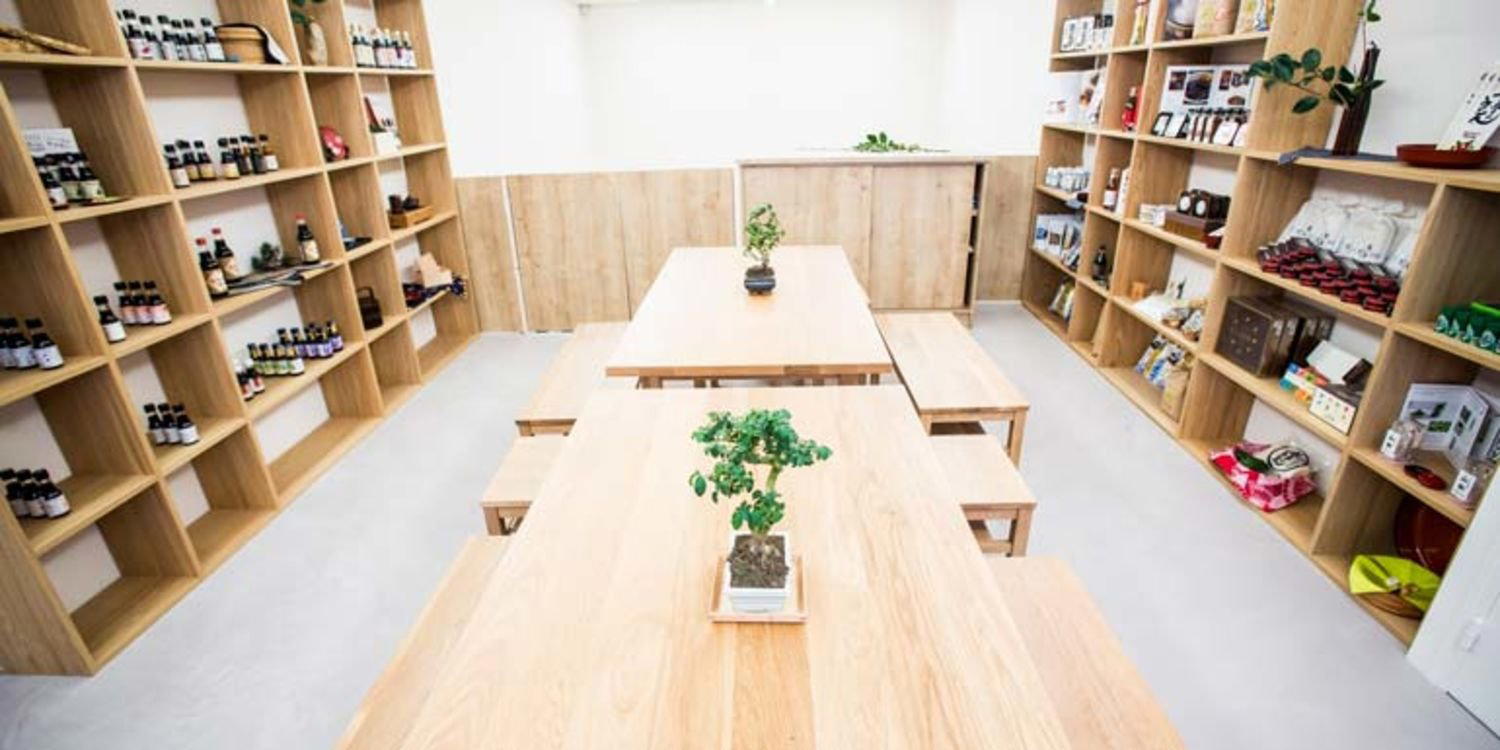
Rue Tiquetonne cuts through the 2nd arrondissement at the edge of the old garment district, a street that has spent the last decade accumulating bars and small restaurants without losing its slightly scruffy, working-Paris character. The building fronts here are narrow, the signage modest, and the distinction between a serious drinking destination and a neighbourhood pivot tends to resolve only once you step inside. The room announces a specific intention: sake, treated with the editorial seriousness that wine bars in this city apply to Burgundy or Champagne.
Where Japanese Brewing Meets the Parisian Bar Format
Paris has absorbed Japanese drinking culture in fragments over the past two decades: izakaya-adjacent restaurants in the 1st and 11th, whisky-forward bars with deep Japanese single-malt programs, and a handful of ramen-adjacent sake lists. What La Maison du Saké represents is a different category commitment altogether. The bar is organised around sake as the primary subject, not as an accompaniment or a niche column on an otherwise conventional drinks menu.
That structural choice places it in a narrow category. Across Paris, bars with a comparable level of category depth in a single imported spirit tend to cluster around Scotch, mezcal, or rum. A bar anchored to sake sits in a narrower niche, which means the list has to function both as an introduction for the curious and as a serious document for the already-convinced. The approach common to this format, in Tokyo, London, or New York, is to organise by brewing style: junmai, ginjo, daiginjo, and aged or sparkling variants. Whether La Maison du Saké follows that taxonomy precisely is less significant than the fact that the format itself requires editorial curation rather than simple procurement.
The Intersection of Imported Method and Local Register
The editorial angle that makes this address interesting in Paris is not simply that it serves sake, but that sake as a category embodies a particular kind of knowledge transfer. Brewing nihonshu requires rice, water, koji mold, and yeast, all of which are shaped by centuries of Japanese agricultural and microbial tradition. Bringing that category to a Parisian bar on Rue Tiquetonne means translating it through a different hospitality language: the cadence of a French evening, the expectation of food pairing, the conversational rhythm between a bar and its regulars.
This is the same tension that defines the leading category-specialist bars in any European capital. The product is imported, the technique is foreign in origin, and the context of consumption is entirely local. What distinguishes a serious program from a themed novelty is whether the staff can explain the difference between a kimoto-brewed junmai and a modern ginjo in the same way a good wine bar explains the difference between a Meursault and a Puligny. That level of explanation is what converts a curious first visit into a returning habit.
Paris has seen this dynamic work in other categories. Candelaria built its reputation on mezcal and tequila at a time when those categories were still being explained to most Parisian drinkers. Danico operates a technically ambitious cocktail program that requires similar staff knowledge depth. The difference is that sake demands not just technique in service but a willingness to guide drinkers through a category that most still approach with less confidence than they bring to wine.
The Paris Bar Context
The 2nd arrondissement sits between Les Halles and the Grands Boulevards. It is not the arrondissement that Paris drinking guides lead with, which is part of why the neighbourhood rewards a deliberate visit. The streets around Rue Tiquetonne and Rue Montorgueil have accumulated a layered bar scene: cocktail bars, natural wine shops with evening hours, and a few internationally-minded spirits destinations.
Within that frame, La Maison du Saké occupies the role that a specialist bookshop plays in a neighbourhood with too many general retailers: it serves a specific need with a depth that broader venues cannot match. Bars elsewhere in Paris with larger sake selections, like Buddha Bar on Place de la Concorde, embed Japanese drinks within a much broader, atmosphere-driven program. Bar Nouveau operates at the cocktail-forward end of the Paris bar scene. The bar sits apart from both in its category commitment.
For readers building a broader picture of the French bar scene beyond Paris, the same specialist logic applies at different scales: Papa Doble in Montpellier and La Maison M. in Lyon each anchor a specific drinking identity in their respective cities, as do Au Brasseur in Strasbourg, Bar Casa Bordeaux, Coté vin in Toulouse, and Le Café de la Fontaine in La Turbie. The format varies; the principle of category depth over breadth is consistent. You can also find that same discipline at work internationally at Bar Leather Apron in Honolulu, one of the few Pacific bars building a comparable program around Japanese-influenced drinking culture.
Planning Your Visit
The bar is at 11 Rue Tiquetonne in the 2nd arrondissement. The address is walkable from Étienne Marcel metro station. As a category-specialist bar, the visit works well with a specific intention: either to explore a style of sake you have not tried or to ask for a pairing recommendation with whatever food is being served.
| Venue | Category Focus | Arrondissement | Format |
|---|---|---|---|
| The bar | Sake specialist | 2nd | Bar, category-led |
| Candelaria | Mezcal / tequila | 3rd | Bar with kitchen |
| Danico | Cocktail program | 1st | Bar, technique-led |
| Buddha Bar | Pan-Asian, broad spirits | 8th | Bar-restaurant, high volume |
| Bar Nouveau | Contemporary cocktails | 2nd | Bar, cocktail-forward |
Awards and Standing
Comparable venues nearby, for context on price, style, and recognition.
| Venue | Cuisine | Price | Notes |
|---|---|---|---|
| La Maison du SakéThis venue — the venue you are viewing | sake_bar | $$ | Not listed |
| Le Subliminal | lounge | $$ | 9ème arrondissement |
| Le Barav | wine_bar | $$ | Le Marais |
| Les Darons | wine_bar | $$ | Montmartre |
| Early June | wine_bar | $$ | Canal Saint-Martin |
| Le Louxor | lounge | $$ | Barbès |
Continue exploring
More in Paris
Bars in Paris
Browse all →
Restaurants in Paris
Browse all →
Hotels in Paris
Browse all →





At a Glance
- Minimalist
- Elegant
- Date Night
- Casual Hangout
- Design Destination
- Seated Bar
- Sake
Current opening hours
- Monday
- 11 AM–7:30 PM
- Tuesday
- 11 AM–8:30 PM
- Wednesday
- 11 AM–8:30 PM
- Thursday
- 11 AM–8:30 PM
- Friday
- 11 AM–8:30 PM
- Saturday
- 11 AM–8:30 PM
- Sunday
- Closed
Hours can change for holidays and private events. Last verified .
Luminous space with wooden furniture creating a zen, minimalist, and serene atmosphere.