La Belle Hortense on Rue Vieille du Temple occupies a specific niche in the Marais: part wine bar, part bookshop, part literary salon. The format collapses the usual boundaries between drinking, reading, and conversation in a neighbourhood already dense with character. For visitors who want something other than a straight restaurant or hotel bar, it earns its place on the itinerary.
Pearl is the En Primeur Club membership app — saves, bookings, and concierge access live there. Same editors, same standards.
- Address
- 31 Rue Vieille du Temple, 75004 Paris, France
- Phone
- +33 1 48 04 71 60
- Website
- cafeine.com
- Directions
- Get directions
 Saves & bookings on Pearl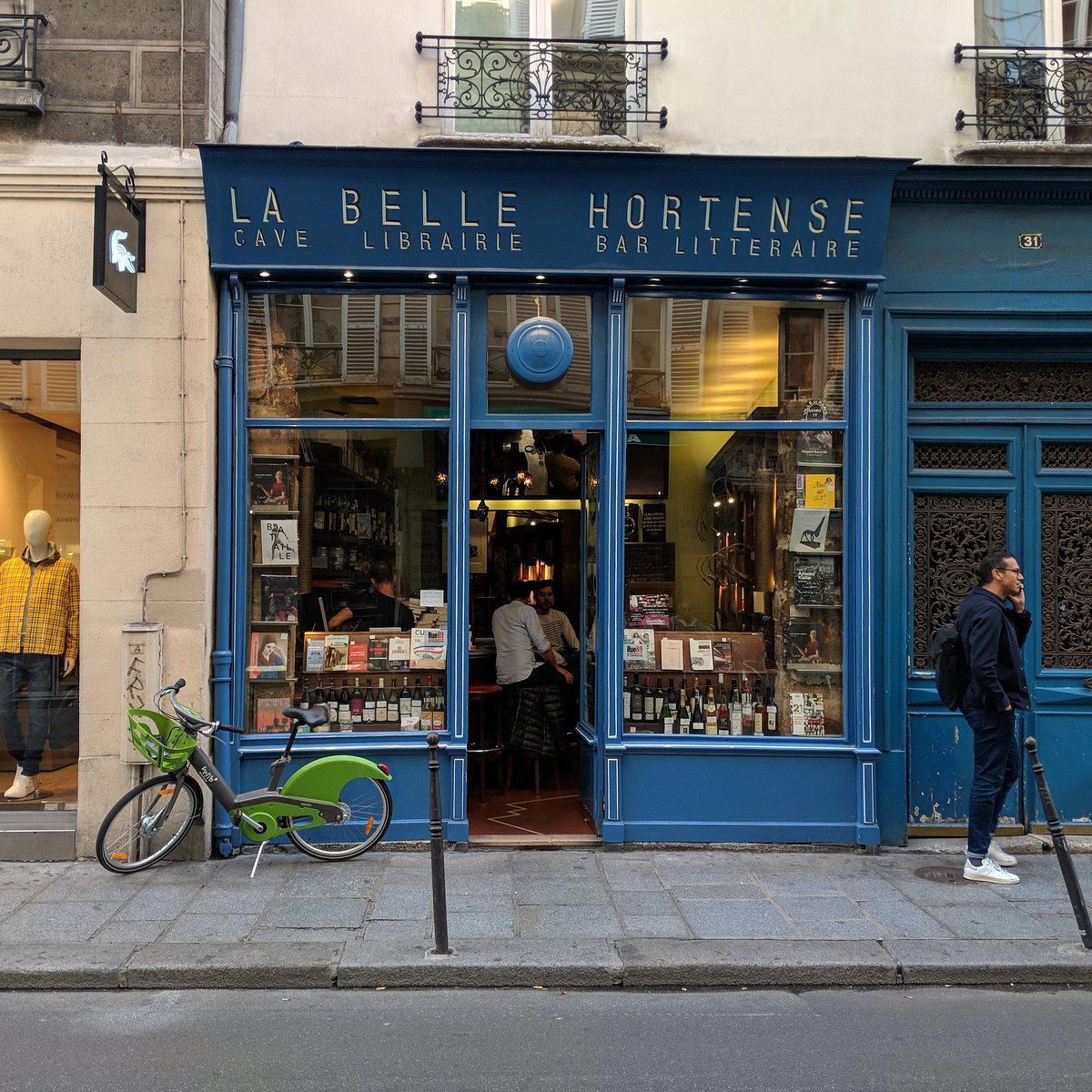
What the Marais Does With a Wine Bar
Rue Vieille du Temple runs through the heart of the 4th arrondissement like a condensed argument for why the Marais retains its hold on Paris. Galleries, concept stores, and a concentration of bars that run from loud to quietly serious line the street in both directions. At number 31, La Belle Hortense occupies a format that would be difficult to categorise anywhere else: a wine bar with floor-to-ceiling bookshelves, a programme of literary events, and an atmosphere that tends toward the deliberate rather than the spontaneous. The approach has made it a reference point in a neighbourhood already dense with options, and it illustrates something broader about how Paris has maintained a certain kind of third-place culture that other cities keep trying to recreate from scratch.
The Architecture of What's on Offer
The menu structure at La Belle Hortense is an editorial statement in itself. In most Paris bars of this postcode, the wine list functions as the entire point; food arrives as a concession. Here, the wine list, the book selection, and the event calendar operate as co-equal elements of a single offering. That structure matters because it tells you something about who the bar is for and what it expects of the people sitting at its tables. It is not designed for a quick glass before dinner. The pacing is slower, the assumption being that the person who picks up a book from the shelf while waiting for a second pour is not out of place but is, in fact, the intended customer.
Wine bars across Paris have split into two rough camps over the past decade: the natural wine operators, often in the 11th and 20th, running tight, rotating lists with zero-intervention producers; and the more classically oriented houses, where French regional depth and cellar age are the primary differentiators. La Belle Hortense belongs neither neatly to one camp nor the other. Its context, the Marais in the 4th, positions it alongside bars like Candelaria and Danico in a neighbourhood where the clientele expects a degree of curation rather than either populist accessibility or maximum technical rigour. The difference is that those bars anchor their identity in cocktail craft; La Belle Hortense anchors in wine and the written word.
Paris Bar Culture and the Literary Format
The literary wine bar format is not an invention of the Marais, but Paris is one of the few cities where it can survive on genuine demand rather than novelty. The combination works here for structural reasons: the neighbourhood has a high density of publishing-adjacent residents and visitors, the French relationship with wine as an intellectual subject rather than merely a sensory one supports a format built around discussion, and the physical design of older Marais buildings, often narrow, high-ceilinged, with deep walls suited to shelving, lends itself to the format without effort. La Belle Hortense did not invent this niche, but it has held it long enough that the bar is now part of how the niche is defined.
Across Paris, bars that sustain a dual identity, wine alongside a secondary cultural function, tend to either sharpen one element at the expense of the other over time or find a stable equilibrium. The evidence at La Belle Hortense suggests the latter. It sits within a broader pattern visible in venues like Bar Nouveau, where the format itself carries as much weight as any individual product on the menu. Compared to the larger-scale production of somewhere like Buddha Bar, which operates on spectacle and volume, La Belle Hortense functions at the opposite end of the scale: low capacity, format-led, with a repeat visitor base that sustains the programme of events rather than tourist throughput alone.
The Marais in Context: Where This Fits
For visitors placing La Belle Hortense within a broader Paris itinerary, the 4th arrondissement positioning is relevant information. The Marais runs roughly from the Centre Pompidou east toward Place de la Bastille, and the density of quality drinking options in this corridor is higher than in most other arrondissements. The bar sits within walking distance of the Place des Vosges and the Picasso Museum, which means it functions naturally as an afternoon or early-evening stop rather than a late-night destination. Bars in the Marais tend to fill earliest among Paris neighbourhoods, and a mid-afternoon arrival at La Belle Hortense is a reasonable way to secure a seat if the format appeals.
For those building a wider picture of the French bar scene beyond Paris, the literary-wine format appears in different registers across the country. La Maison M. in Lyon and Coté vin in Toulouse represent how regional cities have developed their own wine-led bar cultures with local inflection. Bar Casa Bordeaux in Bordeaux operates within a wine region where the bar's list carries different weight by proximity to producers. For the specifically Parisian version of this culture, La Belle Hortense is a cleaner reference point than most. Those travelling further afield might also note Papa Doble in Montpellier, Au Brasseur in Strasbourg, and Le Café de la Fontaine in La Turbie as markers of how bar culture shifts across French regions. Internationally, Bar Leather Apron in Honolulu represents a different model of format-led drinking entirely, though the underlying principle of a bar defined by its point of view rather than its address applies in both cases.
See our full Paris restaurants and bars guide for a broader map of where La Belle Hortense fits within the city's drinking and dining options by neighbourhood and type.
Planning a Visit
La Belle Hortense is at 31 Rue Vieille du Temple in the 4th arrondissement, accessible from the Saint-Paul or Hôtel de Ville Metro stations within a short walk. The bar's dual function as bookshop and wine bar means it draws both browsers and drinkers through the course of the day, with the atmosphere shifting perceptibly from quieter afternoon sessions toward a fuller room by early evening. For those who want to attend a specific literary event, checking the bar's schedule in advance is the practical approach, as the event programme varies and seats for readings or discussions are finite. Walk-ins for a glass of wine and a browse of the shelves are direct during quieter periods, though weekend evenings in the Marais fill fast across all categories of venue.
Standing Among Peers
A short peer table to compare basics side-by-side.
| Venue | Awards |
|---|---|
| La Belle HortenseThis venue — the venue you are viewing | Not listed |
| Bar Nouveau | World's 50 Best |
| Buddha Bar | World's 50 Best |
| Candelaria | World's 50 Best |
| Danico | World's 50 Best |
| Harry's Bar | World's 50 Best |
Continue exploring
More in Paris
Bars in Paris
Browse all →
Restaurants in Paris
Browse all →
Hotels in Paris
Browse all →
At a Glance
- Cozy
- Intimate
- Classic
- Elegant
- Date Night
- Solo
- Casual Hangout
- Historic Building
- Seated Bar
- Lounge Seating
- Conventional Wine
Current opening hours
- Monday
- Closed
- Tuesday
- Closed
- Wednesday
- 5:30 PM–1:30 AM
- Thursday
- 5:30 PM–1:30 AM
- Friday
- 5:30 PM–2 AM
- Saturday
- 1 PM–2 AM
- Sunday
- 1 PM–1:30 AM
Hours can change for holidays and private events. Last verified .
Tranquil cozy atmosphere with soft lighting bookshelves and welcoming vibe for reading and unwinding.
Know Before You Go
- Getting there
- 31 Rue Vieille du Temple, 75004 Paris, France