KPOT Korean BBQ & Hot Pot
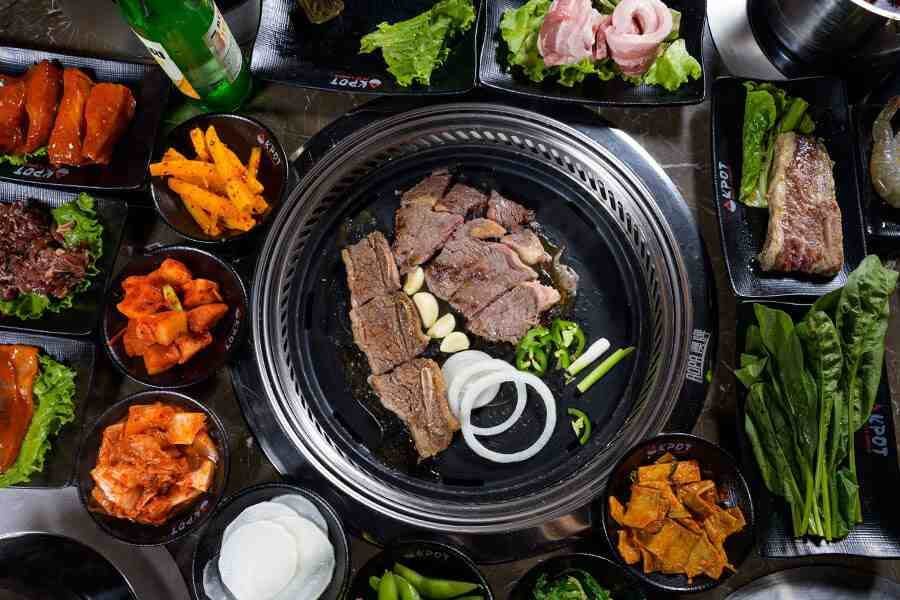
KPOT Korean BBQ & Hot Pot brings the dual-format tabletop cooking experience to Aurora's East Colfax corridor, where diners manage their own grills and simmering broths at the table. The format suits groups and return visitors who prefer an active, self-directed meal over a plated sequence. Located at 14180 E Ellsworth Ave, it occupies a growing corridor of Korean and pan-Asian dining in the Aurora District.

Pearl is the En Primeur Club membership app — saves, bookings, and concierge access live there. Same editors, same standards.
- Address
- 14180 E Ellsworth Ave Unit B, Aurora, CO 80012
- Phone
- (720) 930-9804
- Hours
- Mon–Thu 12–10:30 PMFri–Sat 12–11:30 PMSun 12–10:30 PM
- Website
- thekpot.com
- Directions
- Get directions
Tabletop Fire and Broth: Aurora's Korean BBQ and Hot Pot Scene
The dual-format Korean dining model, where a single table offers both a charcoal or gas grill and a divided hot pot vessel, has expanded steadily across American cities over the past decade. It draws from two distinct Korean traditions: the grill-heavy gogigui culture centered on marinated cuts cooked over live fire, and the communal jeongol and Chinese-influenced hot pot formats that arrived in Korea via Joseon-era trade routes and were later absorbed into Korean-Chinese restaurant culture. KPOT Korean BBQ & Hot Pot, at 14180 E Ellsworth Ave in Aurora, Colorado, positions itself inside that hybrid category, giving diners the option to run both formats simultaneously at a single table.
That combination is less common than it sounds. Most Korean BBQ houses in the United States commit fully to the grill format, with tableside ventilation hoods and metal grates as the defining infrastructure. Hot pot operations typically run as separate concepts. The venues that manage both in one sitting require a different table design, dual heat sources, and kitchen prep that supports two entirely different protein and vegetable presentations. Aurora's East Colfax and Ellsworth corridors have developed enough Korean and pan-Asian dining density, including spots like Daebak Korean Restaurant, that diners in the area now have genuine choice between formats. KPOT occupies the hybrid position in that local set.
The Format in Practice
The self-directed nature of the meal is the defining character here. Unlike a plated tasting format or even a traditional Korean BBQ house where staff manage much of the grill, the KPOT model puts cooking decisions in the diner's hands. Broth temperature, protein sequencing, and cook time are all managed at the table. For groups with mixed preferences, this is a practical advantage: one side of the table can prioritize the hot pot while the other works the grill, and the meal paces itself around conversation rather than a kitchen's sequence.
This style of service has precedent in the broader hot pot tradition. Sichuan mala hot pot chains, Taiwanese shabu-shabu houses, and Korean budae jjigae formats all share a similar philosophy: the kitchen's job is mise en place, and the diner completes the cooking. What differentiates the experience venue to venue is the quality and variety of that mise en place, the broth base options, and how well the ventilation system manages the smoke and steam that accumulate over a long meal. In Aurora's climate, where winter temperatures frequently drop below freezing, a steaming hot pot format has a particular seasonal logic from October through March.
Aurora's Broader Drinking and Dining Context
Aurora's dining scene has diversified significantly over the past several years. The East Colfax corridor and the Stanley Marketplace complex have drawn a range of independent operators, and the neighborhood's drinking options have expanded to match. Cheluna Brewing Company anchors one end of the local craft beer conversation, while Annette and Coffee Story by Barakah Brews represent different points on the neighborhood's daytime and evening spectrum. For a fuller picture of what the area offers across dining and drinking, our full Aurora District restaurants guide maps the current options in detail.
Within that context, a venue like KPOT serves a different function than the neighborhood's more curated bar and restaurant formats. It operates as a social dining destination, where the meal itself is the entertainment and the duration is extended by design. Groups that arrive for a Korean BBQ and hot pot session typically spend ninety minutes to two hours at the table, which shapes the kind of drinking that accompanies the food. Korean soju and beer pairings are the conventional choices with this format, and the carbonation and light body of both work against the heavier, fat-coated flavors that accumulate over a long grill session.
The Spirits Question: What to Drink at a Hot Pot and BBQ Table
The editorial angle assigned to this venue is spirits and back-bar depth, which requires some honest calibration when applied to a tableside-cooking format. KPOT is not a cocktail bar. The drinking culture around Korean BBQ and hot pot in the United States tends toward beer, soju, and occasionally makgeolli, the milky rice wine that pairs particularly well with broth-based courses. Cocktail programs at Korean BBQ houses are still the exception rather than the rule, though a small number of Korean-American dining concepts in cities like New York and Los Angeles have begun developing more serious bar lists.
Kumiko in Chicago runs one of the most considered Japanese spirits programs in the country, with a focus on aged whisky and umeshu that translates well to fermented and grilled flavor profiles. Bar Leather Apron in Honolulu demonstrates how Pacific-facing flavor sensibilities can support a deep spirits list. Jewel of the South in New Orleans, Julep in Houston, Superbueno in New York City, and ABV in San Francisco each represent different models for how a serious bar program can complement a food-forward dining environment. The Parlour in Frankfurt on the Main adds a European reference point for the same conversation about curated spirits programs and food pairing.
At KPOT, the practical drinking advice is simpler: a cold lager or a pour of soju cuts through the char and fat of grilled proteins more cleanly than most cocktails would, and the format does not demand more complexity than that from its drinks list.
Planning the Visit
KPOT Korean BBQ & Hot Pot is located at 14180 E Ellsworth Ave, Unit B, in Aurora, Colorado 80012. The format is well suited to groups of three or more, where the table can divide between grill and hot pot functions and the extended duration of the meal makes logistical sense. Parking in the surrounding area is generally accessible by Aurora suburban standards, and the venue sits within the broader East Ellsworth retail and dining corridor.
Frequently Asked Questions
- What is the general vibe at KPOT Korean BBQ & Hot Pot?
- The atmosphere runs toward the lively and informal end of the dining spectrum. Tabletop cooking formats inherently produce noise, smoke, and movement, and KPOT's setting in a retail corridor in Aurora places it in a casual, neighborhood-oriented register rather than a special-occasion dining environment. Groups and families make up the typical crowd for this format, and the meal tends to be longer and more interactive than a conventional sit-down restaurant visit. Aurora's Korean dining scene, which includes nearby options like Daebak Korean Restaurant, gives useful context for where KPOT sits in the local spectrum.
- What cocktail do people recommend at KPOT Korean BBQ & Hot Pot?
- The conventional pairing for this cuisine format is soju, Korean beer, or makgeolli. Diners looking for a more developed spirits experience before or after the meal can explore Aurora's bar scene, including Cheluna Brewing Company and Annette nearby.
- Does KPOT offer both Korean BBQ and hot pot at the same table, and how does that work in practice?
- KPOT's core format is the dual tabletop setup, where a single table includes both a grill surface and a hot pot vessel, allowing diners to run both cooking methods simultaneously during one meal. This differentiates the concept from Korean BBQ-only or hot pot-only venues, which make up the majority of the category in Colorado. The format is particularly suited to mixed groups, where different preferences can be accommodated without ordering from separate menus. Aurora's growing Korean dining corridor, including Daebak Korean Restaurant, offers useful comparison for diners choosing between single-format and hybrid-format Korean dining experiences.
- Candy Cane Peppermint Martini
- Mistletoe Margarita
- Yule Mule
- Gingerbread Martini
- KPOT Golden Hour
- Florida Man
Cost and Credentials
A quick peer list to put this venue’s basics in context.
| Venue | Price |
|---|---|
| KPOT Korean BBQ & Hot PotThis venue — the venue you are viewing | $20–30 |
| Daebak Korean Restaurant | $10–20 |
| Cheluna Brewing Company | $20–30 |
| La Cueva Restaurant | $20–30 |
Continue exploring
More in Aurora
Bars in Aurora
Browse all →


Restaurants in Aurora
Browse all →
Hotels in Aurora
Browse all →






KPOT Korean BBQ & Hot Pot
The drinks
- Craft cocktails
- Zero-proof drinks
Signature drinks: Candy Cane Peppermint Martini, Mistletoe Margarita, Yule Mule, Gingerbread Martini, KPOT Golden Hour, Florida Man.
Details
- Modern
- Lively
- Energetic
- Group Outing
- Casual Hangout
- Celebration
- Standalone
- Design Destination
- Communal Tables
- Booth Seating
- Lounge Seating
- Craft Cocktails
- Zero Proof
Current opening hours
- Monday
- 12–10:30 PM
- Tuesday
- 12–10:30 PM
- Wednesday
- 12–10:30 PM
- Thursday
- 12–10:30 PM
- Friday
- 12–11:30 PM
- Saturday
- 12–11:30 PM
- Sunday
- 12–10:30 PM
Hours can change for holidays and private events. Last verified .
Modern atmosphere with a full bar, energetic and social dining environment designed for group gatherings and interactive cooking experiences.