
June Wine Bar has anchored Carroll Gardens' natural wine scene since its early days as a neighborhood-first bottle shop with pours. Located at 231 Court St in Brooklyn, it operates in a tier of low-intervention wine bars where the floor staff's knowledge carries as much weight as the list itself. A recent addition to the team has given the program fresh momentum.
Pearl is the En Primeur Club membership app — saves, bookings, and concierge access live there. Same editors, same standards.
- Address
- 231 Court St, Brooklyn, NY 11201
- Phone
- (917) 909-0434
- Website
- junebk.com
- Directions
- Get directions
 Saves & bookings on Pearl
Carroll Gardens and the Natural Wine Bar Format
Brooklyn's natural wine scene developed along different lines from Manhattan's. While the island's wine bars often oriented around price-point theatre and destination dining rooms, Carroll Gardens and its neighboring streets built something quieter: neighborhood-anchored spaces where the list changes frequently, the staff know the producers by name, and the atmosphere resists the kind of formality that turns a glass of piquette into a performance. June Wine Bar, at 231 Court St, has been part of that fabric long enough to function as a reference point rather than a novelty.
The natural wine bar format, as it has evolved in Brooklyn, depends heavily on team coherence. Unlike a cocktail program at a destination bar such as Attaboy NYC or Angel's Share, where a single bartender's technical fluency defines the experience, a wine bar lives or dies on the collective floor knowledge. Whoever pours your second glass needs to know why the first one was correct for you. That dynamic is what separates a serious natural wine program from a bar that simply stocks orange bottles.
A Neighborhood Staple With New Energy
June has operated in Carroll Gardens long enough to qualify as a staple of the local scene, a status that carries its own set of obligations. Regulars expect the list to be curated rather than exhaustive, the staff to be genuinely opinionated, and the room to feel like it belongs to the street it sits on. For most of its history, June has met those expectations reliably enough to build a loyal local following without requiring destination-diner marketing.
What has recently shifted is the team composition. The bar brought on a new addition whose role has injected fresh momentum into the program. The specifics of that hire are deliberately not elaborated here beyond what the public record confirms, but the signal it sends is consistent with a pattern seen across serious wine programs in Brooklyn and beyond: the best-sustained neighborhood bars tend to refresh deliberately rather than radically, adding one strong voice rather than overhauling the room. The effect at June, by available accounts, has been cumulative rather than disruptive, which is the smarter outcome for a venue with an established identity.
Bars like Amor y Amargo have built their identity around a very specific technical focus, in that case bitters and amaro, and every hire reinforces that singular direction. June operates with broader latitude, which means the team dynamic is less about executing a fixed philosophy and more about maintaining a consistent standard across a range of producers, styles, and vintages. That is a harder balance to hold, and it is where front-of-house authority becomes the deciding factor.
How the Team Dynamic Shapes the Pour
In the natural wine tier, sommelier-equivalent knowledge and front-of-house warmth are not separable skills. The list at a bar like June will include wines that require explanation: skin-contact whites that read as flawed to the uninitiated, pét-nats that may or may not be intentionally cloudy, low-sulfur reds that can shift dramatically with temperature. A staff member who cannot bridge the gap between producer intention and guest experience turns those bottles into liabilities. One who can makes them into the reason a customer returns.
This is where the editorial angle of team collaboration becomes directly legible in the product. The recent hire at June does not change the venue's core identity, but it shifts the balance of expertise available on the floor on any given evening. For guests already fluent in natural wine, that means access to a more refined conversation. For guests arriving with curiosity rather than knowledge, it means a more reliable entry point than many neighborhood wine bars provide.
For context, the team-forward model at June sits in the same general category as what more high-profile formats practice in other cities. Kumiko in Chicago and Bar Leather Apron in Honolulu both rely on floor staff whose knowledge is the primary product. Jewel of the South in New Orleans applies a similar discipline to a cocktail-forward program. The mechanism is the same across formats: the guest's experience is only as good as the person holding the bottle or shaker. June operates at neighborhood scale, without the destination bar infrastructure, which makes getting that staffing balance right proportionally more difficult and proportionally more consequential.
Where June Sits in the Brooklyn and New York Picture
Carroll Gardens is not the only Brooklyn neighborhood with serious wine bars, but it has a particular character: residential enough that the crowd is largely local, affluent enough that the price points for serious bottles are sustainable, and dense enough with food culture that a wine bar does not need to be a full restaurant to hold its own. June fits that context precisely. It is not competing with Manhattan's higher-production wine programs, nor is it trying to be a destination import.
For visitors looking to map New York's broader drinking landscape, June represents a format that Manhattan rarely replicates well: the genuinely local wine bar, where the clientele lives within walking distance and the staff has been answering their questions for years. Superbueno offers a different register of Brooklyn bar culture, more cocktail-forward and higher-energy. Allegory in Washington, D.C. and ABV in San Francisco show how the same serious-floor-staff model translates in other American cities. The Parlour in Frankfurt on the Main provides an interesting international parallel for the neighborhood wine bar format done with precision. Julep in Houston demonstrates what neighborhood-anchored drinking culture looks like when the format is built around a specific regional identity rather than producer-driven curation. See our full New York City restaurants guide for broader context on where June sits within the city's drinking and dining map.
Planning Your Visit
| Venue | Format | Booking | Location | Price Tier |
|---|---|---|---|---|
| June Wine Bar | Neighborhood natural wine bar | Walk-in typical | Carroll Gardens, Brooklyn | Not confirmed |
| Amor y Amargo | Bitters-focused cocktail bar | Walk-in | East Village, Manhattan | Mid-range |
| Attaboy NYC | No-menu cocktail bar | Walk-in queue | Lower East Side, Manhattan | Mid-range |
| Superbueno | Latin-influenced cocktail bar | Walk-in / reservations | Greenpoint, Brooklyn | Mid-range |
June is located at 231 Court St, Brooklyn, NY 11201. The Carroll Gardens neighborhood is accessible via the F and G subway lines at Carroll St station.
How June compares with similar nearby venues.
| Venue | Awards |
|---|---|
| June | Star Wine List (2026) |
Recognition history
Dated appearances from independent guides and award organizations, with the underlying list record or original source where available.
Star Wine List
Star Wine List
Continue exploring
More in New York City
Bars in New York City
Browse all →


Restaurants in New York City
Browse all →
Hotels in New York City
Browse all →







At a Glance
- Romantic
- Cozy
- Intimate
- Elegant
- Date Night
- Casual Hangout
- Garden
- Seated Bar
- Booth Seating
- Outdoor Terrace
- Natural Wine
- Craft Cocktails
Current opening hours
- Monday
- 5 PM–12 AM
- Tuesday
- 5 PM–12 AM
- Wednesday
- 5 PM–12 AM
- Thursday
- 5 PM–12 AM
- Friday
- 4 PM–1 AM
- Saturday
- 11 AM–1 AM
- Sunday
- 11 AM–11 PM
Hours can change for holidays and private events. Last verified .
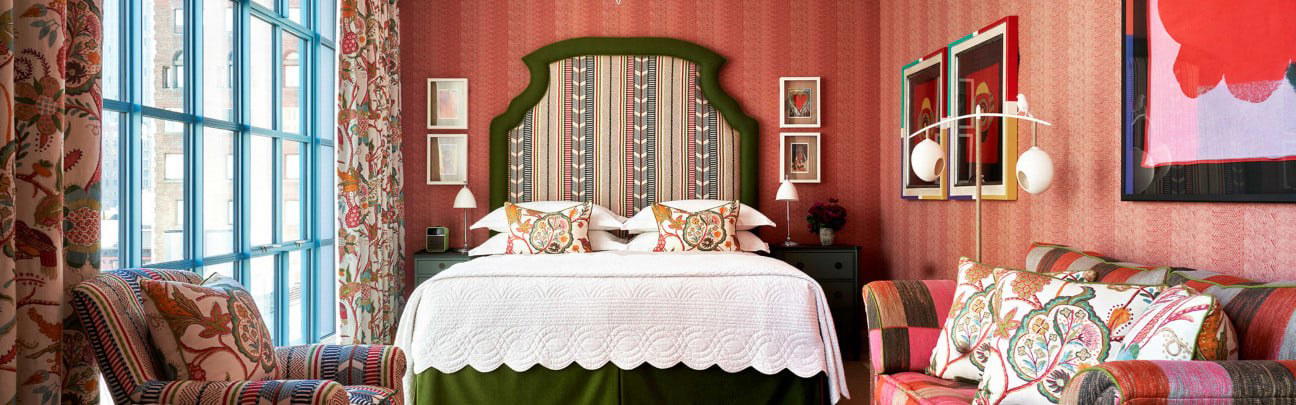
Low-lit with glowing bulbs, dark-wooded cozy interior and spacious booths, evoking a romantic and charming Parisian atmosphere.
Know Before You Go
- Getting there
- 231 Court St, Brooklyn, NY 11201