Holler House | Milwaukee and the Nation’s Oldest Alleys
Holler House on West Lincoln Avenue is Milwaukee's most celebrated dive bar, home to what are widely recognized as the oldest certified bowling alleys in the United States. The two basement lanes, still hand-pinsetted, draw visitors from across the country seeking something the modern entertainment industry has largely erased. It is a working-class tavern that has outlasted every trend aimed at replacing it.
Pearl is the En Primeur Club membership app — saves, bookings, and concierge access live there. Same editors, same standards.
- Address
- 2042 W Lincoln Ave, Milwaukee, WI 53215
- Phone
- +1 262 442 2517
- Website
- geneandmarcyhollerhouse.com
- Directions
- Get directions
 Saves & bookings on Pearl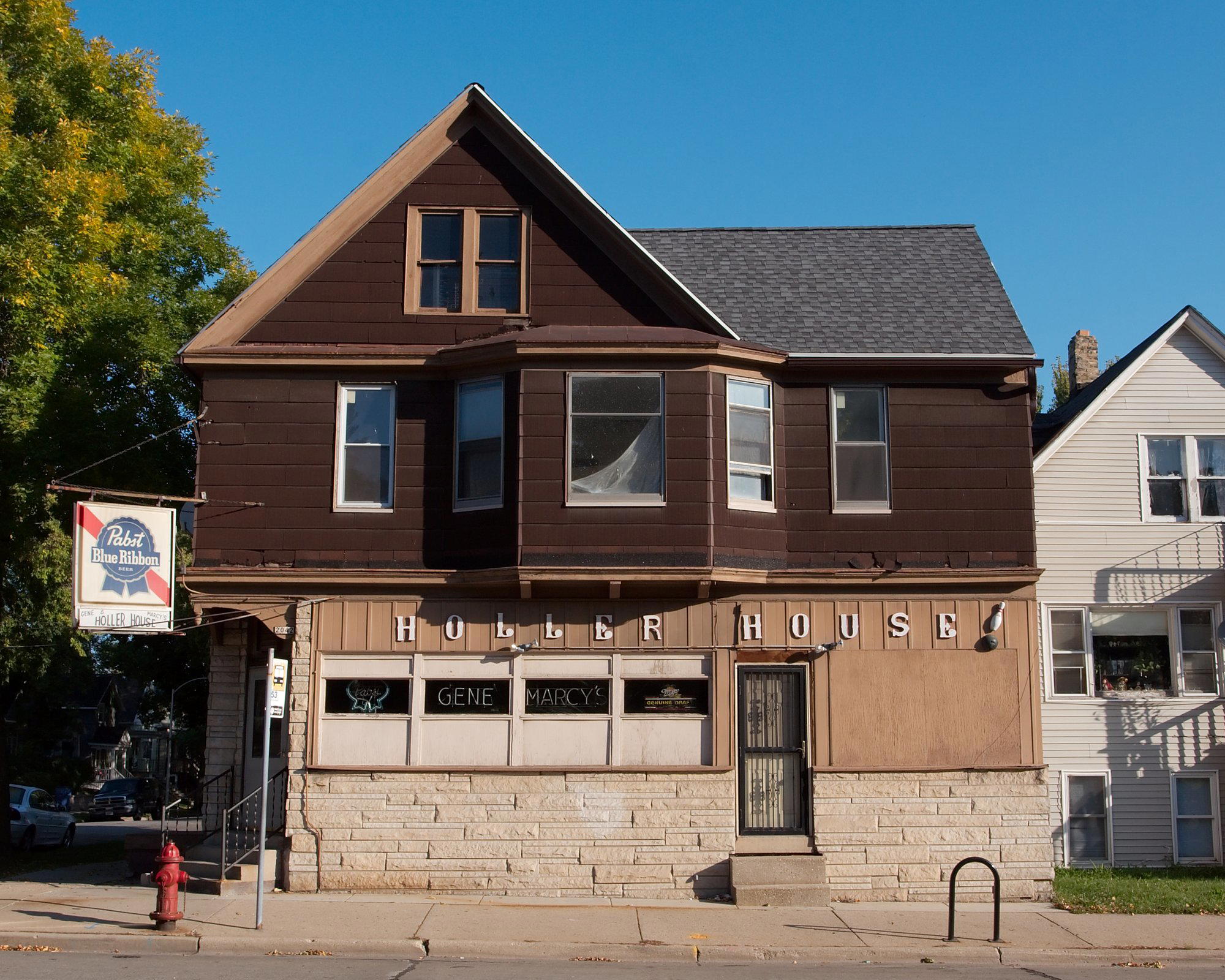
What a Basement in Milwaukee Tells You About American Leisure
Walk down West Lincoln Avenue in Milwaukee's Historic Mitchell Street neighborhood and Holler House announces itself without theater: a narrow storefront, a neon beer sign, the kind of facade that has absorbed decades of Wisconsin winters without apology. Inside, the walls are papered in bras, a tradition whose origins are murky enough to be genuinely folkloric, and the light is the specific amber of a room that predates the idea of mood lighting. The physical environment here is not curated. It accumulated.
Milwaukee has a long tradition of neighborhood taverns functioning as genuine community infrastructure. The city's German and Polish immigrant populations built corner bars into the social fabric of working-class blocks, and many of those establishments have quietly persisted while their urban counterparts in other American cities were replaced by cocktail lounges and hospitality groups. Holler House, at 2042 W Lincoln Ave, sits in that broader tradition, a bar defined less by what it serves than by what it has refused to become.
The Alleys Beneath
The two bowling lanes in the basement are certified by the United States Bowling Congress as the oldest operating bowling alleys in the country, dating to 1908. That credential is not a marketing claim, it is a documented distinction with an institutional source, which is rarer than most vintage-bar branding suggests.
What makes the lanes significant is not age alone but method. The pins are set by hand, meaning someone physically resets them between throws. Mechanical pinsetters became standard across American bowling in the 1950s; the hand-pin tradition that Holler House maintains disappeared from nearly every other commercial alley in the country within a decade of automation's arrival. The experience of bowling here is therefore not nostalgic in the sentimental sense, it is structurally different from anything a standard bowling alley offers. The pace is slower, the negotiation between bowler and pinsetter is direct, and the whole enterprise operates at a human scale that mass-market entertainment facilities abandoned sixty years ago.
This is the editorial angle that matters: Holler House belongs to a category of American venues where the preservation of a specific practice, hand-pinning, in this case, is the product. Similar logic applies to cocktail programs at places like Kumiko in Chicago, where a specific technical format defines the visit, or Jewel of the South in New Orleans, where historical cocktail traditions are the organizing principle. The difference at Holler House is that the practice in question is mechanical and physical rather than culinary.
Sourcing the Experience: What Keeps This Place Honest
Applied to a bar like Holler House, that question shifts from food supply chains to something more fundamental: where does the experience itself come from, and who supplies it?
The answer here is the neighborhood. Holler House draws from the Historic Mitchell Street corridor, one of Milwaukee's most densely Latino commercial streets, a block from a residential grid that has remained genuinely mixed-income. The bar's clientele is not composed primarily of visitors making a pilgrimage to see the old lanes, though that population exists and has grown. It is composed substantially of people who live nearby and treat the place as a local. That source, a stable, proximate, non-touristic community, is what has kept the bar from drifting toward the heritage-experience format that often overtakes venues with a strong historical narrative.
Compare that to the dynamic at Milwaukee's more formal cocktail establishments. At Random draws on a different customer base, oriented around deliberate occasion drinking. Birch and Boone & Crockett both operate in the craft-cocktail register that has dominated urban bar programming for the past fifteen years. Holler House sits outside that category entirely, which is precisely why it draws the same kind of curious visitors who seek out ABV in San Francisco or Bar Leather Apron in Honolulu, bars with a distinct identity that cannot be replicated by formula.
Milwaukee's food and drink scene has developed a parallel track of sourcing-conscious establishments alongside its tavern culture. Braise Restaurant & Culinary School, for instance, built its identity explicitly around regional sourcing and local supply relationships. Holler House operates in a completely different register, but both institutions answer the same underlying question about where an experience comes from, one through its food supply, the other through its physical and social continuity.
Planning Your Visit
Holler House is a neighborhood bar with basement bowling, which means operational realities matter more than they do at a restaurant with a reservations system. The lanes are not high-capacity, two alleys, hand-pinned, and on weekends the bar draws a mix of regulars and visitors who have read about the certification. Arriving earlier in the evening on a weekday gives you a stronger chance of securing lane time without waiting. The bar operates on West Lincoln Avenue in the Historic Mitchell Street neighborhood, accessible by car from downtown Milwaukee in under ten minutes; street parking on Lincoln Avenue is typically available. Holler House is walk-in friendly. Coming in person and asking about lane availability is the operative model here, the kind of logistics that bars like Superbueno in New York City or The Parlour in Frankfurt on the Main have formalized into reservation systems, but which Holler House has never needed to systematize. That, too, is part of what it is.
How It Stacks Up
Comparable venues nearby, for context on price, style, and recognition.
| Venue | Cuisine | Price | Notes |
|---|---|---|---|
| Holler House | Milwaukee and the Nation’s Oldest AlleysThis venue — the venue you are viewing | dive_bar | $ | Not listed |
| Sobelmans on St. Paul | pub | $$ | Menomonee River Valley |
| Steny's Tavern & Grill | sports_bar | $$ | Walker'S Point |
| Sorella | cocktail_bar | $$ | Bay View |
| Strange Town | wine_bar | $$ | Lower East Side |
| Santino's Little Italy | Bar | $$ | Bay View |
Continue exploring
More in Milwaukee
Bars in Milwaukee
Browse all →
Restaurants in Milwaukee
Browse all →
At a Glance
- Classic
- Rustic
- Well Known
- Cozy
- Casual Hangout
- Group Outing
- Historic Building
- Seated Bar
- Standing Room
- Classic Cocktails
Current opening hours
- Monday
- 4–9 PM
- Tuesday
- 4 PM–12 AM
- Wednesday
- 4–10 PM
- Thursday
- 4 PM–12 AM
- Friday
- 3–11 PM
- Saturday
- 2 PM–12 AM
- Sunday
- 12–7 PM
Hours can change for holidays and private events. Last verified .
Gritty, historic tavern atmosphere with cracking red vinyl stools, vintage decor, and a no-frills classic bar feel.