Hana re
Hana re occupies a quiet register in Costa Mesa's dining scene, where the physical space does much of the talking before the food arrives. Located at 2930 Bristol Street, the restaurant draws a crowd that values restraint over spectacle. It sits within a broader Orange County Japanese dining tradition that has grown more refined and more varied over the past decade.
 Discover on Pearl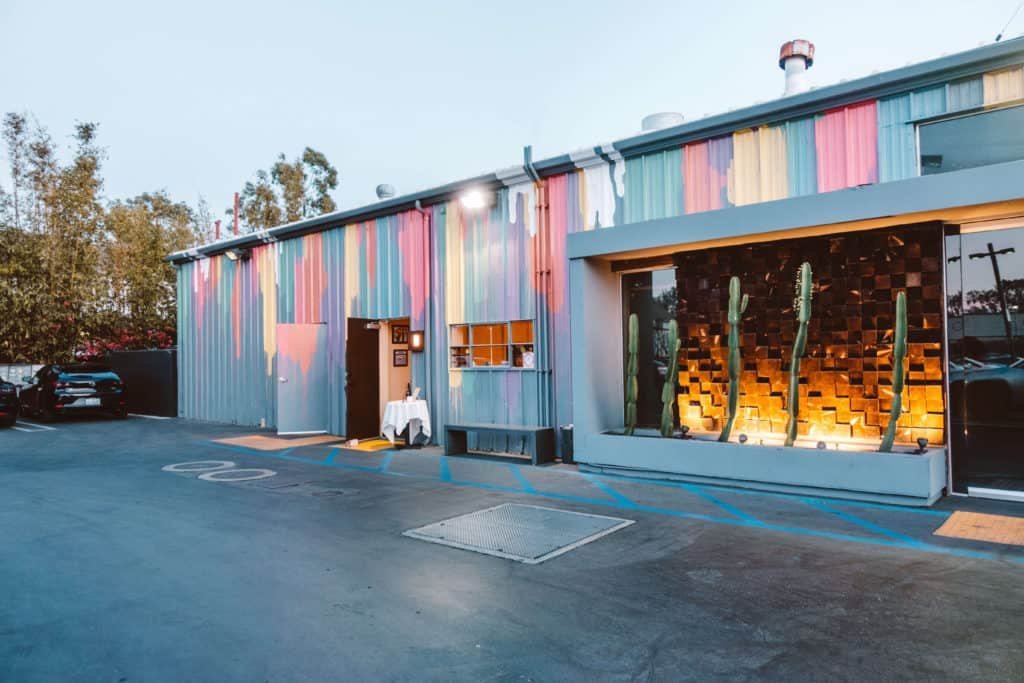
There is a particular kind of stillness that the better Japanese restaurants in Southern California have learned to manufacture. It is not silence exactly, but a calibration of light, surface, and distance between tables that slows the room's metabolism from the moment you step in. Hana re, at 2930 Bristol Street in Costa Mesa, operates in that register. The address places it inside South Coast Plaza's commercial orbit, a stretch of Bristol that runs past retail anchors and chain dining, which makes the contrast on entry more pronounced. The outside gives little away. The inside asks you to adjust.
What the Room Is Doing
Japanese dining environments in this price and format tier tend to make a clear choice: either the counter is the architecture, with every sight line directed at the chef's station, or the room distributes attention more evenly across materials, lighting, and the overall field of view. The more serious omakase-adjacent rooms in Southern California, from West Hollywood down through Orange County, have largely moved toward the former model, where the counter is the seat of authority and the rest of the space recedes. Hana re's position within that local design conversation is part of what gives it a distinct character among Japanese restaurants operating along the Bristol Street corridor.
The shortlist, unlocked.
Hard-to-book tables, cellar releases, and concierge-planned trips.
Get Exclusive Access →Costa Mesa's Japanese dining scene is more layered than its reputation suggests. Hamamori Restaurant and Sushi Bar represents one end of that spectrum, with a format built around a larger room and broader menu scope. Hana re occupies a different position: tighter, quieter, more deliberately composed in its hospitality logic. These two venues are not in direct competition so much as they represent distinct choices available to diners who approach Japanese cuisine with different expectations on a given evening.
The Bristol Street Context
Bristol Street in Costa Mesa has long functioned as a corridor where the expected and the unexpected coexist in close proximity. The surrounding blocks include Descanso Restaurant, which works a different culinary tradition entirely, and East Borough, which brings a Vietnamese-American sensibility to the same general radius. The Brewing Reserve of California adds another dimension to what the area can offer on a single evening out. What this concentration of different approaches tells you is that Costa Mesa's dining corridor is less themed than it might appear from the outside. It rewards the visitor who moves laterally across traditions rather than sticking to a single category.
For a fuller picture of what this city has built across different cuisine types and price points, our full Costa Mesa restaurants guide maps the broader scene with editorial depth.
Atmosphere as the Primary Argument
In the category of Japanese restaurants that lean on atmosphere as their primary argument, the design brief tends to follow a set of understood principles: natural materials, controlled lighting, minimal printed signage, and a staff cadence that matches the room's pace rather than accelerating it. The gap between well-executed and merely adequate in this category is often invisible in photographs and fully apparent the moment you are seated. A room that photographs as spare can feel either meditative or cold depending on decisions made about warmth of light, acoustic treatment, and the pace at which the first things arrive at the table.
Across the broader American Japanese dining scene, venues that have built durable reputations in this register share a commitment to consistency in those atmospheric details rather than dramatic seasonal reinvention. Kumiko in Chicago operates with a similar philosophy of spatial restraint within a deliberate format. Bar Leather Apron in Honolulu applies analogous principles to a drinks-forward environment. The discipline required to maintain a specific atmosphere at a consistent level is underestimated by diners and overestimated by venues that treat it as a design exercise rather than an operational commitment.
Where Hana re Sits in a Wider Conversation
Orange County has historically been positioned, in the national dining press, as a secondary market for serious Japanese cuisine relative to Los Angeles. That framing has become increasingly difficult to sustain as individual venues have built their own constituencies and booking rhythms independent of the LA gravitational pull. The more useful frame is not geographic hierarchy but format specificity: which venues have built a coherent proposition, maintained it across time, and attracted a guest profile that returns rather than simply passes through.
Venues in comparable cities that have achieved that kind of format coherence tend to share certain operational signals: a defined booking window, a controlled seat count, and a menu structure that limits optionality in the service of focus. How completely Hana re has pursued that model is something the room and the sequence of the meal communicate before any individual dish becomes the point of discussion.
Among bars and restaurants that have built reputations on format discipline in American cities, the parallels extend beyond Japanese cuisine. Jewel of the South in New Orleans, Julep in Houston, Superbueno in New York City, and ABV in San Francisco each demonstrate how a well-defined physical environment and a consistent operational logic can define a venue's identity as clearly as its menu does. Internationally, The Parlour in Frankfurt on the Main offers a European instance of the same principle. The physical space is not the backdrop for what happens; it is part of the argument itself.
Planning Your Visit
Hana re is located at 2930 Bristol Street in Costa Mesa, within a short drive of the South Coast Plaza complex, which makes it accessible from both central Orange County and coastal communities to the west. Given the format and the level of attention the room appears designed to support, this is not a venue suited to improvised late arrivals or large groups expecting flexible seating arrangements. Visitors planning an evening around the restaurant's pace will find the surrounding Costa Mesa dining corridor offers complementary options for drinks before or after, with the venues along and near Bristol Street covering a range of formats and traditions. Contact details and current booking availability are leading confirmed directly with the venue before making the drive.
The shortlist, unlocked.
Hard-to-book tables, cellar releases, and concierge-planned trips.
Get Exclusive Access →Frequently Asked Questions
Cuisine and Awards Snapshot
A fast peer set for context, pulled from similar venues in our database.
| Venue | Cuisine | Awards | Notes |
|---|---|---|---|
| Hana re | This venue | ||
| East Borough | |||
| Descanso Restaurant | |||
| Brewing Reserve of California | |||
| Hamamori Restaurant and Sushi Bar | |||
| Knife Pleat |
Need a Table?
Our members enjoy priority alerts and concierge-led booking support for the world's most difficult bars and lounges.
Get Exclusive AccessThe shortlist, unlocked.
Hard-to-book tables, cellar releases, and concierge-planned trips.
Get Exclusive Access →