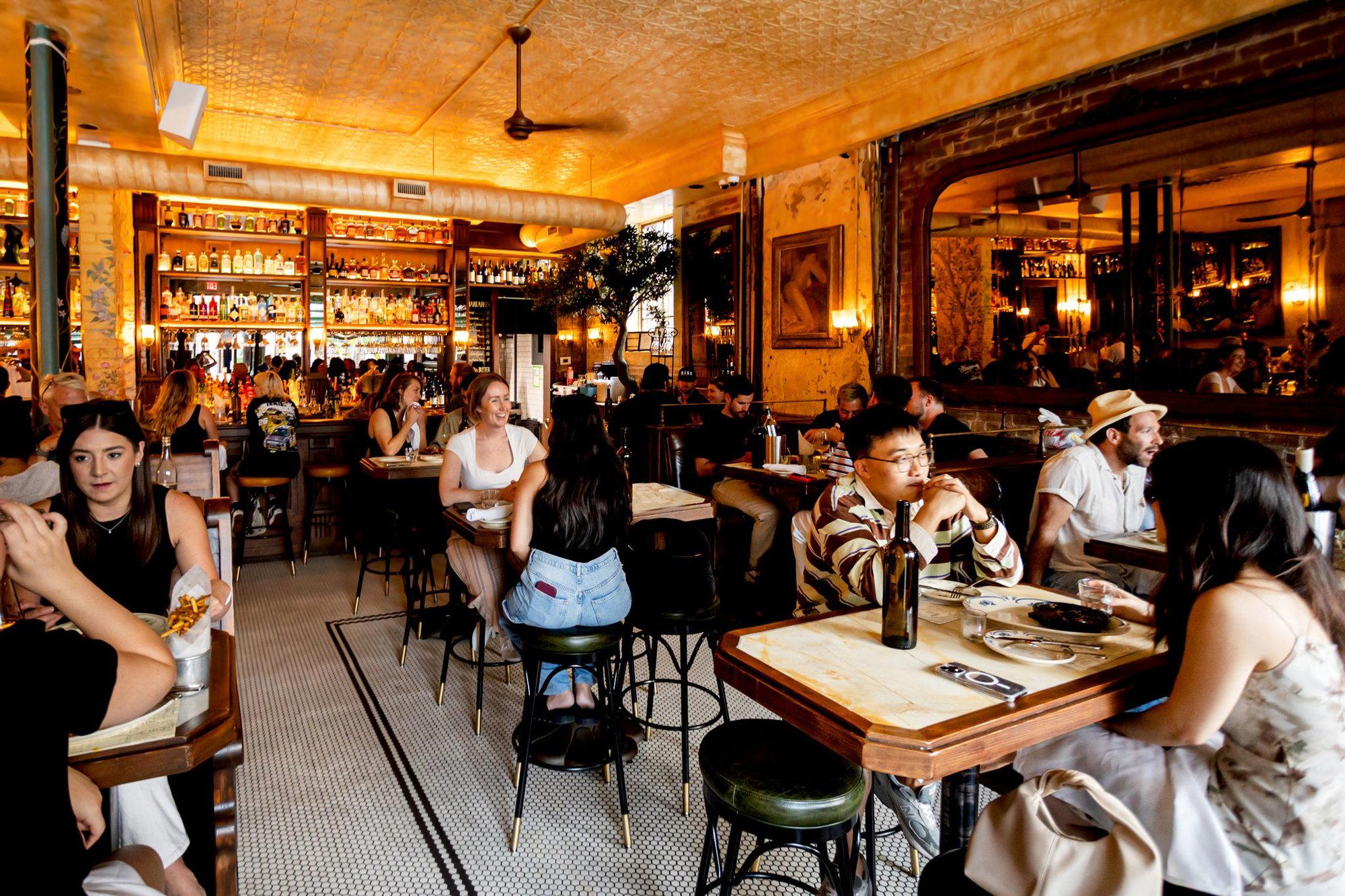
On Roncesvalles Avenue, Gloria Espresso Bar & Cafe occupies a stretch of Toronto's most community-rooted commercial strip, where espresso culture and neighbourhood ritual overlap. Compared to the city's louder cocktail-bar destinations, Gloria operates at a quieter register — a daytime anchor that earns its place through consistency rather than spectacle. It belongs to the same West End conversation as several of Toronto's more considered independent operators.
Roncesvalles and the Case for the Neighbourhood Espresso Bar
There is a specific kind of hospitality that Toronto's west end has always done well: small, deliberate, rooted in the block rather than the brand. Roncesvalles Avenue — a corridor that runs from the rail corridor south toward Parkdale — has historically attracted that type of operator. The neighbourhood's Polish-Canadian backbone, which shaped the strip through decades of deli counters and pierogi houses, has given way to a more mixed commercial character, but the underlying logic remains the same: places that belong to a community rather than perform for it. Gloria Espresso Bar & Cafe at 478 Roncesvalles sits squarely inside that tradition.
The espresso bar as a format has evolved considerably across Toronto over the past decade. The city moved through a third-wave coffee phase , single-origin beans, pour-overs, heavily designed interiors signalling seriousness , and is now in a quieter period where the leading neighbourhood cafes have absorbed those technical advances without making them the entire point. The approach at a venue like Gloria reads against that backdrop: espresso preparation informed by techniques that arrived from Italy, Scandinavia, and Australia now gets applied to a setting that is, first and foremost, a local gathering point on a residential commercial strip.
The Editorial Angle: Imported Method, Local Context
The intersection of global coffee technique and neighbourhood function is not unique to Roncesvalles, but it is particularly legible here. When specialty coffee culture professionalized in cities like Melbourne, Oslo, and Tokyo, it created a shared technical vocabulary , espresso extraction parameters, milk texturing precision, filter brew ratios , that has since been adopted by independent operators across North America. What differentiates the better Canadian examples of this is how lightly they wear those imports. The technique becomes infrastructure rather than theatre.
Toronto's cafe scene, particularly in the west end, has been shaped by operators who trained in that global tradition but built their spaces around local rhythms: the morning commuter on the Roncesvalles streetcar, the parent with a stroller after a school drop-off, the remote worker claiming a corner table through a second latte. Gloria occupies that functional middle ground, where craft is assumed rather than announced. That is a different value proposition than the destination cafes downtown , places that attract visitors and coffee tourists , and it carries its own editorial weight.
For comparison across the city's drinking culture, venues like Bar Raval and Bar Pompette represent a more performance-forward register, where the room itself is part of the proposition. Bar Mordecai and Civil Liberties operate at night with cocktail-forward programs that draw from a different competitive set entirely. The neighbourhood espresso bar exists outside those categories , daytime-oriented, lower-friction, priced for repeat visits rather than occasions.
What the Format Delivers
The espresso bar format, when done well, delivers something that the city's more ambitious hospitality projects often cannot: frictionless daily use. There are no reservations, no occasion requirements, no social signalling involved in the decision to walk through the door. The rhythm of an espresso bar is calibrated to the neighbourhood's own rhythm, which is why Roncesvalles, with its density of owner-occupier housing and its historically pedestrian-scale commercial strip, is a logical home for this kind of operation.
What distinguishes the better operators in this category across North American cities is a willingness to commit to quality across the full offering , not just espresso, but whatever food program sits alongside it. Cafe menus have undergone their own evolution over the past decade, moving away from pre-packaged pastries toward house-made or locally sourced options that reflect the same technical ambition applied to the coffee. Whether Gloria's kitchen program follows that model is not confirmed by available data, but the Roncesvalles context , a street that supports independent food businesses at a range of price points , makes that orientation plausible.
Planning a Visit
Gloria Espresso Bar & Cafe is located at 478 Roncesvalles Avenue, accessible via the 504 King or 505 Dundas streetcar lines, with the Roncesvalles stop placing visitors within a short walk of the address. The venue's hours and booking arrangements are not confirmed in current data; for a walk-in espresso bar format, reservations would not typically apply, and the practical advice for any Roncesvalles visit is to plan for weekday mornings if you want the most settled version of the experience. Weekend mid-mornings on this strip tend toward higher foot traffic as the neighbourhood's farmers market and independent retailers draw a broader crowd.
For those building a broader west-end itinerary, the Roncesvalles strip pairs naturally with a southward walk into Parkdale, where the food and bar scene has its own distinct character. Toronto's wider bar and cafe geography is mapped in our full Toronto restaurants guide.
For Canadian readers building a national comparison, the neighbourhood cafe format finds strong expression in several other cities. Atwater Cocktail Club in Montreal represents a different urban register , evening-focused, cocktail-led , while Botanist Bar in Vancouver operates at the luxury hotel end of the spectrum. Closer in format and ambition to the Roncesvalles model are the more community-embedded operations you find in cities like Victoria, where Humboldt Bar occupies a similar neighbourhood-anchor position. Further afield, Missy's in Calgary, Bearfoot Bistro in Whistler, Grecos in Kingston, and Bar Leather Apron in Honolulu each demonstrate how the independent neighbourhood operator functions differently depending on its city's density, demographics, and drinking culture.
Continue exploring
More in Toronto
Bars in Toronto
Browse all →
Restaurants in Toronto
Browse all →

Hotels in Toronto
Browse all →
Wineries in Toronto
Browse all →
At a Glance
- Casual Hangout
- Historic Building
- Lounge Seating
Warm glow of golden lights in a welcoming intimate space.