Frankie's Tiki Room
Frankie's Tiki Room on West Charleston Boulevard is one of Las Vegas's most committed tiki bars, occupying a corner of the city far from the Strip's spectacle. Where the resort corridor trades in transactional excess, this neighbourhood fixture operates on regulars, rum, and a deliberately dark interior that signals you've crossed into a different Las Vegas entirely.
Pearl is the En Primeur Club membership app — saves, bookings, and concierge access live there. Same editors, same standards.
- Address
- 1712 W Charleston Blvd, Las Vegas, NV 89102
- Phone
- +1 702 385 3110
- Website
- frankiestikiroom.com
- Directions
- Get directions
 Saves & bookings on Pearl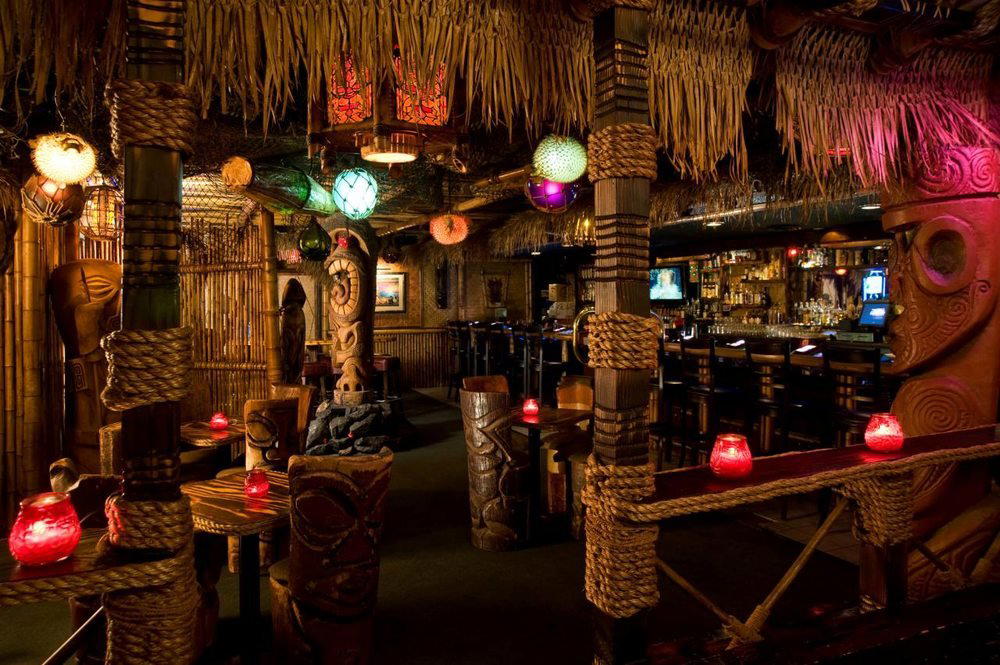
West Charleston and the Other Las Vegas
Las Vegas has always had two faces. The one televised globally is a corridor of resort casinos running a few miles down Las Vegas Boulevard. The other is a city of actual residents, of zip codes with mortgage payments and school districts and neighbourhood bars that open early and close late. Frankie's Tiki Room is a bar at 1712 W Charleston Blvd, Las Vegas, with. It sits on a commercial stretch of West Charleston Boulevard that most visitors never see, in a part of the valley where locals outnumber tourists by a ratio that would surprise anyone whose Las Vegas reference points begin and end at the Strip.
Tiki bars occupy a specific cultural position in American drinking life. They emerged from mid-century Polynesian fantasy, built on rum, elaborate garnishes, and an interior design language heavy on bamboo, carved figures, and dim lighting that made the outside world feel optional. At their peak, the format was mainstream; at their nadir, it was kitsch. Over the past two decades, tiki has undergone a serious critical rehabilitation, driven partly by cocktail revivalists who took the underlying technique seriously and partly by a broader appreciation for the craft behind multi-rum builds and house-made syrups. Frankie's Tiki Room sits inside that revival, but with a neighbourhood-bar grounding that distinguishes it from the cocktail-forward tiki temples in cities like Honolulu (see Bar Leather Apron for a contrasting Pacific approach) or New Orleans (where Jewel of the South operates with a more historically precise cocktail agenda).
The Room Itself
The physical environment does most of the communicating here. Dark is the operative word: the interior is committed to the tiki aesthetic of low light, carved wood, and the accumulated visual noise of a bar that has been acquiring décor for years. It reads less like a curated design exercise and more like a place that has grown into itself, which is precisely the point. The contrast with the relentless brightness of Strip properties is not accidental. This is a room that rewards the eyes once they adjust and asks nothing of you except that you stay a while.
The format is bar-first. Frankie's operates as a drinking destination with the atmosphere as the draw, not as a cocktail showroom or a concept restaurant that happens to have a bar program. That distinction matters in a city where the line between hospitality and entertainment production has nearly dissolved. West Charleston's bar culture, including spots like Herbs & Rye a few miles away, has long functioned as the counterweight to resort hospitality, serving the people who live in this city rather than the people passing through it.
The Tiki Bar as Community Anchor
What distinguishes a neighbourhood watering hole from a destination bar is regularity: the same faces on the same stools, bartenders who know orders before they're placed, a social rhythm that runs on familiarity rather than novelty. Frankie's Tiki Room has cultivated that kind of loyalty in a city that can be brutal to independent operators. The Strip's gravitational pull on entertainment spending is real, and bars that aren't adjacent to casino foot traffic have to earn their audience through something else. Here, that something else is a combination of format commitment, late hours, and the particular appeal of a place that reads as genuinely local.
The comparison set for Frankie's is not other Las Vegas tiki bars but other cities' neighbourhood craft bars: ABV in San Francisco, where a serious drinks program coexists with a local-bar energy, or Kumiko in Chicago, which operates with equal seriousness about spirits in a format that prioritises intimacy. The common thread is bars that have built a community of repeat visitors without relying on marketing spectacle or celebrity adjacency.
Las Vegas has a growing cohort of independent bars operating on exactly this model. 108 Drinks, 1228 Main, and Ada's Food & Wine are each building their own versions of the same thing: a durable, regular-led drinking culture that has historically been harder to sustain in a city where the hospitality infrastructure is built around transience. Frankie's, having operated long enough to accumulate the kind of worn-in authenticity that can't be designed, is among the clearest examples of that possibility.
How It Fits the Broader Tiki Revival
The craft tiki revival has produced bars across the United States that approach rum with the same seriousness that the cocktail renaissance brought to whiskey and gin. At its more technical end, this means sourcing rums by region and age, building house orgeat from scratch, and calibrating each drink's balance with the same precision a chef applies to seasoning. Bars like Julep in Houston and Superbueno in New York City operate with that kind of formal seriousness about spirits rooted in a specific cultural tradition. The Parlour in Frankfurt represents a version of the same thoughtful, tradition-conscious bar program translated to a European context.
Frankie's occupies a position that values atmosphere and ritual alongside technique. The tiki format is inherently theatrical, and a bar that commits fully to the aesthetic is making an argument that the experience is the product, not just the liquid in the glass. That argument resonates with a regular clientele who return not just for specific drinks but for the particular feeling of being inside a room that has a clear and consistent identity.
Planning a Visit
The bar is located at 1712 W Charleston Blvd, well off the Strip and more accessible by car than on foot from most visitor accommodation. The bar is known for late hours, which fits both the city's rhythms and the tiki-bar tradition of functioning as a late-night destination. Walk-ins are the standard approach; this is not a reservation-driven format. For visitors staying in central Las Vegas, pairing a visit with exploration of the West Charleston corridor gives a more complete picture of what the city's independent bar scene looks like.
- Three Rum Scum
- Mai Tai
- Navy Grog
- Bearded Clam
- Tiki Bandit
- Lapu Lapu
The Essentials
Comparable venues nearby, for context on price, style, and recognition.
| Venue | Cuisine | Price | Notes |
|---|---|---|---|
| Frankie's Tiki RoomThis venue — the venue you are viewing | Not listed | $$ | Not listed |
| The Silver Stamp | Not listed | $$ | Downtown South, beer_bar |
| Beer Garden | Not listed | $$ | Downtown, beer_bar |
| Akin Cooperative | Not listed | $$ | Downtown South, wine_bar |
| Laugh Factory | Las Vegas Strip, lounge | $$ | Not listed |
| Oak & Ivy | Not listed | $$$ | Las Vegas Boulevard Overlay District, cocktail_bar |
Continue exploring
More in Las Vegas
Bars in Las Vegas
Browse all →
Restaurants in Las Vegas
Browse all →
At a Glance
- Whimsical
- Well Known
- Energetic
- Cozy
- Late Night
- Casual Hangout
- Celebration
- Design Destination
- Standalone
- Seated Bar
- Booth Seating
- Craft Cocktails
- Rum
- Classic Cocktails
- Frozen
Current opening hours
- Monday
- Open 24 hours
- Tuesday
- Open 24 hours
- Wednesday
- Open 24 hours
- Thursday
- Open 24 hours
- Friday
- Open 24 hours
- Saturday
- Open 24 hours
- Sunday
- Open 24 hours
Hours can change for holidays and private events. Last verified .
Dark interior with vintage tiki decor, low lighting, exotica and surf to psychobilly soundtrack, and a kitschy Las Vegas vibe.