Set along a tree-lined path in Kiel's western outskirts, Forstbaumschule Restaurant u. Parkcafé occupies a position that few urban dining rooms can replicate: a parkland setting where the boundary between interior and garden dissolves across seasons. The address at Düvelsbeker Weg 46 places it well outside the city centre, drawing guests who make the trip a deliberate choice rather than a passing impulse.
 Discover on Pearl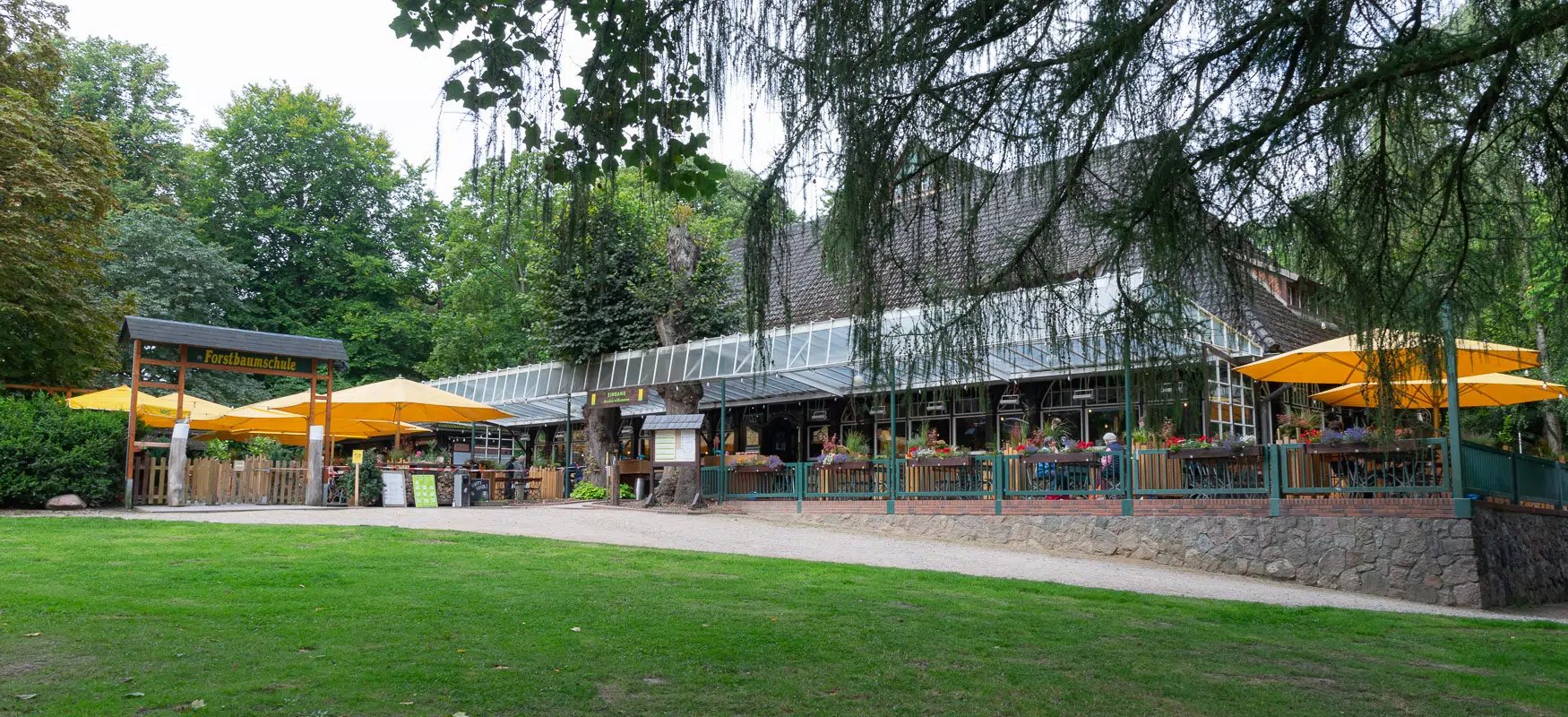
Where the City Ends and the Canopy Begins
Kiel is a harbour city defined by water and wind, and most of its dining culture clusters predictably around the Förde. The further you move from the waterfront, the more the restaurant scene thins out, which makes the western reaches of the city an unlikely address for a venue that draws guests specifically for the journey. Forstbaumschule Restaurant u. Parkcafé sits at Düvelsbeker Weg 46, where the road narrows and the tree cover thickens, placing it in a register that has almost no equivalent among Kiel's other dining addresses. This is parkland dining in a city not particularly known for it.
The name itself is instructive: Forstbaumschule translates roughly as forest nursery, and the designation Parkcafé signals a hybrid format that German-speaking cities have long supported, somewhere between a proper restaurant and a park café that functions across the day without committing fully to either identity. That ambiguity is often the defining quality of these spaces. They succeed not through menu precision or service choreography but through atmosphere — the sense that the physical setting does more work than the kitchen could on its own. The approach is common in Munich's English Garden or Berlin's Tiergarten perimeter, but in a mid-sized northern port city like Kiel, it occupies a narrower niche.
The shortlist, unlocked.
Hard-to-book tables, cellar releases, and concierge-planned trips.
Get Exclusive Access →The Atmosphere as the Main Event
German Parkcafé culture operates on a specific spatial logic: generous outdoor seating that becomes the primary product in warm months, an interior that functions as shelter rather than destination, and a menu calibrated for lingering rather than occasion dining. The format rewards afternoon visits when the light through mature trees creates conditions that no urban interior can engineer. Venues in this category, from Goldene Bar in Munich to the more garden-adjacent spaces in Hamburg, understand that their competitive set is not other restaurants but other ways of spending an afternoon.
At Forstbaumschule, the setting at the edge of a wooded area means the visual and acoustic environment shifts with season more dramatically than almost any city-centre address in Kiel. In late spring and summer, the surrounding greenery functions as natural sound insulation, creating a quieter register than a waterfront terrace. That quality, relatively rare in a port city built around maritime noise and open sky, is part of what defines the experience here. The interior likely reflects the practical requirements of a venue that must function year-round in a north German climate, though the outdoor spaces are where the format's logic becomes apparent.
For context on how atmosphere-led venues position themselves differently from cocktail-forward or cuisine-forward rooms, it is worth noting what places like Le Lion Bar de Paris in Hamburg or Buck & Breck in Berlin achieve through interior precision — low capacity, curated lighting, deliberate acoustics. The Parkcafé format is the inverse of that approach: the spatial generosity is the point, and the interior exists in service of the outdoor experience rather than as a destination in its own right.
Kiel's Dining Geography and Where This Fits
Kiel's restaurant options concentrate heavily around the Innenstadt and the waterfront, where foot traffic and tourist volumes support conventional dining formats. The city's bar scene, including venues like Café Phollkomplex and Kieler Brauerei am Alten Markt, operates closer to the centre where the evening economy concentrates. Forstbaumschule's address on Düvelsbeker Weg places it outside that cluster entirely, which has consequences for when and how guests use it. This is not a before-dinner drink venue or a post-theatre option. The distance from the centre makes it a primary destination, visited with the parkland setting as the motivation rather than as a supplement to another activity.
That positioning is both a constraint and an advantage. Venues that require a deliberate journey tend to attract guests who have already committed to the experience, which affects the atmosphere in ways that footfall-dependent restaurants cannot replicate. The clientele skews toward those who know the address and return for specific conditions, particularly outdoor tables in good weather, rather than impulse visitors drawn by a window display or a queue. For a broader sense of how Kiel's dining options distribute across the city, the full Kiel restaurants guide maps the range from waterfront to suburban.
Across Germany's mid-sized cities, the Parkcafé format has proven more durable than many commentators predicted when urban dining became more technically competitive in the 2010s. Places like Alte Kanzlei Stuttgart in Stuttgart demonstrate how heritage settings can sustain consistent demand without competing on menu innovation. The format's resilience comes from offering something that technically ambitious restaurants actively cannot: uncomplicated access to a good environment, without the reservation pressure or occasion-dining weight that accompanies serious kitchen work. That is the register Forstbaumschule occupies in Kiel's dining map.
Planning a Visit
Getting to Düvelsbeker Weg 46 from central Kiel requires either a car or a longer local bus journey than most city-centre venues demand, so the visit works leading when treated as an excursion rather than a quick lunch slot. The surrounding area offers a route through green space before or after eating, which is part of the venue's inherent logic , the approach through the park is preparation for the atmosphere inside it. Seasonal timing matters more here than at most Kiel addresses: the warm months from May through September represent the period when the outdoor format operates at its full capacity, and visits outside that window will encounter a different register, heavier on interior shelter, lighter on the garden quality that defines the experience at its strongest. Specific opening hours, current menu pricing, and booking requirements are leading confirmed directly, as the venue's operational details are not centrally published.
Frequently Asked Questions
- What's the vibe at Forstbaumschule Restaurant u. Parkcafé?
- The atmosphere follows the Parkcafé model common in German cities: generous outdoor seating in parkland surroundings, a pace suited to lingering rather than occasion dining, and an environment where the setting carries more weight than the service format. In good weather, it operates as one of the few genuinely green dining addresses in Kiel's western outskirts, drawing guests who make the journey for the surroundings as much as the menu.
- What cocktail do people recommend at Forstbaumschule Restaurant u. Parkcafé?
- Specific cocktail programme details are not available in verified sources for this venue. As a Parkcafé format rather than a cocktail-led bar, the drinks offering likely centres on café staples and direct drinks suited to outdoor afternoon drinking rather than the technical programmes at venues like The Parlour in Frankfurt on the Main or Bar Leather Apron in Honolulu. Confirming the current drinks list directly with the venue is the reliable approach.
- What's the standout thing about Forstbaumschule Restaurant u. Parkcafé?
- The physical setting at the edge of wooded parkland on Düvelsbeker Weg is what separates this address from Kiel's other dining options. In a harbour city where most restaurant terraces face water or urban street scenes, a parkland environment with mature tree cover is a distinct spatial offering that few comparable addresses in the city can match.
- Should I book Forstbaumschule Restaurant u. Parkcafé in advance?
- Booking details and reservation policies are not available through centrally published sources. For outdoor-format venues in this category, demand typically peaks on warm-weather weekends when the garden seating fills ahead of walk-in availability. Contacting the venue directly before a weekend visit, particularly between May and September, is the practical approach.
- Is Forstbaumschule Restaurant u. Parkcafé a good option for families visiting Kiel?
- The Parkcafé format, with its spacious outdoor setting and relaxed pace on Düvelsbeker Weg, fits the spatial and timing requirements of family visits more naturally than a formal dinner restaurant. The surrounding parkland provides a context that works across age groups, and the lingering-friendly format suits groups that want more than a brief stop. As with any outing to this address, the experience is strongest in the warmer months when the outdoor areas are in full use. Confirming group-size arrangements directly with the venue is advisable for larger parties. For comparison with other atmosphere-led venues in German cities, edelrausch Leipzig-Schleußig in Leipzig and Bar Trattoria Celentano in Cologne represent the range of formats where setting and tone carry significant weight alongside the menu.
Cuisine-First Comparison
A compact peer snapshot based on similar venues we track.
| Venue | Cuisine | Awards | Notes |
|---|---|---|---|
| Forstbaumschule Restaurant u. Parkcafé | This venue | ||
| The Parlour | World's 50 Best | ||
| Buck & Breck | World's 50 Best | ||
| Goldene Bar | World's 50 Best | ||
| Le Lion Bar de Paris | World's 50 Best | ||
| Velvet | World's 50 Best |
Need a Table?
Our members enjoy priority alerts and concierge-led booking support for the world's most difficult bars and lounges.
Get Exclusive AccessThe shortlist, unlocked.
Hard-to-book tables, cellar releases, and concierge-planned trips.
Get Exclusive Access →