Esters Wine Shop & Oyster Bar
On 7th Street in Santa Monica, Esters Wine Shop and Oyster Bar sits at the intersection of two of California's most traceable sourcing traditions: small-production wine and Pacific shellfish. The format is deliberately compact, pulling wine-retail and raw-bar functions into a single room that rewards repeat visits over special-occasion pilgrimages. It belongs to a tier of neighborhood wine bars where the list does the talking.
- Address
- 1314 7th St, Santa Monica, CA 90401
- Phone
- +1 310 899 6900
- Website
- esterswineshop.com
- Directions
- Get directions
Where Wine Culture and the Pacific Overlap
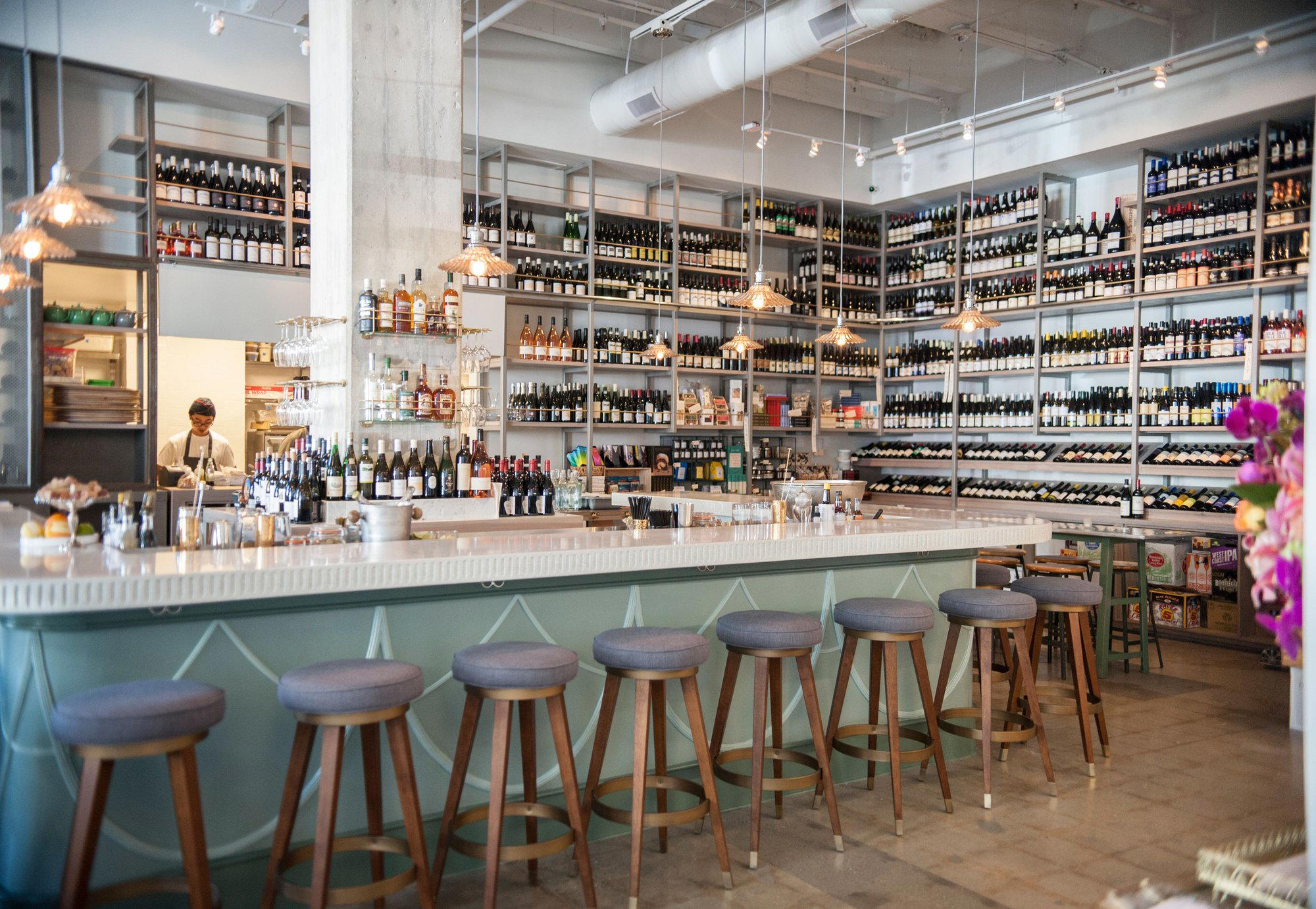
Santa Monica's 7th Street sits a few blocks from the ocean without feeling like a beachside afterthought. The neighborhood runs on a different rhythm than the Promenade two streets over: slower foot traffic, fewer chain fronts, more of the residential-commercial hybrid that defines the city's older commercial corridors. It is in this register that Esters Wine Shop and Oyster Bar operates, occupying the productive overlap between a working wine retail shop and a bar program built around raw shellfish and natural pours. It is a permanently closed bar in Santa Monica at 1314 7th St, with a price point around $50 per person. That combination is less unusual in cities like Portland or Paris than it once was, but on the Westside of Los Angeles it still reads as a deliberate editorial choice about what a neighborhood wine destination can be.
The Retail-Bar Hybrid as a Dining Format
The wine shop and oyster bar format carries specific cultural weight. Historically, the model traces to French cave à manger traditions, where a wine merchant doubles as a place to eat simply: cheese, charcuterie, a dozen oysters, a glass poured from stock that lines the walls. The format asks customers to accept deliberate simplicity in exchange for depth and value in the glass. What it offers is access: bottles that would sit behind a restaurant's markup instead sit at retail price, with a corkage arrangement that flattens the usual dining calculus. Esters sits within this tradition, applying it to a neighborhood where the wine-drinking population is sizable and increasingly fluent in the vocabulary of natural and low-intervention producers.
Oysters function as the ideal pairing anchor in this format. A bivalve needs acid and salinity in its accompanying pour, and those requirements point directly toward the mineral-driven whites, pét-nats, and skin-contact wines that dominate natural lists. The food program does not try to be a full restaurant. That restraint is structural, not a shortcoming. It keeps the wine at the center of the proposition, where it belongs in a shop that uses the bar as a demonstration floor for what it sells.
Santa Monica's Wine Drinking Culture
Los Angeles has developed a credible natural wine scene over the past decade, concentrated in pockets across Silver Lake, Venice, and the Westside. The city's demographics help: a large hospitality industry creates an off-duty professional drinking population with above-average product literacy, and the climate makes year-round outdoor and semi-outdoor wine drinking feasible in a way that does not apply in most American cities. Santa Monica specifically benefits from proximity to the wine trade's wholesale and import infrastructure concentrated in the LA basin, which means allocation access to smaller-production European and domestic labels is meaningfully better here than in comparable coastal markets.
Esters fits the Westside node of this culture, sitting in a competitive set that includes bottle-shop-focused operators and wine-adjacent dining rooms. Nearby, Blue Plate Oysterette handles the shellfish-and-casual-drinks brief from a more direct seafood restaurant angle. Birdie G's addresses the broader Westside drinking crowd from a cocktail and comfort-food position. 1 Pico occupies the hotel dining tier. Esters operates in a more specialized register than any of these, defined by the retail-bar hybrid and by a wine selection depth that puts it closer to a buying resource than a casual drinks stop.
The Oyster Bar in an American Context
Oyster bars carry a specific cultural lineage in American eating, rooted in the working-class oyster saloons of nineteenth-century New York and Boston before the bivalve's class migration upward into white tablecloth territory. The contemporary casual oyster bar represents a partial correction: shellfish returned to an accessible, standing-or-perching format, priced per piece rather than per course, with a wine or beer list sized for quick decisions. This format now appears across American coastal cities in varying registers. The format that Esters deploys connects more closely to the European cave model than to the East Coast raw bar tradition, which tends to run closer to seafood restaurant logic in its full expression.
For comparison against the American wine bar with serious programming, the category includes operators like ABV in San Francisco, where a technically rigorous drink program anchors a space that functions as much as a reference destination as a drinking room. Similarly, Kumiko in Chicago demonstrates how a precision-oriented beverage program can define a room's identity at a national level. In the cocktail-focused tier, Bar Leather Apron in Honolulu, Jewel of the South in New Orleans, Julep in Houston, Superbueno in New York City, and The Parlour in Frankfurt each show how beverage-led formats build identity around program depth rather than kitchen ambition. Esters' answer to that question is filed firmly under the bottle, not the shaker. And separately, Calabra in Santa Monica shows how Mediterranean wine sensibility can anchor a room a few streets away from Esters' own pitch.
Planning a Visit
Esters sits at 1314 7th Street in Santa Monica, close enough to the main commercial stretch to be walkable from most Westside lodging, but placed on a block that functions more like a neighborhood node than a tourist corridor. The retail-bar format means the visit can function as both a drinking stop and a buying trip; many guests leave with bottles in addition to whatever they consumed at the bar. For visitors building a Santa Monica eating and drinking program, the format works well as a lower-key evening opener before a dinner reservation elsewhere, or as a standalone destination for an afternoon that calls for oysters and a white Burgundy poured at retail logic.
Cost Snapshot
Comparable venues nearby, for context on price, style, and recognition.
| Venue | Cuisine | Price | Notes |
|---|---|---|---|
| Esters Wine Shop & Oyster BarThis venue — the venue you are viewing | Not listed | $$$ | Not listed |
| Palma | Not listed | $$$ | Wilshire/Montana Neighborhood Coalition, cocktail_bar |
| Rustic Canyon | Not listed | $$$ | Wilshire/Montana Neighborhood Coalition, cocktail_bar |
| R+D Kitchen | Not listed | $$$ | Wilshire/Montana Neighborhood Coalition, lounge |
| Cosetta | Not listed | $$ | Ocean Park, cocktail_bar |
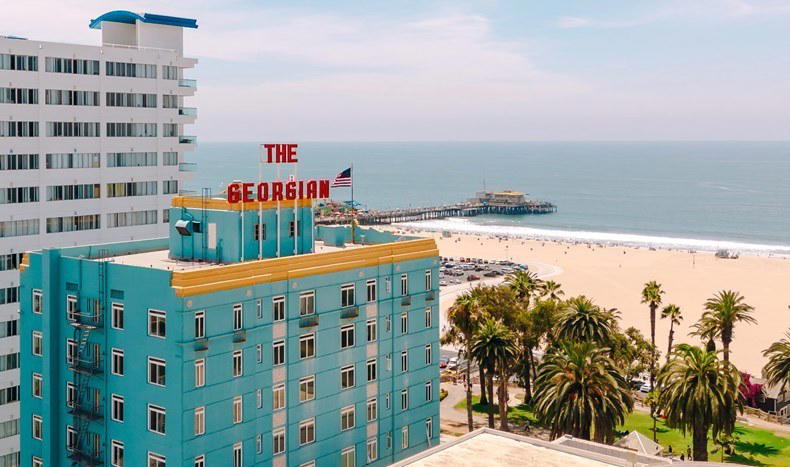
| The Georgian Hotel | Pico Neighborhood Association, speakeasy | $$$ | Not listed |
Continue exploring
More in Santa Monica
Bars in Santa Monica
Browse all →
Restaurants in Santa Monica
Browse all →
Hotels in Santa Monica
Browse all →
Wineries in Santa Monica
Browse all →
At a Glance
- Cozy
- Elegant
- Modern
- Sophisticated
- Date Night
- Casual Hangout
- Group Outing
- Design Destination
- Seated Bar
- Lounge Seating
- Outdoor Terrace
- Natural Wine
- Craft Cocktails
Light, bright, and airy with beautiful lighting and an inviting, stylish neighborhood clubhouse atmosphere.