Google: 4.8 · 11,502 reviews
Estância Brazilian Steakhouse - Austin
Austin's Northwest corridor has a smaller roster of serious dining destinations than the 6th Street corridor, but Estância Brazilian Steakhouse on Research Boulevard holds a clear position in it. The rodízio format, with its continuous tableside service and wood-fired meats, represents a dining tradition rooted in the cattle culture of southern Brazil, translated here for a city that already takes beef seriously.
 Discover on Pearl
Pearl is the En Primeur Club membership app — saves, bookings, and concierge access live there. Same editors, same standards.
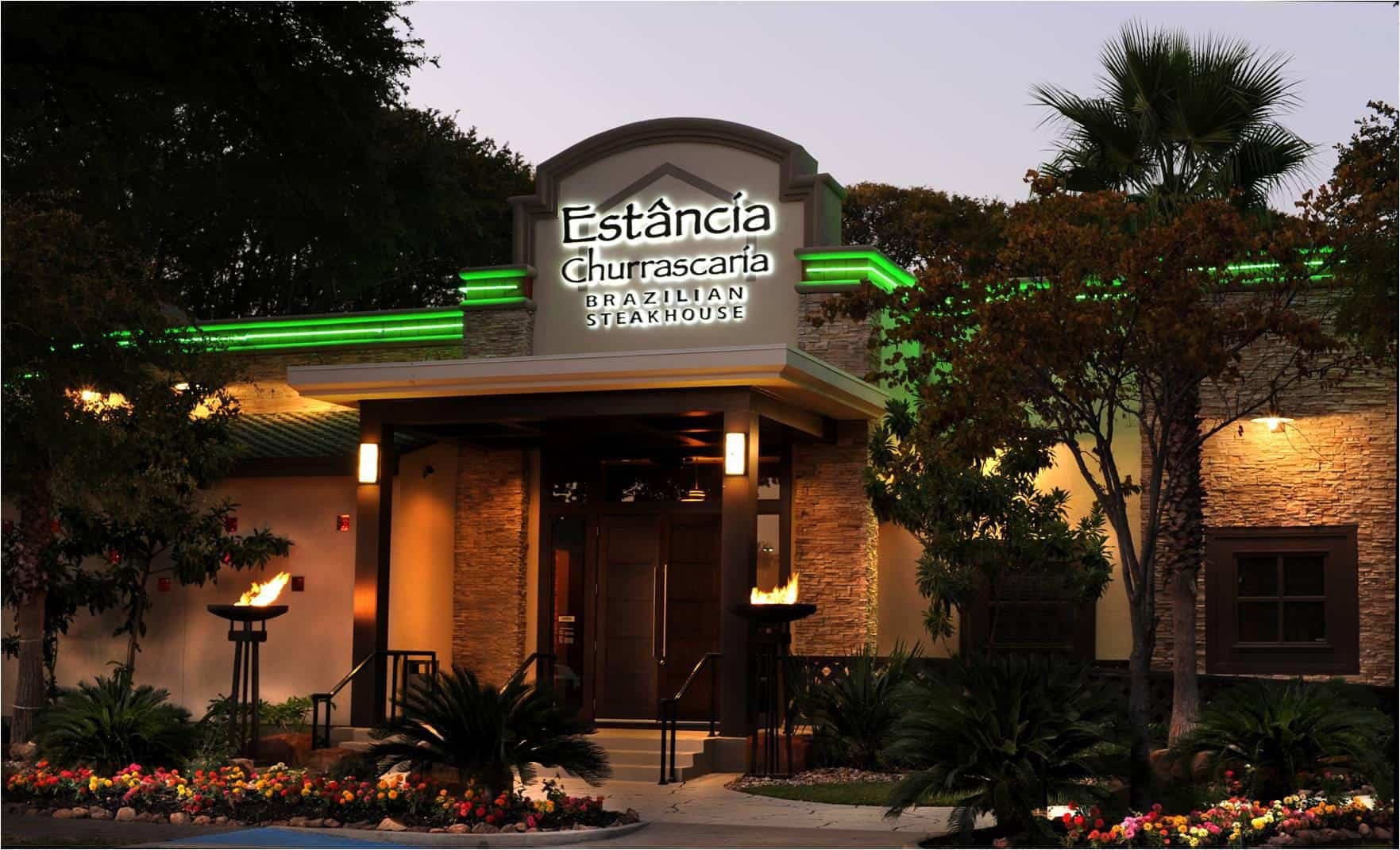
Where the Meat Comes to You
Research Boulevard in Austin's northwest quadrant runs through a stretch of the city that most visitors never reach. The area is defined by tech campuses, low-rise retail, and the kind of practical geography that emerges when a city expands faster than its cultural infrastructure. Within that context, a Brazilian steakhouse operating the full rodízio format occupies an interesting position: it is not competing for attention on a restaurant row, and it does not need to. The format itself, with servers moving through a room carrying skewers of wood-fired meat and slicing tableside on request, generates its own rhythm. The room does not need a theatrical entrance or a destination address to function. The service structure is the spectacle.
The Rodízio Tradition and What It Demands of a Kitchen Team
Brazilian churrascaria dining in the United States has split across two broad tiers over the past two decades. The first tier is dominated by national chains operating at scale, where the model is volume and consistency. The second tier, smaller in number, involves independently operated or regionally anchored houses that run the same rodízio format but with closer attention to cut selection, sourcing, and the coordination between the kitchen and the floor. The rodízio format places unusual pressure on front-of-house execution: the pacing between courses is not managed by a printed menu but by the rhythm of servers reading the room and communicating with the grill team. When that coordination works, the meal has a specific kind of momentum. When it does not, the experience collapses into rushed service or long gaps.
At Estância, the Research Boulevard address places it squarely in the second tier by geography alone. The northwest Austin dining market does not sustain the volume-driven model as reliably as a downtown or tourist-adjacent location might. That means the house lives or dies on repeat customers and local reputation, both of which require the kind of team consistency that national chains sometimes sacrifice for scalability. The collaboration between the grill team, the carvers on the floor, and the front-of-house staff managing the traditional signal system, typically a card or wooden token that guests flip to indicate whether they are ready for more meat, is what defines the experience from visit to visit.
Austin's Beef Culture as Context
Austin has a legitimate claim to serious beef culture. The city sits within Texas, where barbecue traditions involving long-smoked brisket have drawn international attention and generated a secondary industry of weekend pilgrimages to Central Texas smoke houses. In that context, a Brazilian steakhouse is not an exotic import but a different grammar applied to a shared obsession. The cuts differ, the fire management differs, and the service format differs entirely, but the underlying priority is the same: quality beef, cooked over fire, served at the correct internal temperature. Austin diners who have spent time at both Central Texas barbecue institutions and serious churrascarias understand that the two traditions are measuring the same thing with different tools. For visitors arriving from cities with less developed beef cultures, the comparison sharpens the rodízio experience considerably.
For a broader sense of where Austin dining sits across its neighbourhoods and formats, the our full Austin restaurants guide maps the city's current dining character in more detail.
The Front-of-House as the Engine
In most restaurant formats, the kitchen is the primary creative unit and the front-of-house exists to deliver its output. In a rodízio operation, that relationship is more symmetric. The carvers who work the floor are not simply servers; they are making constant micro-decisions about which table needs a fresh pass, which cut is performing leading that evening, and how to pace the meal so that guests do not hit satiety before reaching the cuts that matter most. The interaction between grill and floor in a well-run churrascaria resembles the dynamic at strong cocktail bars, where the collaboration between the bartender, the barback, and the floor team determines whether the operation can sustain quality under pressure. Bars like Kumiko in Chicago and Bar Leather Apron in Honolulu are often cited as examples of that kind of team-driven precision in a drinks context. The same principle applies in a rodízio room: individual skill matters less than the system the team operates together.
Austin's bar scene offers its own version of that collaborative model. Nickel City has built a reputation on consistent execution and a staff that functions as a unit rather than a collection of individual bartenders. 2500 E 6th St operates in a similar register on the east side. Both offer useful comparison points for understanding what team-driven hospitality looks like in an Austin context. For cocktail bars in other cities that demonstrate the same principle, Jewel of the South in New Orleans, Julep in Houston, Superbueno in New York City, and ABV in San Francisco are worth understanding as a cohort. Across formats, the common denominator is a house where no single person carries the experience; the whole team does.
Planning a Visit
Estância sits at 10000 Research Blvd Suite B in northwest Austin, a location that is most practical by car. The address puts it within range of the Domain shopping district and several of Austin's northwest tech employment clusters, which shapes the weekday crowd considerably. Evening visits on weekdays tend to draw a mix of after-work groups and business dinners; weekend service skews toward larger parties and family gatherings. Both crowd profiles suit the rodízio format, which scales naturally for groups. Visitors arriving from downtown Austin should account for the travel time, particularly during the late-afternoon period when Research Boulevard can slow considerably. Those combining dinner with other northwest Austin programming might pair the evening with a film at the Alamo Drafthouse Cinema Slaughter Lane, which operates in the same broad corridor. For drinks before or after, Aba Austin and The Parlour in Frankfurt on the Main represent the kind of format-disciplined bar programs worth knowing in both a local and comparative context.
Continue exploring
More in Austin
Bars in Austin
Browse all →
Restaurants in Austin
Browse all →
Hotels in Austin
Browse all →
At a Glance
- Elegant
- Sophisticated
- Lively
- Date Night
- Celebration
- Group Outing
- Special Occasion
- Private Event
- Standalone
- Seated Bar
- Lounge Seating
- Private Rooms
- Craft Cocktails
- Conventional Wine
- Bottle Service
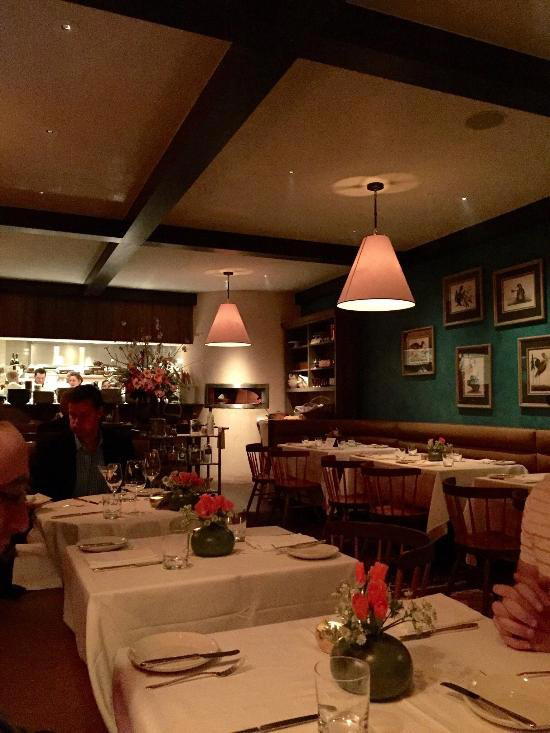
Warm and elegant atmosphere with a lively, welcoming environment that balances casual fun with romantic occasions.