DAME
DAME sits on NE Killingsworth Street in Portland's northeast corridor, operating in a city where ingredient provenance has become as legible as the menu itself. The restaurant draws on the Pacific Northwest's dense network of small farms and fisheries, placing it inside Portland's most ingredient-driven dining tier. It is a focused, neighbourhood-rooted room with regional sourcing as its organising principle.
 Discover on Pearl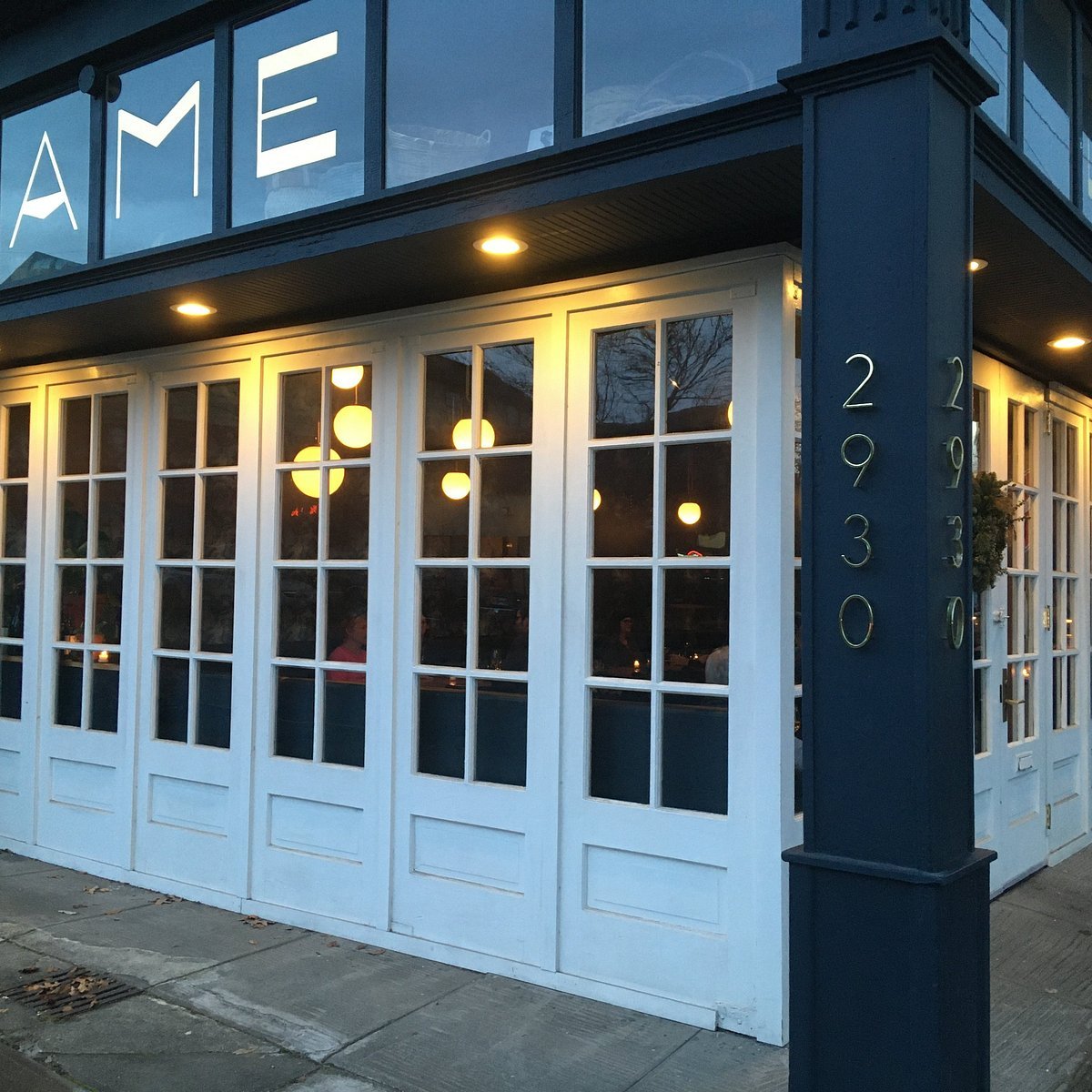
Northeast Portland and the Sourcing-First Kitchen
NE Killingsworth Street has shifted meaningfully over the past decade, moving from a corridor of car repair shops and corner stores into one of Portland's more coherent neighbourhood dining strips. The blocks around 2930 sit at a remove from the Pearl District's self-conscious polish and the concentrated foot traffic of SE Division — which is precisely what makes them interesting. Restaurants here tend to operate without the pressure to perform for a tourist audience, and the cooking often reflects that. DAME occupies this stretch of Killingsworth in a way that feels consistent with the street's current character: purposeful, unglamorous in the leading sense, and oriented toward the people who live nearby rather than the people passing through.
Portland's food culture has long had a specific relationship with ingredient provenance. The city sits within reach of the Willamette Valley's farms, the Oregon Coast's fisheries, and the forested interior's wild-harvested larder. That geography has shaped a generation of kitchens that treat sourcing not as a marketing point but as a structural constraint — the menu follows what's available, and what's available changes with the season. DAME operates within that tradition. The address on Killingsworth places it in a neighbourhood where that ethos tends to run quieter than in the more photographed restaurant districts, but no less seriously.
What the Room Tells You Before the Food Arrives
Approaching DAME from the street, the physical register is deliberate rather than designed-for-impact. Northeast Portland's restaurant rooms at this price and scale tend toward exposed materials and moderate noise levels , a format that signals the kitchen's priorities more than the interior designer's. The room functions as context for the plate, not competition with it. That spatial restraint is common among Portland kitchens that have decided the sourcing story is the primary thing they want the guest to receive.
The ingredient-first model demands a specific kind of discipline in the dining room. Servers in these kitchens typically carry more product knowledge than their counterparts in format-driven restaurants , not because the atmosphere requires it, but because the menu genuinely shifts with supply. When a dish changes because the farm relationship changed, or because the season closed, the front-of-house needs to be able to explain that without losing the guest. DAME's position on Killingsworth, away from the highest-volume dining corridors, allows for that kind of granular conversation in a way that a 120-cover room on a tourist strip does not.
The Pacific Northwest Sourcing Network as Editorial Argument
Oregon's agricultural and fishing infrastructure gives Portland chefs a sourcing network that most American cities cannot replicate at scale. The Willamette Valley produces vegetables, grains, and dairy across a relatively compact geography. The coast provides Dungeness crab, Pacific oysters, and seasonal rockfish within a few hours' drive. Inland, foragers supply mushrooms, ramps, and other wild materials that move through restaurant supply chains with speed. That density of supply is the structural reason why Portland's sourcing-forward kitchens can operate credibly at the neighbourhood level rather than only at the flagship tier.
DAME sits inside that supply network and, by virtue of its northeast Portland address, operates in a part of the city where that sourcing argument tends to be made quietly , through the plate rather than through elaborate menu annotations. The kitchens that have lasted on these blocks tend to be the ones that built genuine farm and fishery relationships rather than rotating through whatever the broadline distributor had available. That relationship-building is a long-term investment, and it tends to produce menus that read differently from season to season in ways that a static, supplier-agnostic kitchen cannot manage.
For readers planning visits across Portland's dining tier, the northeast corridor offers a useful counterpoint to the more curated restaurant experiences further south and west. For comparable sourcing discipline in other cities, Kumiko in Chicago and Jewel of the South in New Orleans represent kitchens and bars that have made ingredient provenance a structuring principle rather than a decorative one. On the West Coast, ABV in San Francisco applies a similar rigor to its drinks program. Further afield, Bar Leather Apron in Honolulu and Julep in Houston demonstrate that the sourcing-first sensibility has taken hold well beyond the Pacific Northwest.
Planning a Visit: Killingsworth in Context
DAME is located at 2930 NE Killingsworth St, Portland, OR 97211. The address places it in a part of northeast Portland that rewards a broader evening plan , the surrounding blocks have enough to justify an early drink before or after. Portland's northeast bar scene includes Teardrop Lounge, which runs a technically serious cocktail program, and 10 Barrel Brewing Portland for a more casual pre-dinner option. Nearby, 3808 N Williams Ave and Abigail Hall add further options for guests building a full evening in the northeast corridor.
Seasonality matters more at sourcing-forward kitchens than at restaurants with static menus. The spring and early summer window , when the Willamette Valley's first-of-season vegetables arrive alongside the tail end of winter seafood , tends to produce the most compositionally interesting plates at Portland's ingredient-driven rooms. Autumn, when wild mushrooms peak and the coast's crab season opens, runs a close second. Visiting in these windows gives the kitchen the widest range of supply to work with, and the menu reflects that range directly.
For a fuller view of Portland's restaurant scene, including neighbourhood comparisons and price-tier breakdowns, see our full Portland restaurants guide. Readers interested in how the sourcing-first model operates in different formats and cities can also reference Superbueno in New York City, The Parlour in Frankfurt on the Main, and Julep in Houston as comparative points across different geographies and price brackets.
Frequently Asked Questions
- What should I try at DAME?
- DAME's menu follows seasonal supply from the Pacific Northwest , Willamette Valley farms, Oregon Coast fisheries, and regional foragers , so what's on the plate depends heavily on when you visit. The most coherent way to approach it is to ask what has arrived most recently rather than anchoring to a fixed expectation. Kitchens operating at this sourcing depth tend to do their leading work with whatever is at peak supply, and the front-of-house should be able to direct you accordingly.
- What should I know about DAME before I go?
- DAME sits on NE Killingsworth in northeast Portland, away from the more heavily trafficked dining corridors. Phone and booking details are not publicly listed at time of writing, so confirming reservation availability directly through current channels before visiting is advisable. The northeast Portland dining strip rewards pairing the meal with drinks at nearby venues; the surrounding blocks have several credible options. Budget expectations for sourcing-forward neighbourhood kitchens in Portland generally fall below the Pearl District flagship tier.
- Is DAME suitable for guests with dietary restrictions, given its seasonal sourcing model?
- Restaurants that build menus around seasonal and local supply tend to have less menu flexibility than kitchens running static formats, because the dishes are composed around specific ingredients that may not have direct substitutes. Guests with significant dietary restrictions should communicate them at the time of booking or inquiry rather than on arrival. Northeast Portland's ingredient-driven kitchens, as a category, tend to handle these conversations more capably than volume-oriented restaurants, but the shifting menu means early communication is more important here than at a fixed-menu establishment.
Nearby-ish Comparables
Comparable venues for orientation, based on our database fields.
| Venue | Cuisine | Price | Notes |
|---|---|---|---|
| DAME | This venue | ||
| Teardrop Lounge | |||
| Bible Club PDX | |||
| Multnomah Whiskey Library | |||
| Rum Club | |||
| Takibi |
Need a Table?
Our members enjoy priority alerts and concierge-led booking support for the world's most difficult bars and lounges.
Get Exclusive Access