Daikon Vegan Sushi
Daikon Vegan Sushi sits on the northwest edge of Las Vegas, away from the Strip's volume dining, representing a format that has grown steadily in American cities: plant-based sushi that takes technique seriously rather than treating vegan as a dietary footnote. The address at W Lake Mead Boulevard places it squarely in a residential corridor, which tells you something about its likely audience and intent.

Pearl is the En Primeur Club membership app — saves, bookings, and concierge access live there. Same editors, same standards.
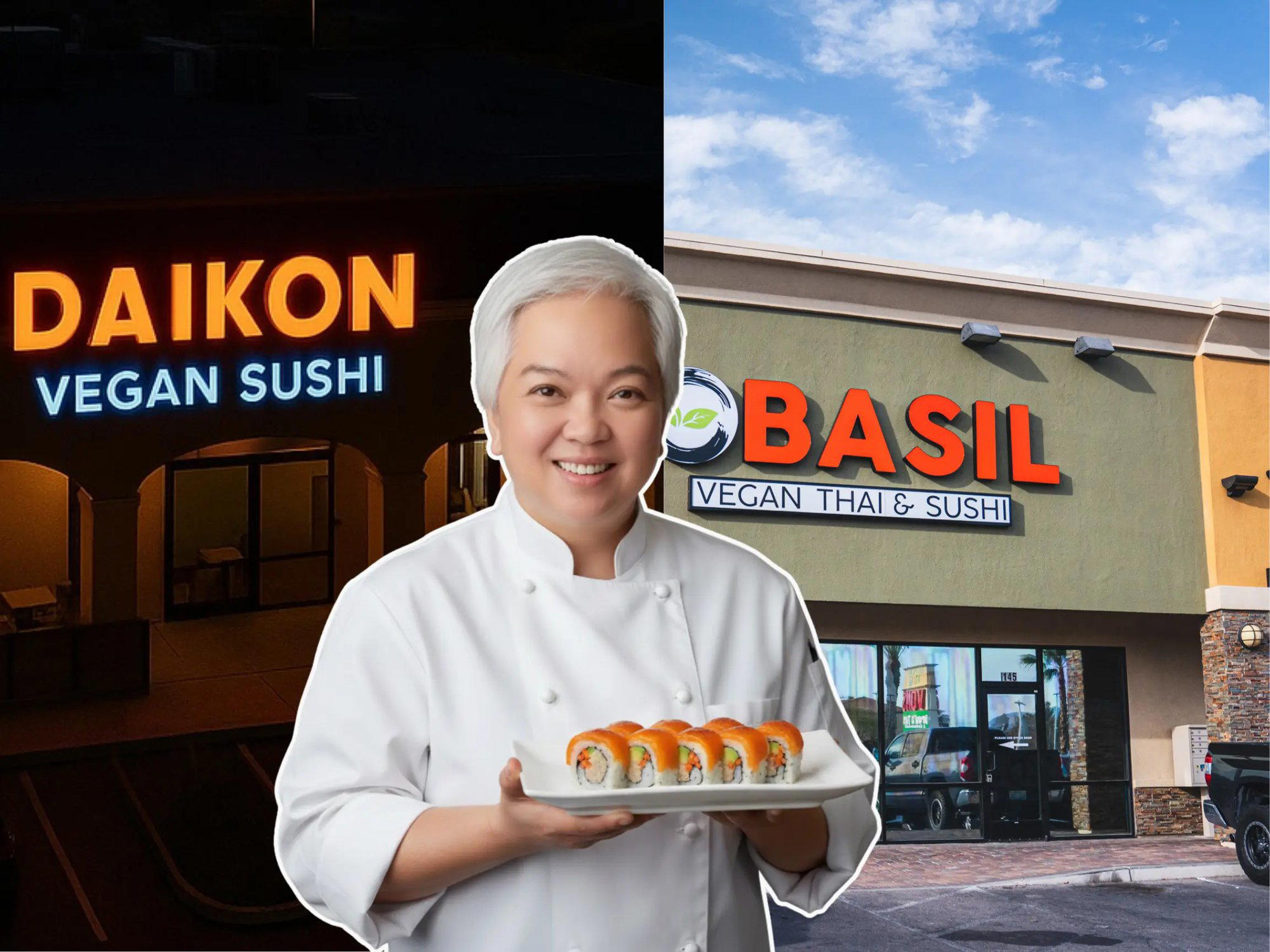
Plant-Based Sushi in a City Built on Excess
Las Vegas has long operated on a simple premise: more of everything. More protein, more spectacle, more square footage behind every buffet counter. Against that backdrop, the growth of plant-based sushi as a format worth taking seriously reads almost as a counterargument. Daikon Vegan Sushi, located at 7210 W Lake Mead Boulevard in the northwest of the city, occupies that contrarian space. The address alone signals something: this is not a Strip experiment or a hotel-casino side project, but a neighbourhood-facing operation in a part of Las Vegas where people actually live.
The physical approach to W Lake Mead Boulevard in this corridor involves strip-mall architecture, wide parking lots, and the kind of retail signage that does not perform for tourists. That context is not incidental. It shapes what a plant-based sushi counter can be here, freed from the pressure of spectacle dining and calibrated instead toward repeat local custom. In many American cities, vegan sushi has followed exactly this pattern: beginning as a niche format in residential or university-adjacent zones, then gradually earning credibility among diners who were not initially looking for a vegan experience at all.
How Plant-Based Sushi Arrived at This Point
The evolution of vegan sushi as a serious format is worth mapping, because it explains how a place like Daikon fits into a broader shift rather than sitting outside it. Through most of the 2000s and into the early 2010s, plant-based Japanese food in the United States was largely a substitution exercise: swap the fish for avocado or cucumber, hold the mayo, and call it done. The results were rarely satisfying to anyone who came for the craft.
What changed was technique. As chefs with real Japanese training began engaging with plant-based formats, and as ingredients like high-quality tofu, konjac, and marinated vegetables became more available at scale, vegan sushi started to develop its own logic rather than borrowing from and falling short of fish-based omakase. The category now splits roughly between venues that treat plant-based as a modification of a conventional menu and those that build the format from the ground up. The latter group tends to produce more coherent results, because the decisions about rice temperature, nori texture, and ingredient balance are made in the context of what is actually on the plate rather than in reference to an absent protein.
Its name is a useful signal. Daikon, the Japanese radish that serves as a palate-cleanser and garnish across traditional sushi service, is chosen as the identity anchor here rather than any protein substitute. That framing suggests an orientation toward Japanese culinary vocabulary rather than away from it.
The Northwest Las Vegas Context
The W Lake Mead Boulevard corridor, running through the 89128 zip code, represents a part of Las Vegas that most travel coverage ignores. It is a functioning residential district with a demographic mix that includes long-term locals, recent arrivals, and a significant population with roots in East and Southeast Asia, which has historically supported the area's more specialist food operations. For a vegan sushi concept, that neighbourhood composition matters: it implies a customer base with genuine familiarity with Japanese food formats and less tolerance for approximation.
Las Vegas's off-Strip dining scene has become more worth tracking over the past decade, particularly in the northwest and west of the city. Operations like Herbs & Rye and 108 Drinks have demonstrated that the city supports serious independent venues outside the casino corridor, and bars such as 1228 Main and Ada's Food & Wine have built consistent local audiences on the strength of program depth rather than foot traffic. Daikon Vegan Sushi belongs to a similar logic: find the neighbourhood, build the regular, earn the word of mouth.
The Format and What It Implies
Plant-based sushi formats in the United States have generally settled into one of two service models. The first is the casual roll-focused counter, where speed and accessibility matter more than precision. The second is a more deliberate approach that borrows structural elements from traditional sushi service: attention to rice seasoning, controlled portioning, and ingredient sequencing that rewards attentive eating. Both are legitimate, but they produce different experiences and attract different audiences.
The comparison to technically serious plant-forward bars and restaurants in other American cities is instructive. Operations like Kumiko in Chicago, which applies Japanese precision to a bar format, or ABV in San Francisco, which treats ingredient sourcing as a program discipline, suggest that the American appetite for rigorous plant-forward formats is not limited to coastal tasting-menu contexts. It shows up wherever the customer base supports it. Similarly, bars with strong ingredient philosophies like Bar Leather Apron in Honolulu, Jewel of the South in New Orleans, Julep in Houston, Superbueno in New York City, and The Parlour in Frankfurt have each found that specificity of approach builds a more durable audience than broad appeal.
Planning a Visit
Daikon Vegan Sushi is located at 7210 W Lake Mead Boulevard, Suite 1, in a retail strip in the northwest of Las Vegas. The location is accessible by car and sits within a commercial block with parking, which is the practical norm for this part of the city. Public transit connections to this corridor are limited, so arriving by rideshare or private vehicle is the standard approach for visitors without a car.
Walk-in friendly service makes same-day visits straightforward, though weekend evenings may bring a wait.
Reputation Context
Comparable venues nearby, for context on price, style, and recognition.
| Venue | Cuisine | Price | Awards | Notes |
|---|---|---|---|---|
| Daikon Vegan SushiThis venue — the venue you are viewing | Bar | $20–30 | Not listed | Not listed |
| HUDL Brewing Company | beer_bar | Not listed | Not listed | Downtown South |
| Backstage Bar & Billiards | sports_bar | $20–30 | Not listed | Las Vegas Boulevard Overlay District |
| Velveteen Rabbit | cocktail_bar | $30–50 | Top 500 Bars Best Bars #403 | Downtown South |
| Commonwealth | rooftop_bar | $20–30 | Not listed | Las Vegas Boulevard Overlay District |
Continue exploring
More in Las Vegas
Bars in Las Vegas
All bars in Las Vegas →
Restaurants in Las Vegas
All restaurants in Las Vegas →
Details
- Modern
- Trendy
- Casual Hangout
Current opening hours
- Monday
- 11 AM–9 PM
- Tuesday
- 11 AM–9 PM
- Wednesday
- 11 AM–9 PM
- Thursday
- 11 AM–9 PM
- Friday
- 11 AM–9 PM
- Saturday
- 11 AM–9 PM
- Sunday
- 3–9 PM
Hours can change for holidays and private events. Last verified .
Welcoming atmosphere with on-point music and attentive service.