Colomé Winery sits at roughly 2,300 metres in Argentina's Calchaquí Valleys, making it one of the highest-altitude wine estates in the world. The property combines working vineyard with boutique lodging and a permanent James Turrell Museum, placing it in a category few wine destinations anywhere can match. Reaching it requires commitment; what you find justifies the effort.
 Discover on Pearl
Pearl is the En Primeur Club membership app — saves, bookings, and concierge access live there. Same editors, same standards.
- Address
- Ruta Provincial 52, Km. 20-Molinos, A4419 Colomé, Argentina
- Phone
- +54 3868 49 4200
- Website
- bodegacolome.com
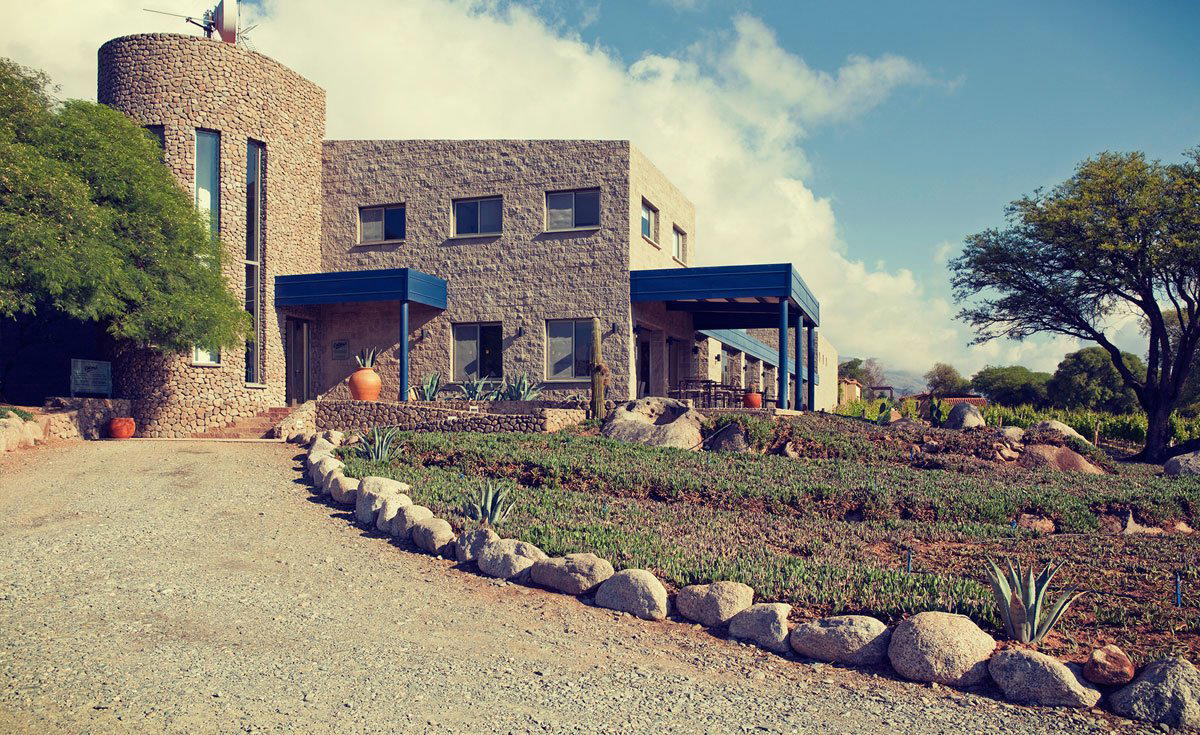
Altitude as Architecture
The Calchaquí Valleys in Argentina's Salta province operate on a different scale from the country's better-known wine regions. Where Mendoza spreads across a broad, accessible plain east of the Andes, the valleys north of Cafayate push deeper into the mountains, gaining elevation with each kilometre of unpaved road. By the time Ruta Provincial 52 reaches the Colomé estate near the village of Molinos, the land itself has become the defining design element. At approximately 2,300 metres above sea level, the light arrives sharper, the shadows move faster, and the quality of silence in the afternoon is the kind that makes conversation feel optional. The estate sits within a range of quebrada geology, layered red and ochre rock formations, and the built environment responds accordingly. Adobe-style construction, earth-toned walls, and materials sourced to echo the surrounding terrain mean the property does not announce itself so much as emerge from the ground it occupies.
For those travelling across Argentina's premium wine circuit, properties like Cavas Wine Lodge in Alto Agrelo and Casa de Uco in Tunuyán represent the Mendoza benchmark: polished, design-led, accessible. Colomé belongs to a different tier of remoteness. The nearest commercial airport is Salta, and the drive to Molinos takes the better part of a day, passing through Cafayate and the Quebrada de las Flechas before the road narrows and the villages become smaller. That distance is not incidental to the experience; it is structural to it.
The James Turrell Museum
High-altitude wine estates rarely build a case for their architecture on the basis of art institutions, but Colomé's James Turrell Museum changes the nature of that conversation. Turrell, the American light artist whose career-long project at Roden Crater in Arizona has become one of the reference points for immersive environmental art, designed nine rooms specifically for this site. The museum opened in 2009 and houses a permanent installation that uses natural and artificial light in enclosed chambers. This is the kind of work that art publications discuss.
The Turrell Museum places Colomé well beyond Argentine wine tourism. Visitors who make the trip often include people whose primary motivation is the art rather than the vineyards, and the reverse is equally true: wine guests who know little about Turrell find themselves spending extended time in the museum's chambers. That overlap, between serious contemporary art and serious wine production at extreme altitude, is not something you encounter at other wine estates in the southern hemisphere, or many places anywhere. For those building an Argentina itinerary around properties that justify a detour, the museum is the argument.
Vineyards at Elevation
Argentina's high-altitude viticulture story is often told through Malbec, and Colomé participates in that narrative, but the estate's elevation range extends significantly above the standard Mendoza frame of reference. Vineyards at Colomé include parcels above 3,000 metres, reaching into territory where only a small number of producing wineries in the world operate. At those elevations, UV radiation intensity, diurnal temperature variation, and water stress produce conditions that leave a specific mark on the fruit: tighter skins, concentrated colour, and acidity levels that give the wines a structural character distinguishing them from the rounder, plusher profile associated with lower-altitude Malbec. Torrontés also features in the estate's range, appropriate for a property in the Salta heartland of that variety.
The broader Argentine wine scene has increasingly recognised the Calchaquí Valleys as distinct from Mendoza. Estates like Algodon Wine Estates in San Rafael and the properties clustered around Awasi Mendoza in Lujan De Cuyo represent Mendoza's premium register, but the Calchaquí story is geologically and climatically distinct enough to read as a separate chapter rather than a variation on the same theme.
The Property and Staying Here
Colomé operates as a wine estate with lodging rather than a hotel that produces wine, and the distinction shapes everything about how the property feels. Room count is deliberately limited, which means the estate rarely generates the activity level of a conventional resort. Guests share the grounds with the working vineyard, the museum, and the surrounding terrain in a way that produces something closer to a private estate experience than a hospitality product. The Lodge Atamisque in Tupungato offers a comparable balance between wilderness setting and considered lodging, but the elevation and art dimension at Colomé sit outside that comparison's reach.
For those constructing a broader Argentina itinerary, properties like House of Jasmines in La Merced Chica cover the Salta region with a different format and a shorter drive from the city. Colomé asks more of the traveller in terms of commitment but offers a setting that the more accessible properties in the region cannot replicate. The Estancia Cristina in El Calafate and Explora El Chaltén occupy comparable positions in Patagonia: properties where physical remoteness is not a drawback to manage but a condition the experience is built around.
Logistics require advance planning. Booking well ahead is advisable given the limited room count, and the museum visit typically requires coordination with the estate. Additional Argentine wine and lodge properties across the country are covered in profiles of Chozos Resort by AKEN Spirit in Agrelo, ESTANCIA LOS POTREROS in Rio Ceballos, La Urumpta Hotel in Cordoba, and Correntoso Lake and River Hotel in Villa La Angostura. For estancia-format alternatives with a different character, Estancia El Ombú de Areco and Estancia La Bandada in San Miguel Del Monte cover the pampas register. Urban Argentina is addressed through Home Hotel in Buenos Aires and Casa Duhau in Mendoza. Further afield, Arakur Ushuaia Resort and Spa, Awasi Iguazu, El Colibri in Santa Catalina, Charming Luxury Lodge in Bariloche, and Las Leñas in Las Heras round out Argentina's premium property spectrum. International reference points include The Fifth Avenue Hotel in New York City, Aman New York, and Aman Venice.
Continue exploring
More in Molinos
Wineries in Molinos
Browse all →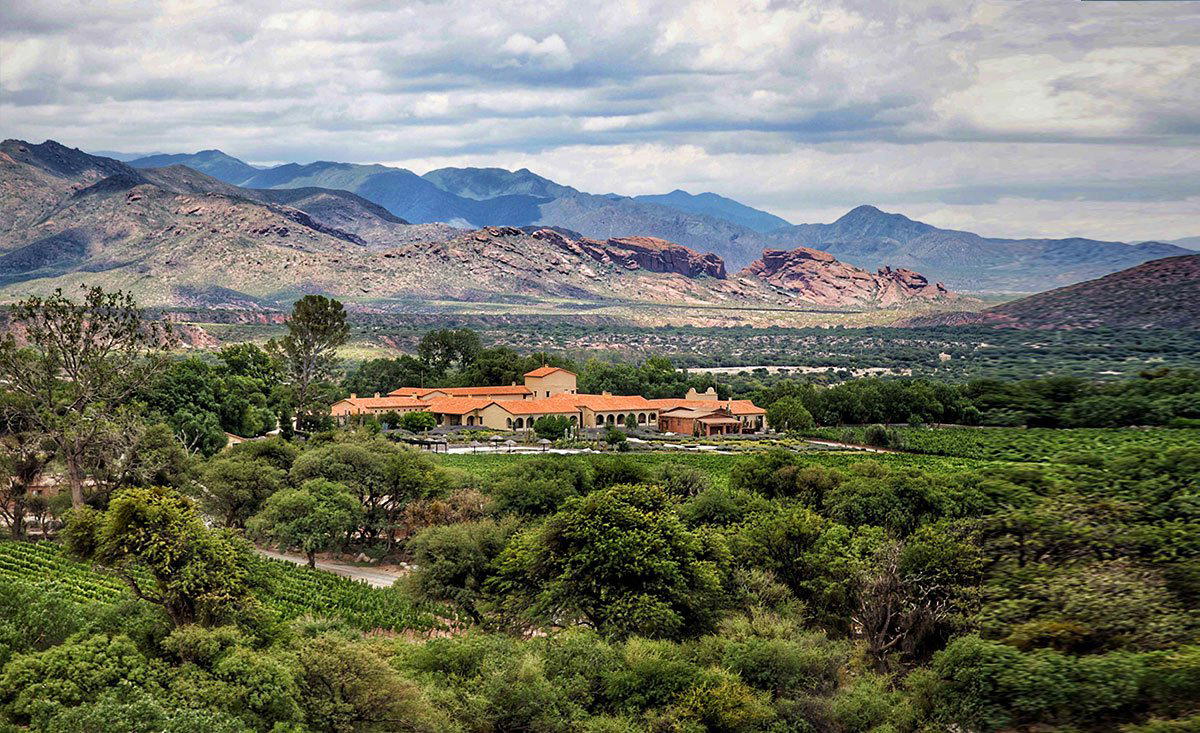
At a Glance
- Rustic
- Scenic
- Elegant
- Quiet
- Intimate
- Romantic Getaway
- Wellness Retreat
- Anniversary
- Weekend Escape
- Panoramic View
- Historic Building
- Wifi
- Pool
- Fitness Center
- Tennis Court
- Mountain
- Vineyard
- Garden
Serene and elegant hacienda-style atmosphere with candle-lit porches, cozy fireplaces, artisanal textiles, and tranquil vineyard and mountain surroundings.