Chisou Sushi and Izakaya
On Woodstock Street in Mayfair, Chisou Sushi and Izakaya occupies a position that London's Japanese dining scene has long needed: a room where the precision of a sushi counter coexists with the looser, sharing-driven logic of an izakaya. The format rewards those who understand the distinction between the two registers and know when to let the kitchen set the pace.
 Discover on Pearl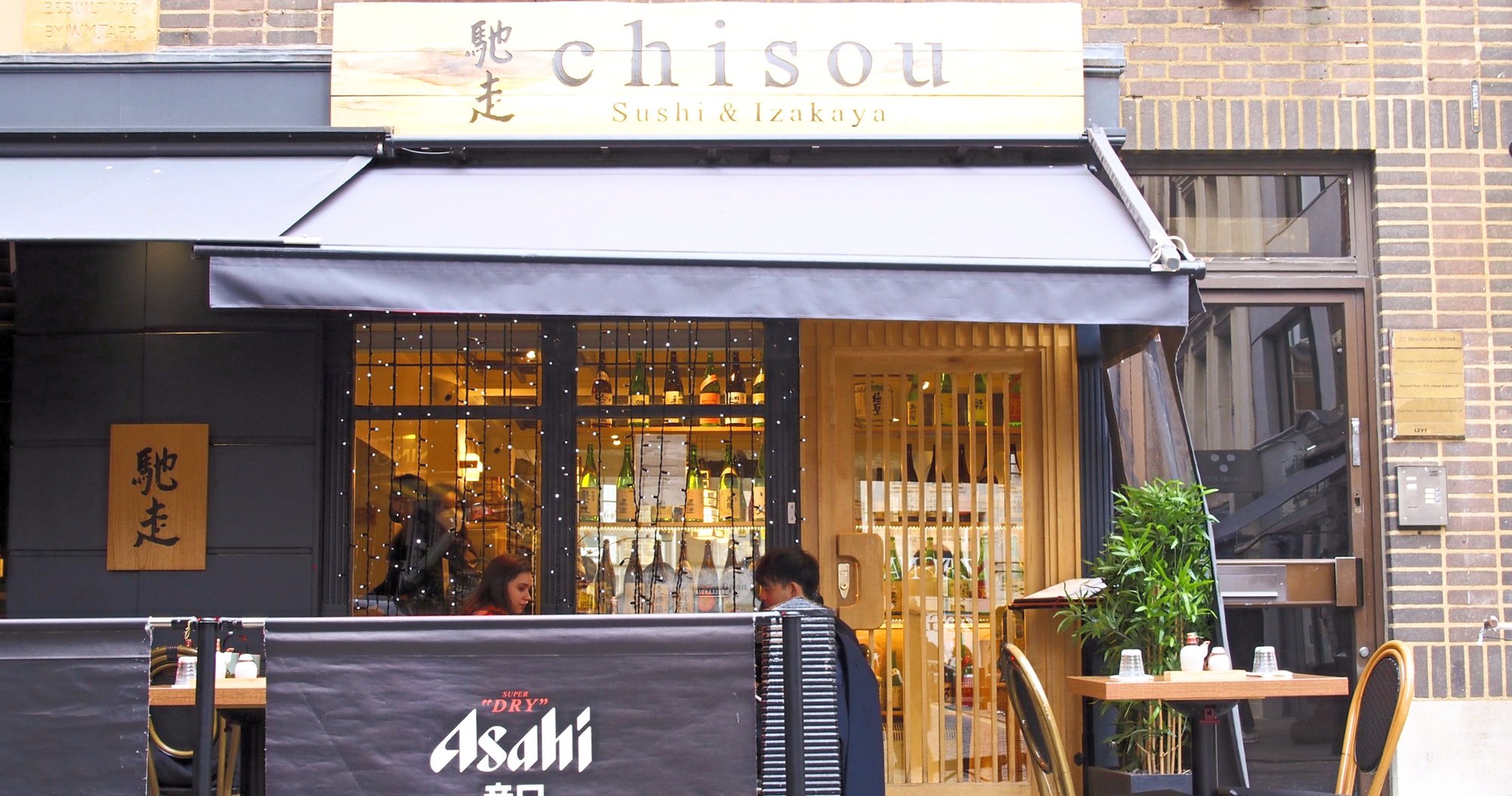
The Room Before the First Dish
Woodstock Street runs quietly between the retail noise of Oxford Street and the composed Georgian terraces of Mayfair proper. The address places Chisou Sushi and Izakaya inside a neighbourhood where Japanese dining has found consistent footing over the past two decades, partly because the area's visitor mix includes a significant contingent from Japan and across East Asia who apply their own standards to what lands on the table. That audience is harder to satisfy with approximation than the typical London diner, and the restaurants that survive on these streets tend to have absorbed that pressure into their kitchens.
Walking into a room that combines a sushi counter with izakaya-style service requires a small recalibration. These are two distinct dining traditions in Japan, and venues that blend them are making a specific claim: that the disciplines are complementary rather than contradictory. The counter demands silence, focus, and deference to the itamae's sequence. The izakaya table invites noise, repetition, and the easy rhythm of ordering another round of skewers alongside another carafe of cold sake. Getting both registers right in one dining room is genuinely difficult, and London venues that have attempted it with any rigour occupy a small peer set.
The shortlist, unlocked.
Hard-to-book tables, cellar releases, and concierge-planned trips.
Get Exclusive Access →Two Traditions, One Room
The izakaya format arrived in the UK as an idea before it arrived as a practice. For years, London restaurants borrowed the aesthetic — ceramic dishes, low lighting, Japanese whisky on the back shelf — without fully committing to the structural logic of the tradition. In Japan, the izakaya is defined less by its menu than by its pace: food arrives as it is ready, drinks precede dishes rather than accompanying them in lockstep, and the evening's duration is decided by the table rather than the kitchen. The format sits closer to a Spanish tapas bar in its social grammar than to the progression-driven logic of European fine dining.
Sushi service, by contrast, is one of the most codified dining rituals in any world cuisine. At the counter, the omakase sequence moves from lighter, cleaner fish through richer, fattier cuts, punctuated by palate-resetting intervals of pickled ginger and occasional broth. The guest's role is largely receptive , responding to what the chef presents rather than assembling an order. That dynamic sits in deliberate tension with the izakaya model, and the interest of a venue like Chisou lies in how it manages the crossover between the two.
Mayfair has seen several iterations of this hybrid across its Japanese restaurant cohort, from the established names on Heddon Street to newer arrivals on the streets feeding into Grosvenor Square. The W1 postcode carries enough price expectation that a kitchen serving both counter sushi and shared plates is implicitly being measured against peers charging a premium for each format separately. That's the competitive context Chisou operates within, and it's a more demanding one than a single-format venue would face.
The Ritual of Ordering
For a first visit, the practical question is which mode to engage. A seat at the sushi counter signals one kind of commitment: you are handing sequencing authority to the kitchen, and the meal will move at its pace. A table in the izakaya section opens a different kind of evening, one where the ordering rhythm is collaborative and the food arrives against the grain of any fixed progression. Regulars at venues like this typically develop a preference for one or the other, then occasionally migrate between them depending on the occasion and the size of the group.
The shared-plate format suits groups of three or more, where coverage across the menu is possible without over-ordering. Sushi counter seating, by contrast, tends to work better for two, or occasionally for a solo diner who wants the focus of the counter experience without the social negotiation of a shared table. London's izakaya-adjacent venues, including those reviewed in our full London restaurants guide, have gradually shifted toward this segmented approach as the city's Japanese dining audience has grown more format-literate.
Drink sequencing matters in this context more than it does in conventional Western restaurant settings. The izakaya convention is to open with beer or a long drink, shift to sake as the food intensifies, and arrive at whisky or shochu as the evening extends beyond the meal itself. London's bar scene has developed enough expertise with Japanese spirits that this progression is no longer unusual to request: venues like 69 Colebrooke Row and A Bar with Shapes For a Name have both contributed to a broader literacy around spirits sequencing that makes the izakaya drink format legible to a wider audience than it would have reached a decade ago.
Where Chisou Sits in London's Japanese Dining Tier
London's Japanese restaurant category has widened considerably since the early 2000s, when a handful of Mayfair and St James's addresses held most of the critical attention. The tier now includes conveyor-belt operations at the accessible end, a growing number of ramen specialists that have moved well beyond the tourist circuit, and at the upper end, omakase counters and kaiseki rooms that price against their Ginza equivalents rather than their London neighbours. Chisou occupies the middle-upper band of this structure: a venue where the quality signals are clear without the counter prices of the top-tier omakase rooms.
That positioning reflects a deliberate choice in how the venue reads against its W1 peers. On a street where property costs are among the highest in the city, the hybrid izakaya-sushi format distributes revenue across a wider menu range than a pure omakase counter could sustain. It also allows the kitchen to serve a broader range of guest intent , the solo counter diner and the group celebrating over shared plates are both viable customers in the same room, rather than requiring two separate operations.
For broader context on where London's Japanese scene sits relative to the rest of the UK's food culture, the contrast with cities like Edinburgh (where Bramble has helped define a different kind of premium hospitality) or Manchester (where Schofield's anchors a serious cocktail programme) is instructive. London's concentration of Japanese-trained kitchen talent and its East Asian residential and visitor base gives Mayfair venues a calibration opportunity that most UK cities cannot replicate.
Planning a Visit
Woodstock Street is a short walk from Bond Street Underground station, placing the restaurant squarely within reach of the central Mayfair hotel strip. For visitors combining dinner with drinks, the neighbourhood supports movement toward Soho for post-dinner options, where venues including Amaro, Academy, and A Bar with Shapes For a Name represent some of the city's more considered bar programmes. For visitors arriving from outside London, the comparison set for premium bar culture in other UK cities includes Merchant Hotel in Belfast, Mojo Leeds, and Horseshoe Bar Glasgow, though none of those cities yet supports a Japanese dining tier comparable to central London's. Further afield, Bar Leather Apron in Honolulu and L'Atelier Du Vin in Brighton suggest how differently premium drink culture organises itself outside the capital. Booking in advance is advisable for counter seating, which at venues of this type in Mayfair tends to fill earlier in the week than the izakaya tables.
The shortlist, unlocked.
Hard-to-book tables, cellar releases, and concierge-planned trips.
Get Exclusive Access →Frequently Asked Questions
Quick Comparison
A short peer set to help you calibrate price, style, and recognition.
| Venue | Cuisine | Price | Awards | Notes |
|---|---|---|---|---|
| Chisou Sushi and Izakaya | This venue | |||
| Bar Termini | World's 50 Best | |||
| Callooh Callay | World's 50 Best | |||
| Happiness Forgets | World's 50 Best | |||
| Nightjar | World's 50 Best | |||
| Quo Vadis | World's 50 Best |
Need a Table?
Our members enjoy priority alerts and concierge-led booking support for the world's most difficult bars and lounges.
Get Exclusive AccessThe shortlist, unlocked.
Hard-to-book tables, cellar releases, and concierge-planned trips.
Get Exclusive Access →