Chautauqua Dining Hall
Chautauqua Dining Hall occupies one of Boulder's most historically significant positions: a National Historic Landmark site at the base of the Flatirons, where the Colorado foothills meet the edge of the city grid. The setting frames every meal with a view that no downtown address can replicate, making it the rare Boulder restaurant where place does as much work as the plate.
Pearl is the En Primeur Club membership app — saves, bookings, and concierge access live there. Same editors, same standards.
- Address
- 900 Baseline Rd, Boulder, CO 80302
- Phone
- +1 303 440 3776
- Website
- chautauqua.com
- Directions
- Get directions
 Saves & bookings on Pearl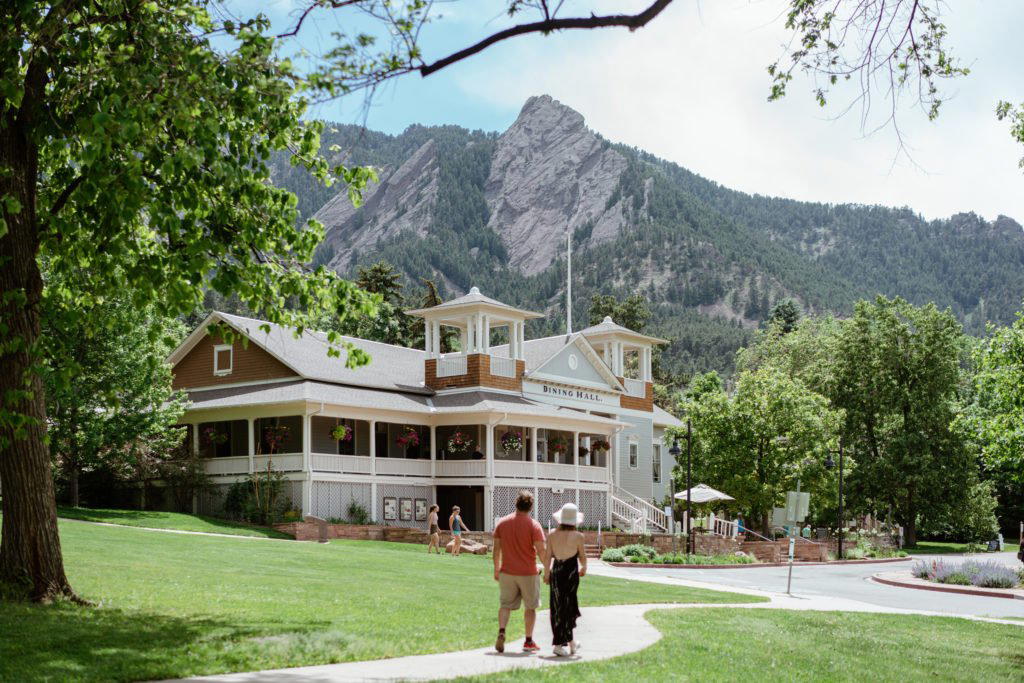
Where Boulder Ends and the Mountains Begin
There is a particular moment, driving west on Baseline Road as the Flatirons rise ahead and the city grid begins to dissolve into open parkland, when the scale of the Front Range becomes undeniable. Chautauqua Dining Hall sits at exactly that threshold: 900 Baseline Rd, at the entrance to the Colorado Chautauqua, a National Historic Landmark that dates to 1898 and remains one of the most intact examples of the American Chautauqua movement in the country. The building itself is a late-Victorian structure of the type that once anchored educational retreat communities across the United States, most of which have long since been converted, demolished, or absorbed by surrounding development. Boulder's Chautauqua survived, and the Dining Hall survived with it.
That survival matters more than it might initially seem. In a city where dining options cluster around Pearl Street and the Hill, Chautauqua sits apart, geographically and atmospherically. The approach through the park, past the cottages and the auditorium, functions as a deliberate decompression from the urban pace. Arriving here is not the same experience as parking behind a downtown block and walking into a restaurant. The context changes what happens inside.
The Logic of Eating at Altitude (or at Least at the Base of It)
Boulder's dining scene has evolved considerably over the past two decades, with Frasca Food and Wine establishing the city's fine-dining credentials and a subsequent generation of more casual but technically serious restaurants following that lead. Venues like Bramble & Hare Bistro and Basta have built programs around local sourcing and wood-fired cooking. Bacco | Trattoria & Mozzarella Bar has added an Italian-focused counter to the mix. In that context, Chautauqua occupies a distinct position: it is the restaurant most tied to a specific place, in the geographic sense, rather than a culinary school of thought or a chef's ambition.
That is not a diminishment. Across American dining, the venues that endure tend to be those anchored to something other than trend. Chautauqua's anchor is the site itself and the broader public-access mission of the Colorado Chautauqua Association, a nonprofit that operates the landmark. The Dining Hall's continued function as a working restaurant within that framework means its identity is inseparable from the park, the hiking trails that begin just beyond the porch, and the community of hikers, tourists, local families, and history-minded visitors who arrive with those conditions in mind.
The Porch as the Point
The covered wraparound porch is the room that Boulder visitors consistently reference when discussing the Dining Hall, and for direct physical reasons: it faces the Flatirons at a distance and angle that places the rock formations in an uninterrupted frame. Early mornings, before the trails fill, the light across the sandstone is the kind of thing that justifies the drive up Baseline regardless of what arrives on the plate. Reservations for porch seating, particularly in warmer months, book ahead of interior tables. That demand pattern is consistent with how dining experiences at landmark outdoor settings tend to work across the country, where the view functions as a co-equal draw to the food.
For comparable dynamics in entirely different culinary contexts, consider how destination placement shapes experience at properties like Bar Leather Apron in Honolulu or the neighborhood-anchored identity of Jewel of the South in New Orleans. In each case, the physical and cultural placement of a venue creates expectations that operate alongside, rather than beneath, what happens at the table.
Visiting in Context: Timing and the Park Calendar
The Colorado Chautauqua operates on a seasonal rhythm that directly affects the Dining Hall. Summer is the high-traffic period: the auditorium hosts concerts, the trails are active from early morning, and the park draws visitors who combine outdoor activity with a meal. Spring and fall offer shorter windows with considerably lighter crowds and, depending on the week, views of snow on the Flatirons that shift the scene entirely. Winter hours narrow, and the programming-driven crowds thin, leaving a quieter experience that has its own appeal for visitors not on a hiking itinerary.
Planning a Boulder trip around Chautauqua means coordinating with the park schedule rather than simply slotting in a dinner reservation.
The Broader Boulder Bar and Dining Circuit
Boulder's independent bar and restaurant culture extends well beyond the Chautauqua grounds. Avery Brewing Company anchors the city's craft beer identity, drawing the same curious-visitor traffic that Chautauqua draws but from a different angle: industrial-scale craft production rather than historic preservation. For bars with equivalent depth of program in other American cities, the reference points range from Kumiko in Chicago to ABV in San Francisco, Julep in Houston, and Superbueno in New York City. Each of those venues demonstrates how local identity and program discipline can create a coherent sense of place without relying on a famous view. Chautauqua's view is the frame; the question for any visit is what sits inside it.
European parallels exist too: The Parlour in Frankfurt on the Main shows how a room embedded within a culturally specific context can function as something distinct from a standard dining or drinking venue. The common thread is that the physical and historical frame changes the register of the experience in ways that a restaurant operating in a neutral commercial space cannot replicate.
Planning Your Visit
Chautauqua Dining Hall sits at 900 Baseline Rd, Boulder, CO 80302, at the western edge of the city where it meets Chautauqua Park. Porch reservations in summer are advisable; weekend mornings after a trail run are among the peak times for walk-in pressure. The park itself is free to access, so combining a hike on the Chautauqua Trail or the Royal Arch route with a meal is the default pattern for first-time visitors and is worth building into the schedule.
Continue exploring
More in Boulder
Bars in Boulder
Browse all →
Restaurants in Boulder
Browse all →
Hotels in Boulder
Browse all →
Wineries in Boulder
Browse all →
At a Glance
- Scenic
- Rustic
- Historic
- Casual Hangout
- Group Outing
- Celebration
- Historic Building
- Live Music
- Panoramic View
- Lounge Seating
- Outdoor Terrace
- Classic Cocktails
- Craft Beer
- Conventional Wine
- Mountain
Current opening hours
- Monday
- 8 AM–9 PM
- Tuesday
- 8 AM–9 PM
- Wednesday
- 8 AM–9 PM
- Thursday
- 8 AM–9 PM
- Friday
- 8 AM–9 PM
- Saturday
- 8 AM–9 PM
- Sunday
- 8 AM–9 PM
Hours can change for holidays and private events. Last verified .
Enchanting historic setting with scenic mountain views from the wraparound porch, welcoming and relaxed atmosphere.
Know Before You Go
- Getting there
- 900 Baseline Rd, Boulder, CO 80302