Chattanooga Whiskey Experimental Distillery
Chattanooga Whiskey Experimental Distillery occupies a working production space on Market Street where the boundary between barrel house and tasting room deliberately blurs. The distillery operates as a live laboratory for Tennessee whiskey innovation, offering visitors direct access to experimental batches and production-floor context that most spirit tours don't attempt. It sits inside Chattanooga's broader craft spirits revival, which has repositioned the city as a meaningful stop on the American whiskey trail.
Pearl is the En Primeur Club membership app — saves, bookings, and concierge access live there. Same editors, same standards.
- Address
- 1439 Market St, Chattanooga, TN 37402
- Phone
- +1 423 760 4333
- Website
- chattanoogawhiskey.com
- Directions
- Get directions
 Saves & bookings on Pearl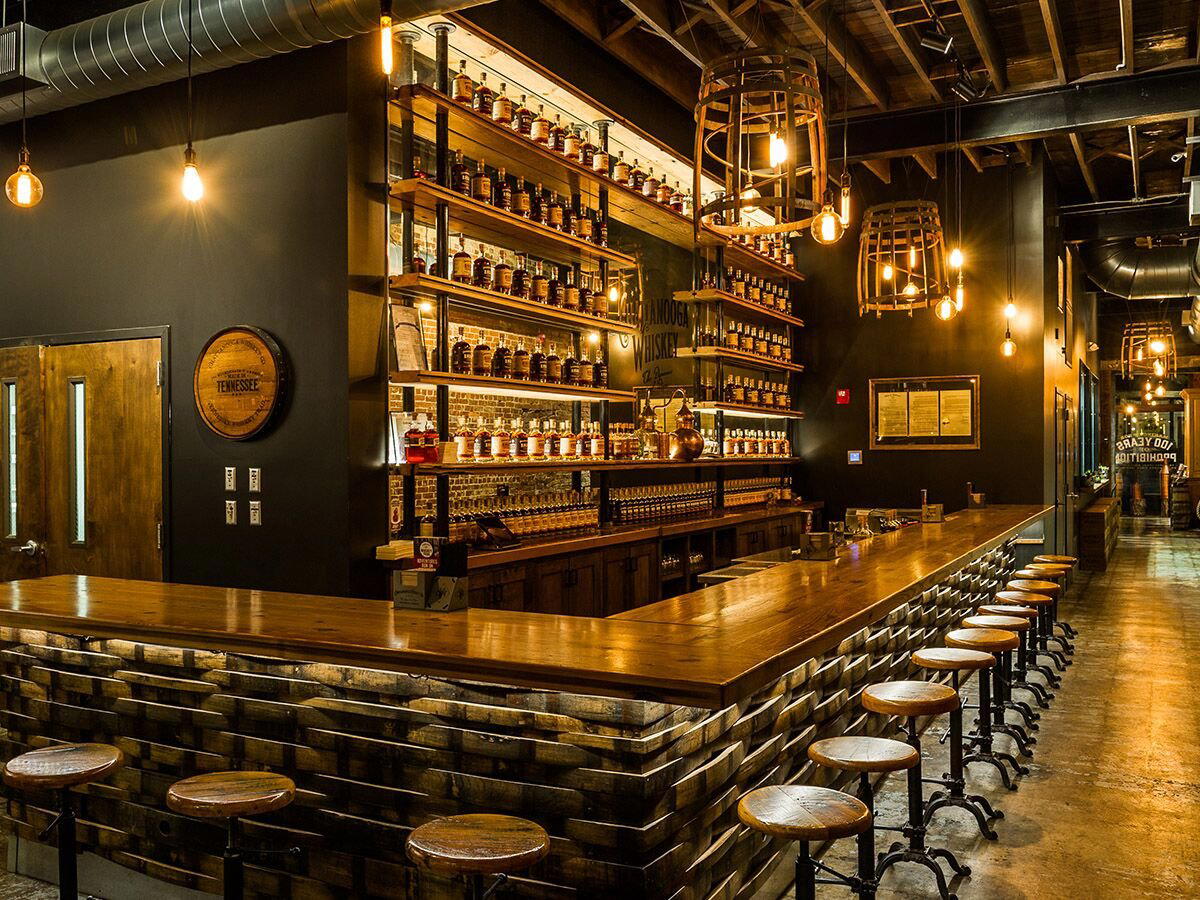
Where Distilling Happens in Front of You
Market Street in Chattanooga has accumulated the kind of creative-industrial character that American mid-size cities often develop when a downtown core finds new purpose after manufacturing leaves. Breweries, music venues, and independent food businesses have moved into the corridor over the past decade, and the Chattanooga Whiskey Experimental Distillery at 1439 Market St fits the pattern: a working production facility that doubles as a public-facing tasting space, positioned deliberately so that the mechanics of whiskey-making remain visible rather than hidden behind marketing mythology.
The experience of visiting a working distillery differs structurally from visiting a cocktail bar. The physical environment is shaped by function first, copper pot stills, fermentation tanks, barrel racks, and the particular warm-grain smell that settles into the air around active spirit production. That industrial atmosphere, rather than suppressed or softened for guests, becomes the design logic of the space. In this format, proximity to the production floor is itself the amenity, and venues like Chattanooga Whiskey Experimental Distillery that maintain their operational identity on public display operate in a different tier from distilleries that shift production to a remote facility and build a decorative visitor center in its place.
The Tennessee Whiskey Context
Tennessee whiskey carries a legal definition distinct from bourbon: the Lincoln County Process, which involves filtering new spirit through maple charcoal before barrel aging, is a requirement for most Tennessee whiskey producers under state law. That single step creates a noticeably different flavor profile from a straight Kentucky bourbon aged to the same spec, lending smoothness at the cost of some of the sharper grain character that bourbon drinkers often prize. The category is historically dominated by two large producers, which means any independent or craft entrant is working against significant shelf-presence asymmetry, but also working with a category identity that has global name recognition to lean on.
Within that context, the word "experimental" in this distillery's name signals something specific. American craft distilling in its current phase has moved beyond simply replicating established styles at smaller scale. Producers who describe their work as experimental are typically exploring grain bills outside the standard mash (high-wheat, high-rye, heritage grains), alternative aging formats (smaller barrels, different wood species, seasoning variables), or proofing and filtration approaches that depart from category convention. Visiting a distillery with an explicit experimental mandate means the tasting experience involves batches that are genuinely variable, some in early release, some at proof points that wouldn't survive a mass-market brief, some intended to fail productively. That variability is the product, not a quality-control problem.
The Tasting Room as Laboratory
Craft spirit programs that operate genuine experimental tracks tend to attract a different visitor profile from destination distilleries built around heritage storytelling. Chattanooga Whiskey Experimental Distillery's Market Street address places it within walking distance of the city's downtown bar and restaurant cluster, which means visitors can anchor a longer evening there before or after stops at spots like Alleia, Calliope Restaurant & Bar, or Big River Grille Downtown.
The atmosphere of a small working distillery tasting room occupies a particular middle ground: more purposeful than a cocktail lounge, more social than a wine library. Tastings move at a pace dictated by the number of expressions being poured, and the conversation tends to loop back to production decisions because the evidence of those decisions is physically present. You can see the stills. You can sometimes smell active fermentation. The connection between liquid in the glass and process on the floor is not abstract.
Chattanooga's Craft Spirits Position
Chattanooga sits at an interesting point in the American craft spirits geography. It is close enough to Kentucky's bourbon belt to carry genuine regional credibility, but distinct enough in identity and legal framework to develop its own character. The city's broader food and drink scene has matured considerably over the past several years: venues like Boathouse Rotisserie & Raw Bar and the broader cluster documented in our full Chattanooga restaurants guide reflect a market that now supports more considered, ingredient-driven hospitality across categories.
For American whiskey tourists calibrating their itinerary, the comparison set matters. Premium craft distillery experiences in cities like New York (Superbueno represents the cocktail-program end of that spectrum), Chicago (Kumiko has built a serious spirits-forward reputation), San Francisco (ABV anchors the technical end of that market), and New Orleans (Jewel of the South operates with serious Southern spirits depth) all demonstrate what focused spirit programming looks like in larger markets. The bar occupies a comparable specialist niche at smaller scale, in a city where the format is still relatively scarce and therefore more distinctive locally than it would be in those markets.
Southern American whiskey culture has also drawn international attention. Programs like The Parlour in Frankfurt on the Main and Bar Leather Apron in Honolulu demonstrate that American whiskey has become a reference category in sophisticated bar programs far outside Tennessee. Visiting a working production source adds a layer of provenance context that cannot be replicated at the consumption end of the supply chain. For visitors who already engage with American whiskey seriously, and for those still building that literacy, the distillery floor provides a kind of education that no tasting menu or cocktail program alone can match. Julep in Houston represents one model for how Southern whiskey heritage gets translated into a dedicated hospitality format; the Experimental Distillery represents a different model, where production itself is the hospitality.
Planning Your Visit
The distillery is located at 1439 Market St in Chattanooga's downtown corridor, accessible on foot from most central accommodation. The Market Street location puts it in direct range of Chattanooga's wider dining scene, including Big River Grille Downtown and other downtown options.
Cuisine Context
Comparable venues nearby, for context on price, style, and recognition.
| Venue | Cuisine | Price | Notes |
|---|---|---|---|
| Chattanooga Whiskey Experimental DistilleryThis venue — the venue you are viewing | Bar | $$ | Not listed |
| Frazier Five & Dime | cocktail_bar | $$ | Northshore |
| Stevarinos Italian Eatery & Pub | pub | $$ | Northshore |
| Boathouse Rotisserie & Raw Bar | Bar | $$ | Riverfront |
| Attack of the Tatsu | cocktail_bar | $$ | Downtown Chattanooga |
| Feed Table and Tavern | cocktail_bar | $$ | Southside |
Continue exploring
More in Chattanooga
Bars in Chattanooga
Browse all →
Restaurants in Chattanooga
Browse all →
At a Glance
- Industrial
- Modern
- Trendy
- Group Outing
- Casual Hangout
- Special Occasion
- Standalone
- Historic Building
- Design Destination
- Standing Room
- Seated Bar
- Lounge Seating
- Whiskey
- Craft Cocktails
Current opening hours
- Monday
- 11 AM–8 PM
- Tuesday
- 11 AM–8 PM
- Wednesday
- 11 AM–8 PM
- Thursday
- 11 AM–8 PM
- Friday
- 11 AM–8 PM
- Saturday
- 11 AM–8 PM
- Sunday
- 11 AM–8 PM
Hours can change for holidays and private events. Last verified .
Industrial downtown distillery setting with a focus on craft production and experimentation, featuring a working production facility atmosphere.