Café Santiago on Rua de Passos Manuel is one of Porto's most established counters for the francesinha, the city's signature layered sandwich. The format is unfussy and the room fills quickly, making it a reference point for understanding what Porto eats rather than what it performs for visitors. It belongs in any honest itinerary of the city's working dining tradition.
 Discover on Pearl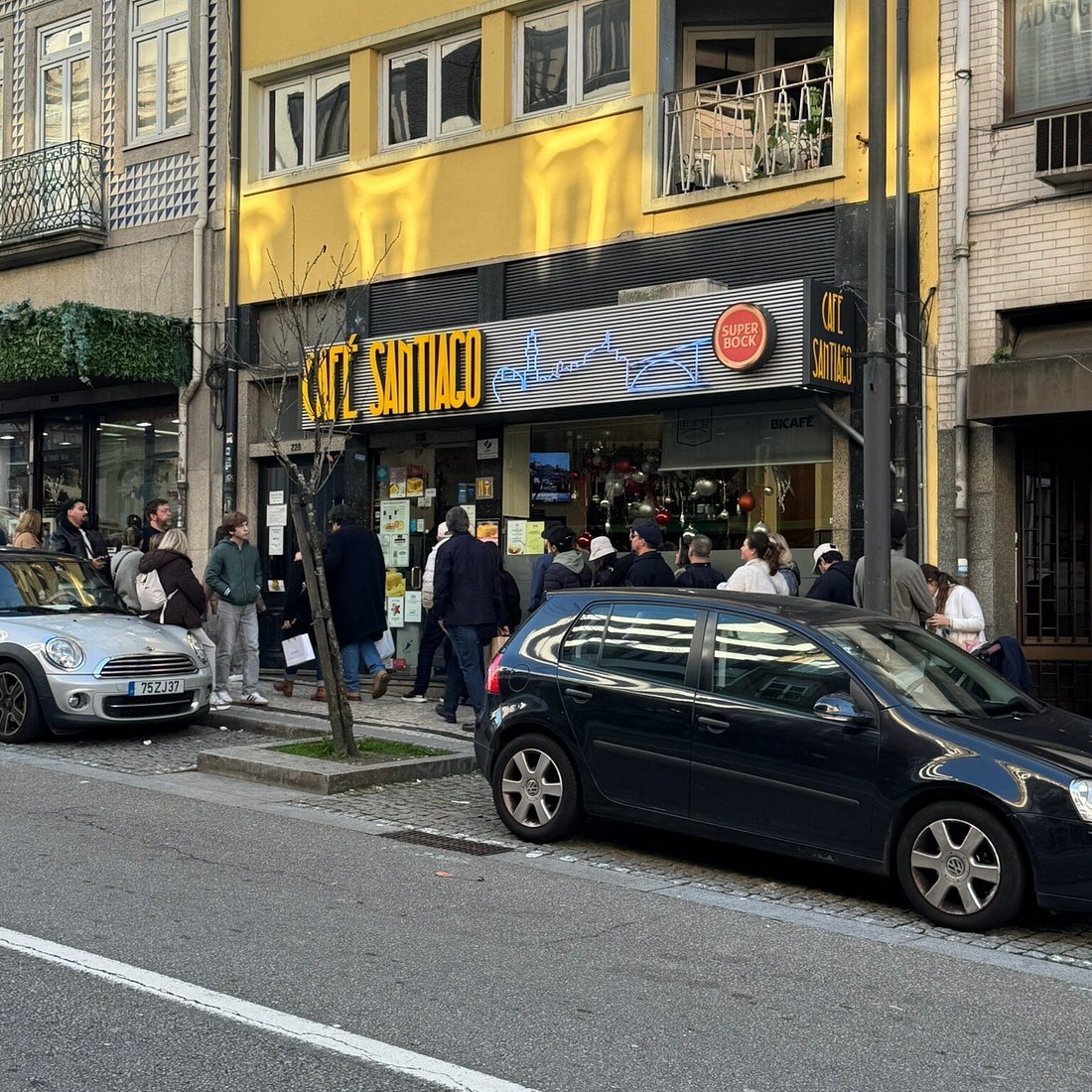
The Room Before the Order
Rua de Passos Manuel runs through a part of central Porto that has resisted the full sweep of tourism renovation. The storefronts are functional, the foot traffic is mixed, and Café Santiago reads accordingly: a tiled, well-worn room where the transaction between kitchen and table is understood by everyone present. You are not here for theatre. You are here because Porto has a dish, and this address has been serving it long enough that the distinction between the place and the tradition has largely collapsed.
That dish is the francesinha. Understanding what it is, and what makes a serious version different from a hotel approximation, matters before anything else. The francesinha is a layered construction of cured meats and sausage between slices of bread, covered in melted cheese, then submerged in a beer-and-tomato sauce that each kitchen guards as its own formula. The sauce is the argument. Across Porto's many francesinha counters, the sauce separates the references from the imitators, and the debate about whose version is definitive is the kind of civic conversation that never fully resolves. Café Santiago sits inside that conversation at a credible level, which is why the room fills at lunch without much ceremony about it.
The Craft Behind the Counter
The editorial angle assigned to this kind of counter bar or café format is the person behind the service, and at Café Santiago that means thinking about what it takes to hold a reputation in a category where every local has an opinion. The francesinha is Porto's most democratised dish: it appears in pastelarias, tascas, proper restaurants, and late-night spots. The counters that maintain standing over years do so not through seasonal reinvention but through consistency of formula, specifically the sauce. Sourcing ratios, the balance of beer to tomato, the heat level, the viscosity — these are the variables that regulars track and debate. A kitchen that keeps those variables steady across decades is exercising a kind of craft that formal fine-dining culture tends to undervalue because it does not involve a tasting menu.
Porto's bar and café scene has branched in several directions in recent years. Cocktail programs at places like A Cave do Bon Vivant and Base Porto have grown technically ambitious, pulling the city into conversations happening in Lisbon and beyond. Wine-focused rooms have multiplied. But the francesinha counter occupies a different register entirely, one where the craft is in the formula held constant rather than the menu pushed forward. Café Santiago and Cachorrinho Gazela, the latter known for its bifanas and cachorros rather than francesinhas, represent the layer of Porto eating that predates the current hospitality wave and has no particular interest in accommodating it.
Porto's Francesinha Circuit
The francesinha is not an easy dish to recommend without context. At its worst, it is stodgy and one-dimensional, the sauce thin and sweet without depth. At its leading, it is genuinely complex: the cheese pulls across the bread, the sauce has acidity and warmth without tipping into heat for its own sake, and the combination of textures is deliberate rather than accidental. The version that earns its reputation does so because the sauce formula has been calibrated over time and is being executed by a kitchen that understands what calibration means in this context.
Within Porto, the francesinha circuit covers a handful of addresses that locals treat as reference points. Café Santiago is among the most cited, which places it inside a competitive set of maybe five or six counters where the argument about precedence is ongoing and unresolved. That ambiguity is, in itself, a sign of a healthy food tradition rather than a marketing-driven one. No single counter holds a monopoly on the dish, and the willingness of Porto residents to argue about it in good faith is what keeps the standard across the city honest.
For comparison across Portugal's bar and food culture more broadly, the quality of place-specific preparation distinguishes the country's regional counters from its more internationally oriented venues. Operations like Red Frog in Lisbon or Bar Leather Apron in Honolulu work within a technical cocktail idiom that travels. The francesinha counter does not travel; it is constitutively local, and its quality is inseparable from its location in Porto's specific culinary geography. The same logic applies to wine-anchored spots elsewhere in the country: Epicur Wine Boutique & Food in Faro, Mosto Wine Shop & Bar in Lagos, Touriga Wine & Dine in Carvoeiro, and Garrafeira Baga in Coimbra each anchor their identity in regional specificity. Café Santiago operates in that same logic, just with a different product category.
Planning Your Visit
Café Santiago is at Rua de Passos Manuel 226, in central Porto, reachable on foot from most of the city's core accommodation clusters. The address does not have a reservations system in the conventional sense; the room operates on a walk-in basis, and arrival timing matters during the lunch window, when the francesinha crowd is at its densest. Mid-morning or late afternoon tends to be quieter, though neither slot is the natural context for the dish. This is lunch eating, and the room reflects that. No website or booking platform is listed in available records, so the approach is direct: walk in, assess the queue, and time accordingly. For a broader orientation to Porto's eating and drinking options, our full Porto restaurants guide covers the range from counter dining to more formal rooms, along with wine bars and cocktail venues across the city's neighbourhoods. If the francesinha counter aesthetic interests you, bbgourmet Boavista offers a contrasting format in a different part of the city, useful for triangulating what Porto's food scene spans. Bar do Guincho in Alcabideche, outside Lisbon, provides a point of comparison for how Portugal's legacy bar formats operate in different coastal contexts.
Frequently Asked Questions
- What drink is Café Santiago famous for?
- Café Santiago is known primarily for its francesinha rather than a particular drink, but the standard accompaniment in Porto's francesinha tradition is draft beer, which cuts through the richness of the sauce. The sauce itself, a beer-and-tomato-based formula, is where each kitchen's identity lives, and Café Santiago's version is among the most cited in the city's francesinha debate.
- What is Café Santiago known for?
- Café Santiago is one of Porto's established reference points for the francesinha, the city's signature layered meat sandwich submerged in a spiced sauce. It draws both locals and informed visitors looking for a version of the dish that predates the current wave of tourism-oriented interpretations. No formal awards appear in available records, but its sustained local reputation over years is its primary credential.
- How far ahead should I plan for Café Santiago?
- Café Santiago operates on a walk-in basis, and no advance booking system appears in available records. The practical strategy is to time your arrival outside the midday lunch rush, when the room is at capacity. Arriving before noon or after 2pm typically improves your chances of a shorter wait. No website or phone contact is listed in current records, so planning ahead means managing your arrival time rather than securing a reservation.
- What kind of traveler is Café Santiago a good fit for?
- Café Santiago suits travelers whose Porto itinerary is built around eating what the city actually eats rather than what it presents to visitors. The room is unpretentious, the format is counter dining at its most direct, and the francesinha is a dish that rewards people willing to engage with Porto's specific culinary identity on its own terms. It is not a fit for anyone seeking a curated tasting experience or a formal room.
- Is the francesinha at Café Santiago different from versions served elsewhere in Porto?
- The francesinha is a dish defined almost entirely by its sauce, and each kitchen in Porto maintains its own formula. Café Santiago's version has accumulated enough local citation over the years to place it in the upper tier of the city's francesinha circuit, a competitive set of perhaps five or six addresses where the sauce debate is genuinely ongoing. What distinguishes the credible counters from the broader field is sauce depth and consistency across service, both of which reflect kitchen discipline more than ingredient sourcing.
A Tight Comparison
A compact peer snapshot based on similar venues we track.
| Venue | Notes | Price |
|---|---|---|
| Café Santiago | This venue | |
| Dogma Wine Bar | ||
| Enoteca 17.56 | ||
| Prova | ||
| Royal Cocktail Club | ||
| Torto |
Need a Table?
Our members enjoy priority alerts and concierge-led booking support for the world's most difficult bars and lounges.
Get Exclusive Access