Cafe Habana
Cafe Habana sits inside Malibu's Cross Creek Road corridor, where a casual Cuban-inflected menu meets a drinks program worth treating seriously. The bar leans into the Latin spirits tradition with a depth that exceeds what the beachside setting might suggest. It occupies a distinct niche in a strip where Pacific views are the usual differentiator.
Pearl is the En Primeur Club membership app — saves, bookings, and concierge access live there. Same editors, same standards.
- Address
- 3939 Cross Creek Rd, Malibu, CA 90265
- Phone
- +1 310 317 0300
- Website
- habana-malibu.com
- Directions
- Get directions
 Saves & bookings on Pearl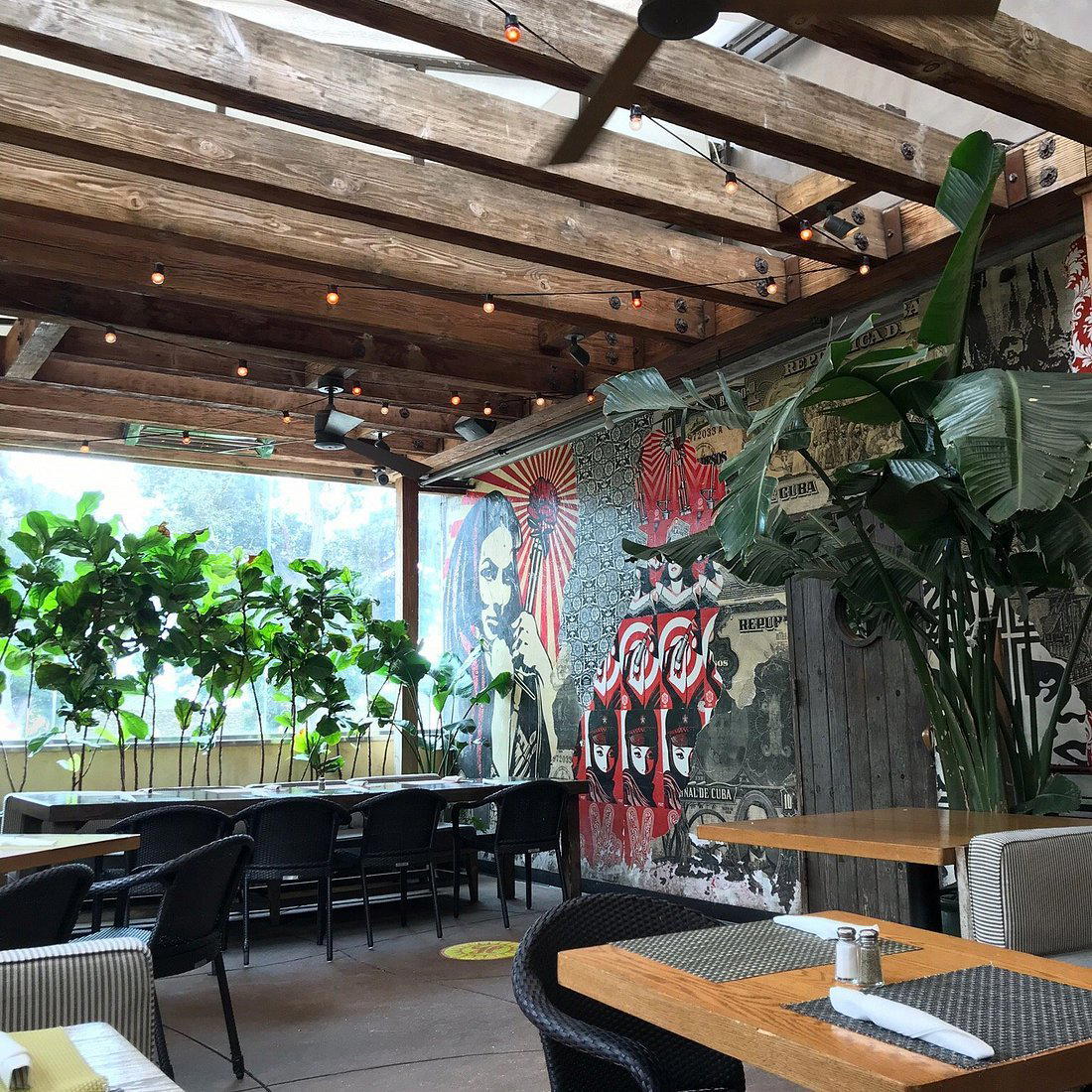
Where the Spirits Collection Does the Talking
Malibu's drinking culture has historically been defined by the view rather than the glass. Oceanfront terraces at venues like Duke's Malibu and Moonshadows Malibu set the dominant template: Pacific horizon, frozen drink, salt air. Cafe Habana, positioned along Cross Creek Road rather than on the shoreline, operates by a different logic. The spirits program here draws on the Latin American tradition more seriously than the zip code might imply, with rum and agave occupying the structural center of the back bar in a way that positions the venue closer to a specialist spirits counter than a casual coastal spot.
Cross Creek Road is Malibu's inland commercial spine, a low-rise strip threading between the mountains and the Colony where working locals shop alongside the weekend crowd. The setting is deliberately unfussy: no Pacific panorama, no valet choreography, no architectural drama. What the room offers instead is the particular ease of a place that does not need to compete on spectacle. The Cuban-inflected format — inherently casual, built around communal plates and long drinks — suits the address exactly.
The Back Bar as Editorial Statement
Latin spirits programs in the United States have undergone a significant reappraisal over the past decade. Rum, once relegated to frozen cocktail formats in tourist-facing venues, has attracted serious collector and blender attention. Agricole styles from Martinique, aged Venezuelan expressions, Jamaican pot-still releases, and Spanish-style solera rums now circulate in the same conversation as single-malt Scotch or allocated bourbon. Mezcal, meanwhile, has split into an entry-level category dominated by mass-market brands and a specialist tier anchored around single-village, ancestral-production bottles that rarely appear outside dedicated agave bars.
A back bar that takes this category seriously signals something about the overall program. At venues like Bar Leather Apron in Honolulu or Kumiko in Chicago, the bottle selection functions as a curatorial argument, it tells you what the bar believes about the category before you order anything. Cafe Habana's Cuban-adjacent identity sets up a natural framework for this kind of curation: the mojito and the daiquiri are the opening positions, but the depth of the rum shelf determines how far the conversation can go.
The Latin spirits tradition also intersects with food in ways that many bar programs ignore. Cuban cuisine, black beans, roasted pork, plantains, rice-based preparations, has a documented affinity with aged rum, particularly expressions that carry molasses-forward sweetness balanced by barrel tannin. A bar serious about this pairing builds its selection accordingly, rather than defaulting to whatever the spirits distributor promotes most aggressively.
Reading the Room: Malibu's Specialist Tier
Malibu's drinking venues sort into roughly two categories. The first is oceanfront and operationally large, built for high volume and the photogenic moment. The second is smaller and inland, serving the resident community with less emphasis on occasion-dressing. Cafe Habana belongs to the second category, alongside spots like John's Garden, which similarly prioritizes repeat-visitor utility over destination theatrics.
The comparison with Nobu Malibu is instructive. Nobu operates at the high end of the first category: Japanese-Peruvian cuisine, celebrity clientele, Pacific deck seating, and a price point that reflects all of the above.
That positioning also affects the spirit of the room. Latin bar culture, particularly in its Cuban expression, has a democratic informality baked into its social grammar: the counter is communal, the drinks are designed for extended conversation, and the food format encourages sharing rather than composed plating. That texture is genuinely difficult to sustain in a high-production oceanfront venue, where the operational model pushes toward table turns and ticket averages. The Cross Creek address protects it.
Cocktail Programs Built Around Latin Spirits: The Wider Context
Across the United States, the bars doing the most interesting work with Latin spirits tend to share certain structural features. They stock depth across multiple rum categories rather than a single house expression. They carry mezcal beyond the three or four names that appear on every menu. They understand the difference between a caipirinha and a daiquiri and a Ti' Punch, and they build their programs accordingly. Jewel of the South in New Orleans and Julep in Houston operate in this register, each with a spirits selection that treats the category as seriously as any European wine list treats its appellations. Superbueno in New York City applies similar discipline to agave. ABV in San Francisco and The Parlour in Frankfurt on the Main demonstrate that this approach translates across cities and even continents.
The common thread is curation as conviction rather than volume. A back bar with fifty rum expressions that the staff cannot explain is less useful than twenty bottles chosen and understood. The editorial argument of a spirits collection only holds when it is backed by service intelligence that can walk a guest through it.
Planning Your Visit
Cafe Habana is located at 3939 Cross Creek Road in the inland commercial strip of Malibu, accessible by car from the Pacific Coast Highway. Cross Creek Road runs east from PCH and includes a mix of retail and dining; parking is available in the area. The casual Cuban-inflected format suits daytime and early evening visits, and the setting makes it equally workable for a solo drink at the bar or a relaxed group meal. For a broader view of where Cafe Habana sits within Malibu's dining and drinking options, see our full Malibu restaurants guide.
Cost and Credentials
| Venue | Price |
|---|---|
| Cafe HabanaThis venue — the venue you are viewing | This venue |
Continue exploring
More in Malibu
Bars in Malibu
Browse all →
Restaurants in Malibu
Browse all →
Hotels in Malibu
Browse all →
Wineries in Malibu
Browse all →
At a Glance
- Lively
- Trendy
- Energetic
- Casual Hangout
- Late Night
- Group Outing
- Standalone
- Seated Bar
- Lounge Seating
- Classic Cocktails
Current opening hours
- Monday
- 11 AM–9 PM
- Tuesday
- 11 AM–9 PM
- Wednesday
- 11 AM–9 PM
- Thursday
- 11 AM–9 PM
- Friday
- 11 AM–9 PM
- Saturday
- 11 AM–9 PM
- Sunday
- 11 AM–9 PM
Hours can change for holidays and private events. Last verified .
Hip and festive with lively, sunny atmosphere.
Know Before You Go
- Getting there
- 3939 Cross Creek Rd, Malibu, CA 90265