Brody House occupies a grand apartment building on Bródy Sándor utca in Budapest's VIII. district, operating as a members-leaning creative house that blurs the line between private residence and boutique hotel. The rooms sit within a layered social environment of bars, studios, and communal spaces that make it a reference point for a particular strain of Budapest creative hospitality — considered, atmospheric, and resolutely anti-chain.
 Discover on Pearl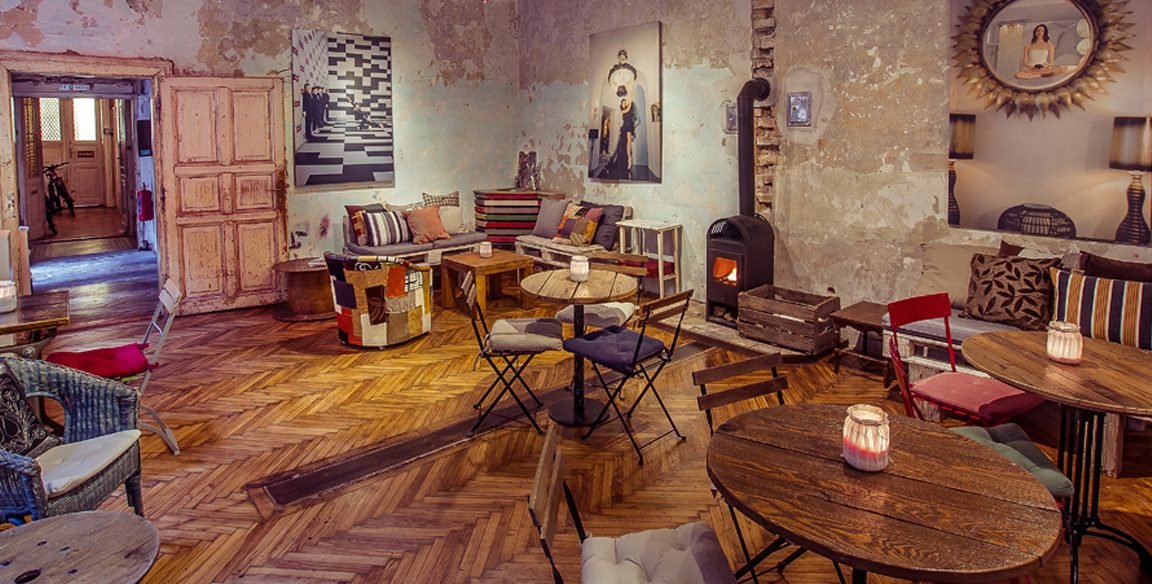
A Street That Earns Its Reputation
Bródy Sándor utca runs through one of Budapest's more textured residential-cultural corridors, connecting the Hungarian National Museum precinct to the garden-facing blocks near the Erzsébet körút ring. The street itself is lined with late-Habsburg apartment buildings whose stairwells and courtyards reward attention. In this context, a boutique property with a members-club atmosphere is not an anomaly — it is a logical extension of the neighbourhood's long habit of housing artists, editors, and intellectuals in spaces that double as social infrastructure. Brody House has occupied this address long enough to become part of the street's identity rather than a tenant of it.
What the Format Signals
Budapest's independent accommodation tier has split over the past decade into two recognisable camps: design-forward boutique hotels that lean on international minimalism, and a smaller cohort of properties that prioritise community and atmosphere over polished consistency. Brody House belongs firmly to the second camp. The model — rooms embedded within a functioning creative house that includes bar spaces, events, and a social calendar , positions it against properties in cities like Berlin's Soho House-adjacent venues or London's earlier member-club hybrids rather than against the standard boutique hotel category. The competitive comparison matters because it sets expectations correctly: guests are not buying a hotel room in the conventional sense; they are buying access to a particular kind of social environment, with a room attached.
The shortlist, unlocked.
Hard-to-book tables, cellar releases, and concierge-planned trips.
Get Exclusive Access →That format has found consistent traction among a specific traveller type: people for whom the lobby bar and the conversations that happen in it are as important as thread counts. Across European cities, this model has proven durable where execution is genuine rather than performed , where the creative-house atmosphere reflects actual programming and actual residents rather than aesthetic signalling alone.
The Rhythm of a Stay
The editorial angle most useful for understanding a stay at Brody House is the dining and drinking ritual rather than the room specification. Properties of this type are experienced primarily through their communal hours , late mornings in shared spaces, evenings that begin with a drink and can extend unpredictably depending on who else is in the building. The pacing is less structured than a hotel stay and more like a well-curated private apartment where the host has strong taste and a wide network.
Budapest's bar culture provides a useful parallel. The city's more considered drinking venues, including Boutiq'bar and Black Swan Lab, have built reputations on atmosphere as much as product. 360 Bar draws a different crowd , rooftop-oriented, more tourist-facing , while BRKLYN occupies a more casual register. Understanding where Brody House's in-house drinking spaces sit relative to these options helps clarify the type of evening on offer: intimate, conversation-driven, unlikely to be loud in the way a ruin bar is loud.
For guests interested in how Budapest's cocktail culture compares globally, the reference points extend well beyond the city. The measured, hospitality-led approach found at venues like Kumiko in Chicago, Jewel of the South in New Orleans, and Bar Leather Apron in Honolulu shares a sensibility with what Budapest's more considered bar operators are building. Similarly, Julep in Houston, Superbueno in New York City, The Parlour in Frankfurt on the Main, and 1806 in Melbourne each demonstrate that the intimacy-over-volume approach to hospitality is a coherent international movement rather than a local quirk.
The VIII. District as Context
The Józsefváros-Palotanegyed area around Brody House has undergone a slower, more organic form of gentrification than the VII. district ruin-bar zone. Gallery openings, independent bookshops, and wine bars have accumulated here without the concentrated tourist infrastructure that defines Kazinczy utca or Gozsdu udvar. This matters for accommodation because the surrounding neighbourhood contributes to the texture of a stay. Guests who walk the blocks around Bródy Sándor utca encounter a Budapest that is less curated for visitors , the coffee is cheaper, the restaurants are oriented toward locals, and the pace is different from the inner tourist core. For a property selling atmosphere and authenticity, the address is doing genuine work.
See our full Budapest restaurants and bars guide for broader context on how the city's different districts organise its hospitality offer.
Planning a Stay
Bródy Sándor utca 10 sits in the VIII. district, a short walk from Kálvin tér metro station on the M3 line, which connects directly to Keleti railway station and to the inner city. The location places guests within walking distance of the Museum Garden, the National Museum, and the southern edge of the VII. district entertainment zone , close enough to reach easily, far enough to feel removed from it. Given the members-leaning format, prospective guests should approach booking through the property's direct channels and verify current room availability and pricing there; the experience and cost structure differ from standard hotel booking platforms in ways that make direct contact the more reliable route.
Who This Suits
The format works well for solo travellers who value serendipitous social contact, for pairs who want a base with genuine personality rather than neutral comfort, and for anyone who finds large hotel lobbies alienating. It is less suited to travellers whose priority is spa facilities, corporate amenities, or the predictable consistency of a branded hotel experience. The value proposition is atmosphere, location, and the specific social texture of the creative-house model , all of which are real, but all of which require a degree of tolerance for the informal and the unpredictable.
Frequently Asked Questions
- What should I drink at Brody House?
- The in-house bar at Brody House is oriented toward the intimate, conversation-led register that characterises Budapest's more considered drinking venues rather than the high-volume ruin-bar format. Hungarian wines , particularly whites and natural bottles from the Eger, Tokaj, and Villány regions , appear consistently in venues of this type, alongside craft spirits and direct cocktail programs. For broader reference on how the city's bar scene is structured, Boutiq'bar and Black Swan Lab represent the more technically serious end of Budapest cocktail culture.
- What should I know about Brody House before I go?
- Brody House operates on a members-and-guests model that differs from standard boutique hotel conventions. The atmosphere is communal and creative-house-oriented, which means the experience varies depending on who else is in the building and what events are scheduled. It sits in the VIII. district, a neighbourhood with a quieter, more residential character than the VII. district ruin-bar zone. Pricing and room availability are leading confirmed directly with the property, as the format does not map neatly onto standard hotel booking assumptions.
- Do I need a reservation for Brody House?
- Given the limited room count typical of properties in this format, advance contact is advisable rather than optional. The members-leaning model means room allocation may be subject to criteria beyond standard availability, and peak Budapest periods , spring and autumn city-break seasons, summer festival weeks , compress supply across the independent accommodation tier. Direct outreach through the property's own channels is the most reliable path to booking confirmation.
- Who is Brody House leading suited to?
- Travellers who respond well to informal social environments, to accommodation with strong neighbourhood character, and to properties where the communal spaces are as meaningful as the private room will find the format genuinely rewarding. It suits creative professionals, repeat Budapest visitors looking beyond the standard boutique tier, and anyone who values a base with a functioning social life attached to it. It is a poor fit for travellers whose priorities run toward wellness amenities, large-group logistics, or the operational predictability of a hotel chain.
- Is Brody House a good base for exploring Budapest beyond the tourist core?
- The Bródy Sándor utca address in the VIII. district places guests in a part of Budapest that retains significant everyday residential character , the surrounding blocks house independent cafés, local restaurants, and cultural institutions including the Hungarian National Museum. This makes it a practical and atmospheric base for visitors interested in the city's less-trafficked neighbourhoods, while remaining within easy walking distance of the inner VII. district and a short metro ride from Keleti station and the Danube embankment.
Cuisine and Recognition
A short peer set to help you calibrate price, style, and recognition.
| Venue | Cuisine | Awards | Notes |
|---|---|---|---|
| Brody House - Rooms | This venue | ||
| Boutiq'bar | World's 50 Best | ||
| Hotsy Totsy | |||
| Kadarka Bar | |||
| Black Swan Lab | |||
| Muzsa |
Need a Table?
Our members enjoy priority alerts and concierge-led booking support for the world's most difficult bars and lounges.
Get Exclusive AccessThe shortlist, unlocked.
Hard-to-book tables, cellar releases, and concierge-planned trips.
Get Exclusive Access →