On Rue Vieille du Temple in the heart of the Marais, Breizh Café occupies the serious end of Paris's crêpe conversation. The kitchen draws directly on Breton tradition, working with buckwheat galettes and sweet crêpes at a standard that separates it clearly from the tourist-facing creperies common across the city. For visitors to the 3rd arrondissement, it functions as both a reliable lunch anchor and a case study in how regional French cooking travels well when it keeps its discipline.
 Discover on Pearl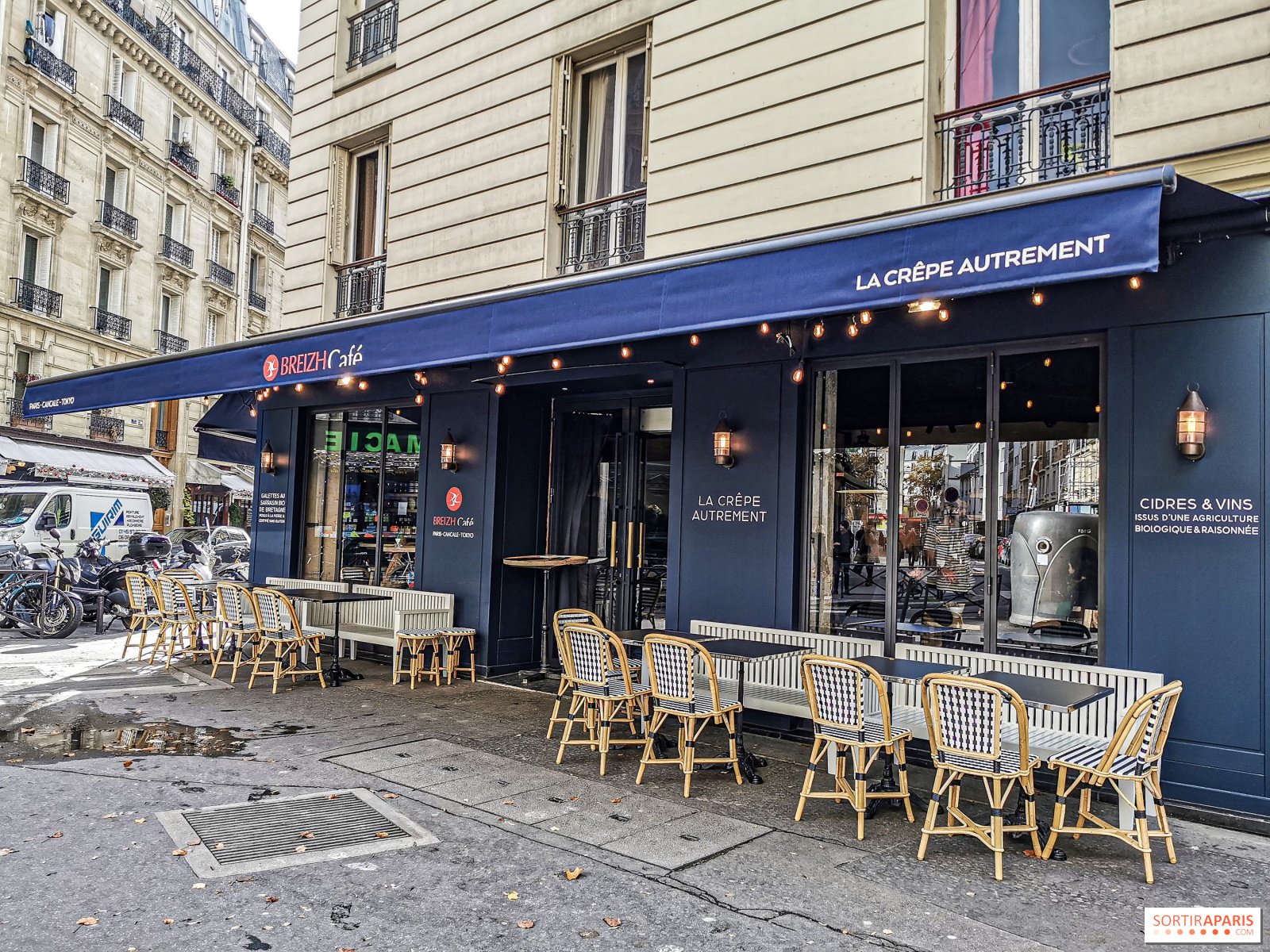
Where Breton Tradition Holds Its Ground in the Marais
The Marais has absorbed a lot over the past two decades: concept stores, destination cocktail bars, ramen counters, and the steady creep of international brunch culture. Against that backdrop, a restaurant dedicated to the buckwheat galette and the sweet crêpe is either an act of stubbornness or a statement of confidence. Breizh Café, at 109 Rue Vieille du Temple, operates as the latter. The address sits on one of the Marais's most-trafficked pedestrian corridors, and the room itself communicates a specific intent: this is not a souvenir-shop version of Brittany.
Breton crêperies in Paris occupy a wide spectrum. At one end, tourist-facing addresses in Saint-Germain and Montparnasse produce galettes assembled from industrially milled flour under laminated menus with photographs. At the other end, a smaller group of kitchens treats the galette as a serious cooking format, sourcing buckwheat with the same deliberateness that a wine-focused restaurant applies to its cellar. Breizh Café sits in that second tier, and its reputation within the city's food community reflects that positioning.
The Physical Space and What It Signals
The room at Rue Vieille du Temple reads as intentionally restrained. Pale wood, clean lines, and a lack of decorative folklorism — none of the fishing nets and painted Breton borders that characterize lesser interpretations of the regional format. The design registers as closer to a Japanese interpretation of minimalism than to a Parisian bistro, which is not incidental. Breizh Café has operated a Tokyo outpost for years, and the cross-cultural influence is legible in how the Paris space is organized: counter seating, a considered approach to materials, and an absence of fuss.
Lighting is warm without being dim, calibrated for a lunch and early-dinner clientele rather than a late-night crowd. The room runs at a moderate volume — conversation carries without effort, and the acoustic register sits closer to a focused lunch spot than to a social-drinking venue. If you are looking for the kind of energy found at Buddha Bar or the subterranean hum of Candelaria, Breizh Café is a different category of experience entirely. The mood is purposeful and calm, organized around the food rather than around spectacle.
Galettes, Crêpes, and the Buckwheat Question
The galette de sarrasin , made from buckwheat flour, water, and salt, with no egg in the Breton tradition , is the format around which the kitchen is organized. Buckwheat is a nutritionally dense, gluten-free grain that fell out of fashion in French cooking broadly but survived as a regional staple in Finistère and the Morbihan. In Paris, the grain's fortunes have followed the wider revival of regional specificity in French cuisine: chefs and producers who once chased internationalism have, over the past decade, returned attention to what grows and tastes distinctively French.
Breizh Café's sourcing position within that conversation is part of what gives it credibility with a food-aware audience. The cider list reinforces the same logic: Breton and Norman ciders, served in the traditional ceramic bowl, are the canonical accompaniment to a galette, and the selection here extends beyond the two or three tokens that appear on most Paris menus. For visitors who have eaten their way through the city's wine-forward dining rooms, the cider-and-galette combination at this level is a genuinely different register of pleasure.
The Marais Context
The 3rd arrondissement is now one of the denser concentrations of serious food and drink addresses in the city. Cocktail programs at venues like Danico and Bar Nouveau operate a short walk from here, and the neighbourhood's gallery and fashion traffic sustains a lunchtime economy that rewards quality-to-speed ratios. Breizh Café fits that demand well: the galette format is inherently efficient to produce and eat, and the kitchen can turn a table without rushing the guest.
The address also benefits from the Marais's particular visitor profile. The neighbourhood draws a mix of informed tourists, Paris residents using the area as a weekend circuit, and international design and fashion visitors who bring genuine food literacy. That audience is better equipped to understand what buckwheat sourcing means, and more willing to pay accordingly, than the broad tourist traffic of the 1st or 8th arrondissement.
For a fuller picture of where Breizh Café sits within the city's wider eating and drinking map, our full Paris restaurants guide covers the range of arrondissements and dining formats in detail.
Planning Your Visit
Breizh Café is a daytime and early-evening address by temperament. The kitchen's format is suited to lunch more naturally than to a long late dinner, and the Marais corridor on which it sits is at its most functional before the evening bar crowd arrives. Walk-ins are possible during off-peak hours on weekdays, but the weekend lunch service draws a consistent queue, particularly during the spring and summer months when the Marais's foot traffic peaks. Booking ahead for Saturday or Sunday lunch is the sensible approach. The room is compact, and the galette format means most covers turn in under ninety minutes, so the rhythm of the service is relatively predictable.
Visitors planning a broader day in the Marais might consider pairing a lunch at Breizh Café with an evening drink at one of the neighbourhood's cocktail addresses. France's regional bar and café scene extends well beyond Paris: Madame Pang in Bordeaux, Papa Doble in Montpellier, and Crapule in Vannes each represent different aspects of how serious drink culture operates outside the capital. Closer to home, Josie par Rosette in Clichy and L'Esprit Libre in Horbourg Wihr are worth noting for visitors moving beyond the périphérique. For a contrast in international scale, Bar Leather Apron in Honolulu and Bar Fouquet's in Cannes illustrate how the bar format translates across very different contexts.
Frequently Asked Questions
- Is Breizh Café more low-key or high-energy?
- Low-key, with intention. The room is designed for focused eating rather than social performance, with warm but unpretentious lighting and a noise level that allows conversation without effort. If the city's more theatrical bar and dining formats are what you are after, this is not that register , it is quieter, more considered, and organized entirely around the food.
- What should I try at Breizh Café?
- The buckwheat galette is the reason to be here. Breizh Café's reputation within Paris's food community rests on its treatment of this Breton format as serious kitchen work rather than tourist-facing assembly. The cider list, built around Breton and Norman producers, is the canonical pairing and extends considerably further than what most Paris crêperies offer.
- What makes Breizh Café worth visiting?
- In a city where regional French cooking is often flattened into generic bistro formats, Breizh Café maintains a clear geographic identity tied to Brittany's buckwheat tradition. Its positioning in the Marais , one of Paris's more food-literate neighbourhoods , means it operates for an audience that notices the difference between sourced buckwheat and commodity flour. That specificity is what separates it from the broader crêperie category in the city.
- Do they take walk-ins at Breizh Café?
- Walk-ins are possible during quieter weekday services, but weekend lunch at this address draws consistent demand given its profile in the Marais. Booking ahead for Saturday or Sunday is the more reliable approach, particularly between spring and early autumn when the neighbourhood's visitor volume is at its highest.
- Why does Breizh Café have a connection to Japan, and does it affect the Paris experience?
- Breizh Café has operated in Tokyo, and the cross-cultural exchange is visible in how the Paris room is designed: the minimalist aesthetic, the counter-seating logic, and the material restraint all carry that influence. The connection also reflects a broader pattern in which Japanese food culture , with its emphasis on sourcing precision and format discipline , has found natural affinity with specific French regional traditions. In practical terms, the Tokyo dimension gives the Paris address a slightly unusual design register that distinguishes it from most Breton crêperies in the city.
A Pricing-First Comparison
A quick look at comparable venues, using the data we have on file.
| Venue | Price | Awards | Notes |
|---|---|---|---|
| Breizh Café | This venue | ||
| Bar Nouveau | World's 50 Best | ||
| Buddha Bar | World's 50 Best | ||
| Candelaria | World's 50 Best | ||
| Danico | World's 50 Best | ||
| Harry's Bar | World's 50 Best |
Need a Table?
Our members enjoy priority alerts and concierge-led booking support for the world's most difficult bars and lounges.
Get Exclusive Access