Brasas Peruanas
Brasas Peruanas on North Mays Street brings Peruvian cooking to Round Rock's growing restaurant corridor, where the charcoal-fired traditions of Lima's rotisserie culture translate into a distinctly Texan context. The address sits within reach of Round Rock's central dining stretch, where Latin American kitchens have carved out a consistent presence alongside the city's newer craft beverage spots.

Pearl is the En Primeur Club membership app — saves, bookings, and concierge access live there. Same editors, same standards.
- Address
- 206 N Mays St, Round Rock, TX 78664
- Phone
- (512) 820-4085
- Hours
- Mon–Thu 11 AM–9 PMFri–Sat 11 AM–10 PMSun 11 AM–8 PM
- Website
- brasasperuanas.us
- Directions
- Get directions
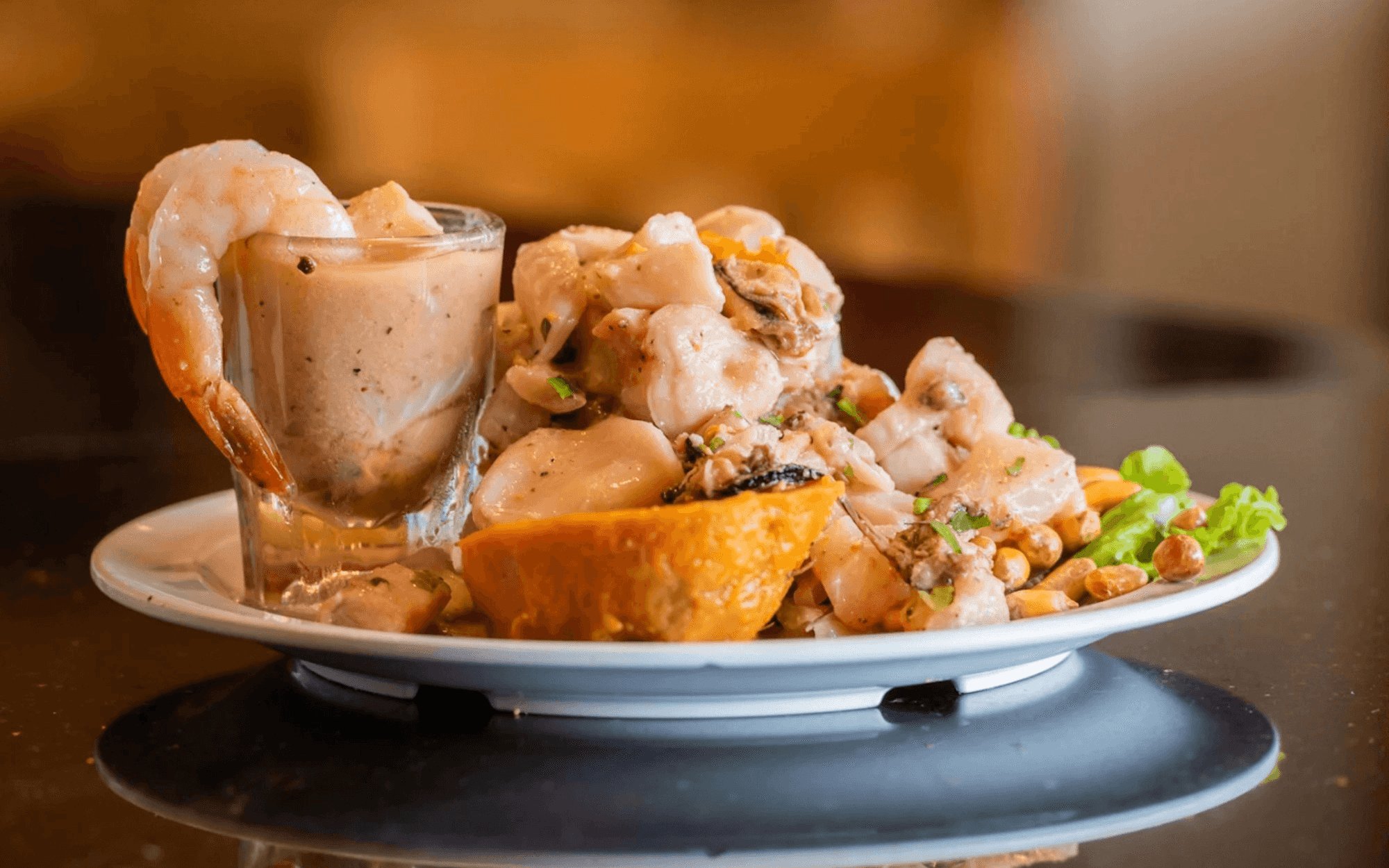
Where Peruvian Fire Meets the Central Texas Corridor
Round Rock's North Mays Street has become one of the more varied dining corridors in the Austin metro's suburban ring. The strip mixes long-standing Mexican cantinas, newer craft-focused spots, and an emerging set of Latin American kitchens that reflect the region's shifting demographics. Brasas Peruanas sits at 206 N Mays St, and the name announces its register immediately: brasas is the fire, the coal, the heat that defines a whole tradition of Peruvian cooking. That tradition, built around wood-fired and charcoal rotisserie technique, travels far from Lima, but its logic survives the distance. The chicken comes out of the same thermal discipline whether the kitchen sits in Miraflores or central Texas.
Approaching North Mays, the street reads as a working local commercial strip rather than a curated dining destination. That's relevant context. Brasas Peruanas is not a restaurant built for destination diners looking for a particular kind of theatrical dining room. It operates in the register of neighbourhood anchor, the kind of place where the cooking carries the argument without architectural support. In a suburban market where Latin American restaurants often compete on price and familiarity, a Peruvian kitchen differentiates itself by technique and flavour profile rather than category recognition alone.
The Peruvian Rotisserie Tradition in a Texan Frame
Pollo a la brasa, the centrepiece of Peru's most exported culinary format, is one of the more technically specific dishes in Latin American cooking. The marinade typically runs deep with aji amarillo, cumin, garlic, and soy, a combination that reflects Peru's Chinese and Japanese culinary immigration as much as its Andean roots. The bird goes on the rotisserie slow, the fat rendering through skin that crisps to a lacquered finish, the meat holding moisture from a long marinade rest. The result is a dish with a specific flavour architecture: acidity from the citrus, warmth from the aji, and a caramelised exterior that bears the direct signature of live fire.
In the United States, this format has found its most concentrated presence in metropolitan areas with established Peruvian communities. Outside those centres, standalone Peruvian kitchens are genuinely sparse. In the broader Austin metro, the format sits in a different competitive position than it would in, say, a Houston corridor or a New Jersey strip mall anchored by Peruvian families. Round Rock's Latin American dining scene draws more heavily on Mexican and Tex-Mex traditions, which means a Peruvian kitchen here occupies a distinct lane. For diners who know the format, it functions as a reliable fix. For diners encountering it for the first time, the flavour profile tends to convert quickly.
Drinks in Context: What the Category Supports
The editorial angle that matters most in assessing a Peruvian restaurant's beverage programme is whether the kitchen's flavour intensity gets matched at the bar or left to work alone. Peruvian cooking at this register carries significant acidity and spice, which makes it one of the more drink-friendly cuisines in Latin America's canon when the pairing is considered deliberately.
The natural counterpart is the pisco sour, one of the few national cocktails with genuine indigenous ingredient logic: pisco, a grape brandy produced under appellation rules in Peru and Chile, combined with citrus, simple syrup, and egg white, produces a drink whose frothy texture and sour-forward profile actually cuts through aji heat. The disc of bitters floated on leading is more than garnish; it introduces an aromatic counterpoint that pulls the drink toward the food rather than away from it. At bars where this technique receives serious attention, the pisco sour earns comparison to the leading acid-forward cocktail formats being produced at programmes like Jewel of the South in New Orleans or Kumiko in Chicago, where the structural logic of a cocktail is considered inseparable from its culinary context.
What the format suggests is that the drinks, even in a simpler expression, serve the cuisine's logic when they stay in the pisco-and-citrus tradition. The Chilcano, pisco lengthened with ginger ale and lime, offers a lower-proof alternative with the same acid logic. For diners more familiar with the American craft cocktail circuit, the contrast between technically ambitious programmes at venues like ABV in San Francisco, Bar Leather Apron in Honolulu, or Superbueno in New York City and the more casual neighbourhood register of a suburban Peruvian kitchen is meaningful: both formats have their logic, but the evaluation criteria differ entirely.
Round Rock's Latin American Dining Map
North Mays Street supports a specific kind of competition. La Margarita Restaurante and La Tapatia Mexican Restaurant and Bar represent the established Mexican dining anchor of the corridor, with the kind of long-running local loyalty that tends to insulate a restaurant from casual competition. Bluebonnet Beer Company covers the craft beer register, and Mi Mundo Coffeehouse and Roastery anchors the independent coffee end. Brasas Peruanas slots into this map not as competition for the Mexican kitchens but as an orthogonal choice for diners who want something outside the Tex-Mex axis.
That positioning is relevant when deciding when to visit. A Tuesday evening on North Mays carries a different energy than a Friday or Saturday, when the corridor draws more traffic and tables at the more established spots turn faster. For a format like Peruvian rotisserie, where the food benefits from a kitchen running at full heat, visiting during a busier service window often makes sense.
For a broader orientation to what Round Rock's restaurant scene offers across formats and price points, the full Round Rock restaurants guide maps the category more completely. Diners who have worked through Houston's Latin American bar and cocktail scene, including the programme at Julep in Houston, or who follow the technical cocktail conversation at venues like The Parlour in Frankfurt, will find Round Rock's offer modest by comparison in the bar category. The draw here is the cooking tradition and the relative scarcity of Peruvian kitchens at any quality level in this part of the metro.
Planning Your Visit
Brasas Peruanas is located at 206 N Mays St, Round Rock, TX 78664. North Mays runs as a navigable commercial street from US-79 southward, and parking along the strip is generally street-level and accessible without structured facilities. Given that no website or phone number appears in the available record, confirming current hours before visiting is worth doing through a real-time search or maps platform, as hours for independent neighbourhood restaurants in this category can shift seasonally or with staffing. The address is direct to locate and sits within the walkable portion of the North Mays corridor, which allows for a pre- or post-dinner stop at one of the surrounding spots.
Side-by-Side Snapshot
Comparable venues nearby, for context on price, style, and recognition.
| Venue | Cuisine | Price | Notes |
|---|---|---|---|
| Brasas PeruanasThis venue — the venue you are viewing | lounge | $20–30 | Not listed |
| The Alcove Cantina | mezcaleria | $20–30 | Downtown Round Rock |
| URBAN Eat. Drink | speakeasy | $30–50 | Downtown Round Rock |
| Salt Traders Coastal Cooking | lounge | $30–50 | Round Rock |
| Bluebonnet Beer Company | beer_bar | $10–20 | Round Rock |
| La Tapatia Mexican Restaurant & Bar | Bar | $10–20 | Round Rock |
Continue exploring
More in Round Rock
Bars in Round Rock
Browse all →
Restaurants in Round Rock
Browse all →
Hotels in Round Rock
Browse all →
Details
- Casual
- Cozy
- Casual Hangout
- Group Outing
- Standalone
- Seated Bar
- Lounge Seating
Current opening hours
- Monday
- 11 AM–9 PM
- Tuesday
- 11 AM–9 PM
- Wednesday
- 11 AM–9 PM
- Thursday
- 11 AM–9 PM
- Friday
- 11 AM–10 PM
- Saturday
- 11 AM–10 PM
- Sunday
- 11 AM–8 PM
Hours can change for holidays and private events. Last verified .