Bob's Java Jive
Bob's Java Jive is one of Tacoma's most recognized dive institutions, housed in a giant coffee pot structure on South Tacoma Way that has drawn locals since 1927. The bar operates as a live music venue and neighborhood gathering point, with a back bar that runs deep on American spirits and cheap beer. It sits in a tier of Tacoma drinking that values character and history over cocktail craft.
Pearl is the En Primeur Club membership app — saves, bookings, and concierge access live there. Same editors, same standards.
- Address
- 2102 S Tacoma Way, Tacoma, WA 98409
- Phone
- +1 253 475 9843
- Website
- bobsjavajive.com
- Directions
- Get directions
 Saves & bookings on Pearl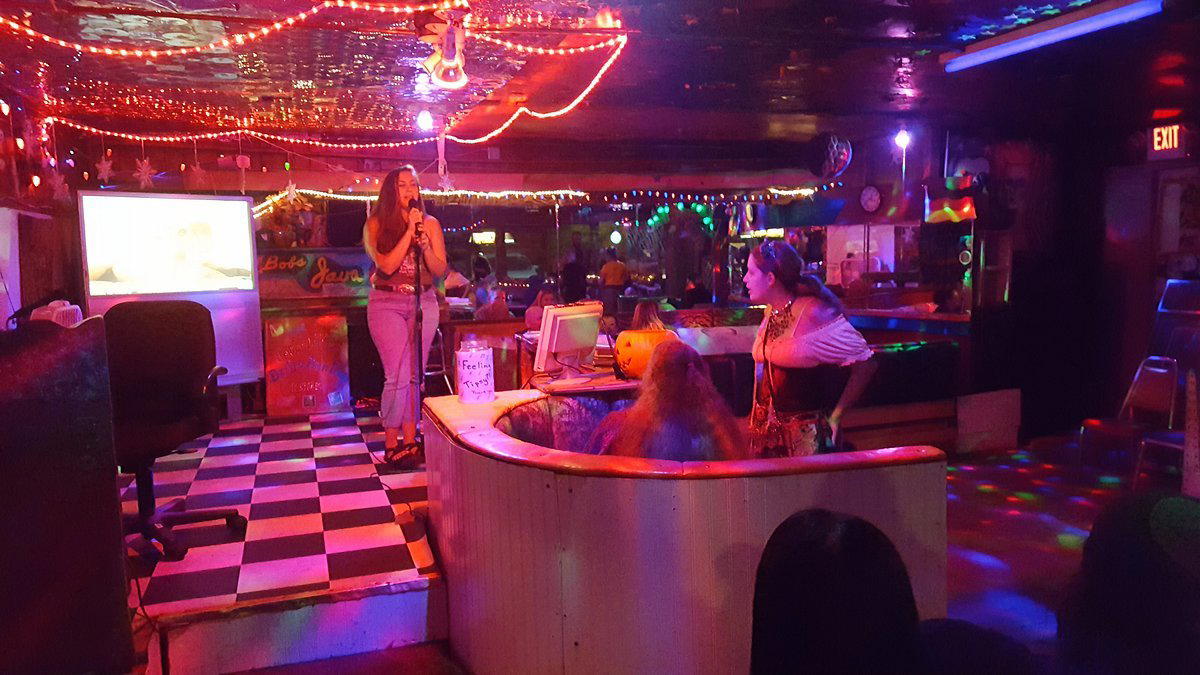
A Coffee Pot, a Back Bar, and Nearly a Century of Tacoma
Tacoma's drinking culture has always run parallel to Seattle's rather than in its shadow, and nowhere is that independence more visible than along South Tacoma Way. The strip carries a different register than the cocktail-forward rooms emerging downtown or on the waterfront: it rewards familiarity, tolerates noise, and measures authenticity in years of operation rather than awards citations. Bob's Java Jive, housed in a two-story coffee pot structure built in 1927, occupies the far end of that register. The building itself — a roadside novelty form that predates the interstate highway system — functions as a geographic anchor for a particular kind of American bar history that most cities have demolished or renovated into irrelevance.
The venue sits at 2102 S Tacoma Way, on a commercial corridor that has cycled through eras of automotive culture, light industry, and neighborhood transition without the building's silhouette changing materially. The coffee pot exterior, poured concrete and painted brown, signals what's inside before you reach the door: a place that has absorbed decades of use without performing nostalgia. The interior carries the texture of a bar that has not been reset for a new audience. That is not a criticism, it is precisely the condition that makes this kind of space worth documenting at a moment when American bar culture increasingly chases the new.
The Back Bar: Volume, Variety, and No Pretense
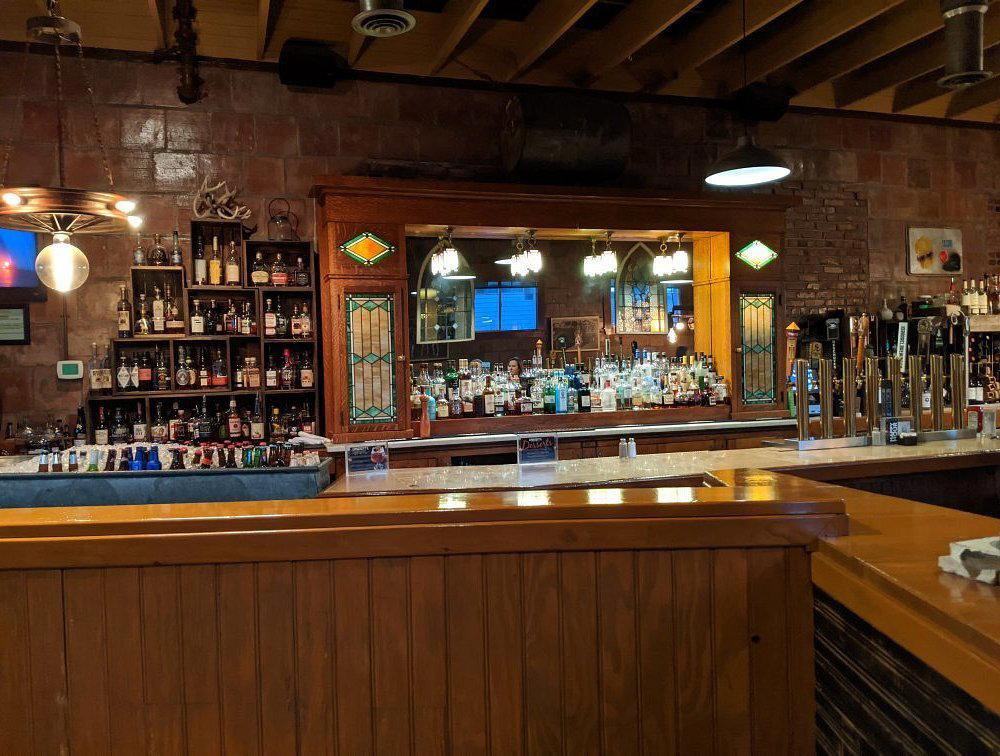
American dive bars tend to split between two back-bar philosophies. The first is the minimalist shelf: a rotation of well spirits, a few domestic beers, and a top-shelf section that exists primarily for upselling. The second is the accumulation model, where decades of product turnover leave behind a back bar of genuine range, not curated in the sommelier sense, but deep in the way that comes from longevity. Bob's Java Jive operates closer to the second model. The spirits selection has been built through time rather than through a purchasing strategy, and the result is a shelf that covers American whiskey, rum, and vodka at accessible price points with occasional surprises in the upper range.
This matters because it defines the drinking proposition clearly. You are not here for a clarified punch or a fat-washed spirit program of the kind that rooms like Kumiko in Chicago or Bar Leather Apron in Honolulu have built their reputations on. You are here for a pour that is honest about what it is, served in a room that has been a bar continuously for the better part of a century. The value of that proposition is not technical, it is contextual. When the broader cocktail conversation has moved toward ABV in San Francisco or the spirits-forward precision of Jewel of the South in New Orleans, a room that operates entirely outside that register acquires its own kind of authority.
Beer skews domestic and affordable, consistent with the price positioning of the surrounding neighborhood. The bar does not publish a cocktail menu in any formal sense, and the absence of that document is itself informative. This is a spirits-and-beer room, and it functions leading when treated as one.
Live Music and the Room's Actual Function
Bob's Java Jive has operated as a live music venue for much of its history, hosting local and regional acts across a range of genres that reflects the city's working-class and arts crosscurrents. The stage and performance space have made it a fixture for Tacoma musicians in a way that purely drinking-focused rooms cannot replicate. This dual function, bar and venue, places it in a category that Tacoma's newer entries do not occupy. Dirty Oscar's Annex and Devil's Reef each occupy distinct niches in Tacoma's bar scene, but neither carries the live-music-plus-history combination that defines this space.
The music programming has historically leaned toward rock, blues, and country, with occasional forays into other formats. Performance nights draw a crowd that arrives for the act rather than the atmosphere, which shifts the room's energy considerably from quieter midweek sessions. If your priority is conversation over the back bar, a non-performance night is the better choice. If you want to understand why this building has survived for nearly a century, a show night explains it more efficiently than anything else.
Tacoma's Bar Scene and Where This Fits
Tacoma's drinking culture has diversified substantially over the past decade. The craft beer expansion brought serious taproom operations like E9 Brewing Co. and Taproom, while the cocktail tier has developed its own distinct voice through rooms like Bar Rosa. Internationally, bars at the technical end of the spectrum, Julep in Houston, Superbueno in New York City, and The Parlour in Frankfurt, represent a global conversation about what a serious bar program looks like in 2024. Bob's Java Jive is not a participant in that conversation, and that is exactly the point.
What it represents is a category that exists in most American cities but rarely gets written about at the same register as award-winning cocktail programs: the bar as civic artifact. The coffee pot building is listed on local historical records and has been recognized in Pacific Northwest architectural documentation as a surviving example of programmatic architecture, the early-twentieth-century practice of constructing commercial buildings in the shape of their product.
For travelers building a Tacoma itinerary that spans the full range of the city's drinking culture, the sequencing matters. See our full Tacoma guide for a broader map of the city's bar and restaurant scene. If craft cocktails or curated spirits are your primary interest, the newer downtown rooms will serve you better. If you are interested in what a bar looks like when it has operated continuously through nearly a century of American social history, South Tacoma Way is the address.
Getting There and Practical Notes
The venue is located on South Tacoma Way, a commercial strip leading accessed by car. Public transit serves the corridor but less frequently than downtown routes. The building is by its structure alone, no signage research required. Hours and booking details are not consistently published online; for live music nights specifically, checking local event listings closer to your visit is the more reliable approach than relying on any fixed schedule. Given the venue's informal operation model, walk-in access has historically been the default. No dress code operates here in any meaningful sense.
Continue exploring
More in Tacoma
Bars in Tacoma
Browse all →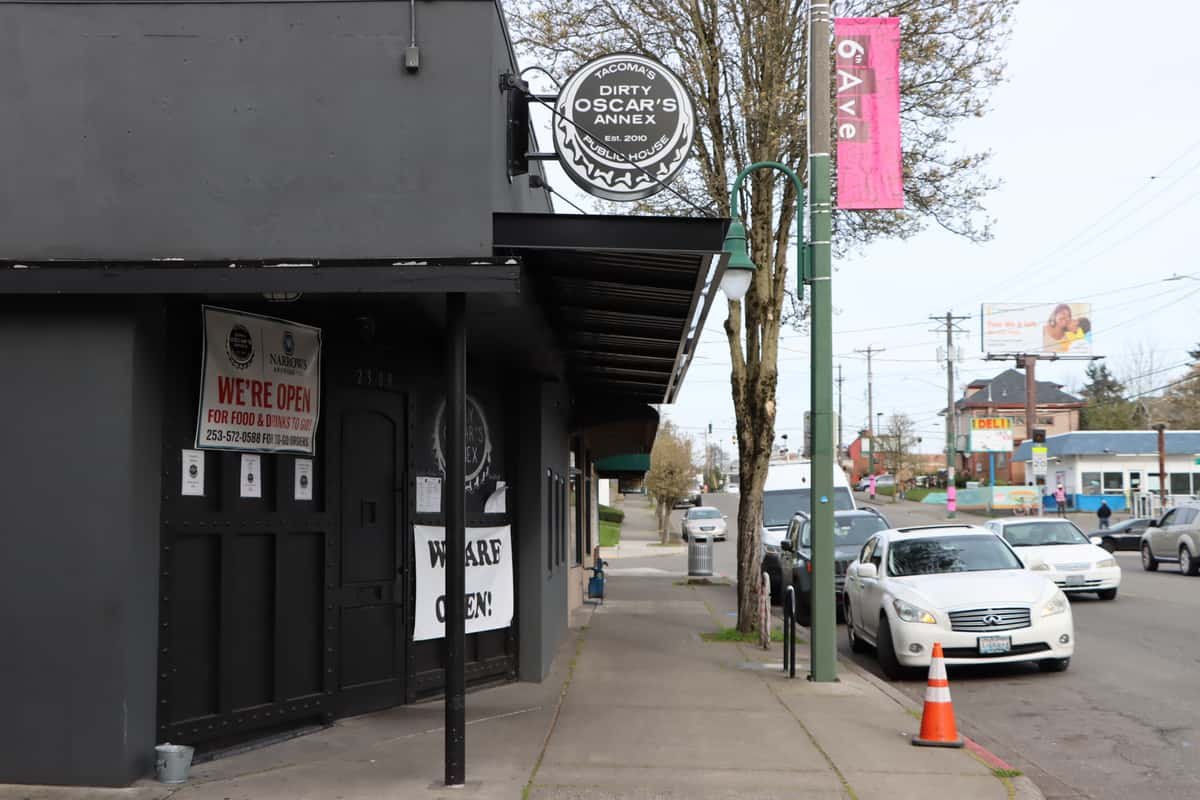
Restaurants in Tacoma
Browse all →
Hotels in Tacoma
Browse all →
At a Glance
- Well Known
- Lively
- Whimsical
- Rustic
- Casual Hangout
- Group Outing
- Late Night
- Live Music
- Historic Building
- Standalone
- Standing Room
- Seated Bar
- Counter Only
- Craft Beer
- Classic Cocktails
Current opening hours
- Monday
- 4 PM–2 AM
- Tuesday
- 4 PM–2 AM
- Wednesday
- 4 PM–2 AM
- Thursday
- 4 PM–2 AM
- Friday
- 4 PM–2 AM
- Saturday
- 12 PM–2 AM
- Sunday
- 12 PM–2 AM
Hours can change for holidays and private events. Last verified .
Authentic dive bar atmosphere with cigarette smoke, vintage karaoke, and intimate live music setting in a uniquely shaped building.
Know Before You Go
- Getting there
- 2102 S Tacoma Way, Tacoma, WA 98409