BaraNaan sits on Rue du Faubourg Saint-Martin in Paris's 10th arrondissement, where the neighbourhood's South Asian dining corridor meets a cocktail-bar format built for evening service. The address places it squarely within a stretch that has shifted from transit corridor to destination dining over the past decade, with street food formats and spirits programs running side by side.
- Address
- 7 Rue du Faubourg Saint-Martin, 75010 Paris, France
- Phone
- +33 7 65 79 50 89
- Website
- baranaan.com
- Directions
- Get directions
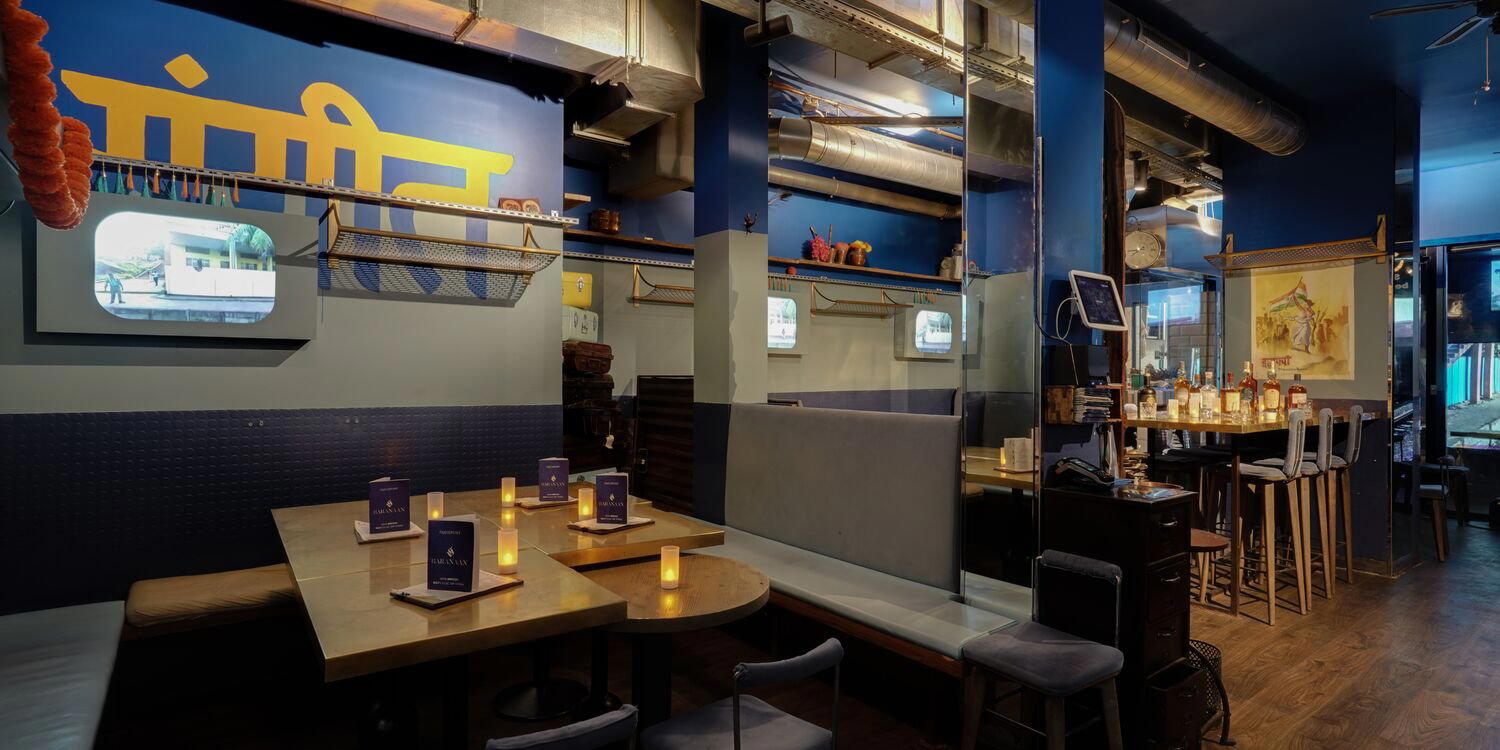
Where the 10th's Street Food Corridor Meets the Cocktail Hour
Rue du Faubourg Saint-Martin runs through one of Paris's most active dining districts: a stretch where South Asian kitchens, North African canteens, and a newer wave of cocktail-led addresses occupy the same few blocks. The 10th arrondissement has long absorbed successive waves of migration and translated them into street-level eating. BaraNaan Street Food and Cocktail Bar, at number 7, sits at the point where that tradition meets a contemporary format that combines naan-centred street food with a structured drinks program.
This is not the polished Marais end of Paris casual dining, where fit-out costs are folded into a €18 lunch plate. The Faubourg Saint-Martin corridor runs at a different temperature: faster, louder at the edges, with restaurants that earn their following through repetition rather than press coverage. A bar and street food address here is competing on consistency and atmosphere rather than tasting-menu ambition, and the format, naan as the anchor, cocktails as the second lane, reflects that positioning.
Daytime vs. Evening: Two Different Propositions
Paris street food addresses with cocktail programs tend to bifurcate sharply between lunch and dinner service, and the Faubourg Saint-Martin corridor is no exception. At lunch, the surrounding neighbourhood operates at a transactional pace: workers from the Canal Saint-Martin offices, market shoppers from the nearby covered passages, and the foot traffic that animates this part of the 10th between noon and two. Street food formats serve that rhythm well, offering quick assembly and a compact bill. Naan-based dishes slot naturally into that daytime proposition, portable, filling, built around bread that travels well from counter to hand.
The evening shift changes the logic. When the 10th's dining corridor turns over after seven, the same address has room to hold a table longer, build a round of drinks into the experience, and operate more like a neighbourhood bar that happens to have a focused food menu than a street food counter that stays open late. Across Paris, this split between a lean daytime format and a more expansive evening one has become the structural reality for venues at this price tier, and it is worth knowing which version you are booking into. The cocktail dimension makes most sense as an evening proposition, when the bar component can carry its own weight alongside the food.
For comparable cocktail-led bars in the French capital operating in a similar register, Candelaria has established a drinks-first taqueria format, and Danico shows what a technically rigorous cocktail program looks like when food plays a supporting role. Bar Nouveau occupies a different register again, more wine-bar adjacent, while Buddha Bar operates at a scale and price point that puts it in a separate category entirely. BaraNaan sits below that upper tier in terms of format ambition, which is not a criticism: the street food and cocktail pairing is its own coherent proposition rather than a scaled-down version of something grander.
The South Asian Street Food Format in a French Context
Naan as a street food vehicle has a specific logic that distinguishes it from, say, the flatbread-wrap formats that run across Paris's Lebanese and Turkish corridor on the Grands Boulevards. Naan is a leavened bread that demands a tandoor or a comparable high-heat environment; when done correctly, it arrives with a char and puff that a wrap or pita does not replicate. As a vessel for fillings, spiced proteins, chutneys, fresh aromatics, it sits in a different textural register than most Western fast-casual bread formats. The question for any Paris address working in this space is whether the kitchen has the volume and equipment to hold that quality across a full service.
The 10th arrondissement has a deeper South Asian food infrastructure than most Paris districts, with suppliers, community ties, and a customer base that arrived before the current wave of culinary tourism. That context matters for any address working with these ingredients and formats, because it sets a baseline of reference rather than novelty. A naan-focused bar here is not introducing the format to Paris; it is competing within an existing frame of reference, which raises the bar for execution and lowers the tolerance for approximation.
Paris Beyond the Centre: What the 10th Arrondissement Signals
For visitors arriving with a Paris itinerary built around the canonical addresses, the bistros of the 6th, the natural wine bars of the 11th, and the tasting counters of the 8th, the 10th represents a recalibration. Prices run lower, formats run more informal, and the neighbourhood's demographic mix produces a dining culture that is genuinely less tourist-facing than much of central Paris. The Canal Saint-Martin end of the 10th has attracted editorial attention for a decade, but the Faubourg Saint-Martin stretch operates at a different frequency: less curated, more utilitarian, with a vitality that comes from actual neighbourhood use rather than destination dining.
That context shapes how an address like BaraNaan functions. It is a local bar-and-food venue in a neighbourhood with a real residential and commercial population, not a concept designed primarily for out-of-district visitors. That does not make it inaccessible to visitors, but it does mean the experience is calibrated around a different set of expectations than a purpose-built tourist-facing address would be.
For those building a wider French bar itinerary, the contrast between Paris's informal cocktail-and-street-food tier and the more structured programs elsewhere in France is instructive. Papa Doble in Montpellier and La Maison M. in Lyon show how regional cities are developing their own cocktail cultures with different price dynamics, while Au Brasseur in Strasbourg, Bar Casa Bordeaux in Bordeaux, and Coté vin in Toulouse each reflect distinct local drinking traditions. Further afield, Le Café de la Fontaine in La Turbie and Bar Leather Apron in Honolulu anchor the international end of the spectrum for members cross-referencing formats across geographies.
Planning Your Visit
BaraNaan is located at 7 Rue du Faubourg Saint-Martin in the 10th arrondissement, accessible from the Strasbourg-Saint-Denis or Jacques Bonsergent metro stations. Given the street food format and cocktail bar positioning, this is an address that suits the early evening window, arriving around 7pm puts you ahead of the neighbourhood's later dining rhythm and gives the drinks program room to operate properly rather than as a supplement to a rushed lunch. For a broader map of where this address sits within Paris's bar and restaurant scene, see our full Paris restaurants guide.
Price and Positioning
Comparable venues nearby, for context on price, style, and recognition.
| Venue | Price | Notes |
|---|---|---|
| BaraNaan Street Food & Cocktail BarThis venue — the venue you are viewing | $$ | Not listed |
| L’Avant Comptoir de la Terre | $$ | Saint-Germain-des-Prés, wine_bar |
| La Cave de Belleville | $$ | Belleville, wine_bar |
| Pochana | $$ | Folie-Mericourt, wine_bar |
| Freddy | $$ | Saint-Germain-des-Prés, wine_bar |
| Les petits Paresseux | $$ | Batignolles, wine_bar |
Continue exploring
More in Paris
Bars in Paris
Browse all →
Restaurants in Paris
Browse all →
Hotels in Paris
Browse all →



At a Glance
- Trendy
- Energetic
- Whimsical
- Date Night
- Group Outing
- Late Night
- Speakeasy
- Lounge Seating
- Craft Cocktails
Warm, colorful train car interior with patchouli scent, spices, and rollicking Bollywood music creating an adventurous, joyful atmosphere.