One of Milan's oldest continuously operating trattorias, Antica Trattoria della Pesa has anchored the Viale Pasubio neighbourhood since the nineteenth century. The room reads like a study in Lombard dining tradition: dark wood, white linen, and a pace that resists the city's urgency. For anyone tracing the through-line of Milanese cucina borghese, this is a primary source.
 Discover on Pearl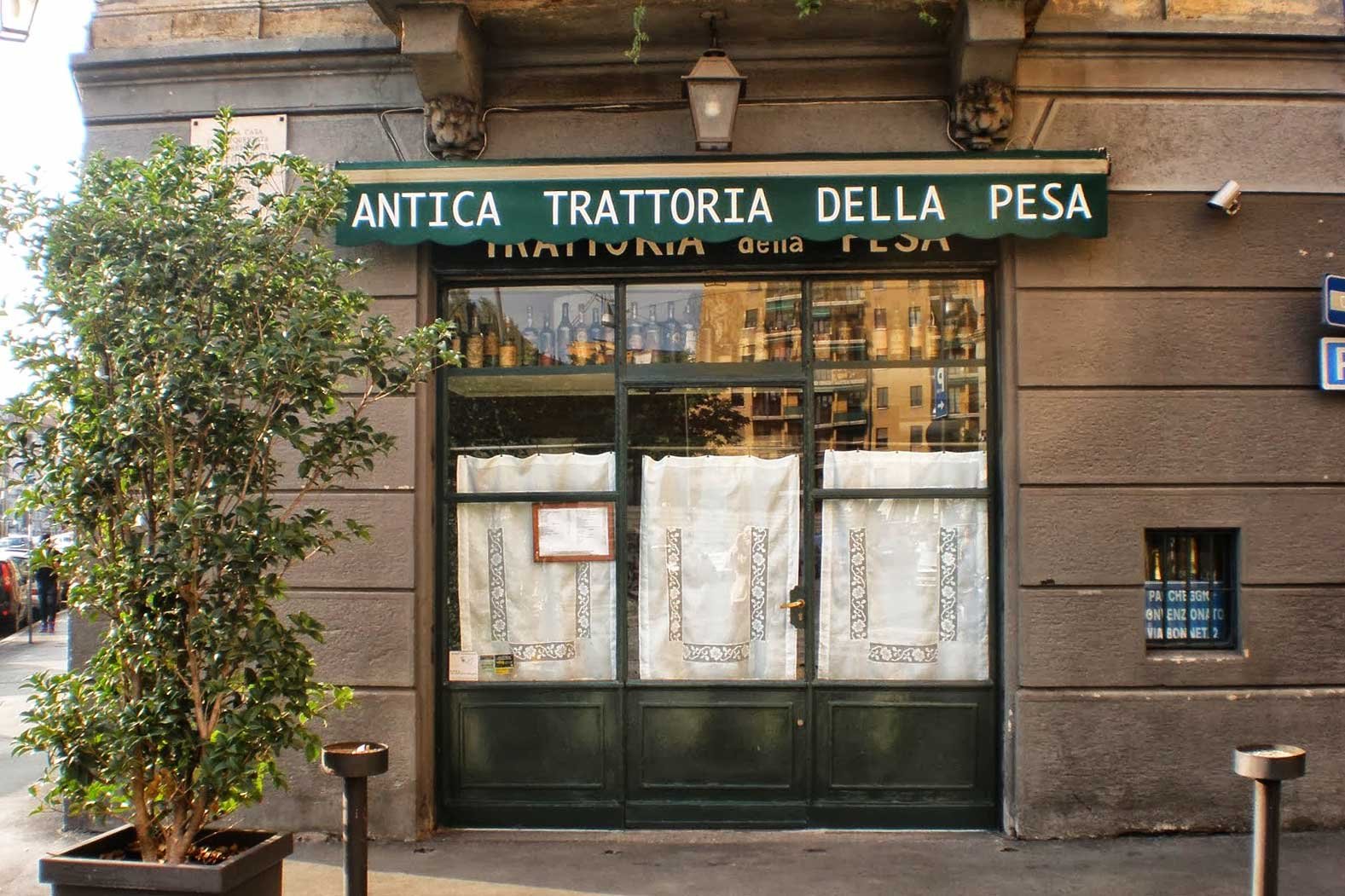
Where the Room Does the Work
There is a particular quality of stillness that older Milanese trattorias carry, a sense that the room itself has absorbed decades of conversation, of grappa poured after midnight, of families returning to the same table across generations. Viale Pasubio, a broad avenue running through the Porta Garibaldi district, is not the city's most photographed address, but that is precisely why rooms like this one survive here rather than in the Brera or Navigli corridors, where rents and tourism have rewritten the dining map entirely.
Antica Trattoria della Pesa operates on the logic of the nineteenth-century Lombard trattoria: dark wood panelling, white linen that covers the full table rather than a decorative runner, seating arranged for conversation rather than visibility, and a lighting level calibrated to the end of a working day rather than the demands of a food photographer. This is not a designed atmosphere so much as an accumulated one, and the distinction matters. Design atmospheres age; accumulated ones do not.
The shortlist, unlocked.
Hard-to-book tables, cellar releases, and concierge-planned trips.
Get Exclusive Access →The Lombard Table and What It Demands
Milanese cuisine is frequently misunderstood by visitors arriving with expectations shaped by the city's fashion and finance reputation. The actual tradition, the cucina borghese that this type of trattoria has carried since the Risorgimento period, is rooted in restraint applied to good primary ingredients: braised meats, rice cooked with bone broth and saffron, cotoletta beaten thin and fried in clarified butter, ossobuco served with the gremolata that cuts its richness. These are not complex preparations in a technical sense, but they are unforgiving of ingredient quality and timing. A trattoria that has been cooking them for well over a century occupies a specific position in the city's dining hierarchy, one that Michelin-starred newcomers cannot replicate by intention alone.
The wine program at this category of Milanese institution typically maps to the Northern Italian canon: Barolo and Barbaresco from Piedmont, Amarone and Valpolicella from Veneto, Franciacorta from the Lombard hills east of the city. The correct approach at a trattoria of this age and profile is to ask the house what they open well rather than what is on the list. Sommeliers at establishments with long institutional memory often hold back bottles that never appear in the standard rotation.
Porta Garibaldi and the Neighbourhood Context
The Porta Garibaldi and Isola districts around Viale Pasubio have shifted considerably over the past fifteen years. The Unicredit Tower and the broader Porta Nuova development brought a new commercial layer to a neighbourhood that was previously more residential and working-class in character. This redevelopment dynamic is directly relevant to understanding the trattoria's position: it is one of the few pre-development anchors still operating in the area, which gives it a different meaning now than it would have carried in, say, 2005, when the surroundings were more uniformly old Milan in character.
For visitors staying in the design-hotel cluster around Porta Garibaldi, the trattoria is a short walk and functions as a counterpoint to the newer hospitality that dominates the area. For those based further south near the Duomo or the Quadrilatero, it warrants a dedicated visit rather than a casual drop-in, which is arguably the correct way to approach a room with this much institutional weight.
How This Fits the Wider Milan Drinking and Dining Circuit
Milan's bar scene has developed along lines that largely diverge from the old trattoria tradition. The serious cocktail programs at venues like 1930, Camparino in Galleria, Moebius Milano, and Nottingham Forest represent a city that takes drinking seriously as a craft discipline, but they exist in a different register from the table-centred culture of the classic trattoria. A well-constructed Milan evening might move from an aperitivo at one of those bars into a long dinner at a room like this one, the two traditions complementing rather than competing with each other.
Across the rest of Italy, comparable institutional-weight drinking and dining anchors appear in different forms: L'Antiquario in Naples and Al Covino in Venice carry similar qualities of accumulated rather than designed atmosphere, while Enoteca Historical Faccioli in Bologna operates in the wine-centred equivalent of that tradition. Further afield, Drink Kong in Rome and Gucci Giardino in Florence show how the Italian hospitality tradition adapts across cities and formats. Beyond Italy, the contrast is sharper still: Lost and Found in Nicosia and Bar Leather Apron in Honolulu operate in traditions where institutional longevity of this kind simply does not exist in the same form. For a complete picture of where this trattoria sits within Milan's broader restaurant scene, see our full Milan restaurants guide.
Planning Your Visit
Antica Trattoria della Pesa sits at Viale Pasubio 10, in the Porta Garibaldi area of Milan, accessible from the Porta Garibaldi FS or Isola metro stops on lines M2 and M5. The trattoria operates in the classic Milanese lunch-and-dinner format: this is not a venue for a quick midday stop but for a proper seated meal with time allocated on both sides of the main course. Booking ahead is the sensible approach for dinner, particularly on midweek evenings when the room fills with local professionals rather than weekend tourists. Dress falls somewhere between the casual-smart register: the room's formality signals that effort is appropriate without demanding a jacket.
Frequently Asked Questions
- Is Antica Trattoria della Pesa more formal or casual?
- The room reads as traditional rather than formal in the strict sense. White linen, dark wood, and attentive service set a tone that is more considered than a neighbourhood osteria, but the dress code and atmosphere are not intimidating. If you have eaten in a well-established Parisian brasserie or a serious London chop house, the register is comparable: a room that takes the meal seriously without requiring the diner to perform formality.
- What should I drink at Antica Trattoria della Pesa?
- A trattoria of this age and profile pairs naturally with Northern Italian reds, Barolo and Barbaresco from Piedmont being the traditional choices alongside Lombard braised dishes. For Milanese classics like cotoletta or ossobuco, a structured Nebbiolo or a Valpolicella Ripasso holds up well against the richness of the preparation. Asking the house for a recommendation by the glass or a half-bottle from the cellar is usually the most productive approach at an establishment with this much accumulated institutional knowledge.
- What makes Antica Trattoria della Pesa worth visiting?
- The case for this trattoria rests on continuity in a city where the dining scene turns over at a significant pace. In a decade when Porta Garibaldi has been substantially rebuilt around it, the room represents a through-line to pre-contemporary Milan dining culture. For anyone interested in Lombard cucina borghese as a tradition rather than a trend, this is among the clearest expressions of it still operating in the city.
- How does Antica Trattoria della Pesa compare to Milan's newer wave of Lombard-focused restaurants?
- A number of newer Milanese restaurants have returned to regional Lombard cooking as a conscious editorial position, presenting classic preparations with sourcing credentials and modernised presentation. Antica Trattoria della Pesa operates in a different register: its authority comes from unbroken practice rather than revival, which means the cooking carries less conceptual framing but more institutional depth. The two approaches serve different purposes for different visitors, and understanding that distinction is the most useful frame for deciding which kind of evening you are after.
Cuisine and Awards Snapshot
A quick peer list to put this venue’s basics in context.
| Venue | Cuisine | Awards | Notes |
|---|---|---|---|
| Antica Trattoria della Pesa | This venue | ||
| Nottingham Forest | World's 50 Best | ||
| 1930 | World's 50 Best | ||
| Camparino in Galleria | World's 50 Best | ||
| Moebius Milano | World's 50 Best | ||
| Backdoor 43 |
Need a Table?
Our members enjoy priority alerts and concierge-led booking support for the world's most difficult bars and lounges.
Get Exclusive AccessThe shortlist, unlocked.
Hard-to-book tables, cellar releases, and concierge-planned trips.
Get Exclusive Access →