Amber
Drinking at the Edge of the Indian Ocean The approach to Ithaafushi Island sets the register before a single drink arrives. Speedboats crossing the South Malé Atoll deliver guests past reef-shallow water in gradations of turquoise and ink blue, the horizon uninterrupted in every direction. By the time you reach the bar, the physical environment has already done significant editorial work: the atoll format, where isolation is the premise rather than the amenity, changes what a cocktail programme needs to accomplish. A drink here is not competing with a city street or a buzzing neighbourhood. It is measured against open water, shifting light, and a specific quality of silence that deep-ocean proximity produces. Amber sits within that context on Ithaafushi Island South, an address that places it among the Maldives’ more concentrated private-island drinking environments. The Maldives has developed a recognisable tier of bar programming over the past decade, moving from hotel-standard spirits lists toward formats that take technique and sourcing seriously. Amber occupies that upper movement within the atoll’s options, where the quality of the ice programme, the provenance of base spirits, and the coherence of a menu’s internal logic matter as much as the view. The Cocktail Programme as a Structural Argument Across the Indian Ocean’s premium bar tier, the most credible programmes share a structural logic: they are built around a central creative premise rather than assembled from trend-adjacent references. The better cocktail bars operating in island resort settings have learned that the environment will always overwhelm a generic list. Guests surrounded by this much natural spectacle quickly identify when a programme is coasting on location. What distinguishes a serious bar in this format is the degree to which the programme develops its own internal grammar. Technique signals whether a programme is self-aware: clarification methods, fat-washing, fermentation-based modifiers, and temperature control in serving all indicate a kitchen-literate approach to spirits. The bars that have built reputations in comparable atoll settings, such as Aaraha Champagne Bar in South Ari Atoll, demonstrate that the Maldives can support technically grounded programmes when the team is committed to format discipline. Amber’s position on Ithaafushi Island South places it within reach of guests whose reference points span global bar culture. The same traveller arriving here may have drunk at Kumiko in Chicago, spent evenings at Bar Leather Apron in Honolulu, or sat at the counter at Le Bar du Plaza Athénée in Paris. That reference set raises the implicit standard. It also creates the interesting condition where island bars are now assessed against urban fine-drinking benchmarks rather than resort-category norms. Comparing Formats Across the Premium Bar Circuit The premium bar circuit in 2024 has sorted into several distinct operating modes. There are high-concept urban programmes where narrative and ingredient sourcing carry equal weight with technique, exemplified by Jewel of the South in New Orleans or Café La Trova in Miami, where cultural specificity anchors every drink. There are ingredient-forward programmes in markets like New York, where Superbueno and Dear Irving operate on different premises but share a commitment to menu coherence. There are heritage programmes, like Julep in Houston, where the depth of a single spirit category drives the argument. And there are European programmes, like The Parlour in Frankfurt or Experimental Bistro in Taipei, operating in their own idioms. Island bar programmes sit outside these categories but are increasingly judged by their standards. The most coherent approach in the Maldives context draws from the locality: tropical fermentation traditions, regional ingredients including coconut derivatives, native botanicals from nearby archipelago ecosystems, and the influence of trade-route spice cultures that historically connected the Indian Ocean. Programmes that build from these materials produce something the urban circuit cannot replicate, because the raw material context is genuinely different. That geographical specificity is where island bars can earn a distinct identity rather than simply approximating what a well-resourced urban programme might produce. The Environment as Co-Author A recurring observation among serious drinkers who travel to the Indian Ocean atoll properties is that the leading sessions happen at transitional light: late afternoon when the sun is low and the water surface changes colour every few minutes, or early evening when the sky compresses toward deep blue and the reef sounds become more present. The cocktail in hand during those windows is operating in a sensory context that no urban room can construct. The programme at a place like Amber does not need to manufacture atmosphere; it needs to be worthy of the one that arrives for free. This creates a specific editorial discipline for the better island programmes. The drinks need to hold attention on their own merits, because the competition from the surrounding environment is not noise to be blocked out but a co-author of the experience. A technically rigorous cocktail, served at the right temperature in appropriate glassware, with a garnish whose aromatic contribution is considered rather than decorative, will read differently against a coral-sea backdrop than the same drink would in a basement bar. The atoll environment amplifies what is already in the glass. Planning a Visit Ithaafushi Island South sits within the South Malé Atoll, accessible from Velana International Airport via speedboat transfers that serve the island properties in this part of the atoll. Transfer logistics vary by property and should be confirmed at the time of booking; the South Malé Atoll’s proximity to the airport makes it one of the more accessible atoll zones, with transfer times generally shorter than those required for properties in the northern or southern atolls. For guests planning time around the bar programme specifically, the transitional hours between afternoon and evening tend to produce the leading conditions, combining optimal light with cooler temperatures after the midday heat. The dry season, running roughly from November through April, is when the Maldives operates at its clearest and calmest, with the wet season bringing heavier skies and occasionally rough transfer conditions. Advance coordination with the island is advisable regardless of season. For broader context on dining and drinking options across the atoll group, see our full South Malé Atoll restaurants guide. Frequently Asked Questions What’s the general vibe of Amber?Amber operates within the South Malé Atoll’s private-island format, where the physical isolation and Indian Ocean setting define the atmosphere as much as the interior design or drinks list. The experience is calibrated for guests seeking a composed, environment-led session rather than high-volume social energy. Pricing in this tier of Maldives hospitality is consistent with premium Indian Ocean resort standards, and the address on Ithaafushi Island South places it within the atoll’s more established property cluster.What drink is Amber famous for?Specific signature drinks have not been publicly documented at a level that allows accurate attribution, so naming a single drink as Amber’s calling card would overreach the available record. What can be said is that bars in this category within the Maldives are increasingly building programmes around Indian Ocean ingredient references, regional spirits, and technically informed preparation methods, departing from the generic resort cocktail model that dominated the atoll market a decade ago.Is Amber suitable for travellers who take bar programmes seriously?The South Malé Atoll has seen a meaningful upgrade in bar quality across its island properties, and guests arriving with a background in fine drinking, whether from urban programmes in cities like New York, Paris, or Honolulu, will find the island-format bar an interesting point of comparison rather than a compromise. Amber’s location on Ithaafushi Island South positions it within that improving atoll tier. As with any island programme, the quality of the experience is leading assessed against the standard of Indian Ocean peers rather than against city bar benchmarks, where the operating conditions, ingredient logistics, and audience profile are fundamentally different.

Pearl is the En Primeur Club membership app — saves, bookings, and concierge access live there. Same editors, same standards.
- Address
- Ithaafushi Island South, Male 20009
- Directions
- Get directions
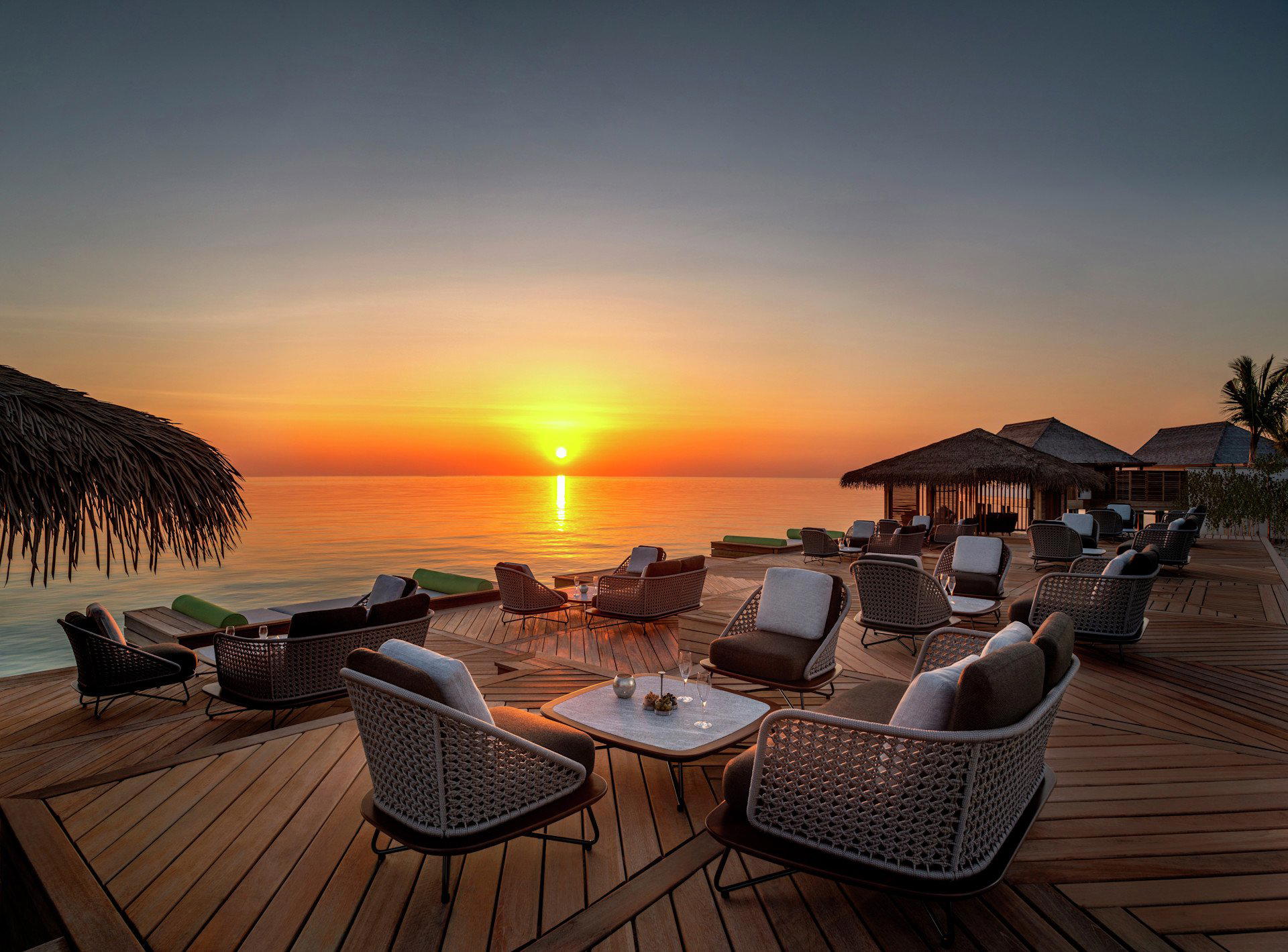
Drinking at the Edge of the Indian Ocean
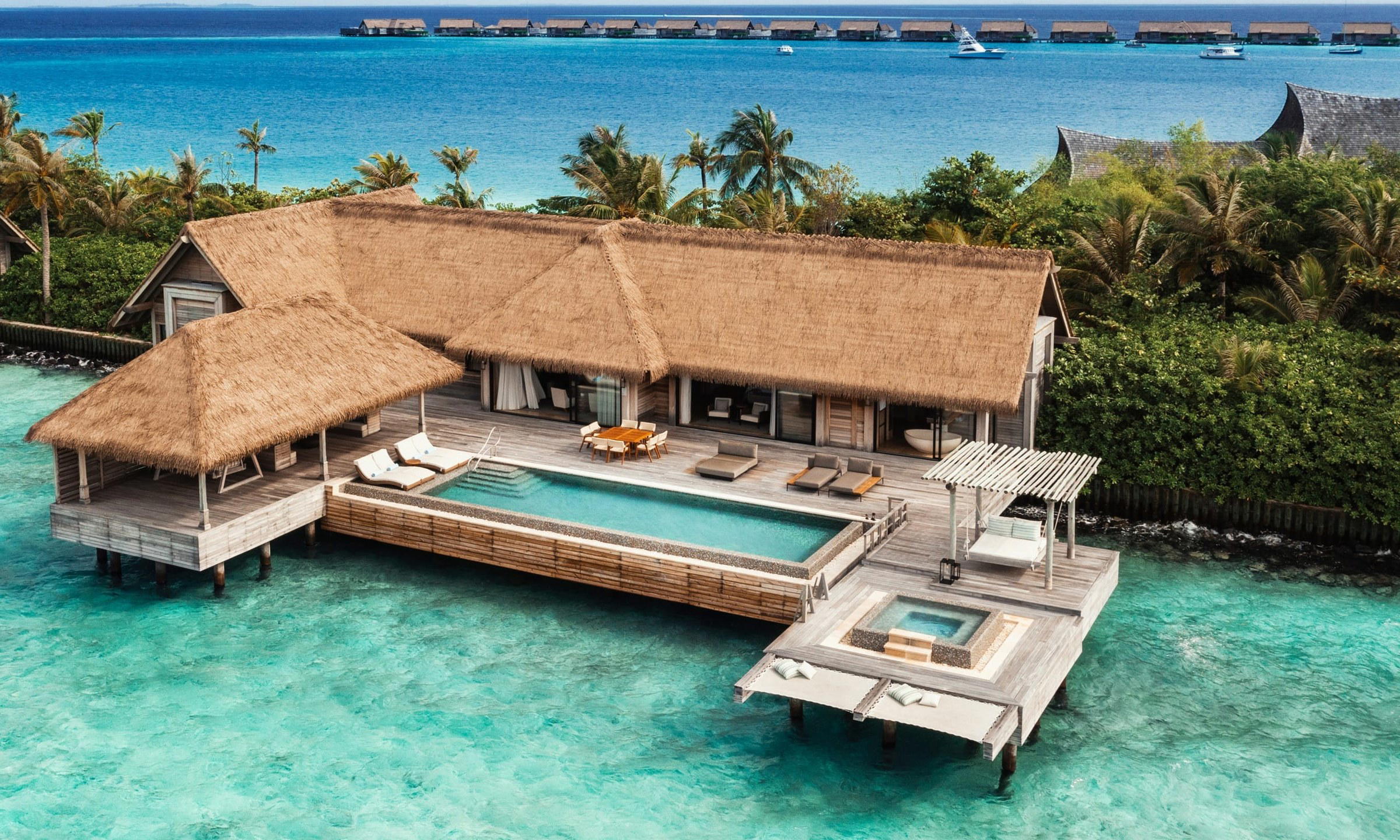
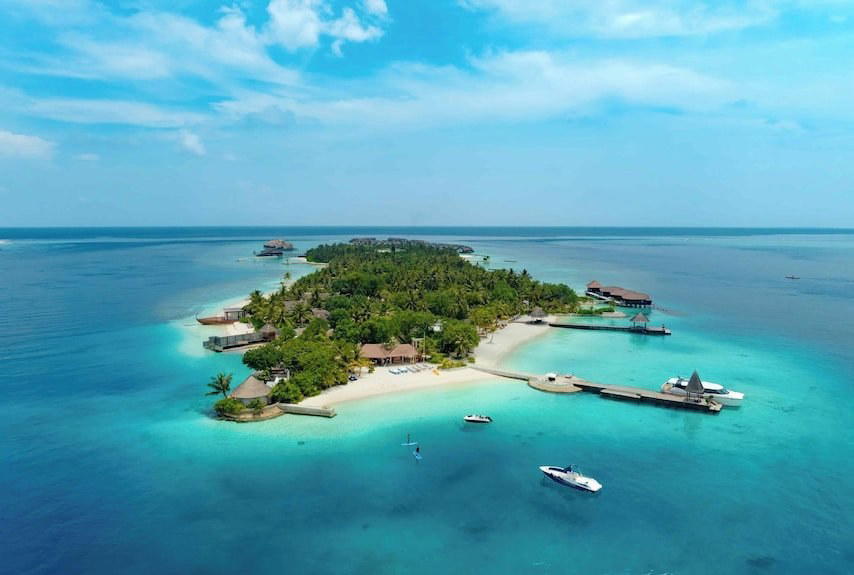
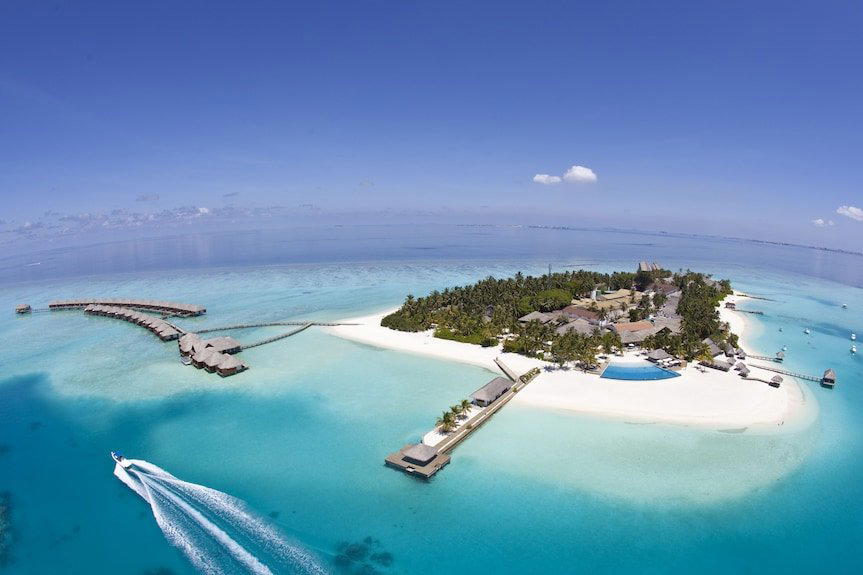
The approach to Ithaafushi Island sets the register before a single drink arrives. Speedboats crossing the South Malé Atoll deliver guests past reef-shallow water in gradations of turquoise and ink blue, the horizon uninterrupted in every direction. By the time you reach the bar, the physical environment has already done significant editorial work: the atoll format, where isolation is the premise rather than the amenity, changes what a cocktail programme needs to accomplish. A drink here is not competing with a city street or a buzzing neighbourhood. It is measured against open water, shifting light, and a specific quality of silence that deep-ocean proximity produces.
Amber sits within that context on Ithaafushi Island South, an address that places it among the Maldives’ more concentrated private-island drinking environments. The Maldives has developed a recognisable tier of bar programming over the past decade, moving from hotel-standard spirits lists toward formats that take technique and sourcing seriously. Amber occupies that upper movement within the atoll’s options, where the quality of the ice programme, the provenance of base spirits, and the coherence of a menu’s internal logic matter as much as the view.
The Cocktail Programme as a Structural Argument
Across the Indian Ocean’s premium bar tier, the most credible programmes share a structural logic: they are built around a central creative premise rather than assembled from trend-adjacent references. The better cocktail bars operating in island resort settings have learned that the environment will always overwhelm a generic list. Guests surrounded by this much natural spectacle quickly identify when a programme is coasting on location.
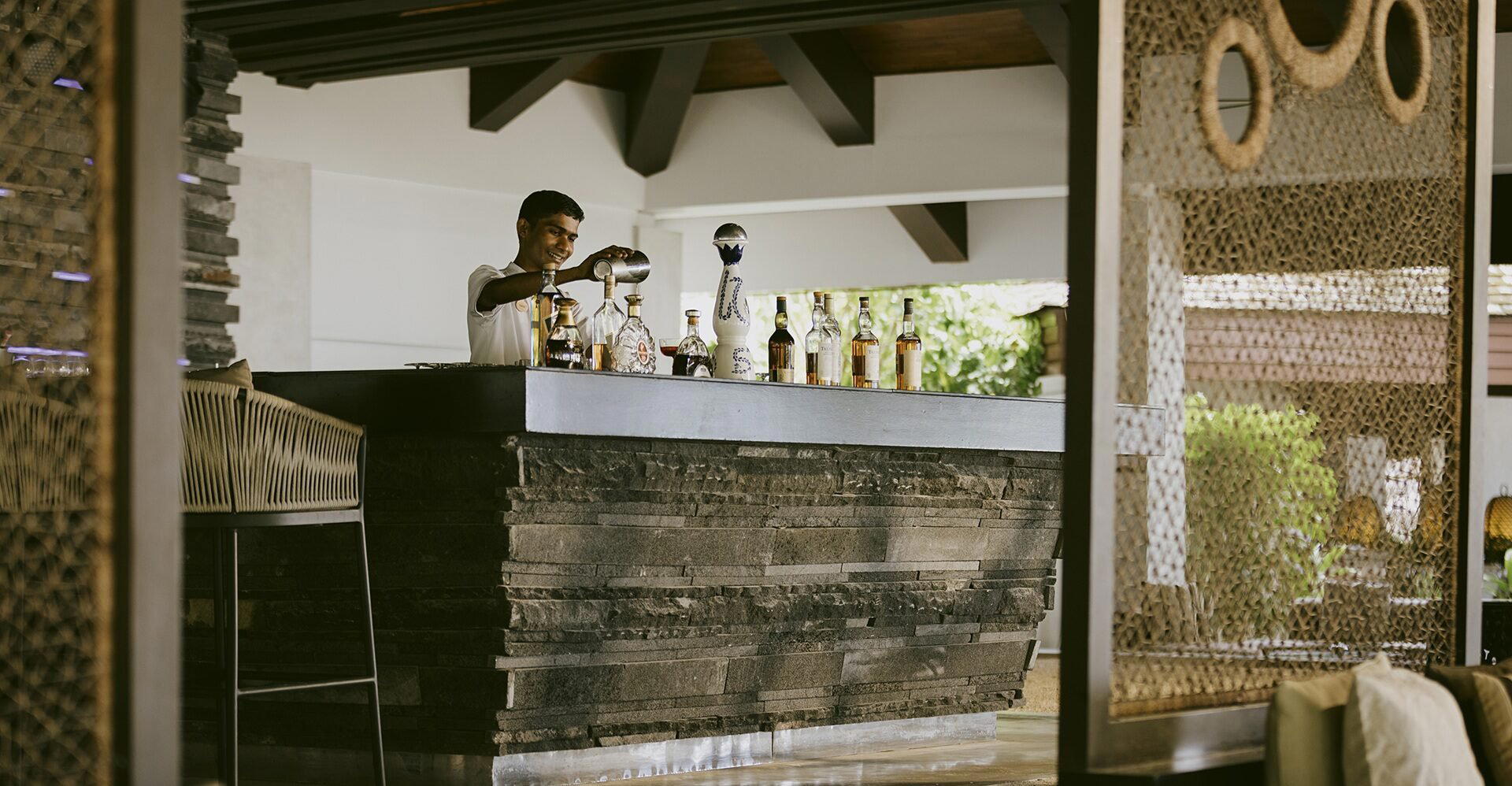
What distinguishes a serious bar in this format is the degree to which the programme develops its own internal grammar. Technique signals whether a programme is self-aware: clarification methods, fat-washing, fermentation-based modifiers, and temperature control in serving all indicate a kitchen-literate approach to spirits. The bars that have built reputations in comparable atoll settings, such as Aaraha Champagne Bar in South Ari Atoll, demonstrate that the Maldives can support technically grounded programmes when the team is committed to format discipline.
Amber’s position on Ithaafushi Island South places it within reach of guests whose reference points span global bar culture. The same traveller arriving here may have drunk at Kumiko in Chicago, spent evenings at Bar Leather Apron in Honolulu, or sat at the counter at Le Bar du Plaza Athénée in Paris. That reference set raises the implicit standard. It also creates the interesting condition where island bars are now assessed against urban fine-drinking benchmarks rather than resort-category norms.
Comparing Formats Across the Premium Bar Circuit
The premium bar circuit in 2024 has sorted into several distinct operating modes. There are high-concept urban programmes where narrative and ingredient sourcing carry equal weight with technique, exemplified by Jewel of the South in New Orleans or Café La Trova in Miami, where cultural specificity anchors every drink. There are ingredient-forward programmes in markets like New York, where Superbueno and Dear Irving operate on different premises but share a commitment to menu coherence. There are heritage programmes, like Julep in Houston, where the depth of a single spirit category drives the argument. And there are European programmes, like The Parlour in Frankfurt or Experimental Bistro in Taipei, operating in their own idioms.
Island bar programmes sit outside these categories but are increasingly judged by their standards. The most coherent approach in the Maldives context draws from the locality: tropical fermentation traditions, regional ingredients including coconut derivatives, native botanicals from nearby archipelago ecosystems, and the influence of trade-route spice cultures that historically connected the Indian Ocean. Programmes that build from these materials produce something the urban circuit cannot replicate, because the raw material context is genuinely different. That geographical specificity is where island bars can earn a distinct identity rather than simply approximating what a well-resourced urban programme might produce.
The Environment as Co-Author
A recurring observation among serious drinkers who travel to the Indian Ocean atoll properties is that the leading sessions happen at transitional light: late afternoon when the sun is low and the water surface changes colour every few minutes, or early evening when the sky compresses toward deep blue and the reef sounds become more present. The cocktail in hand during those windows is operating in a sensory context that no urban room can construct. The programme at a place like Amber does not need to manufacture atmosphere; it needs to be worthy of the one that arrives for free.
This creates a specific editorial discipline for the better island programmes. The drinks need to hold attention on their own merits, because the competition from the surrounding environment is not noise to be blocked out but a co-author of the experience. A technically rigorous cocktail, served at the right temperature in appropriate glassware, with a garnish whose aromatic contribution is considered rather than decorative, will read differently against a coral-sea backdrop than the same drink would in a basement bar. The atoll environment amplifies what is already in the glass.
Planning a Visit
Ithaafushi Island South sits within the South Malé Atoll, accessible from Velana International Airport via speedboat transfers that serve the island properties in this part of the atoll. Transfer logistics vary by property and should be confirmed at the time of booking; the South Malé Atoll’s proximity to the airport makes it one of the more accessible atoll zones, with transfer times generally shorter than those required for properties in the northern or southern atolls. For guests planning time around the bar programme specifically, the transitional hours between afternoon and evening tend to produce the leading conditions, combining optimal light with cooler temperatures after the midday heat. The dry season, running roughly from November through April, is when the Maldives operates at its clearest and calmest, with the wet season bringing heavier skies and occasionally rough transfer conditions. Advance coordination with the island is advisable regardless of season. For broader context on dining and drinking options across the atoll group, see our full South Malé Atoll restaurants guide.
Continue exploring
More in South Malé Atoll
Bars in South Malé Atoll
Browse all →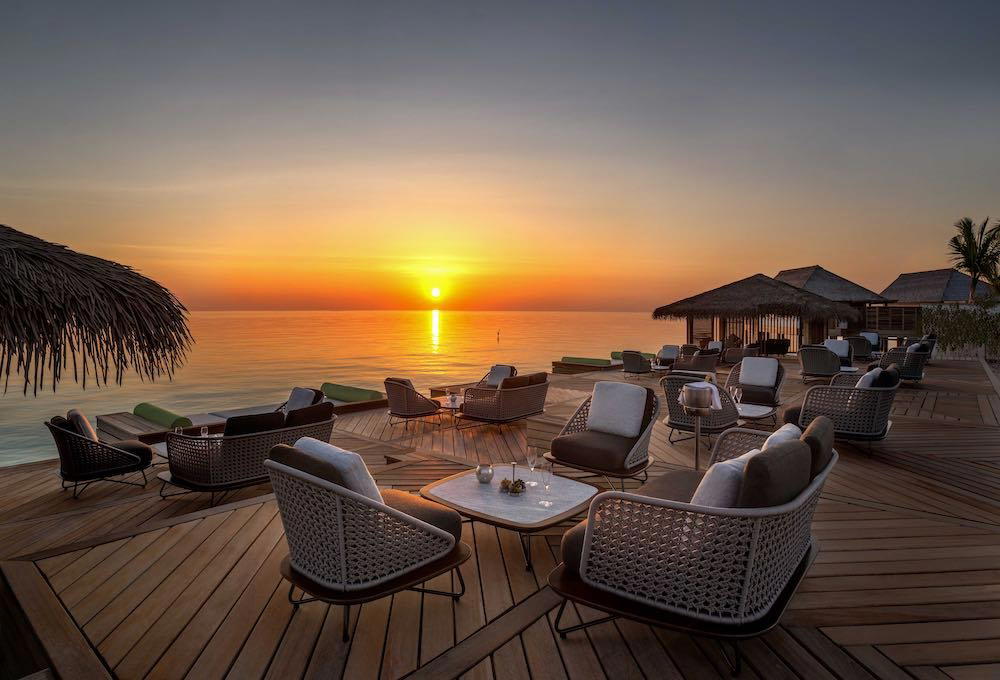
Restaurants in South Malé Atoll
Browse all →
Details
- Scenic
- Relaxed
- Casual
- Casual Hangout
- After Work
- Group Outing
- Waterfront
- Hotel Bar
- Terrace
- Outdoor Terrace
- Lounge Seating
- Seated Bar
- Classic Cocktails
- Waterfront
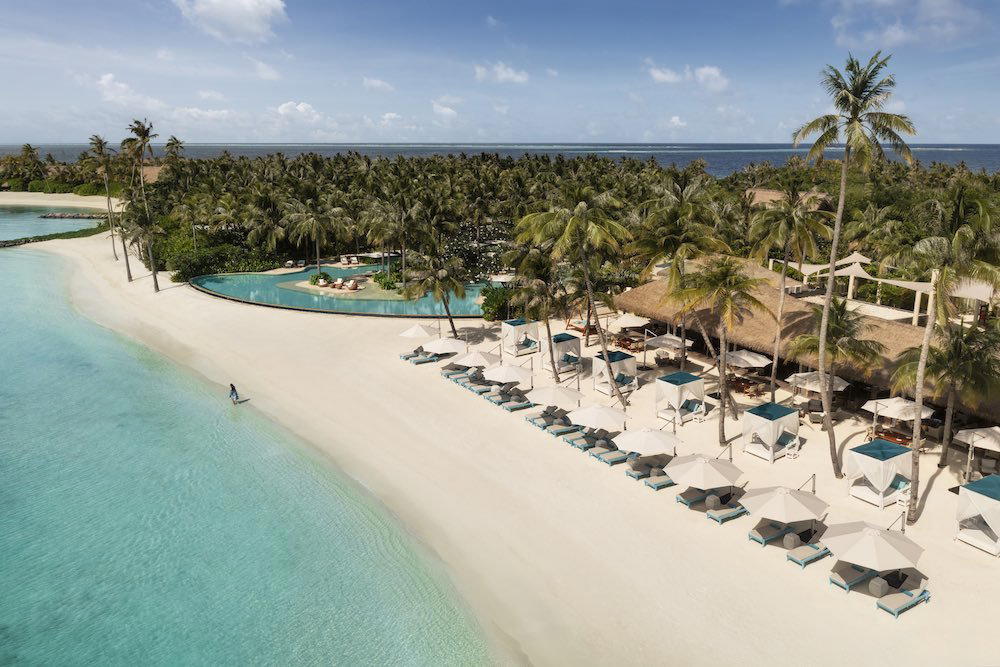
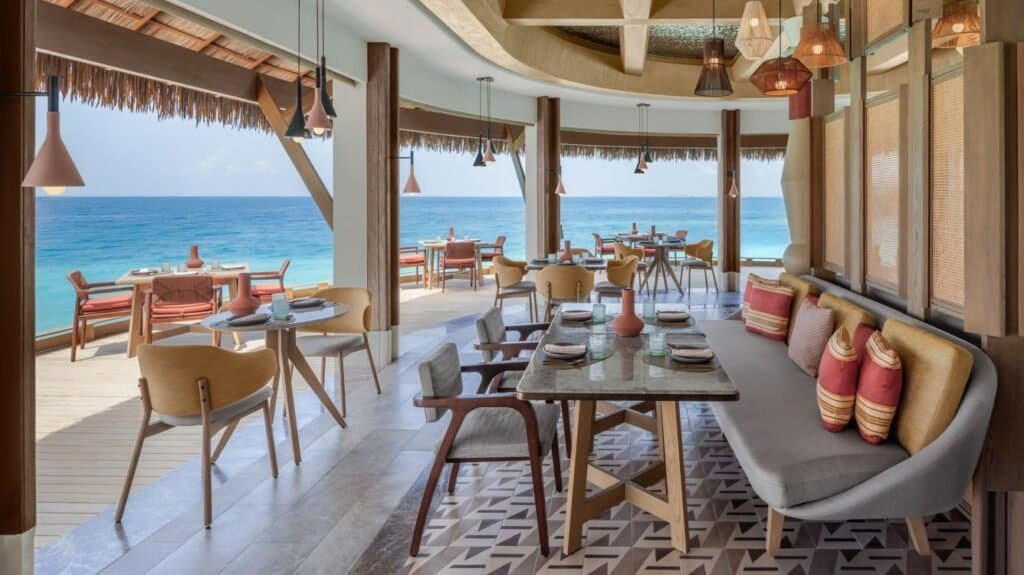
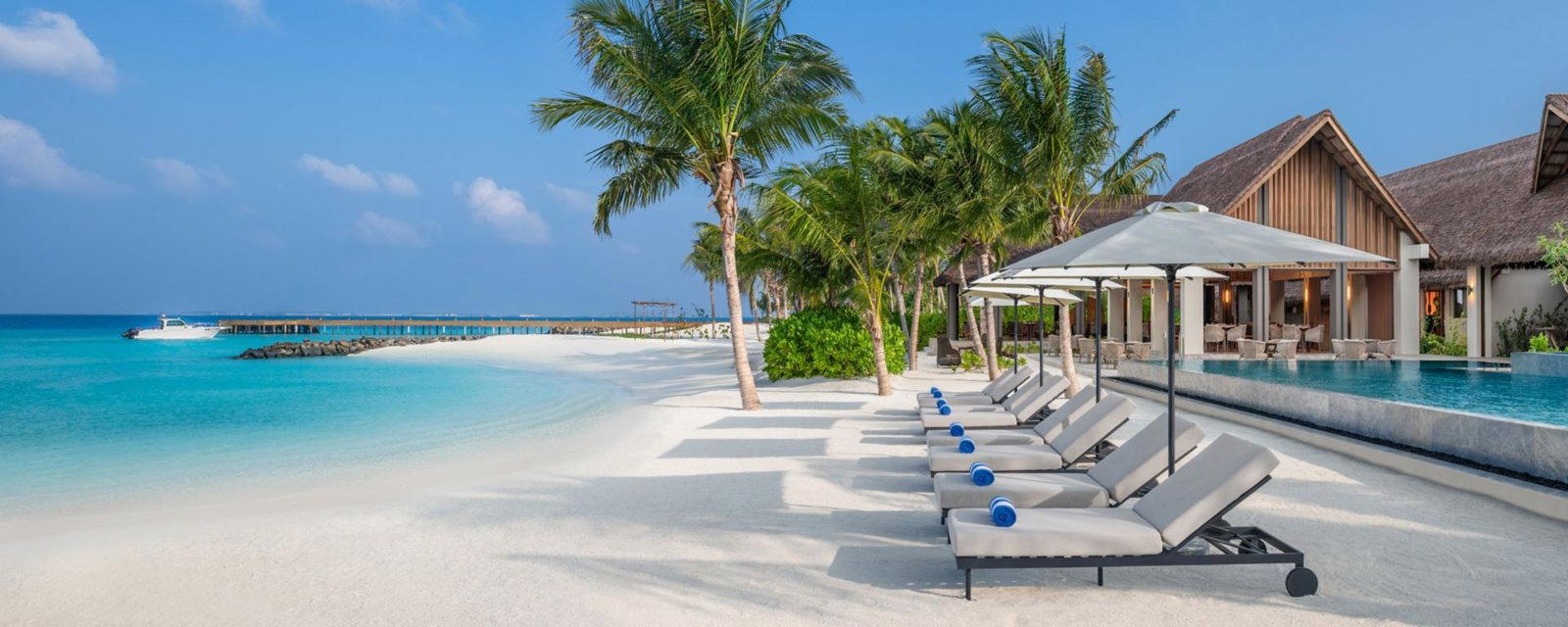
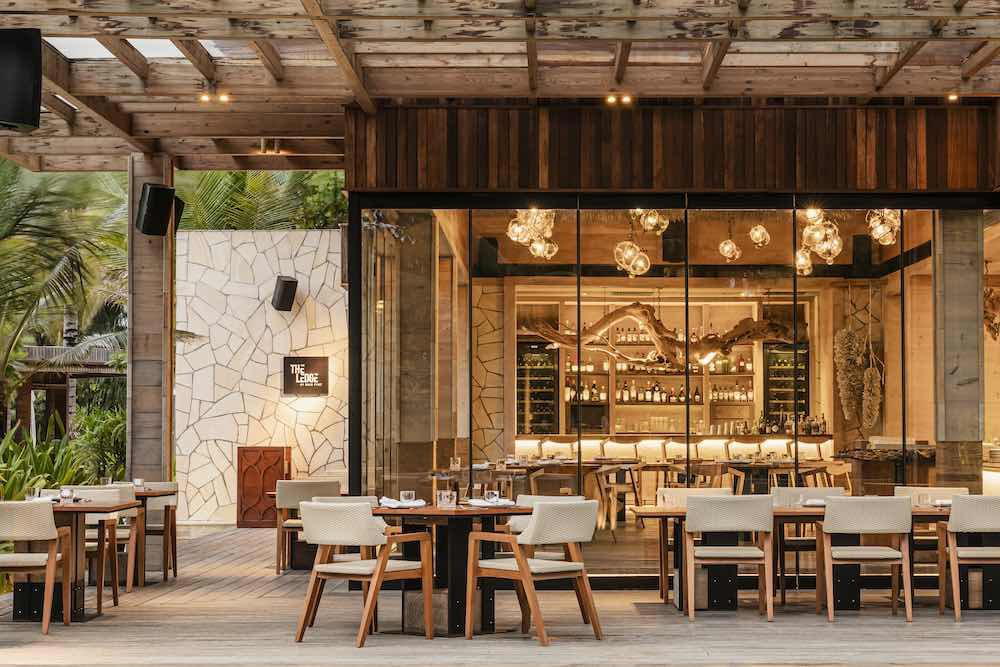
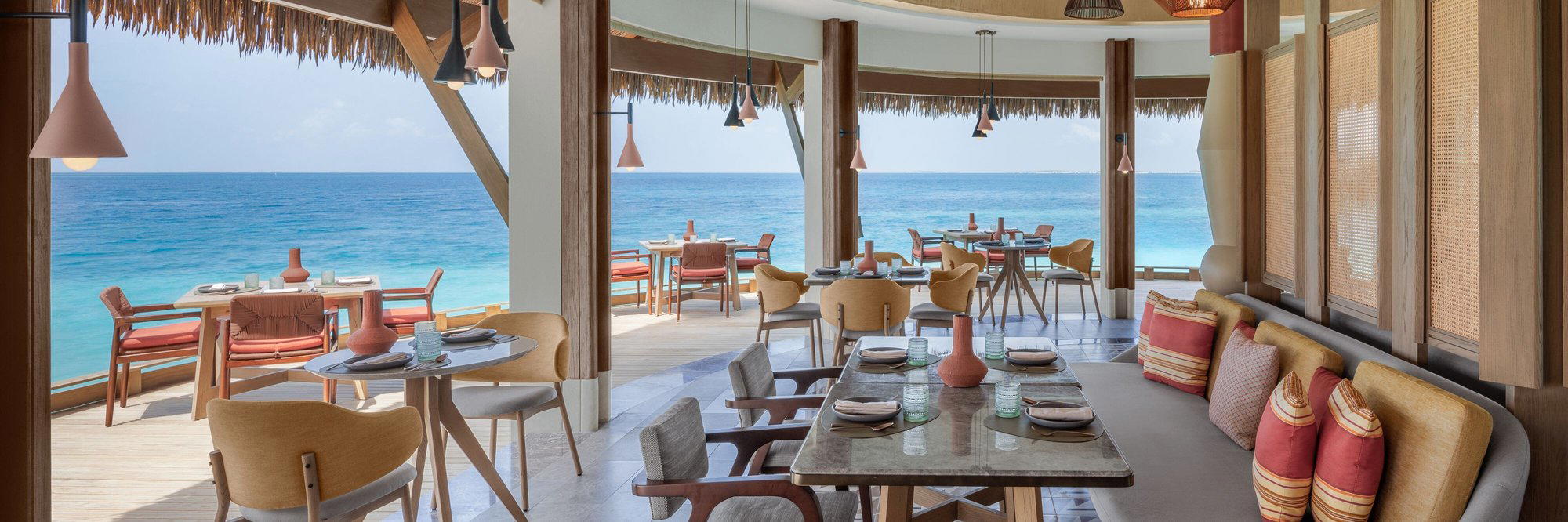
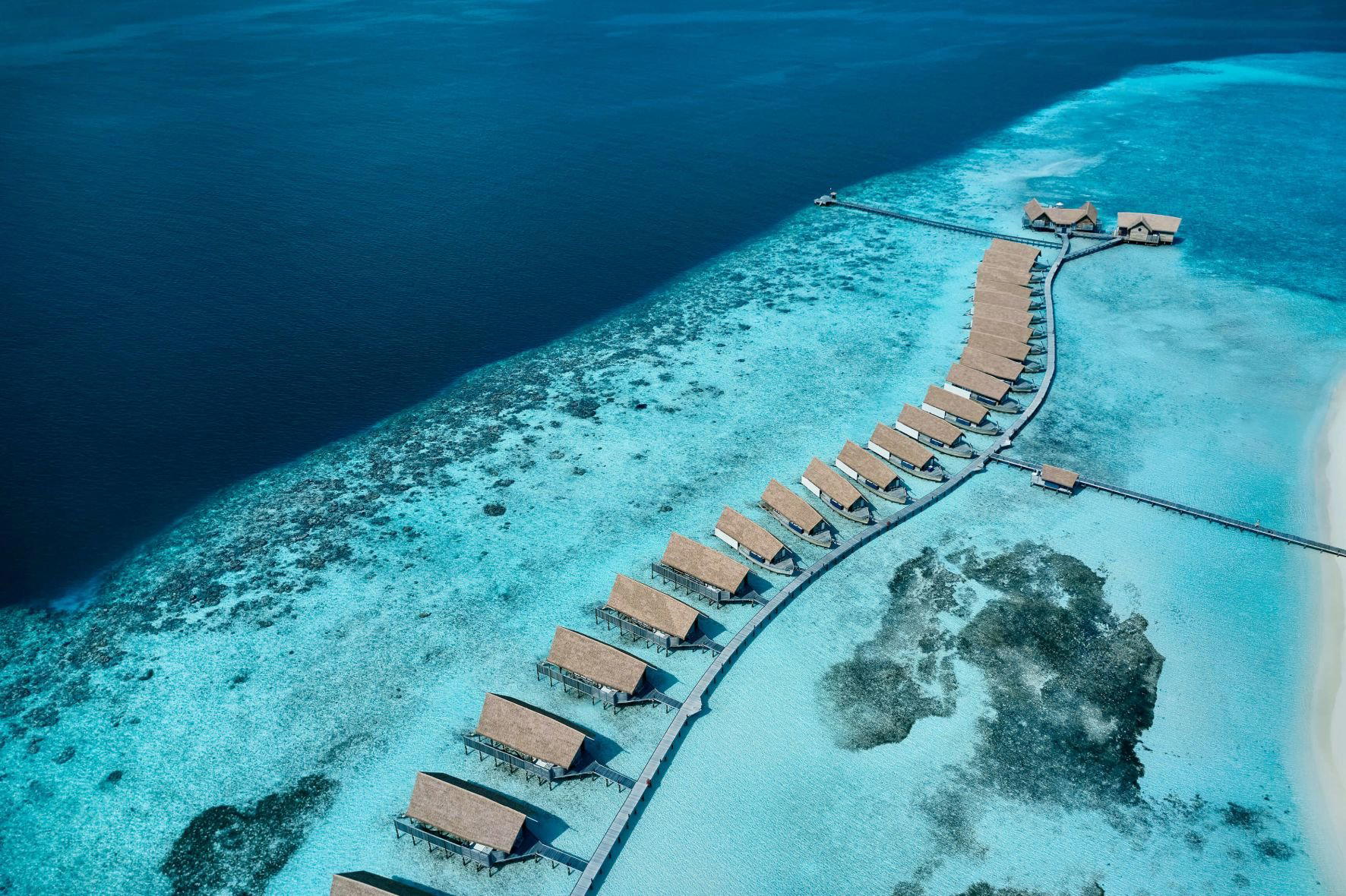
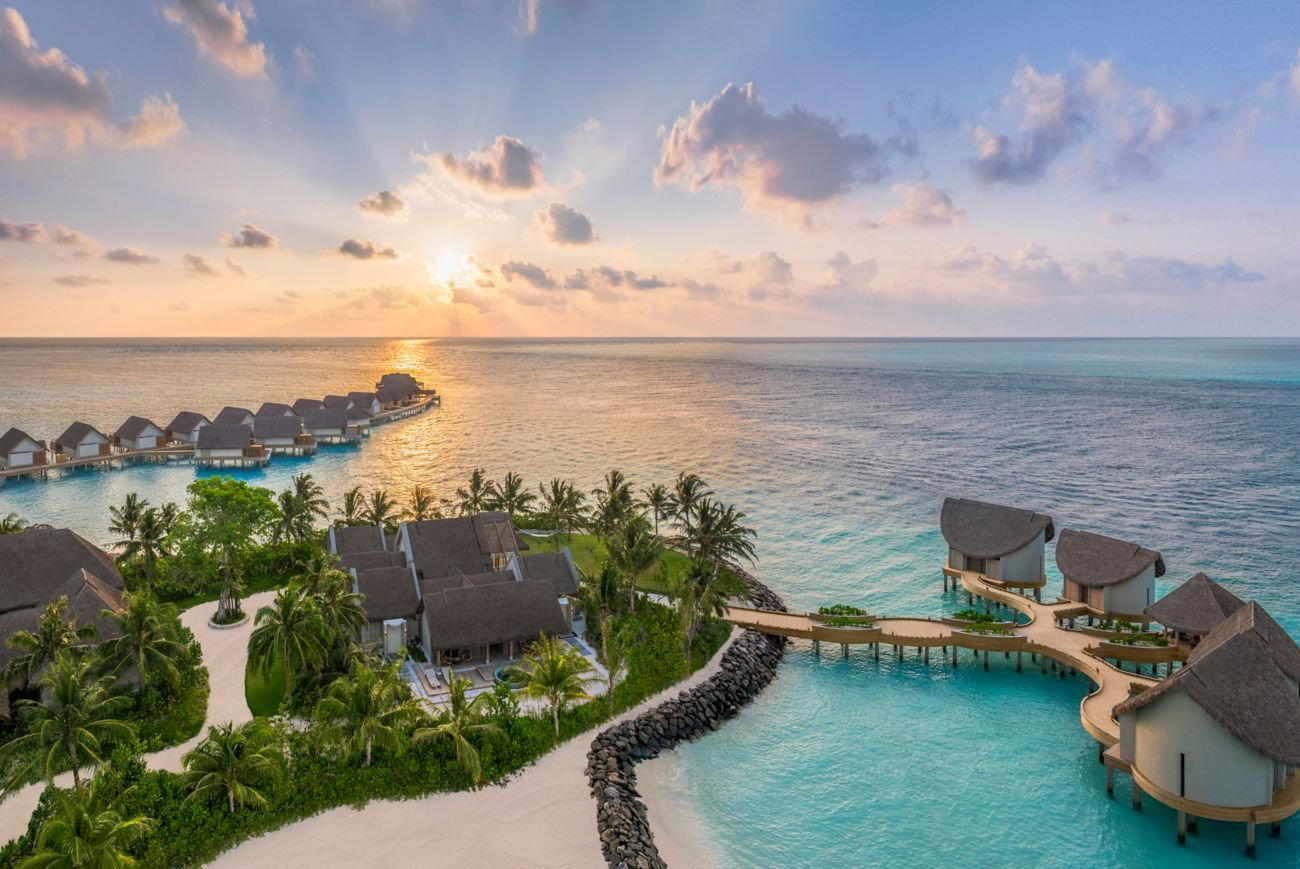
Relaxed beachfront setting with open-air terrace seating overlooking the ocean, casual tropical atmosphere with natural light and sea breezes.