
Falstaff Winery - Listed
Weingut Romasi puts Tyrolean wine into a high-altitude frame: small-scale production, PIWI varieties, vineyard views and a Buschenschank mood rather than polished estate theatre. In Hatting, its appeal is the combination of mountain setting, sustainable intent and a tasting format that links wine to regional food without turning the visit into a formal cellar ritual.

Pearl is the En Primeur Club membership app — saves, bookings, and concierge access live there. Same editors, same standards.
- Address
- Hatting, Mountain country, Tyrol, Österreich
- Directions
- Get directions

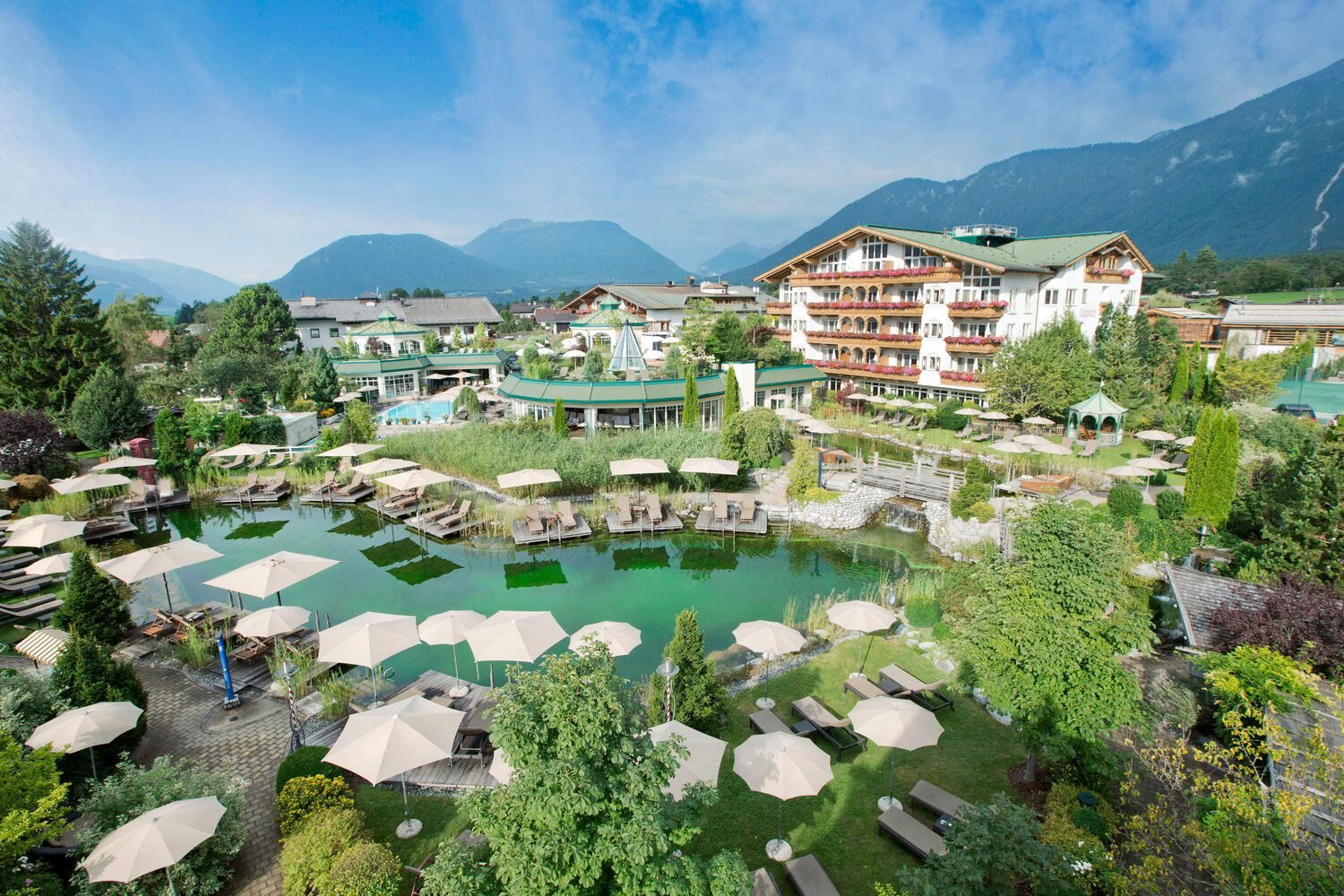
The approach to wine in Hatting is shaped less by grand châteaux logic than by altitude, slope and weather. At Weingut Romasi, the setting sits about 800 meters above sea level on the Hattingerberg, with vineyard and mountain views over the Inn Valley. That matters before a glass is poured: Tyrolean wine has to argue from place, because the region does not carry the same automatic shorthand as Austria’s larger wine zones. Here, the proposition is smaller, more local and more exposed to the physical character of the site.
The winery’s format belongs to the Austrian Buschenschank tradition, where wine, regional food and direct producer hospitality sit close together. That tradition can be casual without being careless. The room may be relaxed and rustic, but the underlying decision is editorially interesting: a high-altitude Tyrolean producer is using the visit to make sense of a place that many wine travelers still associate more readily with mountains than with vineyards. For readers mapping the city beyond the cellar door, Our full Hatting wineries guide gives the local wine frame, while Our full Hatting restaurants guide, Our full Hatting hotels guide, Our full Hatting bars guide and Our full Hatting experiences guide place the visit within the wider Hatting trip.
High-altitude Tyrol, read through PIWI varieties
Useful way to understand Weingut Romasi is through terroir pressure rather than brand mythology. At roughly 800 meters, the vineyard setting signals a cooler, mountain-influenced context where ripening, exposure and disease pressure become part of the agricultural equation. The listed varietals, Solaris, Blütenmuskateller, Chardonnay Stella and Zweigelt Stella, point toward a portfolio that includes PIWI grapes, a category bred for fungal resistance and increasingly relevant in regions where sustainable viticulture has to be practical rather than rhetorical.
PIWI wines are not a novelty act in this context; they are a response to farming conditions. In wetter or higher-risk sites, resistant varieties can reduce vineyard interventions, which is why their presence deserves attention from travelers who usually judge Austrian wine through Grüner Veltliner, Riesling or Blaufränkisch. The Romasi portfolio moves the conversation elsewhere: still white and still red wines tied to a small production scale, with sustainable intent stated as part of the philosophy. That gives the estate a different reading from a conventional tasting-room stop. The point is not breadth, it is how a mountain site can be translated into a focused set of grapes.
Austria’s wine culture is often discussed through the Danube corridor, Burgenland reds or sparkling specialists, but Tyrol asks a different question: what does wine tourism look like where vineyard land is more visually dramatic and less internationally codified? Weingut Romasi answers with altitude, resistant varieties and a hofschank sensibility. That combination gives the visit a regional logic, especially for travelers who care less about trophy labels and more about how a producer adapts to site conditions.
A hofschank mood with regional food in the frame
The experience is structured around guided tasting and wine tasting with regional finger food, which keeps the format grounded in hospitality rather than technical cellar theatre. That distinction matters. A tasting built around food, conversation and a vineyard view lets visitors read the wines as part of Tyrolean rural culture, not as isolated tasting notes. Outdoor seating and panoramic views reinforce the same point: the surrounding valley is not background decoration, it is part of the interpretive apparatus.
The atmosphere is described as rustic, relaxed, romantic and cozy, with a conversational noise level. Those are not empty mood words when placed against the format. A medium-capacity, group-friendly winery with private tasting and vineyard-tour elements sits in the sweet spot between informal mountain outing and structured wine education. It works for celebrations and group outings because the site provides a sense of occasion, but the casual dress code and regional food element keep the tone from hardening into ceremony.
There is also a useful boundary here. This is not a wine-club-driven allocation model, and shipping is not part of the offer. The visit is therefore more tied to being in Hatting than to building a cellar from afar. That localism is part of the appeal: open allocation, small production and appointment-led visiting make the winery feel connected to place rather than scaled for distant collectors.
Where it fits in an Austrian wine itinerary
For a traveler building an Austrian wine route, Weingut Romasi should be read as a Tyrolean counterpoint to the country’s better-known eastern and Danube-side producers. The internal contrast is useful: compare the mountain setting and PIWI emphasis here with the broader Austrian map that includes »der Steiner« Hans Steiner in Podersdorf am See, ®walzer in Gneixendorf Bei Krems, A-Nobis Sektkellerei in Zurndorf, Achs-Wendelin Weine in Gols and Alexander Koppitsch in Neusiedl am See. Those links are not interchangeable recommendations; they show how varied Austrian drinks culture becomes once the route moves beyond a single region or style.
The same national picture also includes producers and makers outside the classic still-wine template, from 1516 Brewing Company Distillery in Vienna and Abfindungsbrennerei Franz in Leithaprodersdorf to Aeijst Distillery in Sankt Nikolai im Sausal. For readers widening the lens beyond Austria, & Handwein in Mannheim and 00 Wines in Carlton illustrate how place-led drinking itineraries shift once climate, grape choice and hospitality format change.
The practical read is simple: this is a winery for travelers who want the vineyard to explain the wine. Robert Zangerl is named as winemaker, the opening year is listed as 2020, and Falstaff recognition places the estate inside a serious wine-facing context rather than a generic countryside stop. The stronger reason to go, though, is the combination of high-altitude Tyrol, sustainable production language, PIWI varieties and a Buschenschank format with regional food. That is a coherent argument for place, and in a mountain region where wine has to earn attention, coherence counts.
Recognition history
Dated appearances from independent guides and award organizations, with the underlying list record or original source where available.
Falstaff Winery - Listed
Falstaff
Continue exploring
More in Hatting
Wineries in Hatting
Browse all →Bars in Hatting
Browse all →
Restaurants in Hatting
Browse all →
Details
- Rustic
- Romantic
- Scenic
- Cozy
- Group Outing
- Celebration
- Special Occasion
- Wine Education
- Vineyard Tour
- Historic Building
- Panoramic View
- Private Tasting
- Sustainable
- Mountain
- Vineyard
- Solaris
- Blütenmuskateller
- Chardonnay Stella
- Zweigelt Stella
- Still White
- Still Red
- Guided Tasting
- Wine Tasting With Regional Finger Food
Rustic, relaxed, and romantic, with a scenic high-altitude vineyard setting and a strong Buschenschank atmosphere.