
Weingut Gernot und Heike Heinrich is a Gols-based winery holding a Pearl 2 Star Prestige award (2025), operating from Baumgarten 60 in the heart of Burgenland's Neusiedlersee wine country. The estate sits within one of Austria's most concentrated clusters of ambitious red wine producers, where continental heat, shallow soils, and the moderating influence of Lake Neusiedl define the regional character.
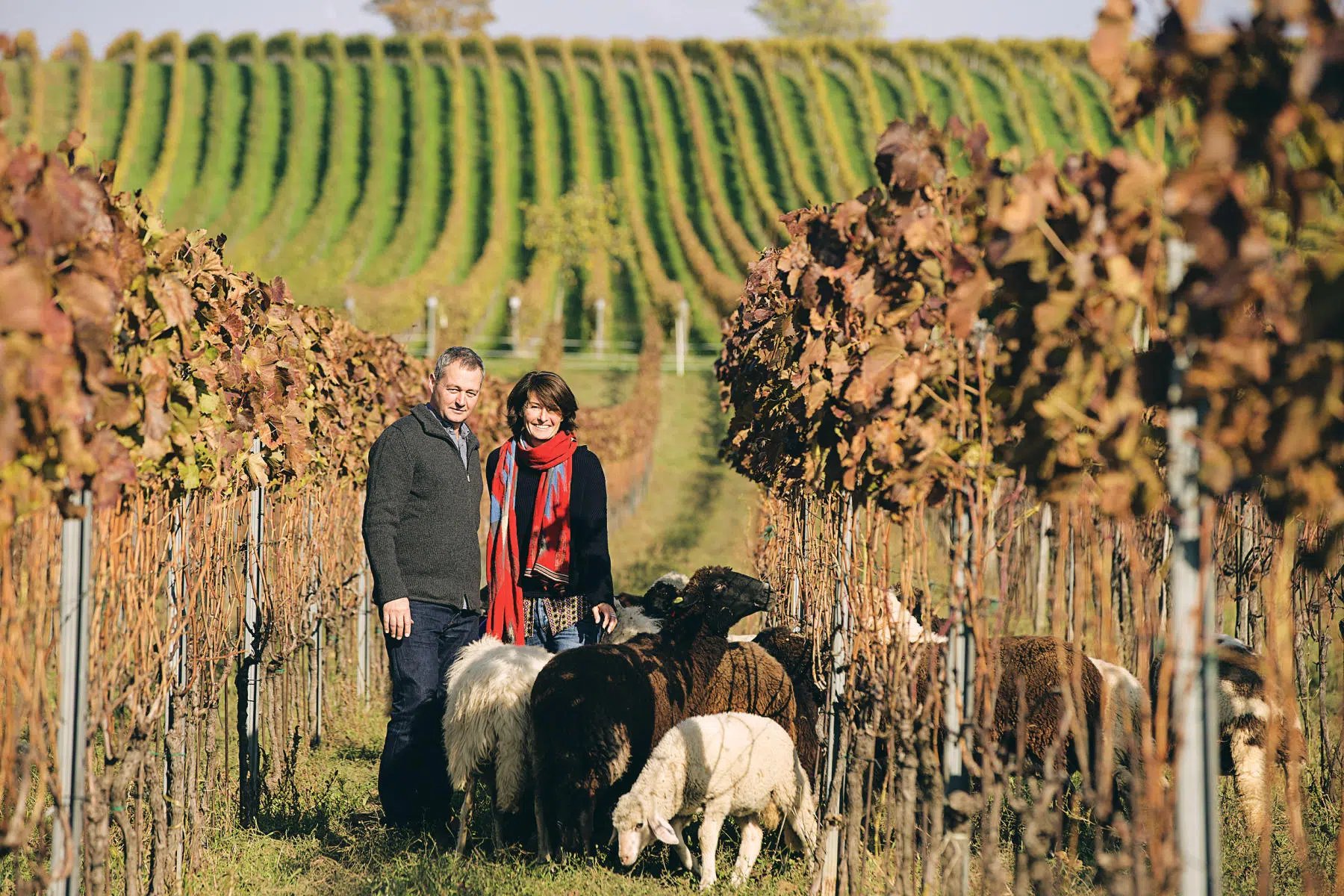
Where Burgenland's Ambition Is Most Concentrated
The road into Gols runs flat through a country that doesn't look, at first glance, like it should produce wines of serious consequence. The Pannonian plain stretches wide and low, the horizon broken by the shimmer of Lake Neusiedl rather than any dramatic topography. But this flatness is deceptive. The shallow, reflective lake creates a microclimate unlike anything else in central Europe: long, warm growing seasons, minimal frost risk, and a diurnal shift that preserves acidity in grapes that accumulate sugar with unusual ease. Gols, sitting on the western shore of the Neusiedlersee, has become the address of choice for producers who understand that Burgenland's terroir rewards ambition precisely because it offers so much raw material to work with.
Within that context, Weingut Gernot und Heike Heinrich, located at Baumgarten 60, has built a position recognised at the top tier of the region's prestige hierarchy. The estate holds a Pearl 2 Star Prestige award for 2025, a credential that places it alongside a small cohort of Burgenland producers where critical validation and allocations align. For visitors arriving in Gols expecting a wine town of modest scale, the concentration of serious estates within a few kilometres of each other is one of the more striking features of the region. The Heinrichs are part of a generation that has argued, through their wines rather than their rhetoric, that Burgenland deserves consideration alongside Austria's more internationally established wine corridors.
The Regional Argument for Gols
Austrian wine criticism has long been anchored to the Wachau and Kamptal in the north, where Grüner Veltliner and Riesling from steep, glacially-formed terraces set the international narrative. Burgenland, and Gols specifically, has made a different case: that the warm south, with its capacity for full-bodied red wines and late-harvest whites, represents an equally valid but distinct Austrian identity. The grape varieties shift here. Blaufränkisch, Zweigelt, and St. Laurent replace the cool-climate whites of the Danube corridor, and the wines carry the weight of a continental summer rather than the mineral tension of crystalline granite.
This isn't a secondary identity. Producers in Gols have, over the past two decades, driven a serious reappraisal of what Austrian red wine can achieve at the premium end of the market. Estates like Weingut Pittnauer, Weingut Anita und Hans Nittnaus, Weingut Juris (Stiegelmar), and Weingut Paul Achs have each developed distinct house styles within the same broad geographical frame. The competition here is internal in the productive sense: each producer pushes the others toward greater precision, and the result is a village-level quality density that few Austrian appellations can match. The Heinrichs operate within this environment, where comparison is inescapable and standards are set by the peer group rather than by any comfortable baseline.
Philosophy Through the Wines
The editorial angle that matters most with an estate at this prestige level is not the biography of its founders but the choices their wines reflect. Burgenland red wine production has split, roughly, into two camps over the past decade: one that has leaned into oak-forward, internationally legible styles designed to compete on weight and concentration, and another that has moved toward restraint, longer skin contact with greater care, and site-specific expression that foregrounds the Neusiedlersee terroir rather than flattening it. Where a producer sits in that spectrum determines everything about how their wines age, how they pair, and who buys them.
A Pearl 2 Star Prestige rating from a credentialed awards body signals consistency and quality depth, not just a single strong vintage performance. At this level, the expectation is that the estate's leading bottlings express a coherent winemaking argument across multiple releases, and that the wines hold up under critical scrutiny from evaluators who have benchmarked them against a wide peer set. For Burgenland, that peer set now extends internationally, with Blaufränkisch in particular drawing comparison to Pinot Noir from Burgundy and Mencia from Galicia among critics interested in cool-inflected reds from warm continental zones.
For context on how Gols-based producers compare to Austrian estates operating in different traditions, Schloss Gobelsburg in Langenlois and Weingut Emmerich Knoll in Dürnstein represent the northern Danube benchmark, where Riesling and Grüner Veltliner dominate. The contrast between those houses and what Gols producers achieve with red varieties underscores how wide the Austrian wine argument has become. Domestically, Weingut Heinrich Hartl in Oberwaltersdorf offers another reference point for Austrian red wine at the serious end of the market.
Arriving in Gols: What to Know Before You Go
Gols sits in the Burgenland region of eastern Austria, approximately an hour's drive from Vienna via the A4 motorway. The village is small and easily covered on foot or by bicycle, which remains the most practical way to move between estates during a tasting itinerary. The wine tourism infrastructure here is less formalised than in the Wachau, which means that visits to estates, including the Heinrich property at Baumgarten 60, typically benefit from advance contact to confirm availability. No phone or website data is held in our current database for the Heinrich estate, so the most reliable approach is to reach out directly through regional wine tourism channels or the Österreich Wein (Austrian Wine Marketing Board) network, which maintains up-to-date producer contact details.
The leading visiting window for Burgenland is generally late spring through early autumn, when the landscape around the Neusiedlersee is at its most accessible and producers are often open to receiving visitors between harvest preparations. Late September and October coincide with harvest activity and, while atmospheric, can mean reduced availability for tastings at smaller estates. For those planning a broader trip, our full Gols wineries guide covers the complete producer landscape in the area, and our Gols restaurants guide, hotels guide, bars guide, and experiences guide provide the logistical detail needed to extend a visit into a full itinerary.
One property in the village worth noting for context on the broader spirits and craft production scene in the area is Private Distillery Weisz, which operates adjacent to the wine-dominant culture of the village. For comparison with prestige-level European wine estates beyond Austria, Abadía Retuerta in Sardón de Duero offers a useful international reference point at a similar award tier, as does the very different but similarly credential-heavy Aberlour in Aberlour for those interested in how prestige signals translate across production categories.
Frequently Asked Questions
What wines should I try at Weingut Gernot und Heike Heinrich?
The estate holds a Pearl 2 Star Prestige award for 2025, which positions its wines among Burgenland's most critically validated bottlings. Gols producers at this level typically centre their prestige range on Blaufränkisch, either as a varietal wine or within structured blends, given the variety's particular affinity for the Neusiedlersee's warm, flat terroir. Zweigelt and St. Laurent also appear frequently at estates of this profile. Without current menu or allocation data held in our database, the most reliable way to identify which specific bottlings are available and on allocation is to contact the estate directly or consult the Austrian Wine Marketing Board's producer portal, which tracks regional releases by vintage.
What should I know about Weingut Gernot und Heike Heinrich before I go?
The estate is located at Baumgarten 60 in Gols, a small Burgenland village roughly an hour from Vienna by car. It carries a Pearl 2 Star Prestige credential for 2025, placing it at the upper tier of regional recognition. Phone, website, and hours data are not currently held in our database, so confirming visit arrangements in advance through regional wine tourism channels is advisable. Pricing data is also unavailable in our current records; at this prestige level, expect allocations and tasting formats to be structured accordingly. The concentration of serious producers in Gols means the estate is leading visited as part of a half-day or full-day itinerary covering multiple addresses rather than as a standalone stop.
Standing Among Peers
A short peer table to compare basics side-by-side.
| Venue | Classification | Awards | First Vintage | Notes |
|---|---|---|---|---|
| Weingut Gernot und Heike Heinrich | 1 awards | This venue | ||
| Weingut Pittnauer | 1 awards | |||
| Weingut Anita und Hans Nittnaus | 1 awards | |||
| Weingut Juris (Stiegelmar) | 1 awards | |||
| Weingut Paul Achs | 1 awards | |||
| Private Distillery Weisz | 1 awards |
Access the Cellar?
Our members enjoy exclusive access to private tastings and priority allocations from the world's most sought-after producers.
Access the Concierge